Close Menu
TechCentralTechCentral

    Subscribe to the newsletter

    Get the best South African technology news and analysis delivered to your e-mail inbox every morning.

    Facebook X (Twitter) YouTube LinkedIn
    WhatsApp Facebook X (Twitter) LinkedIn YouTube
    TechCentralTechCentral
    • News
      MTN lobs a grenade into SA's mobile market with Pi launch

      MTN lobs a grenade into SA’s mobile market with Pi launch

      30 March 2026
      FNB CEO Harry Kellan steps down after just two years

      FNB CEO Harry Kellan steps down after just two years

      30 March 2026
      The staggering cost of connecting every South African household - Pieter Grootes

      The staggering cost of connecting every South African household

      30 March 2026
      Starlink fires back after Namibia rejects licence bid

      Starlink fires back after Namibia rejects licence bid

      30 March 2026
      Standard Bank moved R164-trillion in payments in 2025

      Standard Bank moved R164-trillion in payments in 2025

      30 March 2026
    • World

      Apple plans to open Siri to rival AI services

      27 March 2026
      It's official: ads are coming to ChatGPT

      It’s official: ads are coming to ChatGPT

      23 March 2026
      Mystery Chinese AI model revealed to be Xiaomi's

      Mystery Chinese AI model revealed to be Xiaomi’s

      19 March 2026
      A mystery AI model has developers buzzing

      A mystery AI model has developers buzzing

      18 March 2026
      Samsung's trifold gamble ends in retreat

      Samsung’s trifold gamble ends in retreat

      17 March 2026
    • In-depth
      The R18-billion tech giant hiding in plain sight - Jens Montanana

      The R16-billion tech giant hiding in plain sight

      26 March 2026
      The last generation of coders

      The last generation of coders

      18 February 2026
      Sentech is in dire straits

      Sentech is in dire straits

      10 February 2026
      How liberalisation is rewiring South Africa's power sector

      How liberalisation is rewiring South Africa’s power sector

      21 January 2026
      The top-performing South African tech shares of 2025

      The top-performing South African tech shares of 2025

      12 January 2026
    • TCS
      Anoosh Rooplal

      TCS | Anoosh Rooplal on the Post Office’s last stand

      27 March 2026
      Meet the CIO | HealthBridge CTO Anton Fatti on the future of digital health

      Meet the CIO | Healthbridge CTO Anton Fatti on the future of digital health

      23 March 2026
      TCS+ | Arctic Wolf unpacks the evolving threat landscape for SA businesses - Clare Loveridge and Jason Oehley

      TCS+ | Arctic Wolf unpacks the evolving threat landscape for SA businesses

      19 March 2026
      TCS+ | Vox Kiwi: a wireless solution promising a fibre-like experience - Theo van Zyl

      TCS+ | Vox Kiwi: a wireless solution promising a fibre-like experience

      13 March 2026
      TCS+ | Flipping the narrative on AI in the Global South - Josefin Rosén

      TCS+ | Flipping the narrative on AI in the Global South

      13 March 2026
    • Opinion
      The conflict of interest at the heart of PayShap's slow adoption - Cheslyn Jacobs

      The conflict of interest at the heart of PayShap’s slow adoption

      26 March 2026
      South Africa's energy future hinges on getting wheeling right - Aishah Gire

      South Africa’s energy future hinges on getting wheeling right

      10 March 2026
      Hold the doom: the case for a South African comeback - Duncan McLeod

      Apple just dropped a bomb on the Windows world

      5 March 2026
      VC's centre of gravity is shifting - and South Africa is in the frame - Alison Collier

      VC’s centre of gravity is shifting – and South Africa is in the frame

      3 March 2026
      Hold the doom: the case for a South African comeback - Duncan McLeod

      Hold the doom: the case for a South African comeback

      26 February 2026
    • Company Hubs
      • 1Stream
      • Africa Data Centres
      • AfriGIS
      • Altron Digital Business
      • Altron Document Solutions
      • Altron Group
      • Arctic Wolf
      • Ascent Technology
      • AvertITD
      • Braintree
      • CallMiner
      • CambriLearn
      • CYBER1 Solutions
      • Digicloud Africa
      • Digimune
      • Domains.co.za
      • ESET
      • Euphoria Telecom
      • HOSTAFRICA
      • Incredible Business
      • iONLINE
      • IQbusiness
      • Iris Network Systems
      • LSD Open
      • Mitel
      • NEC XON
      • Netstar
      • Network Platforms
      • Next DLP
      • Ovations
      • Paracon
      • Paratus
      • Q-KON
      • SevenC
      • SkyWire
      • Solid8 Technologies
      • Telit Cinterion
      • Telviva
      • Tenable
      • Vertiv
      • Videri Digital
      • Vodacom Business
      • Wipro
      • Workday
      • XLink
    • Sections
      • AI and machine learning
      • Banking
      • Broadcasting and Media
      • Cloud services
      • Contact centres and CX
      • Cryptocurrencies
      • Education and skills
      • Electronics and hardware
      • Energy and sustainability
      • Enterprise software
      • Financial services
      • HealthTech
      • Information security
      • Internet and connectivity
      • Internet of Things
      • Investment
      • IT services
      • Lifestyle
      • Motoring
      • Policy and regulation
      • Public sector
      • Retail and e-commerce
      • Satellite communications
      • Science
      • SMEs and start-ups
      • Social media
      • Talent and leadership
      • Telecoms
    • Events
    • Advertise
    TechCentralTechCentral
    Home » Sections » Investment » WeWork debacle casts doubt on Masayoshi Son as tech visionary

    WeWork debacle casts doubt on Masayoshi Son as tech visionary

    By Agency Staff23 December 2019
    Twitter LinkedIn Facebook WhatsApp Email Telegram Copy Link
    News Alerts
    WhatsApp
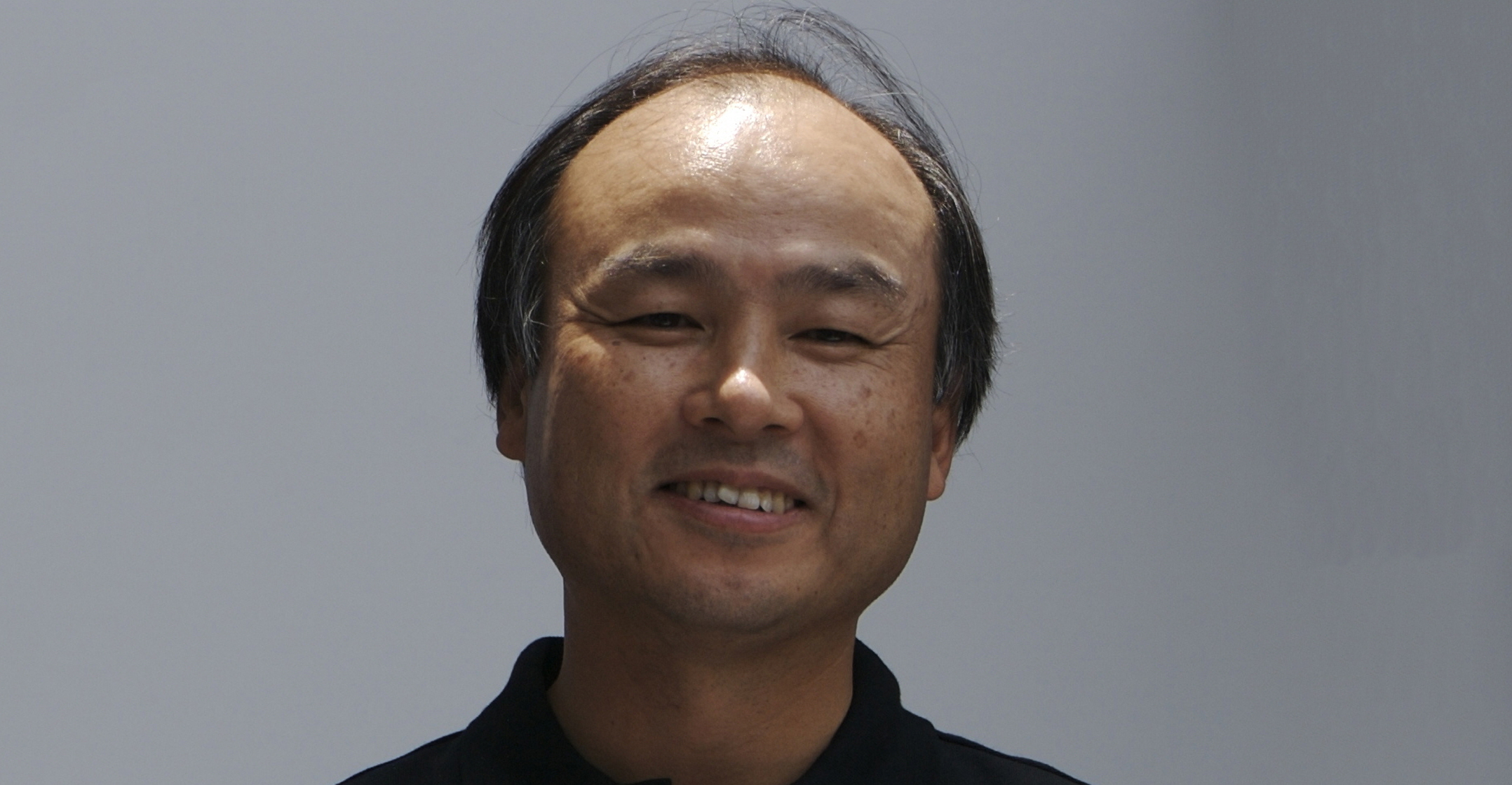
    Masayoshi Son. Image: Masaru Kamikura

    This is the year that brought a US$100-billion venture capitalist to his knees.

    In January, SoftBank Group’s Masayoshi Son was riding high, writing billion-dollar cheques to unicorns from office-sharing start-up WeWork to autonomous-delivery vehicle designer Nuro. But as 2019 winds down, the Japanese deal maker is straining to finance a $9.5-billion bailout package for Adam Neumann’s troubled start-up, whose valuation has evaporated from $47-billion to $8-billion — or even zero, depending whom you ask.

    SoftBank’s bad year goes well beyond WeWork. Investors are starting to get the feeling that whatever Son brings to the public is troubled. And you don’t need to look far for proof: shares of Uber Technologies and Slack Technologies, both backed by the Vision Fund, tumbled upon listing. To venture funds that rely on IPOs for exits and profit, this dark suspicion is a kiss of death.

    Son is less a technology guru than a die-hard capitalist, reinventing the 19th-century business model by squeezing workers for a bit of extra profit

    So how did the world fall out of love with Masa Son?

    Over the past three years, Son has deployed his giant war chest aggressively, threatening to back a start-up’s rival if founders refuse his money, or investing in competitors and forcing them to merge. These unsavoury tactics only became more bothersome when much-hyped SoftBank-backed IPOs started failing. Now we’re coming to realise that Son is less a technology guru than a die-hard capitalist, reinventing the 19th-century business model by squeezing workers for a bit of extra profit.

    Take a look at the Vision Fund’s portfolio. Rather than investing in hard tech such as AI or chip design, a whopping 40% has been funnelled into transportation and logistics companies such as Uber and its ride-hailing clones around the world. You can be sure that drivers on the streets of Shanghai and Jakarta don’t get insurance or pension benefits; they’re only paid per ride. This contract culture seeps well beyond delivery, too: India’s lodging chain Oyo Hotels and Homes, for instance, is asking mom-and-pop business owners to absorb big fixed costs upfront, a New York Times investigation found.

    Long and winding

    But we are living in the 21st century, when human capital ought be worth something and worker protests have erupted around the world. In China alone, three SoftBank-backed unicorns faced 32 strikes last year. So it’s just a matter of time before governments start to step in, demanding better labour protection. If you buy into Karl Marx’s view that a business’s profit pie is a zero-sum divide between workers and capitalists, Son’s portion will inevitably shrink. Put another way, the path to profitability for many of his unicorns will be long and winding — or may even lead to a dead end.

    There’s nothing inherently wrong with being a capitalist, except that SoftBank’s capital is really debt. The company is junk-rated for a good reason: it’s cash poor. Subsidiaries from Sprint to British chip designer ARM Holdings don’t put much on the table, so SoftBank has to live off the cash on hand, borrow even more, or sell its investments to the Vision Fund. At the holding level, Son’s company has already amassed $41-billion of interest-bearing net debt.

    For now, SoftBank is running like a well-oiled machine. But with the Vision Fund fully deployed, and the second iteration likely a lot smaller, Son may have trouble offloading his start-up stakes. To make matters worse, he has folded WeWork under the SoftBank umbrella. Beyond footing the bill for a bailout, SoftBank will need to figure out how to finance the office-leasing company’s $47-billion in lease liabilities. By now, Japanese bankers, who for years revered Son and relied on him for banking fees, are having second thoughts.

    There’s even a case to be made that Son isn’t a terribly skilled capitalist. By September, his Vision Fund had made $11.4-billion, mostly in paper profit, on $76.3-billion in investments deployed over two years. Tiger Global Management, another active investor in late-stage unicorns, has a much better track record. Hedge funds — passive yet nimble investors — are all about due diligence and may well be savvier than Son, who has a habit of writing eye-popping checks after 10 minutes of face time.

    Of the $11.4-billion capital gain the Vision Fund has booked, just about $4-billion is realised, and from only two deals

    If there’s anything Son is unshakably good at, it’s financial engineering. Even after a bailout, WeWork’s debt pile somehow won’t show up on SoftBank’s balance sheet: while the parent will have an 80% stake, it won’t hold a majority of voting rights, the company argued. Another example of such wizardry is SoftBank’s investment playbook. If it buys shares in a start-up and then puts in more money at a higher valuation, it claims to have made a profit. In the June quarter, it booked $3.8-billion in unrealised gains, partly because of a series of investments in Oyo.

    Of that $11.4-billion capital gain the Vision Fund has booked, just about $4-billion is realised, and from only two deals — the sales of Indian e-commerce company Flipkart to Walmart and well-timed trades in Nvidia. But then Son has always been quick to write up and reluctant to write down. After all, in private markets, fair-value accounting is a rigged game.

    Going into the next decade, Son will eventually have to show his cards. There are many expensive decacorns in his incubator. From Bytedance to Didi Chuxing, these unicorns with a $10-billion-plus valuation would easily be considered large caps in public markets. When they do list, we’ll quickly find out if Son is indeed a visionary, or just a mediocre capitalist with “too much money” and a lot of mistakes.  — Reported by Shuli Ren, (c) 2019 Bloomberg LP

    Follow TechCentral on Google News Add TechCentral as your preferred source on Google


    Adam Neumann Flipkart Masayoshi Son Nvidia SoftBank top Uber Walmart WeWork
    WhatsApp YouTube
    Share. Facebook Twitter LinkedIn WhatsApp Telegram Email Copy Link
    Previous Article‘So high!’: Tesla stock hits $420/share
    Next Article Behind Samsung’s $116-billion bid for chip supremacy

    Related Posts

    MTN invests in AI network start-up alongside Nvidia - Mazen Mroué

    MTN invests in AI network start-up alongside Nvidia

    26 March 2026
    OpenClaw fever grips China

    OpenClaw fever grips China

    20 March 2026
    Africa's first Nvidia RTX Pro GPU servers have landed

    Africa’s first Nvidia RTX Pro GPU servers have landed

    19 March 2026
    Company News
    How consumers can identify a true QLED TV

    How consumers can identify a true QLED TV

    30 March 2026
    Kaspersky, Afripol team up to combat African cybercrime

    Kaspersky, Afripol team up to combat African cybercrime

    30 March 2026
    Modernise infrastructure with next-gen compute using HPE VM Essentials - Riaan Swart Tarsus Distribution

    Modernise infrastructure with next-gen compute using HPE VM Essentials

    30 March 2026
    Opinion
    The conflict of interest at the heart of PayShap's slow adoption - Cheslyn Jacobs

    The conflict of interest at the heart of PayShap’s slow adoption

    26 March 2026
    South Africa's energy future hinges on getting wheeling right - Aishah Gire

    South Africa’s energy future hinges on getting wheeling right

    10 March 2026
    Hold the doom: the case for a South African comeback - Duncan McLeod

    Apple just dropped a bomb on the Windows world

    5 March 2026

    Subscribe to Updates

    Get the best South African technology news and analysis delivered to your e-mail inbox every morning.

    Latest Posts
    MTN lobs a grenade into SA's mobile market with Pi launch

    MTN lobs a grenade into SA’s mobile market with Pi launch

    30 March 2026
    FNB CEO Harry Kellan steps down after just two years

    FNB CEO Harry Kellan steps down after just two years

    30 March 2026
    The staggering cost of connecting every South African household - Pieter Grootes

    The staggering cost of connecting every South African household

    30 March 2026
    Starlink fires back after Namibia rejects licence bid

    Starlink fires back after Namibia rejects licence bid

    30 March 2026
    © 2009 - 2026 NewsCentral Media
    • Cookie policy (ZA)
    • TechCentral – privacy and Popia

    Type above and press Enter to search. Press Esc to cancel.

    Manage consent

    TechCentral uses cookies to enhance its offerings. Consenting to these technologies allows us to serve you better. Not consenting or withdrawing consent may adversely affect certain features and functions of the website.

    Functional Always active
    The technical storage or access is strictly necessary for the legitimate purpose of enabling the use of a specific service explicitly requested by the subscriber or user, or for the sole purpose of carrying out the transmission of a communication over an electronic communications network.
    Preferences
    The technical storage or access is necessary for the legitimate purpose of storing preferences that are not requested by the subscriber or user.
    Statistics
    The technical storage or access that is used exclusively for statistical purposes. The technical storage or access that is used exclusively for anonymous statistical purposes. Without a subpoena, voluntary compliance on the part of your Internet Service Provider, or additional records from a third party, information stored or retrieved for this purpose alone cannot usually be used to identify you.
    Marketing
    The technical storage or access is required to create user profiles to send advertising, or to track the user on a website or across several websites for similar marketing purposes.
    • Manage options
    • Manage services
    • Manage {vendor_count} vendors
    • Read more about these purposes
    View preferences
    • {title}
    • {title}
    • {title}