
Close Menu
TechCentralTechCentral

    Subscribe to the newsletter

    Get the best South African technology news and analysis delivered to your e-mail inbox every morning.

    Facebook X (Twitter) YouTube LinkedIn
    WhatsApp Facebook X (Twitter) LinkedIn YouTube
    TechCentralTechCentral
    • News
      South Africa's giant SKA telescope clears major technical hurdle

      South Africa’s giant SKA telescope clears major technical hurdle

      8 January 2026
      'The robot will see you now': OpenAI launches ChatGPT Health

      ‘The robot will see you now’: OpenAI launches ChatGPT Health

      8 January 2026
      Court ruling marks major turning point in driving licence card saga - Barbara Creecy

      Court ruling marks major turning point in driving licence card saga

      7 January 2026
      South Africa lets rivals team up to cut crippling electricity costs - Parks Tau

      South Africa lets rivals team up to cut crippling electricity costs

      7 January 2026
      The next wave: 10 technologies that will define 2026

      The next wave: 10 technologies that will define 2026

      7 January 2026
    • World
      Samsung forecasts record operating profit as AI demand sends memory chip prices sharply higher worldwide - TM Roh

      Samsung cashes in on AI data centre boom as memory prices soar

      8 January 2026
      EU pressure mounts on Musk's X over AI 'undressing' images - Wolfram Weimer

      EU pressure mounts on Musk’s X over AI ‘undressing’ images

      7 January 2026
      Intel launches Panther Lake, its next-gen PC chip

      Intel launches Panther Lake, its next-gen PC chip

      6 January 2026
      Starlink plans to lower satellite orbit to enhance safety

      Starlink plans to lower satellite orbit to enhance safety

      4 January 2026
      Lou Gerstner, the man who saved IBM, dies at 83

      Lou Gerstner, the man who saved IBM, dies at 83

      29 December 2025
    • In-depth
      Digital authoritarianism grows as African states normalise internet blackouts

      Digital authoritarianism grows as African states normalise internet blackouts

      19 December 2025
      TechCentral's South African Newsmakers of 2025

      TechCentral’s South African Newsmakers of 2025

      18 December 2025
      Black Friday goes digital in South Africa as online spending surges to record high

      Black Friday goes digital in South Africa as online spending surges to record high

      4 December 2025
      DStv dodges channel blackout in last-minute deal with Warner Bros

      Canal+ plays hardball – and DStv viewers feel the pain

      3 December 2025
      Jensen Huang Nvidia

      So, will China really win the AI race?

      14 November 2025
    • TCS
      TCS+ | Africa's digital transformation - unlocking AI through cloud and culture - Cliff de Wit Accelera Digital Group

      TCS+ | Cloud without culture won’t deliver AI: Accelera’s Cliff de Wit

      12 December 2025
      TCS+ | How Cloud on Demand helps partners thrive in the AWS ecosystem - Odwa Ndyaluvane and Xenia Rhode

      TCS+ | How Cloud On Demand helps partners thrive in the AWS ecosystem

      4 December 2025
      TCS | MTN Group CEO Ralph Mupita on competition, AI and the future of mobile

      TCS | Ralph Mupita on competition, AI and the future of mobile

      28 November 2025
      TCS | Dominic Cull on fixing South Africa's ICT policy bottlenecks

      TCS | Dominic Cull on fixing South Africa’s ICT policy bottlenecks

      21 November 2025
      TCS | BMW CEO Peter van Binsbergen on the future of South Africa's automotive industry

      TCS | BMW CEO Peter van Binsbergen on the future of South Africa’s automotive industry

      6 November 2025
    • Opinion
      ANC's attack on Solly Malatsi shows how BEE dogma trumps economic reality - Duncan McLeod

      ANC’s attack on Solly Malatsi shows how BEE dogma trumps economic reality

      14 December 2025
      Netflix, Warner Bros deal raises fresh headaches for MultiChoice - Duncan McLeod

      Netflix, Warner Bros deal raises fresh headaches for MultiChoice

      5 December 2025
      BIN scans, DDoS and the next cybercrime wave hitting South Africa's banks - Entersekt Gerhard Oosthuizen

      BIN scans, DDoS and the next cybercrime wave hitting South Africa’s banks

      3 December 2025
      ANC's attack on Solly Malatsi shows how BEE dogma trumps economic reality - Duncan McLeod

      Your data, your hardware: the DIY AI revolution is coming

      20 November 2025
      Zero Carbon Charge founder Joubert Roux

      The energy revolution South Africa can’t afford to miss

      20 November 2025
    • Company Hubs
      • Africa Data Centres
      • AfriGIS
      • Altron Digital Business
      • Altron Document Solutions
      • Altron Group
      • Arctic Wolf
      • AvertITD
      • Braintree
      • CallMiner
      • CambriLearn
      • CYBER1 Solutions
      • Digicloud Africa
      • Digimune
      • Domains.co.za
      • ESET
      • Euphoria Telecom
      • Incredible Business
      • iONLINE
      • IQbusiness
      • Iris Network Systems
      • LSD Open
      • NEC XON
      • Netstar
      • Network Platforms
      • Next DLP
      • Ovations
      • Paracon
      • Paratus
      • Q-KON
      • SevenC
      • SkyWire
      • Solid8 Technologies
      • Telit Cinterion
      • Tenable
      • Vertiv
      • Videri Digital
      • Vodacom Business
      • Wipro
      • Workday
      • XLink
    • Sections
      • AI and machine learning
      • Banking
      • Broadcasting and Media
      • Cloud services
      • Contact centres and CX
      • Cryptocurrencies
      • Education and skills
      • Electronics and hardware
      • Energy and sustainability
      • Enterprise software
      • Financial services
      • Information security
      • Internet and connectivity
      • Internet of Things
      • Investment
      • IT services
      • Lifestyle
      • Motoring
      • Public sector
      • Retail and e-commerce
      • Satellite communications
      • Science
      • SMEs and start-ups
      • Social media
      • Talent and leadership
      • Telecoms
    • Events
    • Advertise
    TechCentralTechCentral
    Home » In-depth » Why 5G is so very different to previous technologies

    Why 5G is so very different to previous technologies

    By The Conversation1 September 2018
    Twitter LinkedIn Facebook WhatsApp Email Telegram Copy Link
    News Alerts
    WhatsApp

    Fifth-generation mobile networks will have the same high-level architecture as previous cellular networks, but the intricate details are very different.

    In very simple terms, a cellular mobile network consists of three components: mobile devices, a radio access network and a core network.

    The mobile device might be a smartphone, tablet or a computer with a USB dongle, but could also be a low-cost sensor with a simple transmitter.

    The radio access network consists mainly of base stations (mobile phone towers), and is connected to the core network. The base station uses radio waves to relay communications between the mobile device and the core network. The area covered by a base station is called a cell.

    Many of the changes introduced by 5G will be in the base stations and core network. These are less apparent to end users, but very important for operators

    The core network’s main role is to set up communication with other devices and other networks, user management and record information for billing.

    Each generation of cellular networking has introduced radical changes to what the network does and how it does it.

    Previous generations have seen communications moving from analogue to digital, have introduced data services, have moved to a simplified architecture, have increased the data speed available to end users and increased bandwidth efficiency.

    Many of the changes introduced by 5G will be in the base stations and core network. These are less apparent to end users, but very important for the network operators.

    5G will make use of much higher frequencies for radio communications than has been used in cellular networks in the past.

    Since higher frequencies attenuate (weaken) with distance more rapidly than lower frequencies, 5G will use much smaller cell sizes than previous generations. In urban areas, cell sizes might only be a few hundred metres in diameter.

    Additional complexity

    Small cell sizes make available previously unused radio frequencies — but introduce additional complexity in managing interference and handover of mobile stations from one base station to another.

    5G will also support very large numbers of devices per cell. One of the working parties developing 5G standards specifies a minimum of one million devices per square kilometre.

    Being able to support such large numbers of devices is important for the “Internet of things” — where household devices and machinery are also connected to the Internet.

    5G will make use of sophisticated signal processing techniques such as Multi Input, Multi Output (Mimo) antennae, which will improve the efficient use of bandwidth.
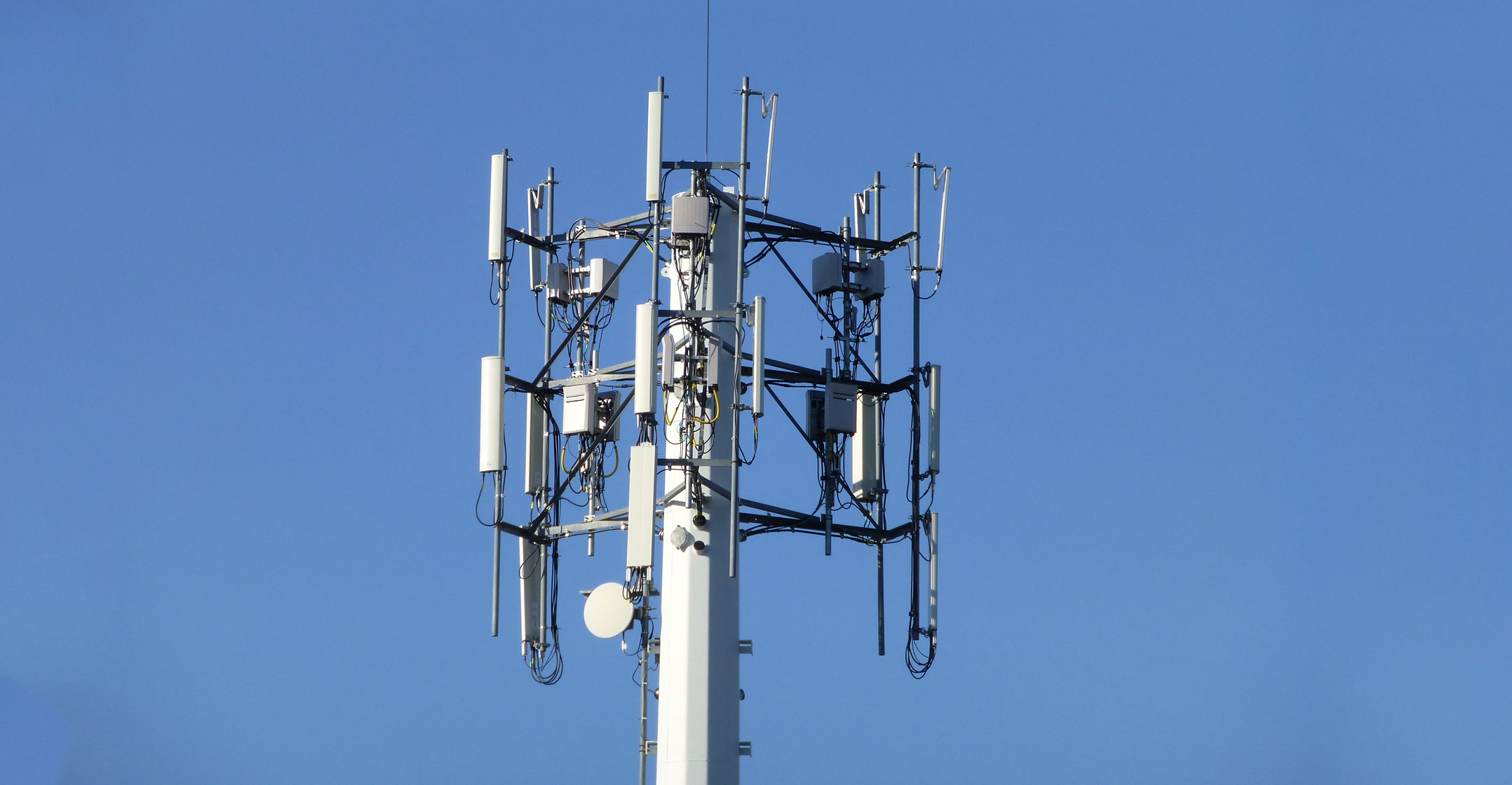
    Because the frequency is higher, the wavelength is smaller (around one millimetre). Optimal antenna size is related to the wavelength. Small wavelengths mean more antennae can be used per mobile node than has been possible in the past which is the basis of Mimo.

    Another significant change for 5G will be to centralise much of the processing that in the past was carried out at the base stations. Dealing with the high density of devices and doing sophisticated processing requires a great deal of computing power. Rather than having each base station doing it, the raw data will be transmitted to a central location and be processed there.

    China’s Huawei has taken a leading role in the development of 5G. It has made substantial contributions to the standards development process and has been among the first to carry out substantial trials.

    Once it’s up and running, the main change for 5G users will be increased speed and reduced delay

    China is expected to be the largest global market for 5G with some predictions of more than 400 million connections by 2025.

    Once it’s up and running, the main change for 5G users will be increased speed and reduced delay.

    Plans are for peak data rates of around 20Gbit/s down to the receiver, and 10Gbit/s up to the base station. The delay (the time taken to get a packet from the mobile device to the base station) will for most users be less than four milliseconds.

    Fixed wireless setups are already operating in Europe that use technologies we know will be used in 5G.

    However, even though we know what technologies 5G will use, the detailed standards for mobile cellular networks are still to be formalised. Without them, companies cannot produce networking equipment and handsets.The Conversation

    Telecommunications companies need to find sites for the base stations, install the systems and upgrade their software. Consequently, we are still a few years off widespread deployment.

    • Written by Philip Branch, associate professor in telecommunications engineering, Swinburne University of Technology
    • This article was originally published on The Conversation


    Huawei Philip Branch top
    Subscribe to TechCentral Subscribe to TechCentral
    Share. Facebook Twitter LinkedIn WhatsApp Telegram Email Copy Link
    Previous ArticleSiyabonga Cwele fires Usaasa board
    Next Article Usaasa board members to fight ‘unlawful’ dismissal in court

    Related Posts

    China races to crack EUV as chip war with the West intensifies

    China races to crack EUV lithography as chip war with the West intensifies

    18 December 2025
    MTN Zambia launches world's first 4G cloud smartphone solution - Huawei

    MTN Zambia launches world’s first 4G cloud smartphone solution

    17 December 2025
    Huawei makes the season brighter with service offers that truly care

    Huawei makes the season brighter with service offers that truly care

    3 December 2025
    Company News
    Why trust is the real currency in modern media

    Why trust is the real currency in modern media

    6 January 2026
    Why banks and insurers need a single decisioning brain as pressures collide - SAS

    Why banks and insurers need a single decisioning brain as pressures collide

    29 December 2025
    First Technology Western Cape delivers the tools - and intelligence - behind modern business - Dell Technologies

    First Technology Western Cape delivers the tools – and intelligence – behind modern business

    29 December 2025
    Opinion
    ANC's attack on Solly Malatsi shows how BEE dogma trumps economic reality - Duncan McLeod

    ANC’s attack on Solly Malatsi shows how BEE dogma trumps economic reality

    14 December 2025
    Netflix, Warner Bros deal raises fresh headaches for MultiChoice - Duncan McLeod

    Netflix, Warner Bros deal raises fresh headaches for MultiChoice

    5 December 2025
    BIN scans, DDoS and the next cybercrime wave hitting South Africa's banks - Entersekt Gerhard Oosthuizen

    BIN scans, DDoS and the next cybercrime wave hitting South Africa’s banks

    3 December 2025

    Subscribe to Updates

    Get the best South African technology news and analysis delivered to your e-mail inbox every morning.

    Latest Posts
    Samsung forecasts record operating profit as AI demand sends memory chip prices sharply higher worldwide - TM Roh

    Samsung cashes in on AI data centre boom as memory prices soar

    8 January 2026
    South Africa's giant SKA telescope clears major technical hurdle

    South Africa’s giant SKA telescope clears major technical hurdle

    8 January 2026
    'The robot will see you now': OpenAI launches ChatGPT Health

    ‘The robot will see you now’: OpenAI launches ChatGPT Health

    8 January 2026
    Court ruling marks major turning point in driving licence card saga - Barbara Creecy

    Court ruling marks major turning point in driving licence card saga

    7 January 2026
    © 2009 - 2026 NewsCentral Media
    • Cookie policy (ZA)
    • TechCentral – privacy and Popia

    Type above and press Enter to search. Press Esc to cancel.

    Manage consent

    TechCentral uses cookies to enhance its offerings. Consenting to these technologies allows us to serve you better. Not consenting or withdrawing consent may adversely affect certain features and functions of the website.

    Functional Always active
    The technical storage or access is strictly necessary for the legitimate purpose of enabling the use of a specific service explicitly requested by the subscriber or user, or for the sole purpose of carrying out the transmission of a communication over an electronic communications network.
    Preferences
    The technical storage or access is necessary for the legitimate purpose of storing preferences that are not requested by the subscriber or user.
    Statistics
    The technical storage or access that is used exclusively for statistical purposes. The technical storage or access that is used exclusively for anonymous statistical purposes. Without a subpoena, voluntary compliance on the part of your Internet Service Provider, or additional records from a third party, information stored or retrieved for this purpose alone cannot usually be used to identify you.
    Marketing
    The technical storage or access is required to create user profiles to send advertising, or to track the user on a website or across several websites for similar marketing purposes.
    • Manage options
    • Manage services
    • Manage {vendor_count} vendors
    • Read more about these purposes
    View preferences
    • {title}
    • {title}
    • {title}