Close Menu
TechCentralTechCentral

    Subscribe to the newsletter

    Get the best South African technology news and analysis delivered to your e-mail inbox every morning.

    Facebook X (Twitter) YouTube LinkedIn
    WhatsApp Facebook X (Twitter) LinkedIn YouTube
    TechCentralTechCentral
    • News
      GSMA tells Africa to copy South Africa on devices

      GSMA tells Africa to copy South Africa on devices

      17 June 2026
      The web belongs to the machines now 

      The web belongs to the machines now 

      17 June 2026
      AI will leave the world short of workers, says Jeff Bezos

      AI will leave the world short of workers, says Jeff Bezos

      17 June 2026
      Good news for South Africa's economy

      Good news for South Africa’s economy

      17 June 2026
      The US just showed it can switch off our AI - Donald Trump

      The US just showed it can switch off our AI

      17 June 2026
    • World
      Google on the hook for what its AI tells users, court rules

      Google on the hook for what its AI tells users, court rules

      15 June 2026
      Amazon CEO flagged Anthropic AI risks to Washington - Andy Jassy

      Amazon CEO flagged Anthropic AI risks to Washington

      14 June 2026
      Trouble at Xbox

      Trouble at Xbox

      11 June 2026
      Meta declares war on Israeli spyware firm

      Meta declares war on Israeli spyware firm

      8 June 2026
      Meta takes on OpenAI and Anthropic in enterprise AI

      Meta takes on OpenAI and Anthropic in enterprise AI

      4 June 2026
    • In-depth
      AI boom sparks rally, frenzy and fear

      AI boom sparks rally, frenzy and fear

      11 June 2026
      Every plug-in hybrid on sale in South Africa, ranked by price - Lamborghini Temerario

      Every plug-in hybrid on sale in South Africa, ranked by price

      7 June 2026
      What Wi-Fi 8 will mean for wireless networks

      What Wi-Fi 8 will mean for wireless networks

      1 June 2026
      Alfa's electric rebel - Alfa Romeo Junior Elettrica Veloce

      Alfa’s electric rebel

      29 April 2026
      Africa switches on as Europe dims the lights

      Africa switches on as Europe dims the lights

      9 April 2026
    • TCS
      Watts & Wheels S1E6: 'A flawless Alfa and a bakkie that divides'

      Watts & Wheels S1E6: ‘A flawless Alfa and a bakkie that divides’

      17 June 2026
      Watts & Wheels S1E6: 'A flawless Alfa and a bakkie that divides'

      Watts & Wheels S1E5: ‘A Bentley of the bush and a car that swims’

      8 June 2026
      TCS | Charge's R1.8-billion bet on an off-grid EV future - Charge chairman Joubert Roux

      TCS | Charge’s R1.8-billion bet on an off-grid EV future

      18 May 2026
      TCS+ | The Up&Up Group on the hidden cost of AI - Jason Harrison

      TCS+ | The Up&Up Group on the hidden cost of AI

      13 May 2026
      Michael Rossouw

      TCS+ | The retirement decision most South Africans get wrong

      6 May 2026
    • Opinion
      The clock is ticking on South African banks' biggest advantage - Pambos Soteriades

      The clock is ticking on South African banks’ biggest advantage

      9 June 2026

      Clashing judgments leave South Africa’s crypto law unsettled

      2 June 2026
      The clock is ticking on South African banks' biggest advantage - Pambos Soteriades

      The trap inside South Africa’s banking MVNO boom

      1 June 2026
      The hidden cost of social media age bans is everyone's privacy - Petrus Potgieter

      The hidden cost of social media age bans is everyone’s privacy

      29 May 2026
      Treasury's crypto crackdown is a betrayal of Mandela's promise - Duncan McLeod

      Treasury’s crypto crackdown is a betrayal of Mandela’s promise

      22 May 2026
    • Company Hubs
      • 1Stream
      • Africa Data Centres
      • AfriGIS
      • Altron Digital Business
      • Altron Document Solutions
      • Altron Group
      • Arctic Wolf
      • Ascent Technology
      • AvertITD
      • BBD
      • Braintree
      • CallMiner
      • CambriLearn
      • CM Telecom
      • Contactable
      • CYBER1 Solutions
      • Digicloud Africa
      • Digimune
      • Domains.co.za
      • ESET
      • Euphoria Telecom
      • HOSTAFRICA
      • Incredible Business
      • iONLINE
      • IQbusiness
      • Iris Network Systems
      • Kaspersky
      • LSD Open
      • Mitel
      • NEC XON
      • Netstar
      • Network Platforms
      • Next DLP
      • Ovations
      • Paracon
      • Paratus
      • Q-KON
      • SevenC
      • SkyWire
      • Solid8 Technologies
      • Telit Cinterion
      • Telviva
      • Tenable
      • Vertiv
      • Videri Digital
      • Vodacom Business
      • Wipro
      • Workday
      • XLink
    • Sections
      • AI and machine learning
      • Banking
      • Broadcasting and Media
      • Cloud services
      • Contact centres and CX
      • Cryptocurrencies
      • Education and skills
      • Electronics and hardware
      • Energy and sustainability
      • Enterprise software
      • Financial services
      • HealthTech
      • Information security
      • Internet and connectivity
      • Internet of Things
      • Investment
      • IT services
      • Lifestyle
      • Motoring
      • Policy and regulation
      • Public sector
      • Retail and e-commerce
      • Satellite communications
      • Science
      • SMEs and start-ups
      • Social media
      • Talent and leadership
      • Telecoms
    • Events
    • Advertise
    TechCentralTechCentral
    Home » In-depth » Why 5G is so very different to previous technologies

    Why 5G is so very different to previous technologies

    By The Conversation1 September 2018
    Twitter LinkedIn Facebook WhatsApp Email Telegram Copy Link
    News Alerts
    WhatsApp

    Fifth-generation mobile networks will have the same high-level architecture as previous cellular networks, but the intricate details are very different.

    In very simple terms, a cellular mobile network consists of three components: mobile devices, a radio access network and a core network.

    The mobile device might be a smartphone, tablet or a computer with a USB dongle, but could also be a low-cost sensor with a simple transmitter.

    The radio access network consists mainly of base stations (mobile phone towers), and is connected to the core network. The base station uses radio waves to relay communications between the mobile device and the core network. The area covered by a base station is called a cell.

    Many of the changes introduced by 5G will be in the base stations and core network. These are less apparent to end users, but very important for operators

    The core network’s main role is to set up communication with other devices and other networks, user management and record information for billing.

    Each generation of cellular networking has introduced radical changes to what the network does and how it does it.

    Previous generations have seen communications moving from analogue to digital, have introduced data services, have moved to a simplified architecture, have increased the data speed available to end users and increased bandwidth efficiency.

    Many of the changes introduced by 5G will be in the base stations and core network. These are less apparent to end users, but very important for the network operators.

    5G will make use of much higher frequencies for radio communications than has been used in cellular networks in the past.

    Since higher frequencies attenuate (weaken) with distance more rapidly than lower frequencies, 5G will use much smaller cell sizes than previous generations. In urban areas, cell sizes might only be a few hundred metres in diameter.

    Additional complexity

    Small cell sizes make available previously unused radio frequencies — but introduce additional complexity in managing interference and handover of mobile stations from one base station to another.

    5G will also support very large numbers of devices per cell. One of the working parties developing 5G standards specifies a minimum of one million devices per square kilometre.

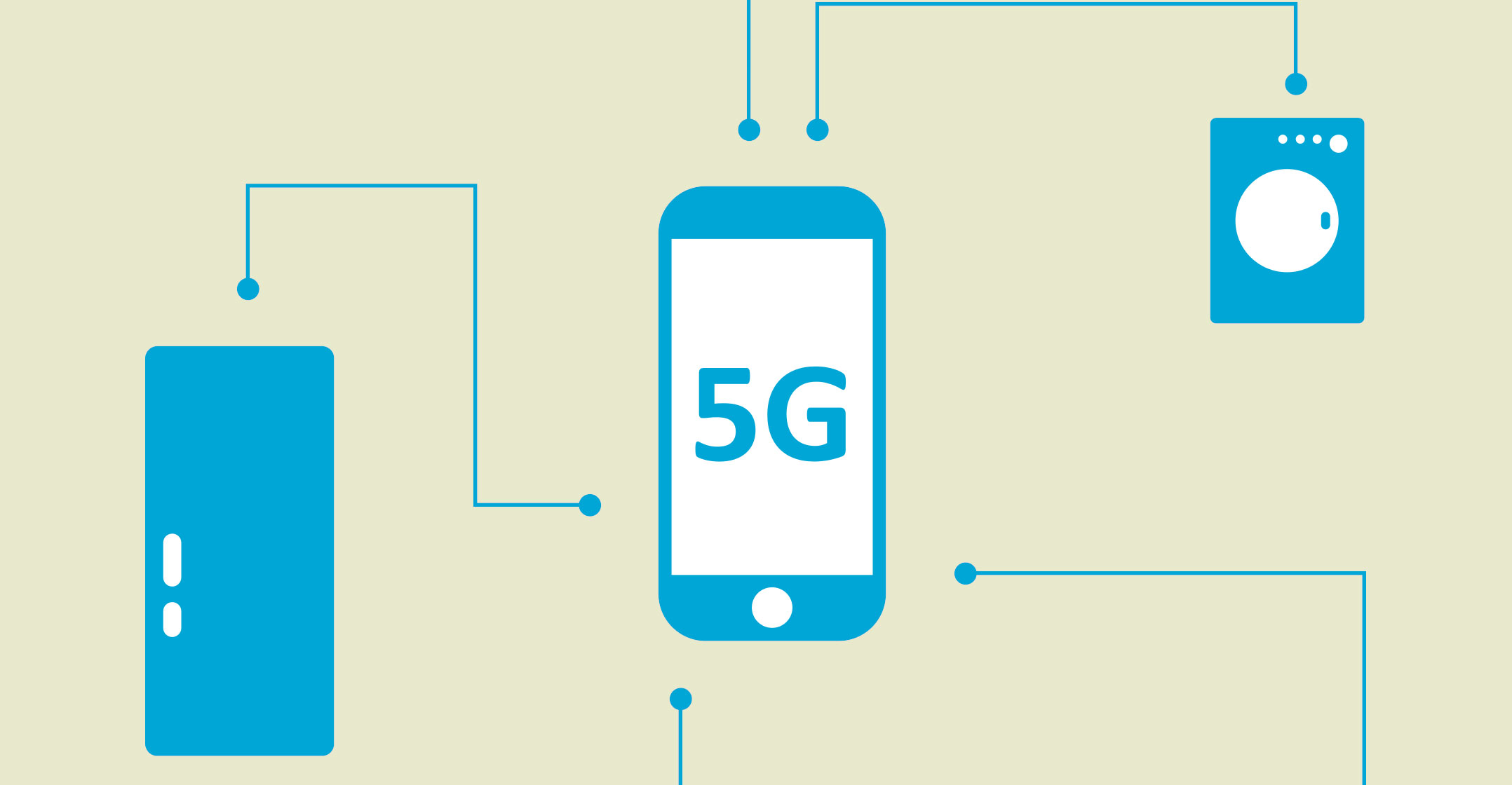
    Being able to support such large numbers of devices is important for the “Internet of things” — where household devices and machinery are also connected to the Internet.

    5G will make use of sophisticated signal processing techniques such as Multi Input, Multi Output (Mimo) antennae, which will improve the efficient use of bandwidth.
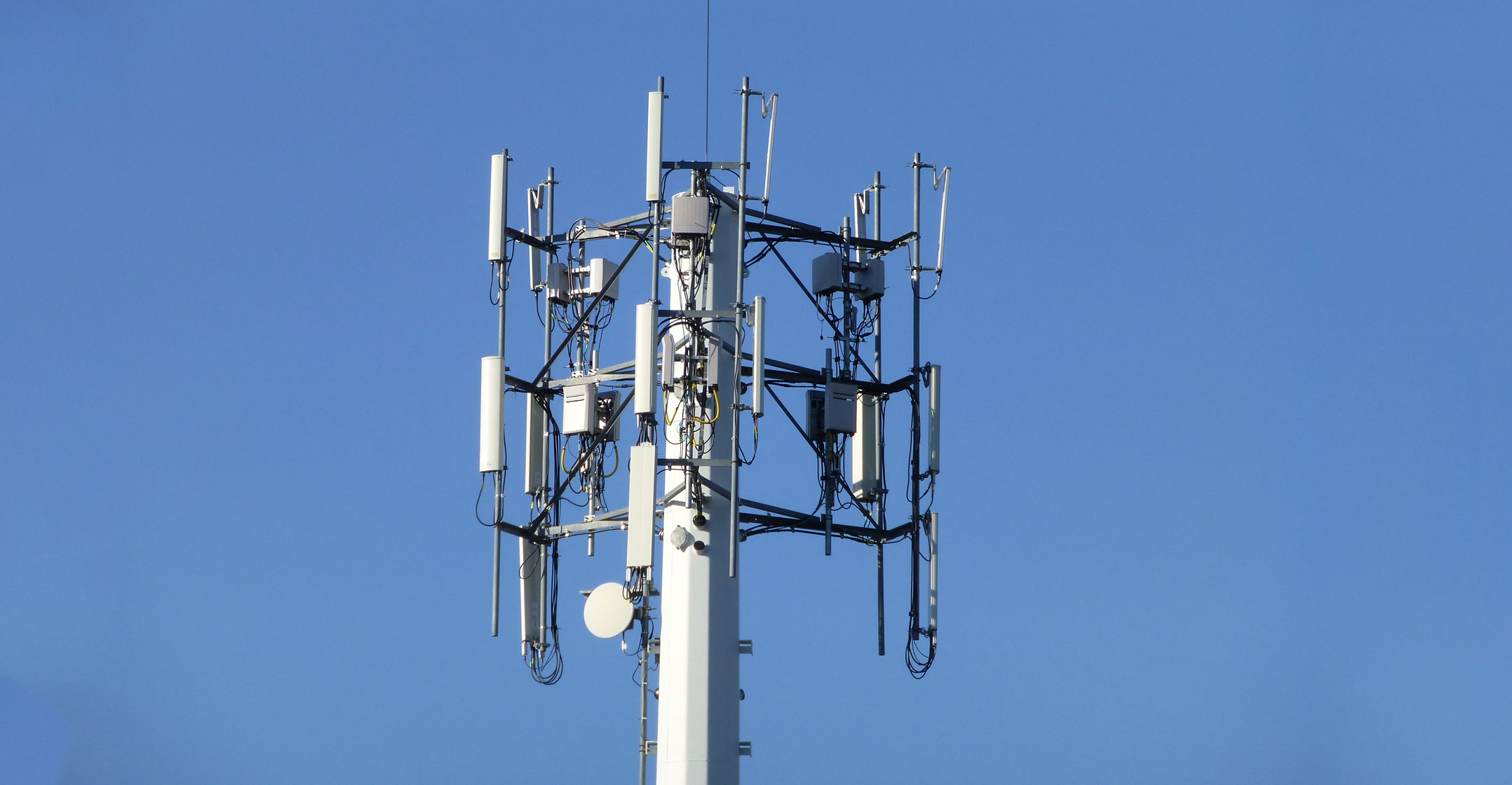
    Because the frequency is higher, the wavelength is smaller (around one millimetre). Optimal antenna size is related to the wavelength. Small wavelengths mean more antennae can be used per mobile node than has been possible in the past which is the basis of Mimo.

    Another significant change for 5G will be to centralise much of the processing that in the past was carried out at the base stations. Dealing with the high density of devices and doing sophisticated processing requires a great deal of computing power. Rather than having each base station doing it, the raw data will be transmitted to a central location and be processed there.

    China’s Huawei has taken a leading role in the development of 5G. It has made substantial contributions to the standards development process and has been among the first to carry out substantial trials.

    Once it’s up and running, the main change for 5G users will be increased speed and reduced delay

    China is expected to be the largest global market for 5G with some predictions of more than 400 million connections by 2025.

    Once it’s up and running, the main change for 5G users will be increased speed and reduced delay.

    Plans are for peak data rates of around 20Gbit/s down to the receiver, and 10Gbit/s up to the base station. The delay (the time taken to get a packet from the mobile device to the base station) will for most users be less than four milliseconds.

    Fixed wireless setups are already operating in Europe that use technologies we know will be used in 5G.

    However, even though we know what technologies 5G will use, the detailed standards for mobile cellular networks are still to be formalised. Without them, companies cannot produce networking equipment and handsets.The Conversation

    Telecommunications companies need to find sites for the base stations, install the systems and upgrade their software. Consequently, we are still a few years off widespread deployment.

    • Written by Philip Branch, associate professor in telecommunications engineering, Swinburne University of Technology
    • This article was originally published on The Conversation

    Follow TechCentral on Google News Add TechCentral as your preferred source on Google


    Huawei Philip Branch top
    WhatsApp YouTube
    Share. Facebook Twitter LinkedIn WhatsApp Telegram Email Copy Link
    Previous ArticleSiyabonga Cwele fires Usaasa board
    Next Article Usaasa board members to fight ‘unlawful’ dismissal in court

    Related Posts

    Huawei claims chip design breakthrough

    Huawei claims chip design breakthrough

    25 May 2026
    How African enterprises can leapfrog the AI infrastructure trap - Huawei Cloud

    How African enterprises can leapfrog the AI infrastructure trap

    22 May 2026
    DeepSeek's long-awaited V4 model enters preview

    DeepSeek’s long-awaited V4 model enters preview

    24 April 2026
    Company News
    The new reality of enterprise security: scaling resilience amid complexity - Kaspersky

    The new reality of enterprise security: scaling resilience amid complexity

    17 June 2026
    Olarm built SA's smart alarm - now it's building the alarm itself

    Olarm built SA’s smart alarm – now it’s building the alarm itself

    17 June 2026
    When jammers kill the signal, AI goes blind too - Rory Atkinson Orange Logistics Sigfox South Africa

    When jammers kill the signal, AI goes blind too

    12 June 2026
    Opinion
    The clock is ticking on South African banks' biggest advantage - Pambos Soteriades

    The clock is ticking on South African banks’ biggest advantage

    9 June 2026

    Clashing judgments leave South Africa’s crypto law unsettled

    2 June 2026
    The clock is ticking on South African banks' biggest advantage - Pambos Soteriades

    The trap inside South Africa’s banking MVNO boom

    1 June 2026

    Subscribe to Updates

    Get the best South African technology news and analysis delivered to your e-mail inbox every morning.

    Latest Posts
    GSMA tells Africa to copy South Africa on devices

    GSMA tells Africa to copy South Africa on devices

    17 June 2026
    Watts & Wheels S1E6: 'A flawless Alfa and a bakkie that divides'

    Watts & Wheels S1E6: ‘A flawless Alfa and a bakkie that divides’

    17 June 2026
    The web belongs to the machines now 

    The web belongs to the machines now 

    17 June 2026
    AI will leave the world short of workers, says Jeff Bezos

    AI will leave the world short of workers, says Jeff Bezos

    17 June 2026
    © 2009 - 2026 NewsCentral Media
    • Cookie policy (ZA)
    • TechCentral – privacy and Popia

    Type above and press Enter to search. Press Esc to cancel.

    Manage consent

    TechCentral uses cookies to enhance its offerings. Consenting to these technologies allows us to serve you better. Not consenting or withdrawing consent may adversely affect certain features and functions of the website.

    Functional Always active
    The technical storage or access is strictly necessary for the legitimate purpose of enabling the use of a specific service explicitly requested by the subscriber or user, or for the sole purpose of carrying out the transmission of a communication over an electronic communications network.
    Preferences
    The technical storage or access is necessary for the legitimate purpose of storing preferences that are not requested by the subscriber or user.
    Statistics
    The technical storage or access that is used exclusively for statistical purposes. The technical storage or access that is used exclusively for anonymous statistical purposes. Without a subpoena, voluntary compliance on the part of your Internet Service Provider, or additional records from a third party, information stored or retrieved for this purpose alone cannot usually be used to identify you.
    Marketing
    The technical storage or access is required to create user profiles to send advertising, or to track the user on a website or across several websites for similar marketing purposes.
    • Manage options
    • Manage services
    • Manage {vendor_count} vendors
    • Read more about these purposes
    View preferences
    • {title}
    • {title}
    • {title}