Close Menu
TechCentralTechCentral

    Subscribe to the newsletter

    Get the best South African technology news and analysis delivered to your e-mail inbox every morning.

    Facebook X (Twitter) YouTube LinkedIn
    WhatsApp Facebook X (Twitter) LinkedIn YouTube
    TechCentralTechCentral
    • News
      Solly Malatsi stakes South Africa's AI future on staying neutral

      Solly Malatsi stakes South Africa’s AI future on staying neutral

      5 August 2026
      Netcare bets on AI to catch deterioration doctors cannot see - Prof Reitze Rodseth

      Netcare bets on AI to catch deterioration doctors cannot see

      5 August 2026
      Icasa promises business as usual through strike

      Icasa promises business as usual through strike

      5 August 2026
      JSE triples software spend in push for digital marketplace - Valdene Reddy

      JSE triples software spend in push for digital marketplace

      5 August 2026
      Starlink wants to be your next mobile operator

      Starlink wants to be your next mobile operator

      5 August 2026
    • World
      Meta AI will now tell parents if their teen is in crisis

      Meta AI will now tell parents if their teen is in crisis

      17 July 2026
      IBM shares crash 25% as AI upends software spending - Arvind Krishna

      IBM shares crash 25% as AI upends software spending

      15 July 2026
      Jony Ive's first OpenAI device: an AI smart speaker - Jony Ive and Sam Altman

      Jony Ive’s first OpenAI device: an AI smart speaker

      15 July 2026
      Stripe, Advent in talks to buy PayPal for $53-billion

      Stripe, Advent in talks to buy PayPal for $53-billion

      15 July 2026
      Memory crisis sends smartphone market into steep decline

      Memory crisis sends smartphone market into steep decline

      13 July 2026
    • In-depth
      The plan to stop AI from breaking the world - Google DeepMind CEO Demis Hassabis. Image: John Sears

      The plan to stop AI from breaking the world

      16 July 2026
      The internet has a Strait of Hormuz problem

      The internet has a Strait of Hormuz problem

      15 July 2026
      AI boom sparks rally, frenzy and fear

      AI boom sparks rally, frenzy and fear

      11 June 2026
      Every plug-in hybrid on sale in South Africa, ranked by price - Lamborghini Temerario

      Every plug-in hybrid on sale in South Africa, ranked by price

      7 June 2026
      What Wi-Fi 8 will mean for wireless networks

      What Wi-Fi 8 will mean for wireless networks

      1 June 2026
    • TCS
      TCS+ | Why South African workers must become supervisors of digital labour - Accelera Digital Group Cliff de Wit

      TCS+ | Why South African workers must become supervisors of digital labour

      31 July 2026
      TCS | Rapid deployment rules can't work without municipalities: ACT - Nomvuyiso Batyi

      TCS | Icasa’s rules skip the real bottleneck: ACT

      30 July 2026
      TCS+ | iStore Business on why Apple makes sense for SMEs - Sudesh Pillay and Tamia Nontsikelelo

      TCS+ | iStore Business on why Apple makes sense for SMEs

      30 July 2026
      TCS+ | A smarter approach to cloud for South African businesses - Joel Chacko and Jonathan Oaker

      TCS+ | A smarter approach to cloud for South African businesses

      28 July 2026
      TCS | How Optasia lends billions to people banks can't see - Salvador Anglada

      TCS | How Optasia lends billions to people banks can’t see

      23 July 2026
    • Opinion
      The author, Jannie van Zyl

      Selling vapour is corporate suicide in slow motion

      16 July 2026
      Brazil's online gambling crackdown is a lesson for South Africa

      How Amazon outmanoeuvred Starlink in South Africa

      15 July 2026
      The Popia problem with agentic AI - Herman Haasbroek

      The Popia problem with agentic AI

      14 July 2026
      The author, Fanie van Rooyen

      South Africa can still catch the AI wave – here’s how

      7 July 2026
      The author, Fanie van Rooyen

      The AI utopia South Africa can’t afford

      1 July 2026
    • Company Hubs
      • 1Stream
      • Africa Data Centres
      • AfriGIS
      • Altron Digital Business
      • Altron Document Solutions
      • Altron Group
      • Arctic Wolf
      • Ascent Technology
      • AvertITD
      • BBD
      • Braintree
      • CallMiner
      • CambriLearn
      • CM Telecom
      • Contactable
      • CYBER1 Solutions
      • Digicloud Africa
      • Digimune
      • Domains.co.za
      • ESET
      • Euphoria Telecom
      • HOSTAFRICA
      • Incredible Business
      • iONLINE
      • IQbusiness
      • Iris Network Systems
      • Kaspersky
      • LSD Open
      • Mitel
      • NEC XON
      • Netstar
      • Network Platforms
      • Next DLP
      • Ovations
      • Paracon
      • Paratus
      • Q-KON
      • SevenC
      • SkyWire
      • Solid8 Technologies
      • Telit Cinterion
      • Telviva
      • Tenable
      • Vertiv
      • Videri Digital
      • Vodacom Business
      • Vox
      • Wipro
      • Workday
      • XLink
    • Sections
      • AI and machine learning
      • Banking
      • Broadcasting and Media
      • Cloud services
      • Contact centres and CX
      • Cryptocurrencies
      • Education and skills
      • Electronics and hardware
      • Energy and sustainability
      • Enterprise software
      • Financial services
      • HealthTech
      • Information security
      • Internet and connectivity
      • Internet of Things
      • Investment
      • IT services
      • Lifestyle
      • Policy and regulation
      • Public sector
      • Retail and e-commerce
      • Satellite communications
      • Science
      • SMEs and start-ups
      • Social media
      • Talent and leadership
      • Telecoms
      • Watts & Wheels
    • Events
    • Advertise
    TechCentralTechCentral
    Home » Sections » Policy and regulation » Solly Malatsi stakes South Africa’s AI future on staying neutral

    Solly Malatsi stakes South Africa’s AI future on staying neutral

    Exclusive | The communications minister has rejected the idea that South Africa must align with Washington or Beijing.
    By Fanie van Rooyen5 August 2026
    Twitter LinkedIn Facebook WhatsApp Email Telegram Copy Link
    News Alerts
    WhatsApp
    Solly Malatsi stakes South Africa's AI future on staying neutral
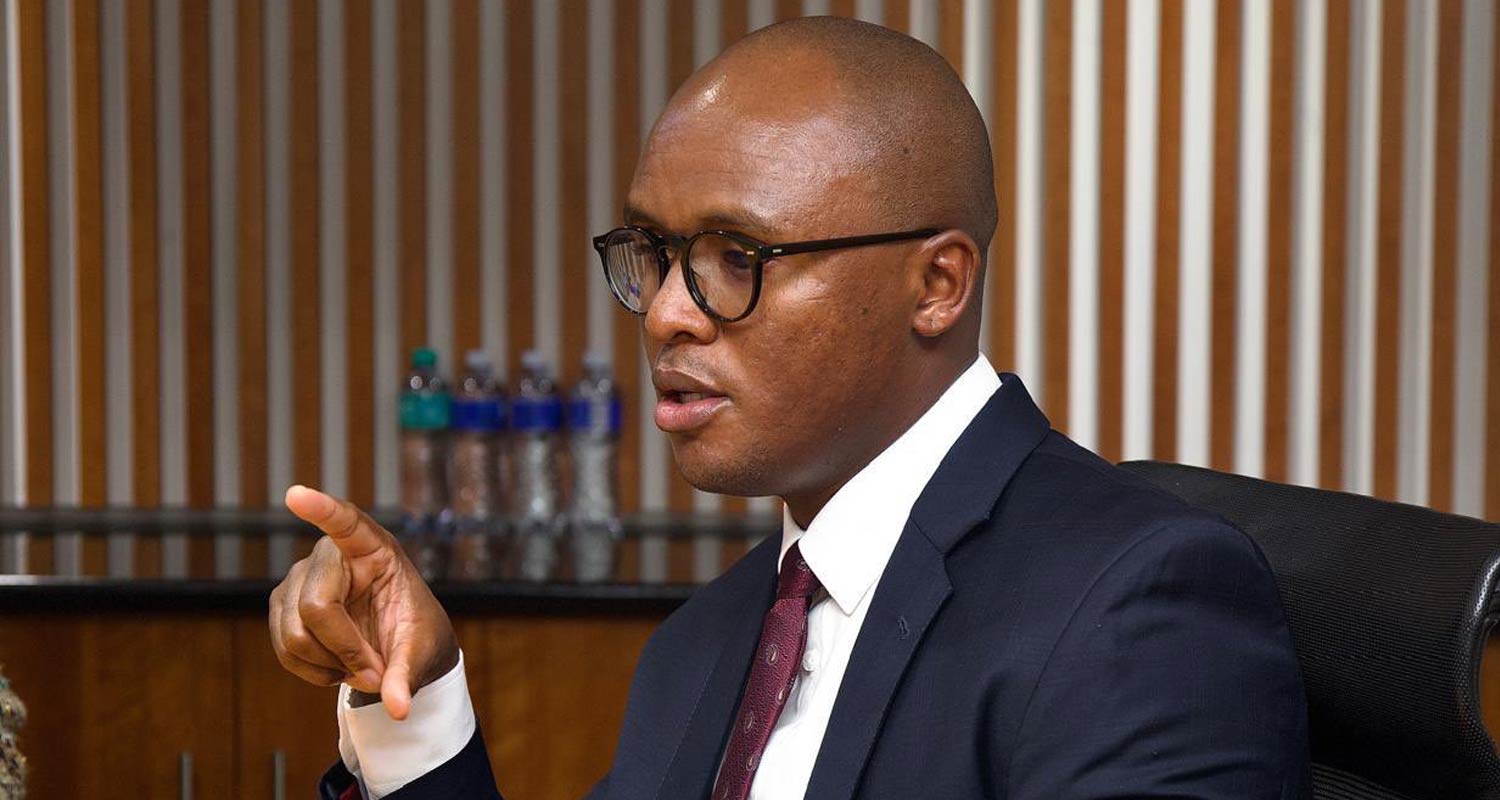
    Solly Malatsi. Image: DCDT

    South Africa will not align itself with either Washington or Beijing in AI, communications minister Solly Malatsi has told TechCentral, rejecting the central premise of a new Boston Consulting Group study that argues the window for countries to hedge between the two AI superpowers is closing.

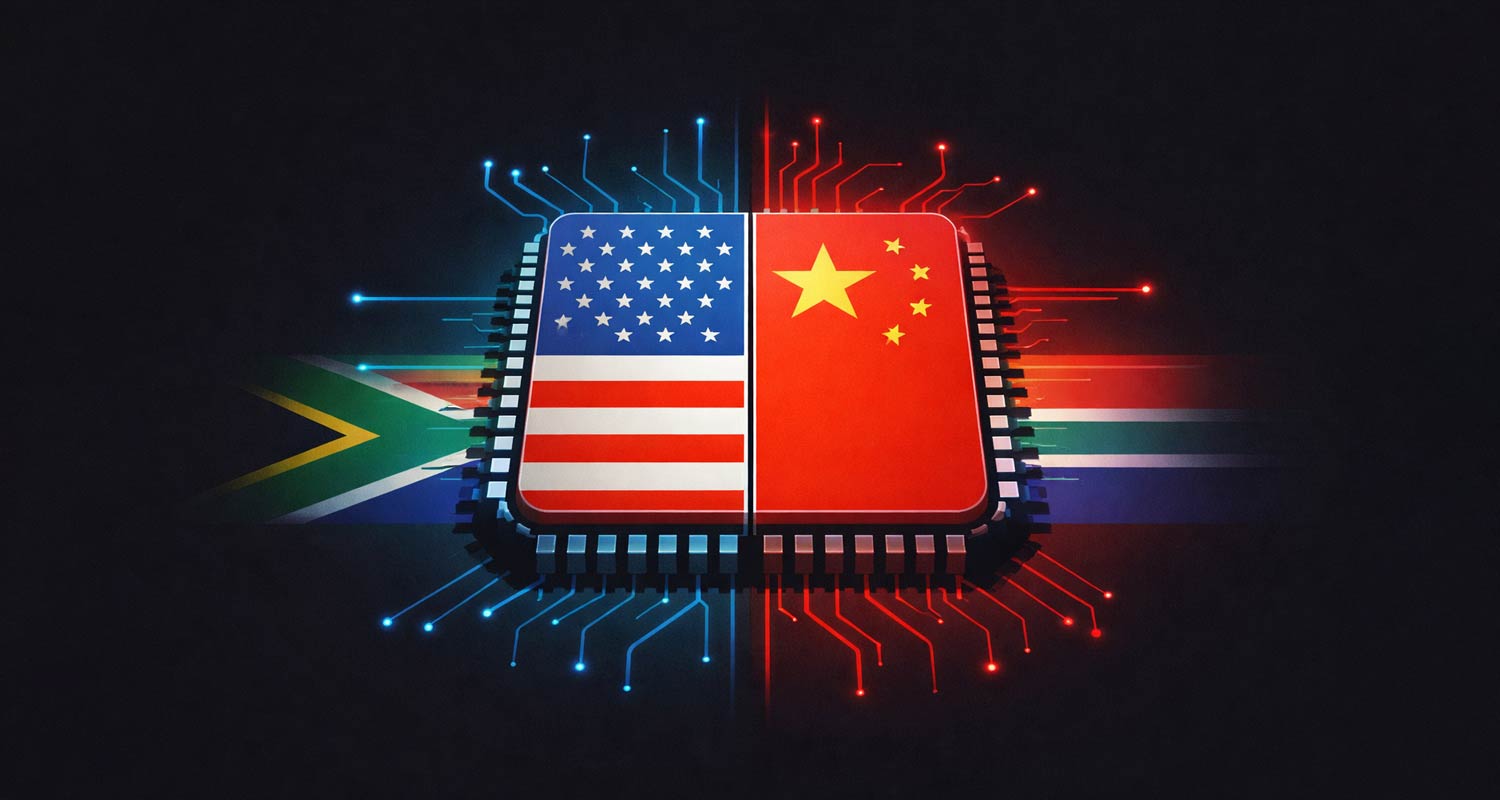
    The Great Divide: How the US and China Are Splitting the AI World, published on 30 June, found that the two countries are no longer building rival products inside one market but separate and increasingly incompatible technology stacks, running from chips through cloud and models to applications. Where BCG’s 2024 assessment found that countries could still mix and match across both, it now warns that “the two ecosystems have diverged to the point where neutrality may soon become harder to sustain”.

    South Africa is not named in the report. But nearly every condition BCG identifies as pushing a middle-income country towards one stack or the other is present here, and the country will not have a published national AI policy before next year.

    South Africa’s membership … carries no binding commitment on technology standards or procurement

    Asked by TechCentral whether South Africa’s membership of the China-led World Artificial Intelligence Cooperation Organisation (Waico) carries any commitment on technology standards or procurement, Malatsi was unequivocal in his reply.

    “South Africa’s membership, like its participation in any multilateral AI or technology body, carries no binding commitment on technology standards or procurement,” he said in a written response to questions. “South Africa engages with all such organisations, whether led by the US, China, the EU, or any other bloc, on the same basis: to share knowledge and advance global cooperation, not to align our state technology choices with any single geopolitical camp.”

    State buying, he said, remains governed by existing procurement law and practice, “including value-for-money, interoperability, security and fit-for-purpose assessments”, with an approach that “has consistently emphasised open standards, interoperability and avoiding vendor lock-in, principles that apply regardless of a vendor’s country of origin”.

    ‘Not choosing sides’

    “To be clear: no membership of Waico, or of any comparable body aligned with any other country, will ever determine South Africa’s procurement decisions based on the nationality of an OEM or service provider,” Malatsi said. “South Africa is not choosing sides in the divide the referenced report describes. We intend to remain able to work with the best available technology, wherever it is developed.”

    He did not answer a second question on whether the redrafted national AI policy will include guidance on the acquisition of AI hardware and software stacks.

    Read: China weighs blocking the West from its best AI

    South Africa has signed the agreement establishing Waico, acting deputy director-general Jeanette Morwane told TechCentral last week. The body, proposed by Chinese President Xi Jinping and established in Shanghai in July, will “focus on creating native AI innovations and tools, rather than just using tools from other countries”, she said.

    Both ecosystems are selling hard into South Africa. Huawei has spent 2026 pitching an integrated AI offering to government and enterprise buyers, most recently at its Connect event in July, and its cloud platform offers DeepSeek models to African developers. DeepSeek’s V4, released in April, was built to run on Huawei’s Ascend silicon.
    China USA South Africa AI

    The American side is further along. Microsoft has committed R5.4-billion to AI and cloud infrastructure here, on top of more than R20-billion already spent. Amazon Web Services, Google and Oracle all run local cloud regions. Altron’s Nvidia-powered AI factory is live, and Cassava Technologies is building its own.

    The lock-in is technical as well as political. Code written for Nvidia’s Cuda software cannot simply be moved onto Huawei’s Ascend chips, BCG noted in its report, because most production AI code would need rewriting for Huawei’s Cann environment.

    Arguably the biggest test of the minister’s position is one South Africa — and other countries around the world — have already lived through: Anthropic released Claude Fable 5 and Claude Mythos 5 on 9 June, the first models in a tier it says exceeds its Opus line. Fable 5 was the general release, carrying safeguards; Mythos 5, with fewer, went only to a small group of partners in the company’s Project Glasswing for defensive cybersecurity work. Three days later both were gone.

    The controls were lifted on 30 June and Fable 5 returned globally on 1 July, an outage of about three weeks

    On 12 June, after Amazon researchers found a way to prompt Fable 5 into identifying software vulnerabilities, the US commerce department directed Anthropic to suspend all access by any foreign national, inside or outside the US. Because the order took effect immediately and the company had no way to verify nationality in real time, it withdrew both models from every user worldwide. South African users lost access overnight.

    The controls were lifted on 30 June and Fable 5 returned globally on 1 July, an outage of about three weeks. BCG read the episode as evidence that “national security concerns may in some instances take precedence over the global diffusion of the most capable AI models”. The decision was taken in Washington and reversed there, not by any buyer in Pretoria applying value-for-money and fit-for-purpose tests.

    Policy vacuum

    South Africa is making these choices without a policy to guide them. The draft national AI policy was withdrawn in April over fictitious references, an expert panel chaired by Wits AI researcher Benjamin Rosman is rebuilding it, and Morwane has signalled the redraft will be light-touch, providing national guidelines and leaving sectors to write their own strategies. She has put the redraft at cabinet in November, with January 2027 as the fallback.

    TechCentral has previously reported that the withdrawn draft left South Africa too dependent on both superpowers. Malatsi’s answer is that dependency is a false choice, and that open standards and vendor neutrality are enough to keep the country’s options open.

    Read: South Africa’s AI policy collapse shows up in World Bank report

    The World Bank’s World Development Report 2026 agrees that is the right instinct, recommending that developing economies make “interoperability a feature instead of aiming for sovereignty”. Where it goes further is on what the instinct requires: interoperability is something a country has to specify and enforce, not something it gets by declining to choose.

    BCG’s warning is that the options themselves are being foreclosed. “The walls between the US and Chinese AI technology stacks are going up faster than most companies are reorganising around them,” it said.  — © 2026 NewsCentral Media

    • Subscribe to TechCentral’s daily newsletter
    • Get breaking news alerts on WhatsApp

    Follow TechCentral on Google News Add TechCentral as your preferred source on Google


    Anthropic Benjamin Rosman Boston Consulting Group DeepSeek Huawei Jeanette Morwane Microsoft Nvidia Solly Malatsi Waico World Bank
    WhatsApp YouTube
    Share. Facebook Twitter LinkedIn WhatsApp Telegram Email Copy Link
    Previous ArticleSouth Africa agrees on a shared language for location

    Related Posts

    Starlink wants to be your next mobile operator

    Starlink wants to be your next mobile operator

    5 August 2026
    South Africa's AI policy collapse shows up in World Bank report

    South Africa’s AI policy collapse shows up in World Bank report

    4 August 2026
    SA experts split on whether the singularity has begun

    SA experts split on whether the singularity has begun

    3 August 2026
    Company News
    South Africa agrees on a shared language for location - AfriGIS

    South Africa agrees on a shared language for location

    5 August 2026
    IUX brings its trading platform to South Africa

    IUX brings its trading platform to South Africa

    5 August 2026
    Paratus Namibia takes resilient connectivity to Mining Expo 2026 - Cherica Levin and Christo van Wyk

    Paratus Namibia takes resilient connectivity to Mining Expo 2026

    5 August 2026
    Opinion
    The author, Jannie van Zyl

    Selling vapour is corporate suicide in slow motion

    16 July 2026
    Brazil's online gambling crackdown is a lesson for South Africa

    How Amazon outmanoeuvred Starlink in South Africa

    15 July 2026
    The Popia problem with agentic AI - Herman Haasbroek

    The Popia problem with agentic AI

    14 July 2026

    Subscribe to Updates

    Get the best South African technology news and analysis delivered to your e-mail inbox every morning.

    Latest Posts
    Solly Malatsi stakes South Africa's AI future on staying neutral

    Solly Malatsi stakes South Africa’s AI future on staying neutral

    5 August 2026
    South Africa agrees on a shared language for location - AfriGIS

    South Africa agrees on a shared language for location

    5 August 2026
    IUX brings its trading platform to South Africa

    IUX brings its trading platform to South Africa

    5 August 2026
    Netcare bets on AI to catch deterioration doctors cannot see - Prof Reitze Rodseth

    Netcare bets on AI to catch deterioration doctors cannot see

    5 August 2026
    © 2009 - 2026 NewsCentral Media
    Built and maintained by Chronon
    • Cookie policy (ZA)
    • TechCentral – privacy and Popia

    Type above and press Enter to search. Press Esc to cancel.

    Manage consent

    TechCentral uses cookies to enhance its offerings. Consenting to these technologies allows us to serve you better. Not consenting or withdrawing consent may adversely affect certain features and functions of the website.

    Functional Always active
    The technical storage or access is strictly necessary for the legitimate purpose of enabling the use of a specific service explicitly requested by the subscriber or user, or for the sole purpose of carrying out the transmission of a communication over an electronic communications network.
    Preferences
    The technical storage or access is necessary for the legitimate purpose of storing preferences that are not requested by the subscriber or user.
    Statistics
    The technical storage or access that is used exclusively for statistical purposes. The technical storage or access that is used exclusively for anonymous statistical purposes. Without a subpoena, voluntary compliance on the part of your Internet Service Provider, or additional records from a third party, information stored or retrieved for this purpose alone cannot usually be used to identify you.
    Marketing
    The technical storage or access is required to create user profiles to send advertising, or to track the user on a website or across several websites for similar marketing purposes.
    • Manage options
    • Manage services
    • Manage {vendor_count} vendors
    • Read more about these purposes
    View preferences
    • {title}
    • {title}
    • {title}