When China’s leadership unveiled its previous five-year plan in 2021, it pledged to pour money into chips, AI and 5G in a bid to catch up with the US. Five years on, the 15th five-year plan (2026-2030), adopted by the National People’s Congress in March, signals a different posture. The race to make more chips is no longer the headline. Now it’s about deployment: pushing AI and automation into the real economy at scale, and then exporting the whole package abroad.
For a country that South Africa counts among its closest economic partners, the document is worth reading closely. It is, in the words of the plan’s own digital chapter (in translation), a drive to “fully implement the ‘AI Plus’ initiative … seize the commanding heights of AI industrial application, and empower thousands of industries across the board”.
The most-watched shift is what is missing. The 70% semiconductor self-sufficiency ambition associated with the old Made in China 2025 agenda has disappeared, replaced by metrics built around how deeply computing penetrates the economy rather than how many chips roll off domestic lines. Chips still matter: the plan calls for “extraordinary measures” to win “decisive breakthroughs in key core technologies” across integrated circuits, machine tools, high-end instruments and basic software. But the centre of gravity has moved to applications.
AI now runs through the document. One analysis counted the term more than 50 times, against six in the 2021 plan. The plan dedicates a full chapter to an “AI Plus” action programme, instructs planners to “explore pathways towards” artificial general intelligence and lists embodied intelligence, quantum technology, biomanufacturing, brain-computer interfaces and 6G as future industries that should “become new sources of economic growth”.
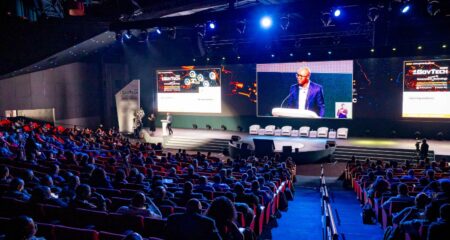
At the World Economic Forum’s Dalian meeting in June, Columbia University historian Adam Tooze captured the mood. “Here we are in 2026 discussing the 15th five-year plan of the People’s Republic of China, and that is not how many of us expected the 21st century to work out,” he said, adding that he could not recall a five-year plan watched as closely.
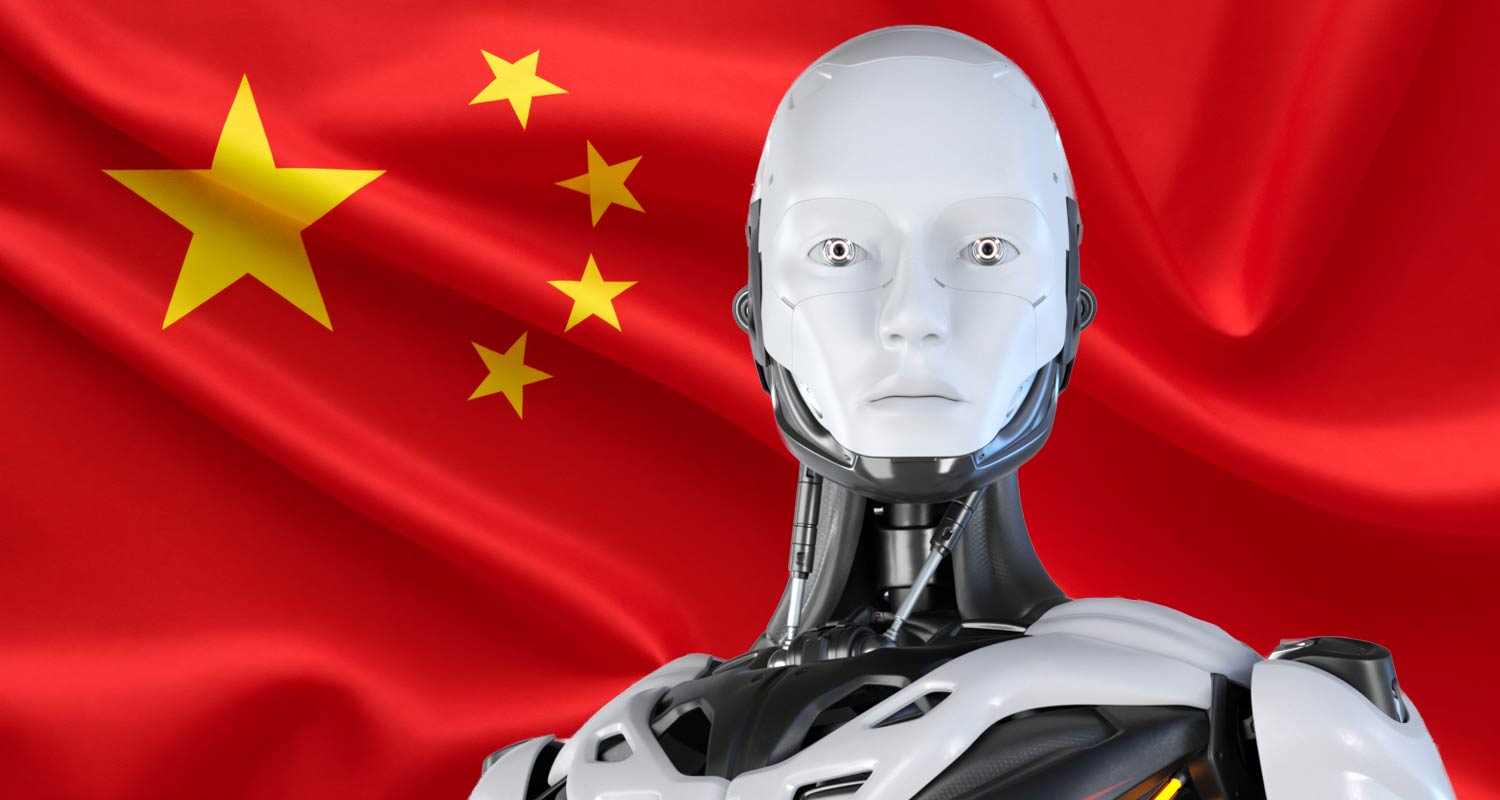
Robots – lots of them
The clearest break with the past is robotics. The plan designates robotics as a strategic emerging industry and embeds humanoid machines into its consumer and labour ambitions. It calls for the development of “AI phones and computers, intelligent robots, and other new-generation smart terminals”, and, more strikingly, for China to “explore new forms of human-machine collaborative work, and promote the application of embodied intelligence in labour-scarce and high-risk roles”.
The plan rests on an industrial base no other country can match. According to the International Federation of Robotics, China’s operational stock of industrial robots surpassed two million in 2024, driven by more than 295 000 new installations that year alone – around 54% of global demand. The federation says Beijing has now made AI-powered robots a core national strategy, backed by a reported C¥1-trillion (R2.4-trillion) state venture fund for AI, robotics and emerging technologies. Analysts expect humanoid commercialisation to arrive towards the end of the plan period rather than at its start, but the direction is set.
None of this works without electricity, and the plan treats energy as strategic infrastructure for the AI build-out. It commits China to “a multi-pronged approach combining wind, solar, hydro and nuclear power” and to “a 10-year action plan to double non-fossil energy”, alongside a “new-type power system” built on smart grids, large-scale transmission and new energy storage.
HiThium chairman Wu Zuyu, whose company makes battery storage systems, told the Dalian meeting that storage is moving “from policy-driven growth towards market-driven expansion”, with falling solar, wind and storage costs making green power steadily more competitive.
What it means for South Africa
The plan does not stop at China’s borders. Its AI chapter sets out a global ambition: to “promote the establishment of a World Artificial Intelligence Cooperation Organisation”, build “a Belt and Road AI multilateral cooperation platform and an international AI application cooperation centre”, and push countries to “jointly formulate regulatory frameworks, technical standards and ethical norms”. A later section commits China to “support Global South countries in strengthening AI capacity-building”.
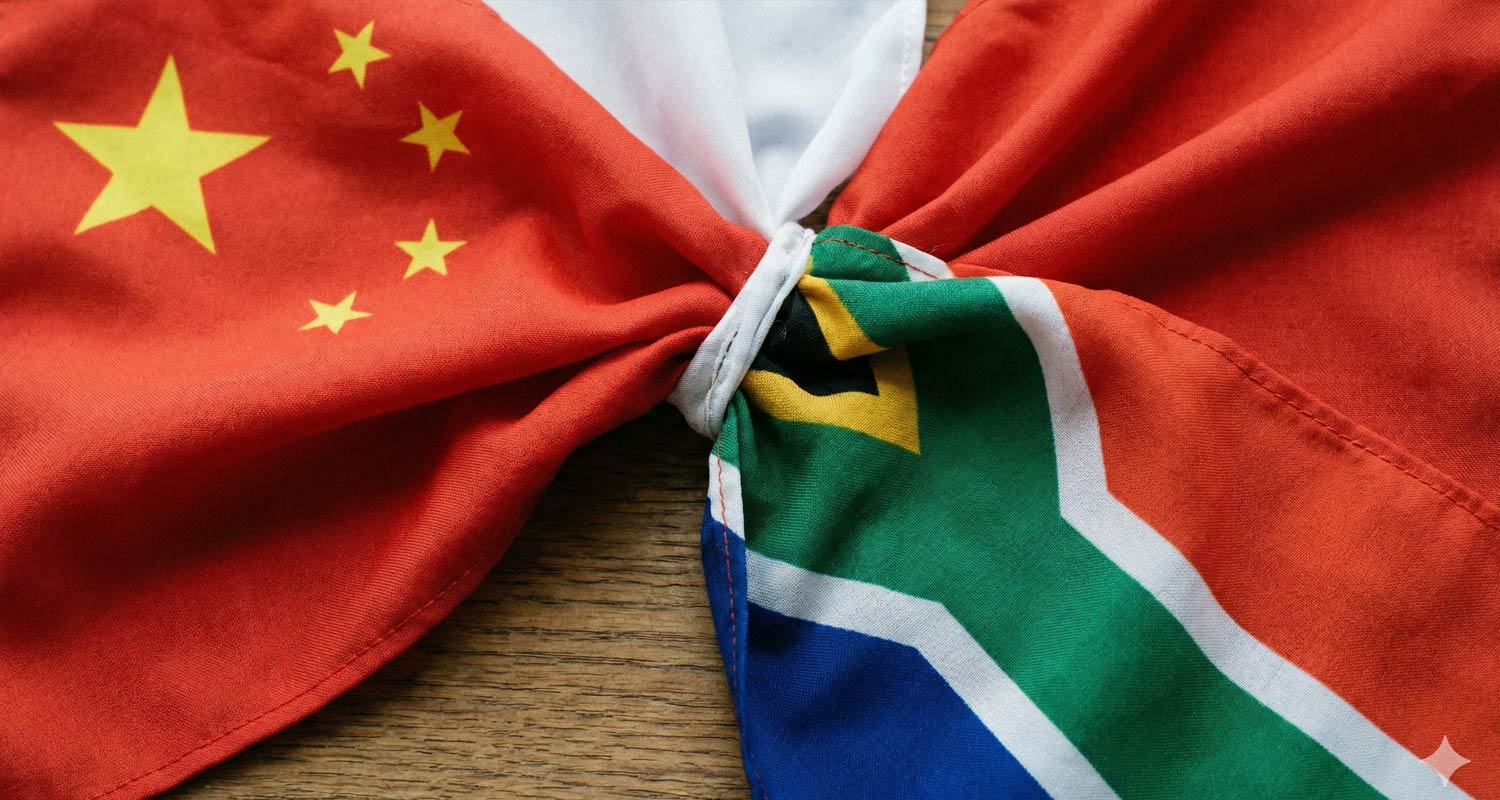
China is not only building an AI and clean-energy stack; it intends to export it, on its own standards, to a bloc in which South Africa is a leading voice. The plumbing is already being laid. Durban is a founding member of the new Brics “New Industrial Revolution” partner cities network launched in Xiamen in May, and on 22 June Chinese foreign minister Wang Yi called for closer cooperation with South Africa on infrastructure and cybersecurity.
The energy dependence is more concrete still. South African solar imports from China jumped 81.4% year on year in April, part of an African import boom that saw the continent take 18.8GW of Chinese panels in 2025, up 48% on the year before. The catch is that the supply line runs one way: Beijing scrapped its solar export tax rebate entirely on 1 April – having already cut it from 13% to 9% in late 2024 – a move expected to push prices up across Africa, with limited local manufacturing to cushion the blow.
Opportunity, and the dependence trap
The upside for South Africa is real: cheaper clean energy, access to BRICS computing power, technology transfer and smart-manufacturing partnerships at a moment when the country is trying to build its own AI and electric vehicle industries. But the risks track the opportunity. TechCentral has already reported that South Africa’s draft AI policy leaves the country too dependent on the US and China, and that chasing absolute data sovereignty is harder than it looks. The 15th five-year plan raises the stakes on both counts, because it offers South Africa the application layer – the robots, the cloud, the panels – while the foundational layer stays in China.
A Georgetown Journal of International Affairs analysis of US-China AI competition in Africa argues that the countries that come out ahead are those that “articulate their own AI priorities early and engage both US and Chinese actors on their own terms”. When dealing with China, whose data governance practices it regards as weaker, the journal warns that governments should anchor negotiations in strong data protection rules, localisation requirements and explicit AI risk management provisions.

That, ultimately, is the test the plan sets for Pretoria. China has written its next five years around deploying AI and robots at home and exporting the result. Whether South Africa ends up a co-author of that stack or simply a customer of it will depend less on Beijing’s plan than on whether South Africa finalises one of its own. — © 2026 NewsCentral Media
- Subscribe to TechCentral’s daily newsletter
- Get breaking news alerts on WhatsApp