Close Menu
TechCentralTechCentral

    Subscribe to the newsletter

    Get the best South African technology news and analysis delivered to your e-mail inbox every morning.

    Facebook X (Twitter) YouTube LinkedIn
    WhatsApp Facebook X (Twitter) LinkedIn YouTube
    TechCentralTechCentral
    • News
      US scored 'own goal' with ban on top Anthropic model

      US scored ‘own goal’ with ban on top Anthropic model

      15 June 2026
      Fox is buying streaming hardware firm Roku for $22-billion

      Fox is buying streaming hardware firm Roku for $22-billion

      15 June 2026
      Where SA remote workers keep the most: Wise, Grey, Payoneer or PayPal

      Where SA remote workers can keep the most: Wise, Grey, Payoneer or PayPal

      15 June 2026
      How Russians juggle VPNs to outwit the Kremlin

      How Russians juggle VPNs to outwit the Kremlin

      15 June 2026
      The millions Vodacom spends protecting its CEO - Shameel Joosub

      The millions Vodacom spends protecting its CEO

      14 June 2026
    • World
      Google on the hook for what its AI tells users, court rules

      Google on the hook for what its AI tells users, court rules

      15 June 2026
      Amazon CEO flagged Anthropic AI risks to Washington - Andy Jassy

      Amazon CEO flagged Anthropic AI risks to Washington

      14 June 2026
      Trouble at Xbox

      Trouble at Xbox

      11 June 2026
      Meta declares war on Israeli spyware firm

      Meta declares war on Israeli spyware firm

      8 June 2026
      Meta takes on OpenAI and Anthropic in enterprise AI

      Meta takes on OpenAI and Anthropic in enterprise AI

      4 June 2026
    • In-depth
      AI boom sparks rally, frenzy and fear

      AI boom sparks rally, frenzy and fear

      11 June 2026
      Every plug-in hybrid on sale in South Africa, ranked by price - Lamborghini Temerario

      Every plug-in hybrid on sale in South Africa, ranked by price

      7 June 2026
      What Wi-Fi 8 will mean for wireless networks

      What Wi-Fi 8 will mean for wireless networks

      1 June 2026
      Alfa's electric rebel - Alfa Romeo Junior Elettrica Veloce

      Alfa’s electric rebel

      29 April 2026
      Africa switches on as Europe dims the lights

      Africa switches on as Europe dims the lights

      9 April 2026
    • TCS
      Watts & Wheels S1E5: 'A Bentley of the bush and a car that swims'

      Watts & Wheels S1E5: ‘A Bentley of the bush and a car that swims’

      8 June 2026
      TCS | Charge's R1.8-billion bet on an off-grid EV future - Charge chairman Joubert Roux

      TCS | Charge’s R1.8-billion bet on an off-grid EV future

      18 May 2026
      TCS+ | The Up&Up Group on the hidden cost of AI - Jason Harrison

      TCS+ | The Up&Up Group on the hidden cost of AI

      13 May 2026
      Michael Rossouw

      TCS+ | The retirement decision most South Africans get wrong

      6 May 2026
      TCS | The Cape Town start-up listening for TB with AI - Braden van Breda

      TCS | The Cape Town start-up listening for TB with AI

      4 May 2026
    • Opinion
      The clock is ticking on South African banks' biggest advantage - Pambos Soteriades

      The clock is ticking on South African banks’ biggest advantage

      9 June 2026

      Clashing judgments leave South Africa’s crypto law unsettled

      2 June 2026
      The clock is ticking on South African banks' biggest advantage - Pambos Soteriades

      The trap inside South Africa’s banking MVNO boom

      1 June 2026
      The hidden cost of social media age bans is everyone's privacy - Petrus Potgieter

      The hidden cost of social media age bans is everyone’s privacy

      29 May 2026
      Treasury's crypto crackdown is a betrayal of Mandela's promise - Duncan McLeod

      Treasury’s crypto crackdown is a betrayal of Mandela’s promise

      22 May 2026
    • Company Hubs
      • 1Stream
      • Africa Data Centres
      • AfriGIS
      • Altron Digital Business
      • Altron Document Solutions
      • Altron Group
      • Arctic Wolf
      • Ascent Technology
      • AvertITD
      • BBD
      • Braintree
      • CallMiner
      • CambriLearn
      • CM Telecom
      • Contactable
      • CYBER1 Solutions
      • Digicloud Africa
      • Digimune
      • Domains.co.za
      • ESET
      • Euphoria Telecom
      • HOSTAFRICA
      • Incredible Business
      • iONLINE
      • IQbusiness
      • Iris Network Systems
      • Kaspersky
      • LSD Open
      • Mitel
      • NEC XON
      • Netstar
      • Network Platforms
      • Next DLP
      • Ovations
      • Paracon
      • Paratus
      • Q-KON
      • SevenC
      • SkyWire
      • Solid8 Technologies
      • Telit Cinterion
      • Telviva
      • Tenable
      • Vertiv
      • Videri Digital
      • Vodacom Business
      • Wipro
      • Workday
      • XLink
    • Sections
      • AI and machine learning
      • Banking
      • Broadcasting and Media
      • Cloud services
      • Contact centres and CX
      • Cryptocurrencies
      • Education and skills
      • Electronics and hardware
      • Energy and sustainability
      • Enterprise software
      • Financial services
      • HealthTech
      • Information security
      • Internet and connectivity
      • Internet of Things
      • Investment
      • IT services
      • Lifestyle
      • Motoring
      • Policy and regulation
      • Public sector
      • Retail and e-commerce
      • Satellite communications
      • Science
      • SMEs and start-ups
      • Social media
      • Talent and leadership
      • Telecoms
    • Events
    • Advertise
    TechCentralTechCentral
    Home » Sections » Policy and regulation » Draft AI policy: South Africa ‘too dependent’ on US, China

    Draft AI policy: South Africa ‘too dependent’ on US, China

    South Africa’s draft AI policy admits the country’s dependence on rival superpowers leaves it exposed.
    By Nkosinathi Ndlovu15 April 2026
    Twitter LinkedIn Facebook WhatsApp Email Telegram Copy Link
    News Alerts
    WhatsApp

    Draft AI policy: South Africa 'too dependent' on US, China

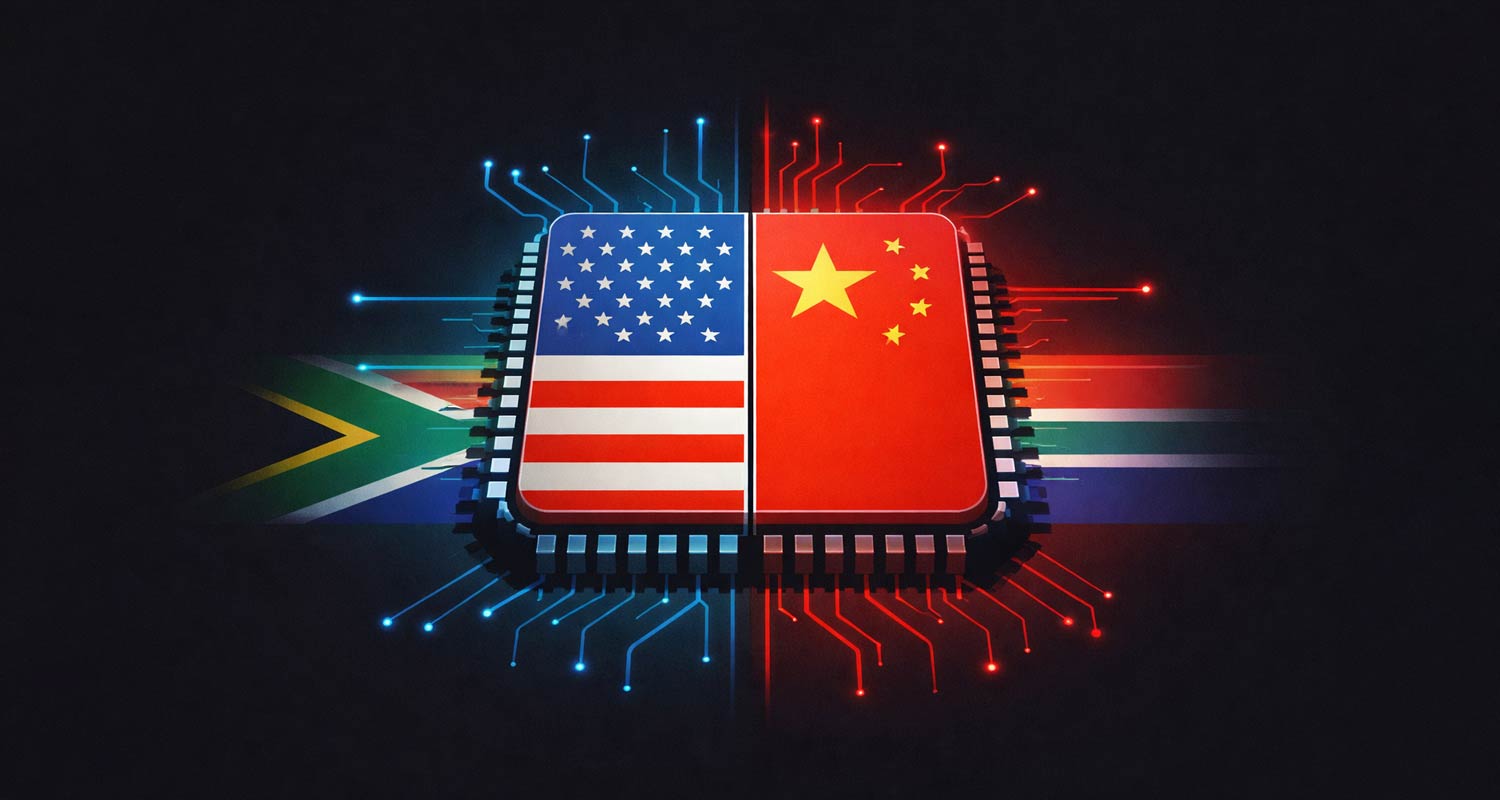
    South Africa’s draft AI policy document – gazetted last week by the department of communications & digital technologies – contains a candid acknowledgement that the country’s reliance on US and Chinese hardware poses a strategic vulnerability that the intensifying rivalry between the two powers makes increasingly difficult to manage.

    “Reliance on foreign infrastructure compromises the security of sensitive South African data. Therefore, there is a need to invest in local infrastructure and related data sovereignty measures to safeguard the national interest … and create plans to reduce the country’s current hardware dependence on the US and China,” said the document.

    One way to reduce data sovereignty risk is to create more local infrastructure to ensure that sensitive data is not stored on foreign servers. In his budget speech in February, finance minister Enoch Godongwana for the first time placed data centre infrastructure on the same footing as electricity, ports and transport networks.

    We are dealing with a technology that is rapidly developing and we are a little late in responding to it

    This policy shift is partly aimed at attracting more investment. But even if it manages to ensure higher levels of data sovereignty, the hardware used in those data centres must come from somewhere.

    The hardware concern sits within a broader and accelerating phenomenon: the bifurcation of global technology standards along geopolitical lines. What began as a trade dispute between the US and China over semiconductors has evolved into something more structurally significant – the gradual emergence of parallel technology ecosystems, one anchored in the US and its allies and another centred on China.

    Implications

    The implications run deeper than chip supply. They extend to networking equipment, cloud infrastructure, AI training hardware and, increasingly, to the software and model layers built on top of them. Huawei Technologies’ development of its own AI silicon in response to US export controls, and the emergence of domestically developed Chinese large language models running on that silicon, is the most visible expression of a stack that is actively diverging.

    For countries in the middle – and South Africa sits squarely in that category – the risk is being forced to choose, or of inadvertently locking into one ecosystem before the consequences of that choice are fully understood.

    Read: South Africa’s draft AI policy is a bureaucrat’s dream

    In March, the US banned the importation and sale of new foreign-made internet routers over national security concerns, spreading the geopolitical divide from the infrastructure to the consumer hardware market. Other sectors are also at risk.

    At Mobile World Congress in Spain in March, GSMA deputy president and CEO of MTN Group Ralph Mupita warned that the mobile industry faced a bifurcation of technology standards as the industry moves towards 6G connectivity. According to Mupita, the resulting split in supply chains and the possible shrinking of global economies of scale could put smaller economies like those in Africa at risk of falling further behind in digital infrastructure and access to connectivity.
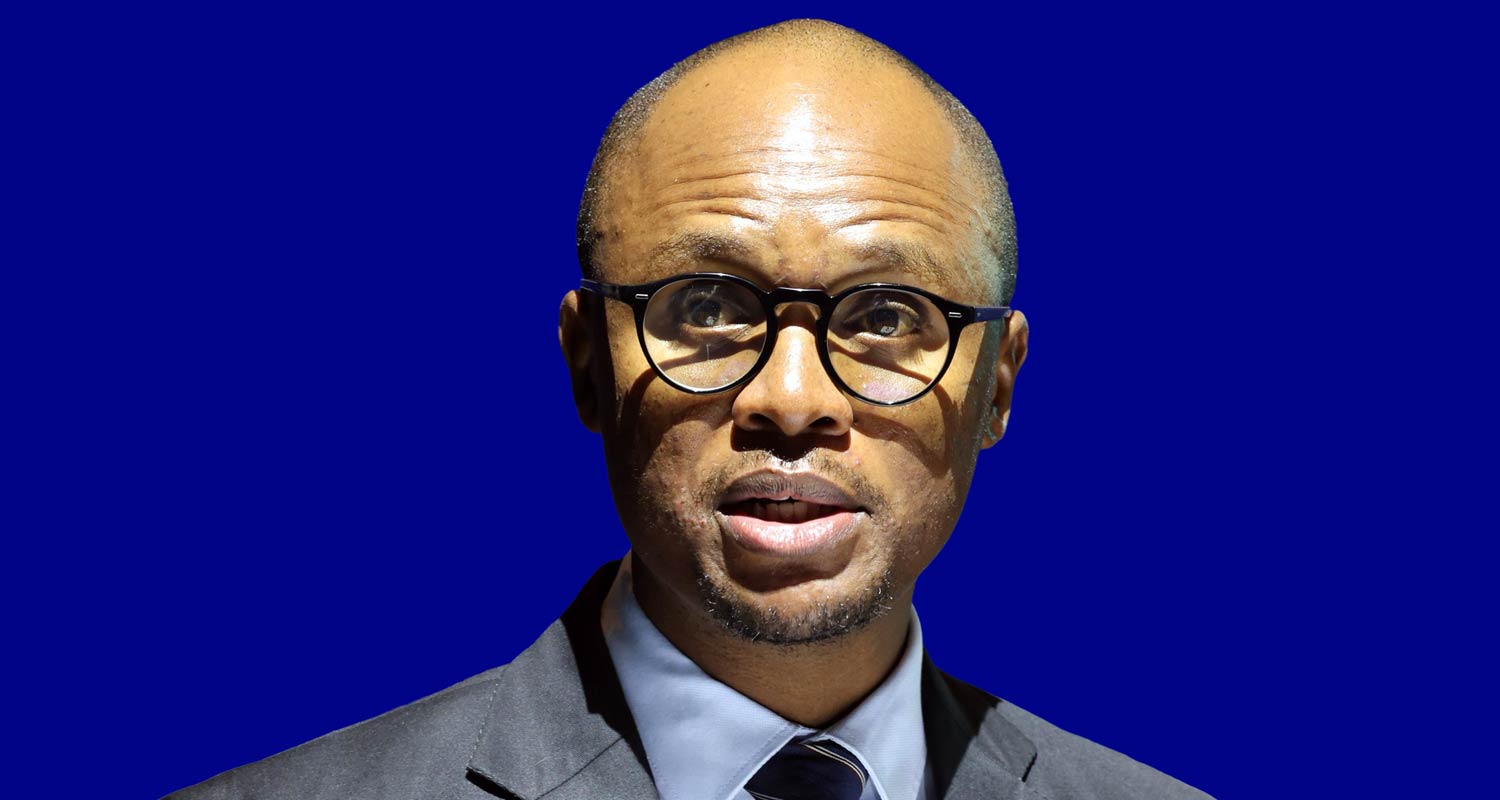
    Communications minister Solly Malatsi
    Communications minister Solly Malatsi

    “A huge area of debate among the GSMA board members is the concept of digital sovereignty and whether it is a paradox or oxymoron in a world that today is increasingly looking like it’s trending towards de-globalisation and moving towards one where you may have bifurcated standards for 6G,” said Mupita.

    For South African enterprises and public institutions currently procuring AI infrastructure, the bifurcation question presents a quandary. Decisions made now about which cloud platforms to standardise on, which networking vendors to deploy and which AI model providers to integrate with carry long-term switching costs. If global standards continue to fragment, those decisions will increasingly carry geopolitical dimensions that procurement policy is not currently equipped to navigate.

    A huge area of debate among the GSMA board members is the concept of digital sovereignty

    Speaking to Newzroom Afrika on Tuesday, communications minister Solly Malatsi said people in all sectors are affected by AI, adding that cooperation between government, business and the general public is important to ensure South Africa develops a sound AI policy.

    “Every sector has had a unique impact and response to AI, and we want to tap into the lessons that have been evident in those areas and aggregate those into a policy that can be fair and practical and that gives society a solid foundation. We are dealing with a technology that is rapidly developing and, if truth be told, we are a little late in the journey of responding to it,” said Malatsi.

    The draft AI policy is open for public comment until 10 June.  – © 2026 NewsCentral Media

    Get breaking news from TechCentral on WhatsApp. Sign up here.

    Follow TechCentral on Google News Add TechCentral as your preferred source on Google


    AI policy AI policy South Africa draft AI policy MTN Ralph Mupita Solly Malatsi
    WhatsApp YouTube
    Share. Facebook Twitter LinkedIn WhatsApp Telegram Email Copy Link
    Previous ArticleR85-million for SA start-up reinventing the stethoscope with AI
    Next Article TCS | Werner Lindemann on how AI is rewriting the infosec rulebook

    Related Posts

    The millions Vodacom spends protecting its CEO - Shameel Joosub

    The millions Vodacom spends protecting its CEO

    14 June 2026
    MTN's first AI target? Itself - Charles Molapisi

    MTN’s first AI target? Itself

    11 June 2026
    MTN South Africa hunts up to R6-billion in savings - Ferdi Moolman

    MTN South Africa hunts up to R6-billion in savings

    10 June 2026
    Company News
    When jammers kill the signal, AI goes blind too - Rory Atkinson Orange Logistics Sigfox South Africa

    When jammers kill the signal, AI goes blind too

    12 June 2026
    Workday Horizon shows SA firms how to make AI deliver - Kiv Moodley

    Workday Horizon shows SA firms how to make AI deliver

    12 June 2026
    Hisense, Makro team up for winter laundry promotion

    Hisense, Makro team up for winter laundry promotion

    12 June 2026
    Opinion
    The clock is ticking on South African banks' biggest advantage - Pambos Soteriades

    The clock is ticking on South African banks’ biggest advantage

    9 June 2026

    Clashing judgments leave South Africa’s crypto law unsettled

    2 June 2026
    The clock is ticking on South African banks' biggest advantage - Pambos Soteriades

    The trap inside South Africa’s banking MVNO boom

    1 June 2026

    Subscribe to Updates

    Get the best South African technology news and analysis delivered to your e-mail inbox every morning.

    Latest Posts
    US scored 'own goal' with ban on top Anthropic model

    US scored ‘own goal’ with ban on top Anthropic model

    15 June 2026
    Fox is buying streaming hardware firm Roku for $22-billion

    Fox is buying streaming hardware firm Roku for $22-billion

    15 June 2026
    Where SA remote workers keep the most: Wise, Grey, Payoneer or PayPal

    Where SA remote workers can keep the most: Wise, Grey, Payoneer or PayPal

    15 June 2026
    Google on the hook for what its AI tells users, court rules

    Google on the hook for what its AI tells users, court rules

    15 June 2026
    © 2009 - 2026 NewsCentral Media
    • Cookie policy (ZA)
    • TechCentral – privacy and Popia

    Type above and press Enter to search. Press Esc to cancel.

    Manage consent

    TechCentral uses cookies to enhance its offerings. Consenting to these technologies allows us to serve you better. Not consenting or withdrawing consent may adversely affect certain features and functions of the website.

    Functional Always active
    The technical storage or access is strictly necessary for the legitimate purpose of enabling the use of a specific service explicitly requested by the subscriber or user, or for the sole purpose of carrying out the transmission of a communication over an electronic communications network.
    Preferences
    The technical storage or access is necessary for the legitimate purpose of storing preferences that are not requested by the subscriber or user.
    Statistics
    The technical storage or access that is used exclusively for statistical purposes. The technical storage or access that is used exclusively for anonymous statistical purposes. Without a subpoena, voluntary compliance on the part of your Internet Service Provider, or additional records from a third party, information stored or retrieved for this purpose alone cannot usually be used to identify you.
    Marketing
    The technical storage or access is required to create user profiles to send advertising, or to track the user on a website or across several websites for similar marketing purposes.
    • Manage options
    • Manage services
    • Manage {vendor_count} vendors
    • Read more about these purposes
    View preferences
    • {title}
    • {title}
    • {title}