
Close Menu
TechCentralTechCentral

    Subscribe to the newsletter

    Get the best South African technology news and analysis delivered to your e-mail inbox every morning.

    Facebook X (Twitter) YouTube LinkedIn
    WhatsApp Facebook X (Twitter) LinkedIn YouTube
    TechCentralTechCentral
    • News
      Banned or not? The truth about Schuko plugs in South Africa

      Banned or not? The truth about Schuko plugs in South Africa

      5 January 2026
      Novus to appeal after being told to hike Mustek bid

      Novus to appeal after being told to hike Mustek bid

      5 January 2026
      Television at 50 | How the SABC lost its way - and what it must become

      Television at 50 | How the SABC lost its way – and what it must become

      5 January 2026
      Why Solly Malatsi was right to bury the Post Office monopoly

      Why Solly Malatsi was right to bury the Post Office monopoly

      4 January 2026
      Television turns 50 in South Africa

      Television turns 50 in South Africa

      4 January 2026
    • World
      Starlink plans to lower satellite orbit to enhance safety

      Starlink plans to lower satellite orbit to enhance safety

      4 January 2026
      Lou Gerstner, the man who saved IBM, dies at 83

      Lou Gerstner, the man who saved IBM, dies at 83

      29 December 2025
      Starlink satellite anomaly creates debris in rare orbital mishap

      Starlink satellite anomaly creates debris in rare orbital mishap

      19 December 2025
      Trump space order puts the moon back at centre of US, China rivalry - US President Donald Trump

      Trump space order puts the moon back at centre of US, China rivalry

      19 December 2025
      Warner Bros slams the door on Paramount

      Warner Bros slams the door on Paramount

      17 December 2025
    • In-depth
      Digital authoritarianism grows as African states normalise internet blackouts

      Digital authoritarianism grows as African states normalise internet blackouts

      19 December 2025
      TechCentral's South African Newsmakers of 2025

      TechCentral’s South African Newsmakers of 2025

      18 December 2025
      Black Friday goes digital in South Africa as online spending surges to record high

      Black Friday goes digital in South Africa as online spending surges to record high

      4 December 2025
      DStv dodges channel blackout in last-minute deal with Warner Bros

      Canal+ plays hardball – and DStv viewers feel the pain

      3 December 2025
      Jensen Huang Nvidia

      So, will China really win the AI race?

      14 November 2025
    • TCS
      TCS+ | Africa's digital transformation - unlocking AI through cloud and culture - Cliff de Wit Accelera Digital Group

      TCS+ | Cloud without culture won’t deliver AI: Accelera’s Cliff de Wit

      12 December 2025
      TCS+ | How Cloud on Demand helps partners thrive in the AWS ecosystem - Odwa Ndyaluvane and Xenia Rhode

      TCS+ | How Cloud On Demand helps partners thrive in the AWS ecosystem

      4 December 2025
      TCS | MTN Group CEO Ralph Mupita on competition, AI and the future of mobile

      TCS | Ralph Mupita on competition, AI and the future of mobile

      28 November 2025
      TCS | Dominic Cull on fixing South Africa's ICT policy bottlenecks

      TCS | Dominic Cull on fixing South Africa’s ICT policy bottlenecks

      21 November 2025
      TCS | BMW CEO Peter van Binsbergen on the future of South Africa's automotive industry

      TCS | BMW CEO Peter van Binsbergen on the future of South Africa’s automotive industry

      6 November 2025
    • Opinion
      ANC's attack on Solly Malatsi shows how BEE dogma trumps economic reality - Duncan McLeod

      ANC’s attack on Solly Malatsi shows how BEE dogma trumps economic reality

      14 December 2025
      Netflix, Warner Bros deal raises fresh headaches for MultiChoice - Duncan McLeod

      Netflix, Warner Bros deal raises fresh headaches for MultiChoice

      5 December 2025
      BIN scans, DDoS and the next cybercrime wave hitting South Africa's banks - Entersekt Gerhard Oosthuizen

      BIN scans, DDoS and the next cybercrime wave hitting South Africa’s banks

      3 December 2025
      ANC's attack on Solly Malatsi shows how BEE dogma trumps economic reality - Duncan McLeod

      Your data, your hardware: the DIY AI revolution is coming

      20 November 2025
      Zero Carbon Charge founder Joubert Roux

      The energy revolution South Africa can’t afford to miss

      20 November 2025
    • Company Hubs
      • Africa Data Centres
      • AfriGIS
      • Altron Digital Business
      • Altron Document Solutions
      • Altron Group
      • Arctic Wolf
      • AvertITD
      • Braintree
      • CallMiner
      • CambriLearn
      • CYBER1 Solutions
      • Digicloud Africa
      • Digimune
      • Domains.co.za
      • ESET
      • Euphoria Telecom
      • Incredible Business
      • iONLINE
      • IQbusiness
      • Iris Network Systems
      • LSD Open
      • NEC XON
      • Netstar
      • Network Platforms
      • Next DLP
      • Ovations
      • Paracon
      • Paratus
      • Q-KON
      • SevenC
      • SkyWire
      • Solid8 Technologies
      • Telit Cinterion
      • Tenable
      • Vertiv
      • Videri Digital
      • Vodacom Business
      • Wipro
      • Workday
      • XLink
    • Sections
      • AI and machine learning
      • Banking
      • Broadcasting and Media
      • Cloud services
      • Contact centres and CX
      • Cryptocurrencies
      • Education and skills
      • Electronics and hardware
      • Energy and sustainability
      • Enterprise software
      • Financial services
      • Information security
      • Internet and connectivity
      • Internet of Things
      • Investment
      • IT services
      • Lifestyle
      • Motoring
      • Public sector
      • Retail and e-commerce
      • Satellite communications
      • Science
      • SMEs and start-ups
      • Social media
      • Talent and leadership
      • Telecoms
    • Events
    • Advertise
    TechCentralTechCentral
    Home » Sections » Public sector » Why Solly Malatsi was right to bury the Post Office monopoly

    Why Solly Malatsi was right to bury the Post Office monopoly

    South Africa has a curious habit of legislating fantasies and then acting surprised when the real economy ignores them.
    By Duncan McLeod4 January 2026
    Twitter LinkedIn Facebook WhatsApp Email Telegram Copy Link
    News Alerts
    WhatsApp

    Why Solly Malatsi was right to bury the Post Office monopoly

    South Africa has a curious habit of legislating fantasies and then acting surprised when the real economy ignores them. The now-defunct monopoly of the South African Post Office over sub-1kg parcels is a perfect example of this. On paper, the monopoly existed; in practice, it died years ago. Communications minister Solly Malatsi has merely done what government should have done long ago: align the law with reality.

    The notion that the Post Office had an exclusive right to deliver small parcels had long become absurd. It became downright farcical as e-commerce exploded, private couriers scaled nationally and consumers came to expect fast, reliable delivery – something the lumbering state-owned Post Office manifestly could not provide. The market moved on; the law did not. Malatsi’s decision to terminate the monopoly simply recognises that pretending otherwise serves no public interest.

    There is an instructive parallel here with the liberalisation of South Africa’s telecommunications sector nearly two decades ago. In 2008, Altech successfully challenged the government in court, forcing the regulator to allow companies to self-provide telecoms facilities. The case cracked open a closed market that had been artificially protected in the name of “managed liberalisation”. What followed was an explosion of competition, investment and innovation – and the rapid decline of legacy players that had grown fat and complacent.

    The lesson was clear: monopolies protected by bad laws don’t preserve public value; they delay inevitable change

    Incumbents (most notably, Telkom) warned of job losses and chaos. Instead, consumers benefited from lower prices and better services, while the economy gained from improved connectivity. The lesson was clear: monopolies protected by bad laws don’t preserve public value; they delay inevitable change and increase the eventual cost of adjustment.

    The same dynamic has been playing out at the Post Office. For years, the company clung to a theoretical monopoly it lacked the capacity to enforce, let alone exploit. Private couriers simply ignored it, because they had to. Had they complied, South Africa’s e-commerce sector would have been strangled at birth. Consumers would have paid more for worse service, or none at all.

    That the monopoly was widely ignored is not an indictment of the market. It is an indictment of the law. Yet the termination of the monopoly has provoked predictable outrage from parts of the political establishment. Khusela Diko, chair of parliament’s portfolio committee on communications, has argued that ending the reserved service threatens the Post Office’s sustainability and undermines its universal service obligations, particularly in rural areas.

    Bailouts

    This argument assumes the status quo was sustainable to begin with. It was not. The Post Office has required repeated bailouts over more than a decade, has shed thousands of jobs, closed branches and entered business rescue. The monopoly did not save it. It did not even meaningfully support it. To argue that preserving a legal fiction would somehow reverse this decline is magical thinking.

    More troubling is the deeper assumption behind the criticism: that state-owned entities are entitled to perpetual protection, regardless of performance or relevance. Business models change. Technology changes. Consumer behaviour changes. Organisations that fail to adapt – whether private or state owned – do not have a divine right to survive.

    Read: Malatsi buries Post Office monopoly the market ignored

    In functioning economies, governments help workers transition; they do not freeze markets in legal and regulatory stasis. They modernise public services; they do not criminalise alternatives simply because incumbents are failing.

    The telecoms comparison is again instructive. When fixed-line voice revenues collapsed, Telkom had to reinvent itself or shrink. No one seriously proposed banning mobile phones to protect the copper network. Yet that is effectively what defenders of the Post Office are arguing for in logistics: limit competition to preserve an institution that has already lost relevance.
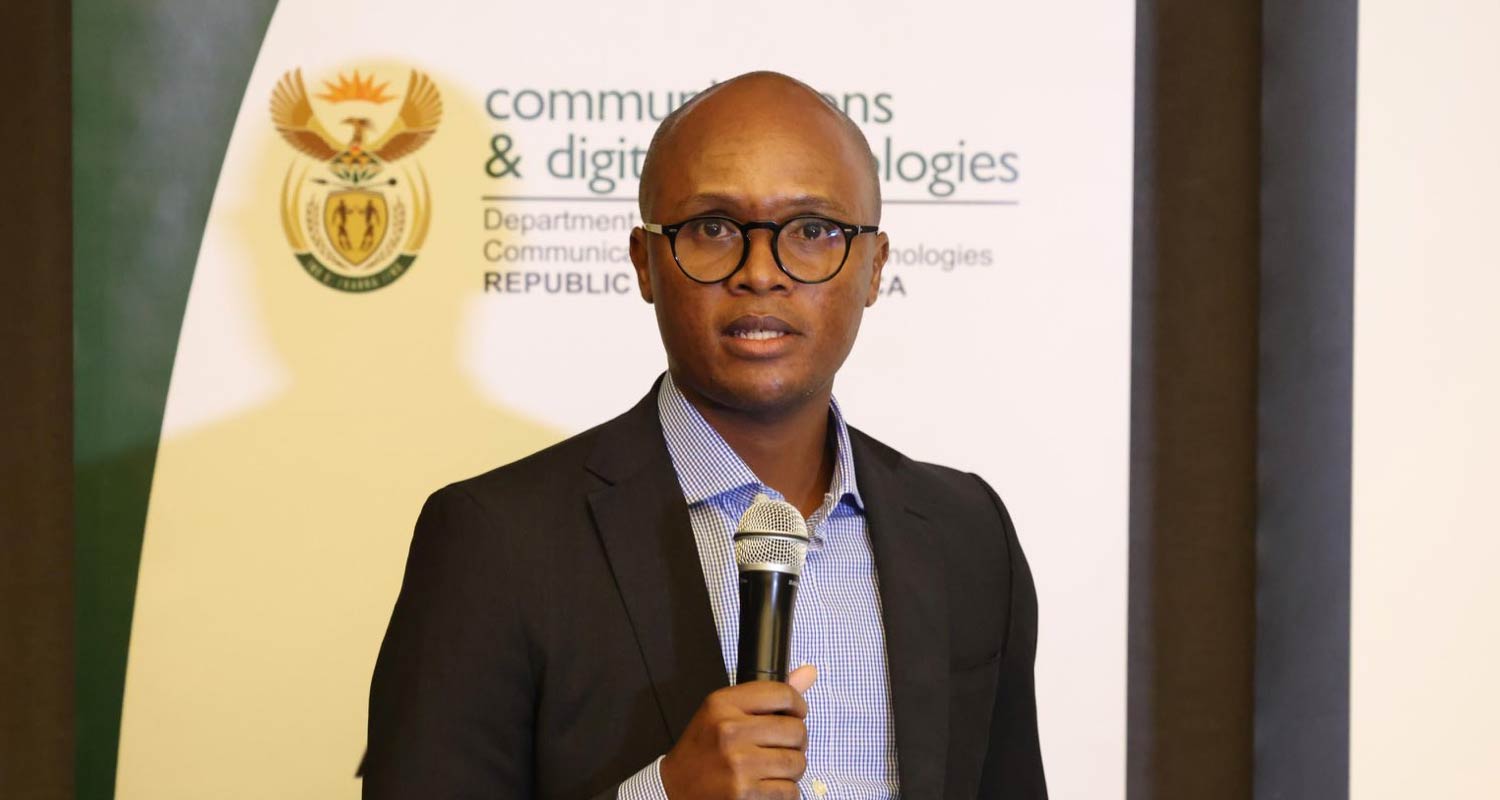
    Communications minister Solly Malatsi. Image: DCDT
    Communications minister Solly Malatsi. Image: DCDT

    There is also a striking lack of imagination in the political response from the ANC. Rather than asking how the Post Office might partner with private couriers, specialise in niche services or leverage its footprint differently, the instinct is to reach for prohibition and protection. This reflex reveals a deeper malaise within the ANC: an inability to think about reform outside the framework of control.

    South Africa’s economic challenges are not caused by too much competition. They are caused by too little – and by a political culture that confuses regulation with value creation. Ending the Post Office monopoly does not doom rural communities. What dooms them, and everyone else, is clinging to failed models while pretending the world has not changed.

    Read: Gov’t seeks private sector partners to rebuild broken Post Office

    Malatsi’s move will not fix the Post Office’s problems. But it removes an impediment to honest reform. Like the Altech judgment before it, it forces the country to confront an uncomfortable truth: laws cannot compel relevance. They can only delay irrelevance – and usually at great cost.  – © 2025 NewsCentral Media

    Get breaking news from TechCentral on WhatsApp. Sign up here.



    Altech Khusela Diko Post Office Sapo Solly Malatsi South African Post Office Telkom
    Subscribe to TechCentral Subscribe to TechCentral
    Share. Facebook Twitter LinkedIn WhatsApp Telegram Email Copy Link
    Previous ArticleTelevision turns 50 in South Africa
    Next Article Television at 50 | How the SABC lost its way – and what it must become

    Related Posts

    TechCentral's South African Newsmakers of 2025

    TechCentral’s South African Newsmakers of 2025

    18 December 2025
    Malatsi buries Post Office's long-dead monopoly

    Malatsi buries Post Office monopoly the market ignored

    18 December 2025
    Telecoms industry backs Malatsi policy directive, warns on execution - ACT CEO Nomvuyiso Batyi

    Telecoms industry backs Malatsi policy directive, warns on execution

    17 December 2025
    Company News
    Why banks and insurers need a single decisioning brain as pressures collide - SAS

    Why banks and insurers need a single decisioning brain as pressures collide

    29 December 2025
    First Technology Western Cape delivers the tools - and intelligence - behind modern business - Dell Technologies

    First Technology Western Cape delivers the tools – and intelligence – behind modern business

    29 December 2025
    How First Technology Western Cape supports green IT initiatives - Dell Technologies

    How First Technology Western Cape supports green IT initiatives

    29 December 2025
    Opinion
    ANC's attack on Solly Malatsi shows how BEE dogma trumps economic reality - Duncan McLeod

    ANC’s attack on Solly Malatsi shows how BEE dogma trumps economic reality

    14 December 2025
    Netflix, Warner Bros deal raises fresh headaches for MultiChoice - Duncan McLeod

    Netflix, Warner Bros deal raises fresh headaches for MultiChoice

    5 December 2025
    BIN scans, DDoS and the next cybercrime wave hitting South Africa's banks - Entersekt Gerhard Oosthuizen

    BIN scans, DDoS and the next cybercrime wave hitting South Africa’s banks

    3 December 2025

    Subscribe to Updates

    Get the best South African technology news and analysis delivered to your e-mail inbox every morning.

    Latest Posts
    Banned or not? The truth about Schuko plugs in South Africa

    Banned or not? The truth about Schuko plugs in South Africa

    5 January 2026
    Novus to appeal after being told to hike Mustek bid

    Novus to appeal after being told to hike Mustek bid

    5 January 2026
    Television at 50 | How the SABC lost its way - and what it must become

    Television at 50 | How the SABC lost its way – and what it must become

    5 January 2026
    Why Solly Malatsi was right to bury the Post Office monopoly

    Why Solly Malatsi was right to bury the Post Office monopoly

    4 January 2026
    © 2009 - 2026 NewsCentral Media
    • Cookie policy (ZA)
    • TechCentral – privacy and Popia

    Type above and press Enter to search. Press Esc to cancel.

    Manage consent

    TechCentral uses cookies to enhance its offerings. Consenting to these technologies allows us to serve you better. Not consenting or withdrawing consent may adversely affect certain features and functions of the website.

    Functional Always active
    The technical storage or access is strictly necessary for the legitimate purpose of enabling the use of a specific service explicitly requested by the subscriber or user, or for the sole purpose of carrying out the transmission of a communication over an electronic communications network.
    Preferences
    The technical storage or access is necessary for the legitimate purpose of storing preferences that are not requested by the subscriber or user.
    Statistics
    The technical storage or access that is used exclusively for statistical purposes. The technical storage or access that is used exclusively for anonymous statistical purposes. Without a subpoena, voluntary compliance on the part of your Internet Service Provider, or additional records from a third party, information stored or retrieved for this purpose alone cannot usually be used to identify you.
    Marketing
    The technical storage or access is required to create user profiles to send advertising, or to track the user on a website or across several websites for similar marketing purposes.
    • Manage options
    • Manage services
    • Manage {vendor_count} vendors
    • Read more about these purposes
    View preferences
    • {title}
    • {title}
    • {title}