Close Menu
TechCentralTechCentral

    Subscribe to the newsletter

    Get the best South African technology news and analysis delivered to your e-mail inbox every morning.

    Facebook X (Twitter) YouTube LinkedIn
    WhatsApp Facebook X (Twitter) LinkedIn YouTube
    TechCentralTechCentral
    • News

      Washington takes on Beijing in race for Africa’s critical minerals

      9 February 2026
      Vodacom drops R5.6-billion for spectrum in key market

      Vodacom dropping R5.6-billion for spectrum in key market

      9 February 2026
      Nersa blunder triggers sharper electricity tariff increases

      Nersa blunder triggers sharper electricity tariff increases

      9 February 2026
      Eskom unbundling U-turn threatens to undo hard-won electricity gains

      Eskom unbundling U-turn threatens to undo hard-won electricity gains

      9 February 2026
      Bloisi's big cleanup - Fabricio Bloisi

      Bloisi’s big cleanup

      9 February 2026
    • World
      Musk hits brakes on Mars mission

      Musk hits brakes on Mars mission

      9 February 2026
      Crypto firm accidentally sends R700-billion in bitcoin to its users

      Crypto firm accidentally sends R700-billion in bitcoin to its users

      8 February 2026
      AI won't replace software, says Nvidia CEO amid market rout - Jensen Huang

      AI won’t replace software, says Nvidia CEO amid market rout

      4 February 2026
      Apple acquires audio AI start-up Q.ai

      Apple acquires audio AI start-up Q.ai

      30 January 2026
      SpaceX IPO may be largest in history

      SpaceX IPO may be largest in history

      28 January 2026
    • In-depth
      How liberalisation is rewiring South Africa's power sector

      How liberalisation is rewiring South Africa’s power sector

      21 January 2026
      The top-performing South African tech shares of 2025

      The top-performing South African tech shares of 2025

      12 January 2026
      Digital authoritarianism grows as African states normalise internet blackouts

      Digital authoritarianism grows as African states normalise internet blackouts

      19 December 2025
      TechCentral's South African Newsmakers of 2025

      TechCentral’s South African Newsmakers of 2025

      18 December 2025
      Black Friday goes digital in South Africa as online spending surges to record high

      Black Friday goes digital in South Africa as online spending surges to record high

      4 December 2025
    • TCS
      TCS+ | How Cloud On Demand is helping SA businesses succeed in the cloud - Xhenia Rhode, Dion Kalicharan

      TCS+ | Cloud On Demand and Consnet: inside a real-world AWS partner success story

      30 January 2026
      Watts & Wheels S1E3: 'BYD's Corolla Cross challenger'

      Watts & Wheels S1E3: ‘BYD’s Corolla Cross challenger’

      30 January 2026
      Watts & Wheels S1E3: 'BYD's Corolla Cross challenger'

      Watts & Wheels S1E2: ‘China attacks, BMW digs in, Toyota’s sublime supercar’

      23 January 2026

      TCS+ | Why cybersecurity is becoming a competitive advantage for SA businesses

      20 January 2026
      Watts & Wheels S1E3: 'BYD's Corolla Cross challenger'

      Watts & Wheels: S1E1 – ‘William, Prince of Wheels’

      8 January 2026
    • Opinion
      South Africa's skills advantage is being overlooked at home - Richard Firth

      South Africa’s skills advantage is being overlooked at home

      29 January 2026
      Why Elon Musk's Starlink is a 'hard no' for me - Songezo Zibi

      Why Elon Musk’s Starlink is a ‘hard no’ for me

      26 January 2026
      South Africa's new fibre broadband battle - Duncan McLeod

      South Africa’s new fibre broadband battle

      20 January 2026
      AI moves from pilots to production in South African companies - Nazia Pillay SAP

      AI moves from pilots to production in South African companies

      20 January 2026
      South Africa's new fibre broadband battle - Duncan McLeod

      ANC’s attack on Solly Malatsi shows how BEE dogma trumps economic reality

      14 December 2025
    • Company Hubs
      • Africa Data Centres
      • AfriGIS
      • Altron Digital Business
      • Altron Document Solutions
      • Altron Group
      • Arctic Wolf
      • AvertITD
      • Braintree
      • CallMiner
      • CambriLearn
      • CYBER1 Solutions
      • Digicloud Africa
      • Digimune
      • Domains.co.za
      • ESET
      • Euphoria Telecom
      • Incredible Business
      • iONLINE
      • IQbusiness
      • Iris Network Systems
      • LSD Open
      • NEC XON
      • Netstar
      • Network Platforms
      • Next DLP
      • Ovations
      • Paracon
      • Paratus
      • Q-KON
      • SevenC
      • SkyWire
      • Solid8 Technologies
      • Telit Cinterion
      • Tenable
      • Vertiv
      • Videri Digital
      • Vodacom Business
      • Wipro
      • Workday
      • XLink
    • Sections
      • AI and machine learning
      • Banking
      • Broadcasting and Media
      • Cloud services
      • Contact centres and CX
      • Cryptocurrencies
      • Education and skills
      • Electronics and hardware
      • Energy and sustainability
      • Enterprise software
      • Financial services
      • Information security
      • Internet and connectivity
      • Internet of Things
      • Investment
      • IT services
      • Lifestyle
      • Motoring
      • Public sector
      • Retail and e-commerce
      • Satellite communications
      • Science
      • SMEs and start-ups
      • Social media
      • Talent and leadership
      • Telecoms
    • Events
    • Advertise
    TechCentralTechCentral
    Home » In-depth » Why the Eskom saga should scare us all

    Why the Eskom saga should scare us all

    By The Conversation30 May 2017
    Twitter LinkedIn Facebook WhatsApp Email Telegram Copy Link
    News Alerts
    WhatsApp
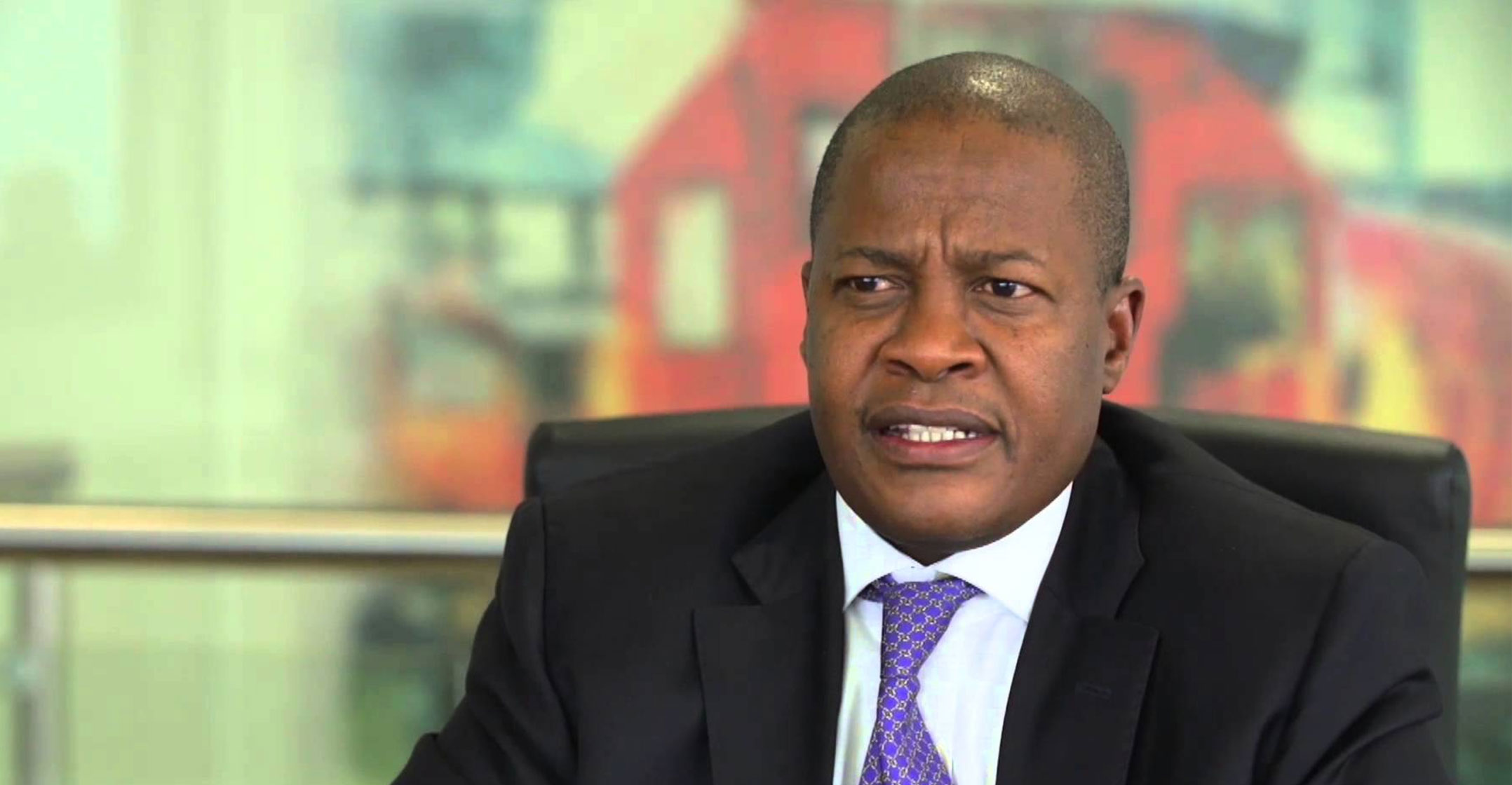
    Brian Molefe
    South Africa has, in the past, been credited with taking on innovative corporate governance standards and integrated reporting. So, it’s particularly depressing to see the spectacle around the country’s largest state-owned enterprise, power utility Eskom.

    The drama has revolved around Eskom’s CEO, Brian Molefe, who has returned to the job just months after quitting. The contradictory explanations of his return point to huge flaws in the accountability systems of the country’s state-owned enterprises. It’s clear that Eskom flouted many basic principles of sound corporate governance.

    This poses enormous risks as these systems are imperative for ensuring an ethical public service and society.

    When Molefe announced his departure from Eskom, he specifically connected his leaving to “corporate governance”; he was certainly accurate in that. On top of the issue of his claimed connections to the Gupta family, the allegations that spurred his exit spoke to breakdowns in information sharing and decision making that were made to benefit only a few.

    Regardless of political ideology, it is difficult to see that Molefe’s return to Eskom can be said to be in the best interests of creating an ethical culture

    The ANC’s national executive committee has since ordered that Molefe’s return to Eskom should be reversed, a decision seen to be going against the wishes of its President Jacob Zuma.

    There are many flaws that need to be examined in this saga, but let me flag three foundational faults in corporate governance. Firstly, there were serious lapses around Eskom’s senior executive remuneration processes. Secondly, it looks like the basic rules of consultation around critical decision making were flouted. And thirdly, creating a false dilemma between handing Molefe a R30m payout or allowing him to return to his Eskom job points to a simple disregard of the rules.

    Process failures

    The compensation question: The question of fair and justified compensation for senior executives looms large in the Eskom saga. There’s still no clarity over why Molefe left Eskom in December last year: whether he “retired” or “resigned” remains a contested point. More recently, South Africans were informed that he was, in fact, on unpaid leave in the months between his departure in December and his return in early May.

    Whatever the reason for his departure, Eskom’s board chose to award Molefe R30m. This raises the first potential failure in the accountability system: the responsibility of board members to decide fair and justified compensation for senior executives.

    This is true regardless of whether they retire or resign or go on unpaid leave. Each is governed by sets of rules to guide a board’s decision making. Leaving aside the obvious contradiction that anyone would be paid R30m for being on unpaid leave, none of the normal remuneration rules seems to have been followed. But without a basic understanding of the terms of his departure, a proper analysis is almost impossible. This failure of transparency in the process makes justifying the award because it was in the interests of Eskom’s stakeholders even less likely.
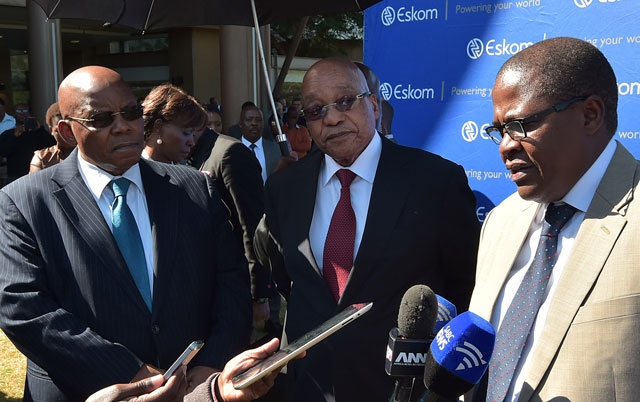
    From left, Eskom chairman Ben Ngubane, President Jacob Zuma and Brian Molefe

    Flouting consultation processes: The second failure in the governance system is a lack of clarity around the role of public enterprises minister Lynne Brown. Her decision to contradict the board and deny the R30m payout triggered an evaluation of what to do about Molefe’s connection to Eskom. In her statement, Brown highlighted the fact that she hadn’t been consulted and referred to decisions that appeared to have been made without the required approvals.

    An effective corporate governance system has clearly delineated processes for both consultation and decision making.

    In this case, it seems that steps in that process were skipped over, and key people weren’t consulted, leading to an unsupported outcome.

    Creating a false dilemma: Brown claimed that there were only two options open to her — to pay Molefe R30m or reinstate him. But by doing so she created a false dilemma that stood to benefit the person who stepped down, rather than the company and its stakeholders. In the process, the board and the minister ignored multiple options that would have likely been better.

    For example, if neither the board nor Brown could agree on severance compensation, Molefe could be paid his old salary in the interim, while final negotiations took place (there is a paid leave option in his contract). This type of bridging arrangement would create fairness for him while avoiding disruption to Eskom’s operations.

    A question of ethics

    A fundamental principle of good governance, laid out in King IV (a set of guidelines for strong corporate governance which companies/directors should comply with and explain their choices), that applies here is that “governing bod[ies] should govern the ethics of the organisation in a way that supports the establishment of an ethical culture”.

    Regardless of political ideology, it is difficult to see that Molefe’s return to Eskom can be said to be in the best interests of creating an ethical culture.

    Strong accountability systems create ethical cultures because everyone knows the rules, and believes the rules are being followed. As a result, people trust that when things don’t go their way, there’s a clear explanation. While they may not agree with choices, they are confident that a decision was made after a known process was followed.

    While the legal grounds for better governance are worth debating and enforcing, South Africans must never neglect the profound ethical impact of failed accountability systems

    Strong accountability systems can certainly privilege some people over others in different circumstances, but they clarify what gets rewarded and what gets punished. This leads to an ethical culture because there’s a common understanding and, crucially, some levels of shared purpose.

    Good accountability systems are about more than creating and following rules; while compliance is an aspect of these systems, it is really the bare minimum. They create and support a sense of shared destination, bolstered by agreed processes.

    Recently, leaders have too often relied on their legal “right” to do something, ignoring their ethical obligation to the greater good: the good of their company, their portfolio, their electorate, their country.

    While the legal grounds for better governance are worth debating and enforcing, South Africans must never neglect the profound ethical impact of failed accountability systems. Eskom’s current situation is about more than fulfilling its legal obligations. It’s a warning that South Africa’s ethical culture might slip through our hands. Let’s hold on tight.The Conversation

    • Timothy London is senior lecturer, University of Cape Town. His article was originally published on The Conversation

    Brian Molefe Eskom Jacob Zuma Lynne Brown Timothy London top
    WhatsApp YouTube Follow on Google News Add as preferred source on Google
    Share. Facebook Twitter LinkedIn WhatsApp Telegram Email Copy Link
    Previous ArticleZuma quashes revolt
    Next Article DFA raises R1,2bn in new funding

    Related Posts

    Nersa blunder triggers sharper electricity tariff increases

    Nersa blunder triggers sharper electricity tariff increases

    9 February 2026
    Eskom unbundling U-turn threatens to undo hard-won electricity gains

    Eskom unbundling U-turn threatens to undo hard-won electricity gains

    9 February 2026
    Eskom lifts load reduction for 140 000 customers

    Eskom lifts load reduction for 140 000 customers

    8 February 2026
    Company News
    Beyond the prompt: Why the future of enterprise AI is hybrid and agentic - LSD Open

    Beyond the prompt: Why the future of enterprise AI is hybrid and agentic

    9 February 2026
    The skills gap is a thinking gap: why South African employers can't find problem solvers

    The skills gap is a thinking gap: why SA employers can’t find problem solvers

    6 February 2026
    Vox Kiwi Wireless: fibre-like broadband for South African homes

    Vox Kiwi Wireless: fibre-like broadband for South African homes

    5 February 2026
    Opinion
    South Africa's skills advantage is being overlooked at home - Richard Firth

    South Africa’s skills advantage is being overlooked at home

    29 January 2026
    Why Elon Musk's Starlink is a 'hard no' for me - Songezo Zibi

    Why Elon Musk’s Starlink is a ‘hard no’ for me

    26 January 2026
    South Africa's new fibre broadband battle - Duncan McLeod

    South Africa’s new fibre broadband battle

    20 January 2026

    Subscribe to Updates

    Get the best South African technology news and analysis delivered to your e-mail inbox every morning.

    Latest Posts

    Washington takes on Beijing in race for Africa’s critical minerals

    9 February 2026
    Beyond the prompt: Why the future of enterprise AI is hybrid and agentic - LSD Open

    Beyond the prompt: Why the future of enterprise AI is hybrid and agentic

    9 February 2026
    Vodacom drops R5.6-billion for spectrum in key market

    Vodacom dropping R5.6-billion for spectrum in key market

    9 February 2026
    Musk hits brakes on Mars mission

    Musk hits brakes on Mars mission

    9 February 2026
    © 2009 - 2026 NewsCentral Media
    • Cookie policy (ZA)
    • TechCentral – privacy and Popia

    Type above and press Enter to search. Press Esc to cancel.

    Manage consent

    TechCentral uses cookies to enhance its offerings. Consenting to these technologies allows us to serve you better. Not consenting or withdrawing consent may adversely affect certain features and functions of the website.

    Functional Always active
    The technical storage or access is strictly necessary for the legitimate purpose of enabling the use of a specific service explicitly requested by the subscriber or user, or for the sole purpose of carrying out the transmission of a communication over an electronic communications network.
    Preferences
    The technical storage or access is necessary for the legitimate purpose of storing preferences that are not requested by the subscriber or user.
    Statistics
    The technical storage or access that is used exclusively for statistical purposes. The technical storage or access that is used exclusively for anonymous statistical purposes. Without a subpoena, voluntary compliance on the part of your Internet Service Provider, or additional records from a third party, information stored or retrieved for this purpose alone cannot usually be used to identify you.
    Marketing
    The technical storage or access is required to create user profiles to send advertising, or to track the user on a website or across several websites for similar marketing purposes.
    • Manage options
    • Manage services
    • Manage {vendor_count} vendors
    • Read more about these purposes
    View preferences
    • {title}
    • {title}
    • {title}