Close Menu
TechCentralTechCentral

    Subscribe to the newsletter

    Get the best South African technology news and analysis delivered to your e-mail inbox every morning.

    Facebook X (Twitter) YouTube LinkedIn
    WhatsApp Facebook X (Twitter) LinkedIn YouTube
    TechCentralTechCentral
    • News
      The AI agent race is on - and Google wants to win it - Sundar Pichai

      The AI agent race is on – and Google wants to win it

      22 April 2026
      Eskom developing bitcoin mining plan but needs Nersa's nod - Agnes Mlambo

      Eskom developing bitcoin mining plan but needs Nersa’s nod

      22 April 2026
      Eskom to decide fate of older coal stations by September - Dan Marokane

      Eskom to decide fate of older coal stations by September

      22 April 2026
      Capitec bets big on AI - and keeps hiring

      Capitec bets big on AI – and keeps hiring

      22 April 2026
      Capitec blows up MVNO pricing with free on-net calls - Graham Lee

      Capitec blows up MVNO pricing with free on-net calls

      22 April 2026
    • World
      More organic compounds detected on Mars - Nasa Curiosity rover

      More organic compounds detected on Mars

      21 April 2026
      Adobe bets on AI agents to fend off cheaper rivals

      Adobe bets on AI agents to fend off cheaper rivals

      16 April 2026
      Google poised to lose ad crown to Meta

      Google poised to lose ad crown to Meta

      14 April 2026
      Grand Theft Data - hackers hit Rockstar Games - Grand Theft Auto

      Grand Theft Data – hackers hit Rockstar Games

      14 April 2026
      UK PM Keir Starmer declares war on doomscrolling

      UK PM Keir Starmer declares war on doomscrolling

      13 April 2026
    • In-depth
      Africa switches on as Europe dims the lights

      Africa switches on as Europe dims the lights

      9 April 2026
      The biggest untapped EV market on Earth is hiding in plain sight

      The biggest untapped EV market on Earth is hiding in plain sight

      1 April 2026
      The R18-billion tech giant hiding in plain sight - Jens Montanana

      The R16-billion tech giant hiding in plain sight

      26 March 2026
      The last generation of coders

      The last generation of coders

      18 February 2026
      Sentech is in dire straits

      Sentech is in dire straits

      10 February 2026
    • TCS

      TCS+ | ‘The ISP for ISPs’: Vox’s shift to wholesale aggregator

      20 April 2026
      TCS | Werner Lindemann on how AI is rewriting the infosec rulebook

      TCS | Werner Lindemann on how AI is rewriting the infosec rulebook

      15 April 2026
      TCS | Donovan Marsh on AI and the future of filmmaking

      TCS | Donovan Marsh on AI and the future of filmmaking

      7 April 2026
      TCS+ | Vodacom Business moves to crack the SME tech gap - Andrew Fulton, Sannesh Beharie

      TCS+ | Vodacom Business moves to crack the SME tech gap

      7 April 2026
      TCS | MTN's Divysh Joshi on the strategy behind Pi - Divyesh Joshi

      TCS | MTN’s Divyesh Joshi on the strategy behind Pi

      1 April 2026
    • Opinion
      The conflict of interest at the heart of PayShap's slow adoption - Cheslyn Jacobs

      The conflict of interest at the heart of PayShap’s slow adoption

      26 March 2026
      South Africa's energy future hinges on getting wheeling right - Aishah Gire

      South Africa’s energy future hinges on getting wheeling right

      10 March 2026
      Hold the doom: the case for a South African comeback - Duncan McLeod

      Apple just dropped a bomb on the Windows world

      5 March 2026
      R230-million in the bag for Endeavor's third Harvest Fund - Alison Collier

      VC’s centre of gravity is shifting – and South Africa is in the frame

      3 March 2026
      Hold the doom: the case for a South African comeback - Duncan McLeod

      Hold the doom: the case for a South African comeback

      26 February 2026
    • Company Hubs
      • 1Stream
      • Africa Data Centres
      • AfriGIS
      • Altron Digital Business
      • Altron Document Solutions
      • Altron Group
      • Arctic Wolf
      • Ascent Technology
      • AvertITD
      • BBD
      • Braintree
      • CallMiner
      • CambriLearn
      • CYBER1 Solutions
      • Digicloud Africa
      • Digimune
      • Domains.co.za
      • ESET
      • Euphoria Telecom
      • HOSTAFRICA
      • Incredible Business
      • iONLINE
      • IQbusiness
      • Iris Network Systems
      • Kaspersky
      • LSD Open
      • Mitel
      • NEC XON
      • Netstar
      • Network Platforms
      • Next DLP
      • Ovations
      • Paracon
      • Paratus
      • Q-KON
      • SevenC
      • SkyWire
      • Solid8 Technologies
      • Telit Cinterion
      • Telviva
      • Tenable
      • Vertiv
      • Videri Digital
      • Vodacom Business
      • Wipro
      • Workday
      • XLink
    • Sections
      • AI and machine learning
      • Banking
      • Broadcasting and Media
      • Cloud services
      • Contact centres and CX
      • Cryptocurrencies
      • Education and skills
      • Electronics and hardware
      • Energy and sustainability
      • Enterprise software
      • Financial services
      • HealthTech
      • Information security
      • Internet and connectivity
      • Internet of Things
      • Investment
      • IT services
      • Lifestyle
      • Motoring
      • Policy and regulation
      • Public sector
      • Retail and e-commerce
      • Satellite communications
      • Science
      • SMEs and start-ups
      • Social media
      • Talent and leadership
      • Telecoms
    • Events
    • Advertise
    TechCentralTechCentral
    Home » In-depth » Why we should fear the Apple Watch

    Why we should fear the Apple Watch

    By The Conversation10 March 2015
    Twitter LinkedIn Facebook WhatsApp Email Telegram Copy Link
    News Alerts
    WhatsApp

    apple-watch-640

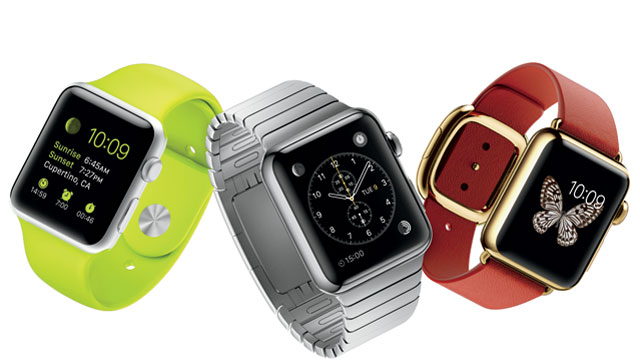
    Apple CEO Tim Cook has released the much anticipated Apple Watch, the company’s first new product since the iPad. Cook said the new watch, in addition to telling the time, was a “comprehensive health and fitness companion”. But we’re unlikely to hear much about how people will actually use this new product for some time.

    Our research has found that smartwatches certainly do have some benefits for users. But they also have a hidden, darker side which the companies selling them are unlikely to talk about.

    As part of a research project with Alberto Rizzoli, we have tried to understand what drives people to invest in smartwatches. One participant, a judge, hoped he could keep track of the deluge of e-mails during long hours in the courtroom when he had to pay attention — and be seen to pay attention.

    The dilemma is familiar to many of us. We spend our days engaged in social interaction. Huge amounts of our time are taken up with meetings or impromptu encounters with a colleagues. However, when we are in these meetings, our smartphone is buzzing away reminding us that our inbox is filling up. We may want to check these incoming messages, but know it would be rude to glace at our phone. When one of the first smartwatches came to market, the judge thought he had found the solution to this problem.

    We found that heavy smartwatch users valued how the devices helped them track information as it arrived while still appearing socially attentive. It also saved users the hassle of having to dig through their pockets or handbags to find a buzzing phone. Surprisingly, only about half the people we spoke to actually used all the health tracking technology built in to the watches. They were more interested in keeping abreast of their inbox than their calorie count.

    We also noticed a worrying side to these new devices as heavy users of the watches incorporate them into their daily routines — we call it the “phantom device effect”. They would compulsively check their watch not just for the time, but for a wide range of information. In some cases their new gizmo would become such an instinctive part of their life that even when not wearing one they would check their bare wrist. Some would feel a phantom buzz, notifying them of an imaginary incoming e-mail.

    The phantom device effect leads us to ask about just how ingrained in our daily habits these devices might become. Recent research has suggested that average smartphone users check their phone 150 times a day, starting just minutes after waking up.

    We also know this has the effect of extending work into all areas of our lives — monitoring work e-mails late into the night or during social or family events. We used to worry that the average person watched television for many hours every day. Now we accept as a matter of course the fact that we tied to our devices for most of the time we’re awake. Indeed, many of us go to bed with our smart devices quietly monitoring our rhythms as we sleep.
    apple-watch-640-2

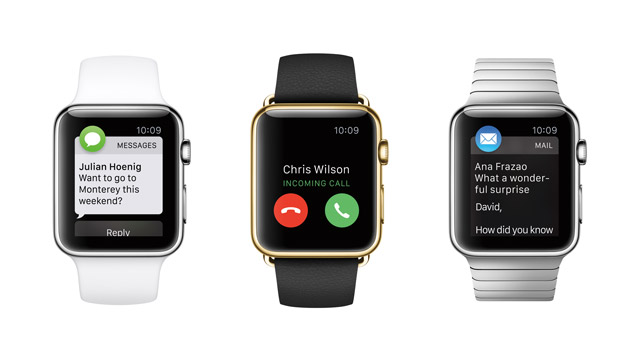
    This raises the question of what impact it will have on our lives. In the work Carl Cederström and I have done on the hidden dangers of wearables, a big concern is privacy.

    The Apple Watch, like most wearables, is essentially a tracking device, recording heart rate, sleep patterns, movement, whereabouts and much more depending on the apps installed. All this is packaged and transmitted to data centres for analysis. The result? A database of personal information of which the Stasi could only have dreamed.

    As well as sucking up personal information, wearables could fuel an unhealthy obsession with personal wellness. By pumping health and wellbeing information at us nonstop, we start to become a little too focused on our biorhythms. Data which would have been generated only in the most unusual situations now becomes commonplace, making people not just health conscious, but also self-obsessed.

    Instead of checking in with social networks, we spend more time checking in with our own bodily rhythms. As a result, other people start to become more interested in what is going on inside themselves rather than what is happening in the world.

    Information obsession
    As we pay more attention to our feed of personal biodata, we’re likely to become more anxious about things that we may never have given a second thought to in the past. Not walking your allotted steps in a day or finding you had a poor sleeping pattern at night can become a source of significant personal guilt or worry. As a result, we pour more attention into monitoring and controlling ourselves, giving us less time to do the things which actually make us happy.

    If Apple’s projections are indeed correct and tens of millions of people purchase smartwatches, it’s likely to create a step change in our lives. We already see people routinely posting on social media information they would have only shared with their doctor a few years ago.

    Widespread use of smartwatches could mean that instead of relieving our boredom by answering e-mails, people will spend their time sifting through their biodata stream, planning ways to maximise their personal wellness ratings. Rather than talking about what was on television last night, people will start comparing charts of their sleeping patterns. When this happens we will know that the internet of me has arrived.The Conversation

    • Andre Spicer is professor of organisational behaviour, Cass Business School, City University London
    • This article was originally published on The Conversation

    Follow TechCentral on Google News Add TechCentral as your preferred source on Google


    Andre Spicer Apple Apple Watch Tim Cook
    WhatsApp YouTube
    Share. Facebook Twitter LinkedIn WhatsApp Telegram Email Copy Link
    Previous ArticleNew MacBook steals the show
    Next Article Denel working on e-warfare programmes

    Related Posts

    John Ternus and the battle for Apple's soul

    John Ternus and the battle for Apple’s soul

    21 April 2026
    Amazon ramps up satellite war with $11.6-billion Globalstar buy

    Amazon ramps up satellite war with $11.6-billion Globalstar buy

    15 April 2026
    Microsoft is sacrificing Edge on the altar of Copilot

    Microsoft is sacrificing Edge on the altar of Copilot

    10 April 2026
    Company News
    How AnyDesk is redefining remote access for African enterprises

    How AnyDesk is redefining remote access for African enterprises

    22 April 2026
    Centracom's Pindrop takes the pain out of wholesale fibre

    Centracom’s Pindrop takes the pain out of wholesale fibre

    22 April 2026
    Conversational AI is rewriting the customer service playbook - CallMiner

    Conversational AI is rewriting the customer service playbook

    22 April 2026
    Opinion
    The conflict of interest at the heart of PayShap's slow adoption - Cheslyn Jacobs

    The conflict of interest at the heart of PayShap’s slow adoption

    26 March 2026
    South Africa's energy future hinges on getting wheeling right - Aishah Gire

    South Africa’s energy future hinges on getting wheeling right

    10 March 2026
    Hold the doom: the case for a South African comeback - Duncan McLeod

    Apple just dropped a bomb on the Windows world

    5 March 2026

    Subscribe to Updates

    Get the best South African technology news and analysis delivered to your e-mail inbox every morning.

    Latest Posts
    The AI agent race is on - and Google wants to win it - Sundar Pichai

    The AI agent race is on – and Google wants to win it

    22 April 2026
    Eskom developing bitcoin mining plan but needs Nersa's nod - Agnes Mlambo

    Eskom developing bitcoin mining plan but needs Nersa’s nod

    22 April 2026
    Eskom to decide fate of older coal stations by September - Dan Marokane

    Eskom to decide fate of older coal stations by September

    22 April 2026
    How AnyDesk is redefining remote access for African enterprises

    How AnyDesk is redefining remote access for African enterprises

    22 April 2026
    © 2009 - 2026 NewsCentral Media
    • Cookie policy (ZA)
    • TechCentral – privacy and Popia

    Type above and press Enter to search. Press Esc to cancel.

    Manage consent

    TechCentral uses cookies to enhance its offerings. Consenting to these technologies allows us to serve you better. Not consenting or withdrawing consent may adversely affect certain features and functions of the website.

    Functional Always active
    The technical storage or access is strictly necessary for the legitimate purpose of enabling the use of a specific service explicitly requested by the subscriber or user, or for the sole purpose of carrying out the transmission of a communication over an electronic communications network.
    Preferences
    The technical storage or access is necessary for the legitimate purpose of storing preferences that are not requested by the subscriber or user.
    Statistics
    The technical storage or access that is used exclusively for statistical purposes. The technical storage or access that is used exclusively for anonymous statistical purposes. Without a subpoena, voluntary compliance on the part of your Internet Service Provider, or additional records from a third party, information stored or retrieved for this purpose alone cannot usually be used to identify you.
    Marketing
    The technical storage or access is required to create user profiles to send advertising, or to track the user on a website or across several websites for similar marketing purposes.
    • Manage options
    • Manage services
    • Manage {vendor_count} vendors
    • Read more about these purposes
    View preferences
    • {title}
    • {title}
    • {title}