Close Menu
TechCentralTechCentral

    Subscribe to the newsletter

    Get the best South African technology news and analysis delivered to your e-mail inbox every morning.

    Facebook X (Twitter) YouTube LinkedIn
    WhatsApp Facebook X (Twitter) LinkedIn YouTube
    TechCentralTechCentral
    • News
      SA finally has a broadband map - and it reveals where the gaps are

      SA finally has a broadband map – and it reveals where the gaps are

      31 March 2026
      Bookmakers want banks to cut off offshore online gambling sites

      Bookmakers want banks to cut off offshore online gambling sites

      31 March 2026
      Government steps in as fuel shock hits

      Government steps in as fuel shock hits

      31 March 2026
      Uber commits R5-billion to South Africa amid licensing woes - Deepesh Thomas

      Uber commits R5-billion to South Africa amid licensing woes

      31 March 2026
      'It's done for my industry': the SA director betting everything on AI film - Donovan Marsh

      The SA director betting everything on AI filmmaking

      31 March 2026
    • World

      Apple plans to open Siri to rival AI services

      27 March 2026
      It's official: ads are coming to ChatGPT

      It’s official: ads are coming to ChatGPT

      23 March 2026
      Mystery Chinese AI model revealed to be Xiaomi's

      Mystery Chinese AI model revealed to be Xiaomi’s

      19 March 2026
      A mystery AI model has developers buzzing

      A mystery AI model has developers buzzing

      18 March 2026
      Samsung's trifold gamble ends in retreat

      Samsung’s trifold gamble ends in retreat

      17 March 2026
    • In-depth
      The R18-billion tech giant hiding in plain sight - Jens Montanana

      The R16-billion tech giant hiding in plain sight

      26 March 2026
      The last generation of coders

      The last generation of coders

      18 February 2026
      Sentech is in dire straits

      Sentech is in dire straits

      10 February 2026
      How liberalisation is rewiring South Africa's power sector

      How liberalisation is rewiring South Africa’s power sector

      21 January 2026
      The top-performing South African tech shares of 2025

      The top-performing South African tech shares of 2025

      12 January 2026
    • TCS
      Anoosh Rooplal

      TCS | Anoosh Rooplal on the Post Office’s last stand

      27 March 2026
      Meet the CIO | HealthBridge CTO Anton Fatti on the future of digital health

      Meet the CIO | Healthbridge CTO Anton Fatti on the future of digital health

      23 March 2026
      TCS+ | Arctic Wolf unpacks the evolving threat landscape for SA businesses - Clare Loveridge and Jason Oehley

      TCS+ | Arctic Wolf unpacks the evolving threat landscape for SA businesses

      19 March 2026
      TCS+ | Vox Kiwi: a wireless solution promising a fibre-like experience - Theo van Zyl

      TCS+ | Vox Kiwi: a wireless solution promising a fibre-like experience

      13 March 2026
      TCS+ | Flipping the narrative on AI in the Global South - Josefin Rosén

      TCS+ | Flipping the narrative on AI in the Global South

      13 March 2026
    • Opinion
      The conflict of interest at the heart of PayShap's slow adoption - Cheslyn Jacobs

      The conflict of interest at the heart of PayShap’s slow adoption

      26 March 2026
      South Africa's energy future hinges on getting wheeling right - Aishah Gire

      South Africa’s energy future hinges on getting wheeling right

      10 March 2026
      Hold the doom: the case for a South African comeback - Duncan McLeod

      Apple just dropped a bomb on the Windows world

      5 March 2026
      VC's centre of gravity is shifting - and South Africa is in the frame - Alison Collier

      VC’s centre of gravity is shifting – and South Africa is in the frame

      3 March 2026
      Hold the doom: the case for a South African comeback - Duncan McLeod

      Hold the doom: the case for a South African comeback

      26 February 2026
    • Company Hubs
      • 1Stream
      • Africa Data Centres
      • AfriGIS
      • Altron Digital Business
      • Altron Document Solutions
      • Altron Group
      • Arctic Wolf
      • Ascent Technology
      • AvertITD
      • Braintree
      • CallMiner
      • CambriLearn
      • CYBER1 Solutions
      • Digicloud Africa
      • Digimune
      • Domains.co.za
      • ESET
      • Euphoria Telecom
      • HOSTAFRICA
      • Incredible Business
      • iONLINE
      • IQbusiness
      • Iris Network Systems
      • LSD Open
      • Mitel
      • NEC XON
      • Netstar
      • Network Platforms
      • Next DLP
      • Ovations
      • Paracon
      • Paratus
      • Q-KON
      • SevenC
      • SkyWire
      • Solid8 Technologies
      • Telit Cinterion
      • Telviva
      • Tenable
      • Vertiv
      • Videri Digital
      • Vodacom Business
      • Wipro
      • Workday
      • XLink
    • Sections
      • AI and machine learning
      • Banking
      • Broadcasting and Media
      • Cloud services
      • Contact centres and CX
      • Cryptocurrencies
      • Education and skills
      • Electronics and hardware
      • Energy and sustainability
      • Enterprise software
      • Financial services
      • HealthTech
      • Information security
      • Internet and connectivity
      • Internet of Things
      • Investment
      • IT services
      • Lifestyle
      • Motoring
      • Policy and regulation
      • Public sector
      • Retail and e-commerce
      • Satellite communications
      • Science
      • SMEs and start-ups
      • Social media
      • Talent and leadership
      • Telecoms
    • Events
    • Advertise
    TechCentralTechCentral
    Home » Editor's pick » Windows 95 turns 20

    Windows 95 turns 20

    By The Conversation23 August 2015
    Twitter LinkedIn Facebook WhatsApp Email Telegram Copy Link
    News Alerts
    WhatsApp

    windows-95-640

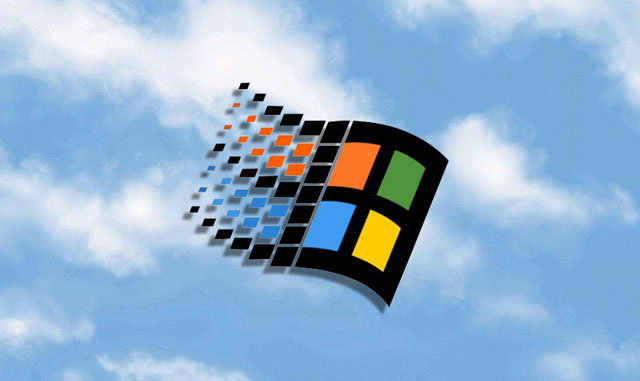
    The arrival of Microsoft Windows 95 on 24 August 1995 brought about a desktop PC boom. With an easier and more intuitive graphical user interface than previous versions, it appealed to more than just business, and Bill Gates’s stated aim of one PC per person per desk was set in motion. This was a time of 320MB hard drives, 8MB of RAM and 15-inch CRT monitors. For most home users, the Internet had only just arrived.

    Windows 95 introduced the Start menu, powered by a button in the bottom-left corner of the desktop. This gives a central point of entry into menus from which to choose commands and applications. The simplicity of this menu enables users to easily find commonly used documents and applications. All subsequent versions of Windows have kept this menu, with the notable exception of Windows 8, a change which prompted an enormous backlash.

    We take these intuitive graphic interfaces for granted today, but earlier operating systems such as DOS and CP/M allowed the user to interact using only typed text commands. This all changed in the 1970s, with Ivan Sutherland’s work with Sketchpad and the use of lightpens to control CRT displays, Douglas Engelbart’s development of the computer mouse, and the Xerox Parc research team’s creation of the Windows Icon Menu Pointer graphical interfaces paradigm (Wimp) — the combination of mouse pointer, window and icons that remains standard to this day.

    By the early 1980s, Apple had developed graphical operating systems for its Lisa (released in 1983) and Macintosh (1984) computers, and Microsoft had released Windows (1985).

    All these interfaces rely on the central idea of the desktop, a comprehensible metaphor for a computer. We work with information in files and organise them in folders, remove unwanted information to the trash can, and note something of interest with a bookmark.

    Metaphors are useful. They enable users to grasp concepts faster, but rely on the metaphor remaining comprehensible to the user and useful for the designer and programmer putting it into effect — without stretching it beyond belief. The advantage is that the pictures used to represent functions (icons) look similar to those in the workplace, and so the metaphor is readily understandable.

    But 20 years after Windows 95, the world has changed. We have smartphones and smart TVs, we use the Internet prolifically for practically everything. Touchscreens are now almost more ubiquitous than the classic mouse-driven interface approach, and screen resolution is so high individual pixels can be difficult to see. We still have Windows, but things are changing. Indeed, they need to change.

    Windows 95 introduced the Start menu
    Windows 95 introduced the Start menu

    The desktop metaphor has been the metaphor of choice for so long, and this ubiquity has helped computers find a place within households as a common, familiar tool rather than as specialist, computerised equipment. But is it still appropriate? After all, few of us sit in an office today with paper-strewn desks; books are read on a tablet or phone rather than hard-copies; printing e-mails is discouraged; most type their own letters and write their own e-mails; files are electronic not physical; we search the Internet for information rather than flick through reference books; and increasingly the categorisation and organisation of data has taken second place to granular search.

    Mouse-driven interfaces rely on a single point of input, but we’re increasingly seeing touch-based interfaces that accept swipes, touches and shakes in various combinations. We are moving away from the dictatorship of the mouse pointer. Dual-finger scrolling and pinch-to-zoom are new emerging metaphors — natural user interfaces (NUI) rather than graphical user interfaces.

    The next 20 years
    It’s hard to tell what the next 20 years hold, but one thing that is certain is that interfaces will make use of more human senses to display information and to control the computer. Interfaces will become more transparent, more intuitive and less set around items such as boxes, arrows or icons. Human gestures will be more commonplace. And such interfaces will be incorporated into technology throughout the world, through virtual reality and augmented reality.

    These interfaces will be appear and feel more natural. Some suitable devices already exist, such as ShiverPad, that provide shear forces on surfaces that provide a frictional feel to touch devices. Or Geomagic’s Touch X (formerly the Sensible Phantom Desktop) that delivers three-dimensional forces to make 3D objects feel solid.

    Airborne haptics are another promising technology that develop tactile interfaces in mid-air. Through ultrasound, users can feel acoustic radiation fields that emanate from devices, without needing to touch any physical surface. Videogame manufacturers have led the way with these interfaces, including the Microsoft Kinect and Hololens that allow users to use body gestures to control the interface, or with their eyes through head-mounted displays.

    Once interaction with a computer or device can be commanded using natural gestures, movements of the body or spoken commands, the necessity for the Windows-based metaphor of computer interaction begins to look dated — as old as it is.The Conversation

    • Jonathan Roberts is senior lecturer in computer science at Bangor University
    • This article was originally published on The Conversation

    Follow TechCentral on Google News Add TechCentral as your preferred source on Google


    Jonathan Roberts Microsoft Windows 95
    WhatsApp YouTube
    Share. Facebook Twitter LinkedIn WhatsApp Telegram Email Copy Link
    Previous ArticleU.N.C.L.E. shows spy spoofs are back
    Next Article Didata’s new CEO sets out his game plan

    Related Posts

    Microsoft rolls out big Copilot upgrades

    Microsoft rolls out big Copilot upgrades

    31 March 2026
    Defend your cloud with Altron Digital Business

    Defend your cloud with Altron Digital Business

    26 March 2026
    AI is coming to your accounting software

    Sage bets AI can save small business owners from admin hell

    13 March 2026
    Company News
    How consumers can identify a true QLED TV

    How consumers can identify a true QLED TV

    30 March 2026
    Kaspersky, Afripol team up to combat African cybercrime

    Kaspersky, Afripol team up to combat African cybercrime

    30 March 2026
    Modernise infrastructure with next-gen compute using HPE VM Essentials - Riaan Swart Tarsus Distribution

    Modernise infrastructure with next-gen compute using HPE VM Essentials

    30 March 2026
    Opinion
    The conflict of interest at the heart of PayShap's slow adoption - Cheslyn Jacobs

    The conflict of interest at the heart of PayShap’s slow adoption

    26 March 2026
    South Africa's energy future hinges on getting wheeling right - Aishah Gire

    South Africa’s energy future hinges on getting wheeling right

    10 March 2026
    Hold the doom: the case for a South African comeback - Duncan McLeod

    Apple just dropped a bomb on the Windows world

    5 March 2026

    Subscribe to Updates

    Get the best South African technology news and analysis delivered to your e-mail inbox every morning.

    Latest Posts
    SA finally has a broadband map - and it reveals where the gaps are

    SA finally has a broadband map – and it reveals where the gaps are

    31 March 2026
    Bookmakers want banks to cut off offshore online gambling sites

    Bookmakers want banks to cut off offshore online gambling sites

    31 March 2026
    Government steps in as fuel shock hits

    Government steps in as fuel shock hits

    31 March 2026
    Uber commits R5-billion to South Africa amid licensing woes - Deepesh Thomas

    Uber commits R5-billion to South Africa amid licensing woes

    31 March 2026
    © 2009 - 2026 NewsCentral Media
    • Cookie policy (ZA)
    • TechCentral – privacy and Popia

    Type above and press Enter to search. Press Esc to cancel.

    Manage consent

    TechCentral uses cookies to enhance its offerings. Consenting to these technologies allows us to serve you better. Not consenting or withdrawing consent may adversely affect certain features and functions of the website.

    Functional Always active
    The technical storage or access is strictly necessary for the legitimate purpose of enabling the use of a specific service explicitly requested by the subscriber or user, or for the sole purpose of carrying out the transmission of a communication over an electronic communications network.
    Preferences
    The technical storage or access is necessary for the legitimate purpose of storing preferences that are not requested by the subscriber or user.
    Statistics
    The technical storage or access that is used exclusively for statistical purposes. The technical storage or access that is used exclusively for anonymous statistical purposes. Without a subpoena, voluntary compliance on the part of your Internet Service Provider, or additional records from a third party, information stored or retrieved for this purpose alone cannot usually be used to identify you.
    Marketing
    The technical storage or access is required to create user profiles to send advertising, or to track the user on a website or across several websites for similar marketing purposes.
    • Manage options
    • Manage services
    • Manage {vendor_count} vendors
    • Read more about these purposes
    View preferences
    • {title}
    • {title}
    • {title}