Close Menu
TechCentralTechCentral

    Subscribe to the newsletter

    Get the best South African technology news and analysis delivered to your e-mail inbox every morning.

    Facebook X (Twitter) YouTube LinkedIn
    WhatsApp Facebook X (Twitter) LinkedIn YouTube
    TechCentralTechCentral
    • News
      Xneelo breaks ground on second Samrand data centre

      Xneelo breaks ground on second Samrand data centre

      3 February 2026
      Heavyweights backing ZARU, a new rand-based stablecoin in South Africa

      Heavyweights backing ZARU, a new rand-based stablecoin

      3 February 2026
      China's Haier takes aim at Samsung, LG and Hisense in South Africa

      China’s Haier takes aim at Samsung, LG and Hisense in South Africa

      3 February 2026
      South African tech start-ups that sold big on the world stage

      South African tech start-ups that sold big on the world stage

      3 February 2026
      Standard Bank branches are going cashless - Kabelo Makeke

      Standard Bank branches are going cashless

      3 February 2026
    • World
      Apple acquires audio AI start-up Q.ai

      Apple acquires audio AI start-up Q.ai

      30 January 2026
      SpaceX IPO may be largest in history

      SpaceX IPO may be largest in history

      28 January 2026
      Nvidia throws AI at the weather

      Nvidia throws AI at weather forecasting

      27 January 2026
      Debate erupts over value of in-flight Wi-Fi

      Debate erupts over value of in-flight Wi-Fi

      26 January 2026
      Intel takes another hit - Intel CEO Lip-Bu Tan. Laure Andrillon/Reuters

      Intel takes another hit

      23 January 2026
    • In-depth
      How liberalisation is rewiring South Africa's power sector

      How liberalisation is rewiring South Africa’s power sector

      21 January 2026
      The top-performing South African tech shares of 2025

      The top-performing South African tech shares of 2025

      12 January 2026
      Digital authoritarianism grows as African states normalise internet blackouts

      Digital authoritarianism grows as African states normalise internet blackouts

      19 December 2025
      TechCentral's South African Newsmakers of 2025

      TechCentral’s South African Newsmakers of 2025

      18 December 2025
      Black Friday goes digital in South Africa as online spending surges to record high

      Black Friday goes digital in South Africa as online spending surges to record high

      4 December 2025
    • TCS
      TCS+ | How Cloud On Demand is helping SA businesses succeed in the cloud - Xhenia Rhode, Dion Kalicharan

      TCS+ | Cloud On Demand and Consnet: inside a real-world AWS partner success story

      30 January 2026
      Watts & Wheels S1E3: 'BYD's Corolla Cross challenger'

      Watts & Wheels S1E3: ‘BYD’s Corolla Cross challenger’

      30 January 2026
      Watts & Wheels S1E3: 'BYD's Corolla Cross challenger'

      Watts & Wheels S1E2: ‘China attacks, BMW digs in, Toyota’s sublime supercar’

      23 January 2026

      TCS+ | Why cybersecurity is becoming a competitive advantage for SA businesses

      20 January 2026
      Watts & Wheels S1E3: 'BYD's Corolla Cross challenger'

      Watts & Wheels: S1E1 – ‘William, Prince of Wheels’

      8 January 2026
    • Opinion
      South Africa's skills advantage is being overlooked at home - Richard Firth

      South Africa’s skills advantage is being overlooked at home

      29 January 2026
      Why Elon Musk's Starlink is a 'hard no' for me - Songezo Zibi

      Why Elon Musk’s Starlink is a ‘hard no’ for me

      26 January 2026
      South Africa's new fibre broadband battle - Duncan McLeod

      South Africa’s new fibre broadband battle

      20 January 2026
      AI moves from pilots to production in South African companies - Nazia Pillay SAP

      AI moves from pilots to production in South African companies

      20 January 2026
      South Africa's new fibre broadband battle - Duncan McLeod

      ANC’s attack on Solly Malatsi shows how BEE dogma trumps economic reality

      14 December 2025
    • Company Hubs
      • Africa Data Centres
      • AfriGIS
      • Altron Digital Business
      • Altron Document Solutions
      • Altron Group
      • Arctic Wolf
      • AvertITD
      • Braintree
      • CallMiner
      • CambriLearn
      • CYBER1 Solutions
      • Digicloud Africa
      • Digimune
      • Domains.co.za
      • ESET
      • Euphoria Telecom
      • Incredible Business
      • iONLINE
      • IQbusiness
      • Iris Network Systems
      • LSD Open
      • NEC XON
      • Netstar
      • Network Platforms
      • Next DLP
      • Ovations
      • Paracon
      • Paratus
      • Q-KON
      • SevenC
      • SkyWire
      • Solid8 Technologies
      • Telit Cinterion
      • Tenable
      • Vertiv
      • Videri Digital
      • Vodacom Business
      • Wipro
      • Workday
      • XLink
    • Sections
      • AI and machine learning
      • Banking
      • Broadcasting and Media
      • Cloud services
      • Contact centres and CX
      • Cryptocurrencies
      • Education and skills
      • Electronics and hardware
      • Energy and sustainability
      • Enterprise software
      • Financial services
      • Information security
      • Internet and connectivity
      • Internet of Things
      • Investment
      • IT services
      • Lifestyle
      • Motoring
      • Public sector
      • Retail and e-commerce
      • Satellite communications
      • Science
      • SMEs and start-ups
      • Social media
      • Talent and leadership
      • Telecoms
    • Events
    • Advertise
    TechCentralTechCentral
    Home » Sections » Public sector » With Eskom, Ramaphosa faces his Thatcher moment

    With Eskom, Ramaphosa faces his Thatcher moment

    By Agency Staff18 March 2019
    Twitter LinkedIn Facebook WhatsApp Email Telegram Copy Link
    News Alerts
    WhatsApp
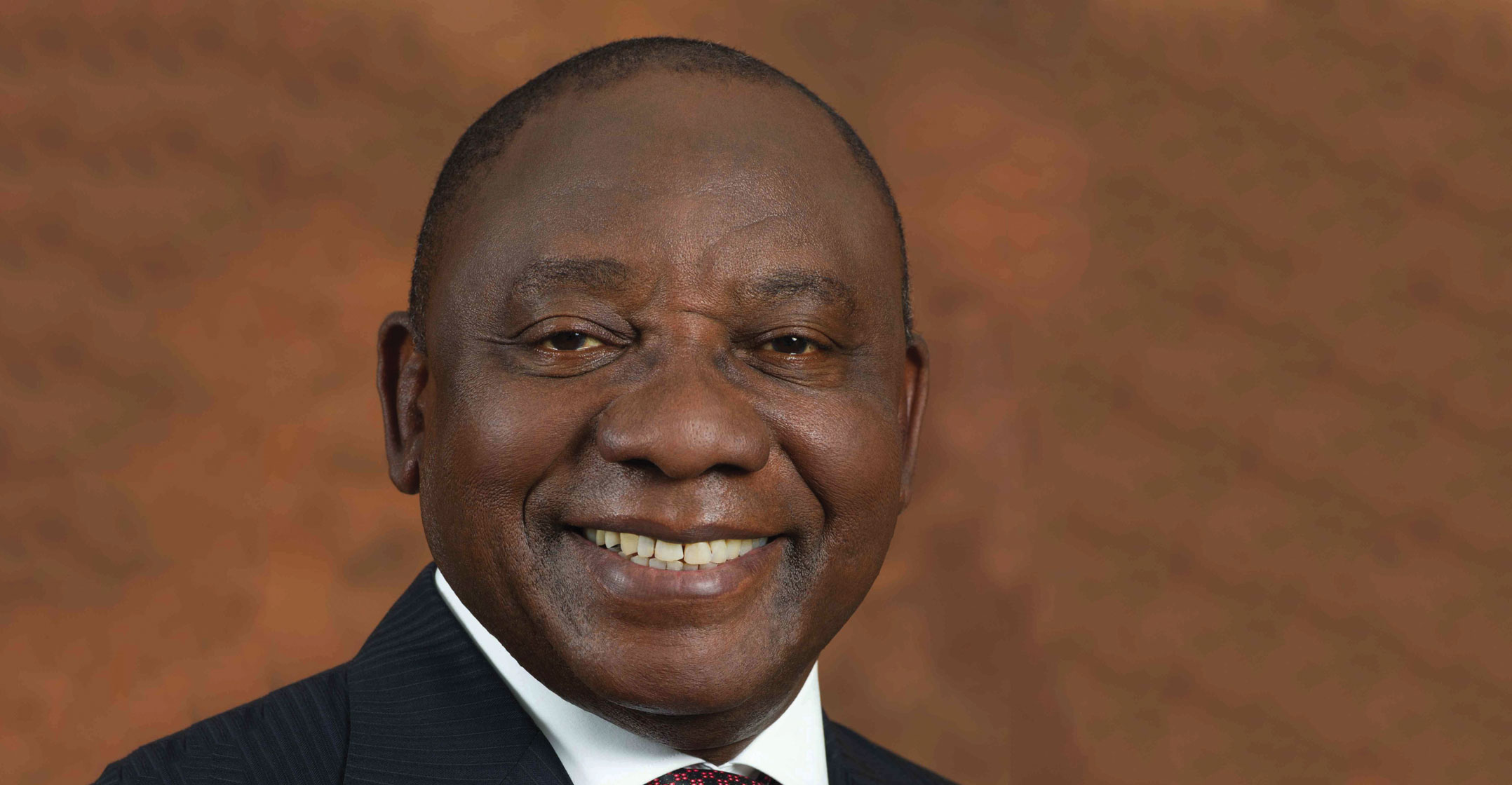
    Cyril Ramaphosa. Image c/o GCIS

    In 1987, an anti-apartheid firebrand named Cyril Ramaphosa led South Africa’s biggest-ever mining strike. Some 300 000 miners — from a union Ramaphosa himself had founded — walked off the job, protesting pay and working conditions.

    The mining company “used fascist methods to destroy workers’ lives”, Ramaphosa declared. Over the three-week strike, nine people were killed, 500 were injured and more than 50 000 were fired. Still, it demonstrated the power that organised black labour could exercise and the economic damage it could inflict on South Africa.

    Three decades later, Ramaphosa, now the reformist president of his country, is seeing the issue from the other side. One of the chief obstacles to his agenda is South Africa’s powerful unions, which are deeply embedded in the government and economy. To reignite growth in a stagnating economy and lower one of the world’s highest unemployment rates, he may need to take on the movement he helped create.

    He wants to move the power to the middle, he wants to reduce the power of unions in a party that is in an alliance with the unions

    Some analysts call it his “Thatcher moment”, a reference to the then-British prime minister’s defeat of the country’s powerful labour unions, which set the UK economy on a decades-long growth path.

    “He wants to move the power to the middle, he wants to reduce the power of unions in a party that is in an alliance with the unions,” said Nic Cheeseman, a professor of democracy and international development at the University of Birmingham in northern England. “Thatcher didn’t care about losing the support of the unions because she never had it.” In that sense, Ramaphosa’s task might be more akin to that of Labour Prime Minister Tony Blair, he said.

    The state power utility has 66% too many employees, according to the World Bank, while the 1.2 million-strong public service absorbs 35% of the budget and the teachers’ union exacerbates a dysfunctional primary education system that the World Economic Forum ranks 116th out of 137. Labour reform is key to the success of Ramaphosa’s plan to lure US$100-billion in investment over five years.

    Intertwined

    At the heart of the president’s problem is the intertwined nature of the ruling party and the union movement, which fought side-by-side to end apartheid. Since Nelson Mandela’s ANC won the country’s first all-race elections in 1994, it has governed in an alliance with the South African Communist Party and the Congress of South African Trade Unions (Cosatu), the country’s biggest labour group.

    While the ANC has long advocated an economy mostly guided by orthodox economic policies, its union allies remain steeped in the Marxist-Leninist dogma that informed many of the protest organisations. The result: a constitution that gives workers some of the strongest rights in the world. That helped raise union members out of poverty, but labour laws also make it difficult to dismiss staff and boost worker costs above those of other emerging markets.

    “Labour effectively has a veto on economic policy in South Africa,” said Claude Baissac, who leads Eunomix, a South African country-risk consulting firm. “The government always loses, condemning a vast swath of the population to exclusion, unemployment and poverty.”
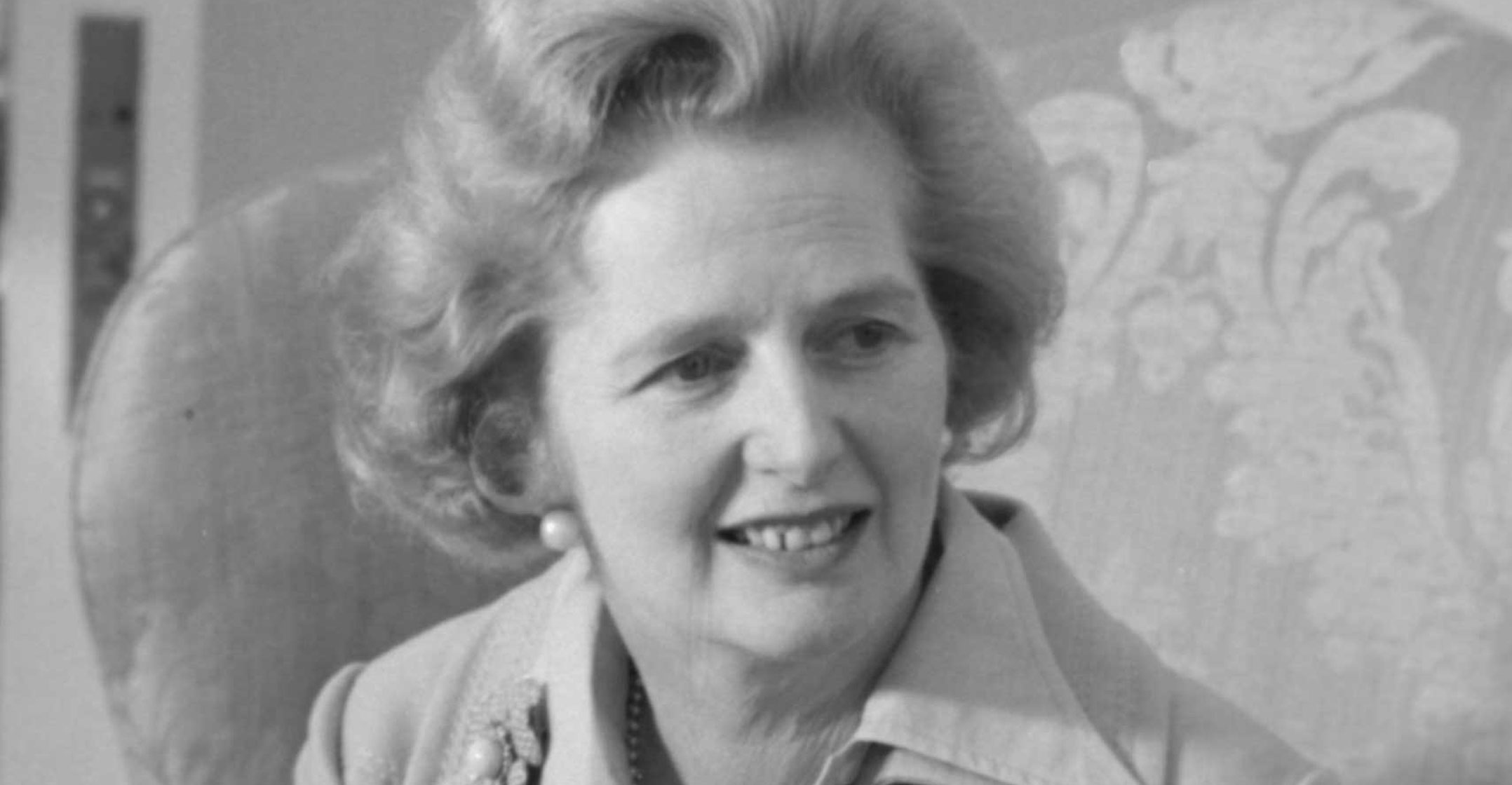
    Margaret Thatcher … broke the back of the trade unions

    While Ramaphosa has been criticised for taking too slow an approach to reform, he has fired and replaced the boards of state companies including the power utility, Eskom, and boosted the power of the prosecutorial services to tackle graft. The slowness is due to his meticulous style and his training as a lawyer, said Richard Calland, a founding partner of The Paternoster Group, which advises on political risk.

    The president’s task is complicated by the fact that he must fight an election on 8 May. He’s likely to save major policy battles until after that, especially given that he inherited the presidency last year after the resignation of Jacob Zuma. Winning an electoral mandate will strengthen his hand and that of the ANC, allies say.

    Come any form of retrenchment we must make it hell, we must make it expensive or the capitalists will use it

    But a poor showing, even in victory, would weaken Ramaphosa’s standing in the party and his ability to make unpopular decisions. The ANC slumped to its worst-ever performance in 2016 municipal elections, securing 54%. Ramaphosa himself won control of the ruling party in December 2017 by the narrowest of margins as Zuma backed his ex-wife, veteran politician Nkosazana Dlamini-Zuma, for the post.

    In his state of the nation address on 7 February, Ramaphosa spoke only of the need for a “pragmatic and cooperative relationship” between the government, unions and the private sector. He also announced a restructuring of Eskom and an early retirement programme for state workers.

    Backlash

    The backlash was swift: Cosatu staged nationwide protests over potential job losses on 13 February. The biggest union at Eskom later said it would shut down the utility for a week right before the elections to protest the plan.

    “Come any form of retrenchment we must make it hell, we must make it expensive or the capitalists will use it” to boost profits, said Phillip Vilakazi, deputy president of the National Union of Mineworkers, the union Ramaphosa founded. “This is an ideological war. As workers, we are saying socialism is the future. We must build it now.”

    The government has folded to union pressure at times since Ramaphosa took power. When Eskom’s board last year said pay wouldn’t be increased because of the company’s financial problems, which include R419-billion in debt, workers protested and some sabotaged power plants leading to electricity outages. Public enterprises minister Pravin Gordhan intervened and Eskom agreed to boost pay by an inflation-busting 7% — and even more for the next two years.
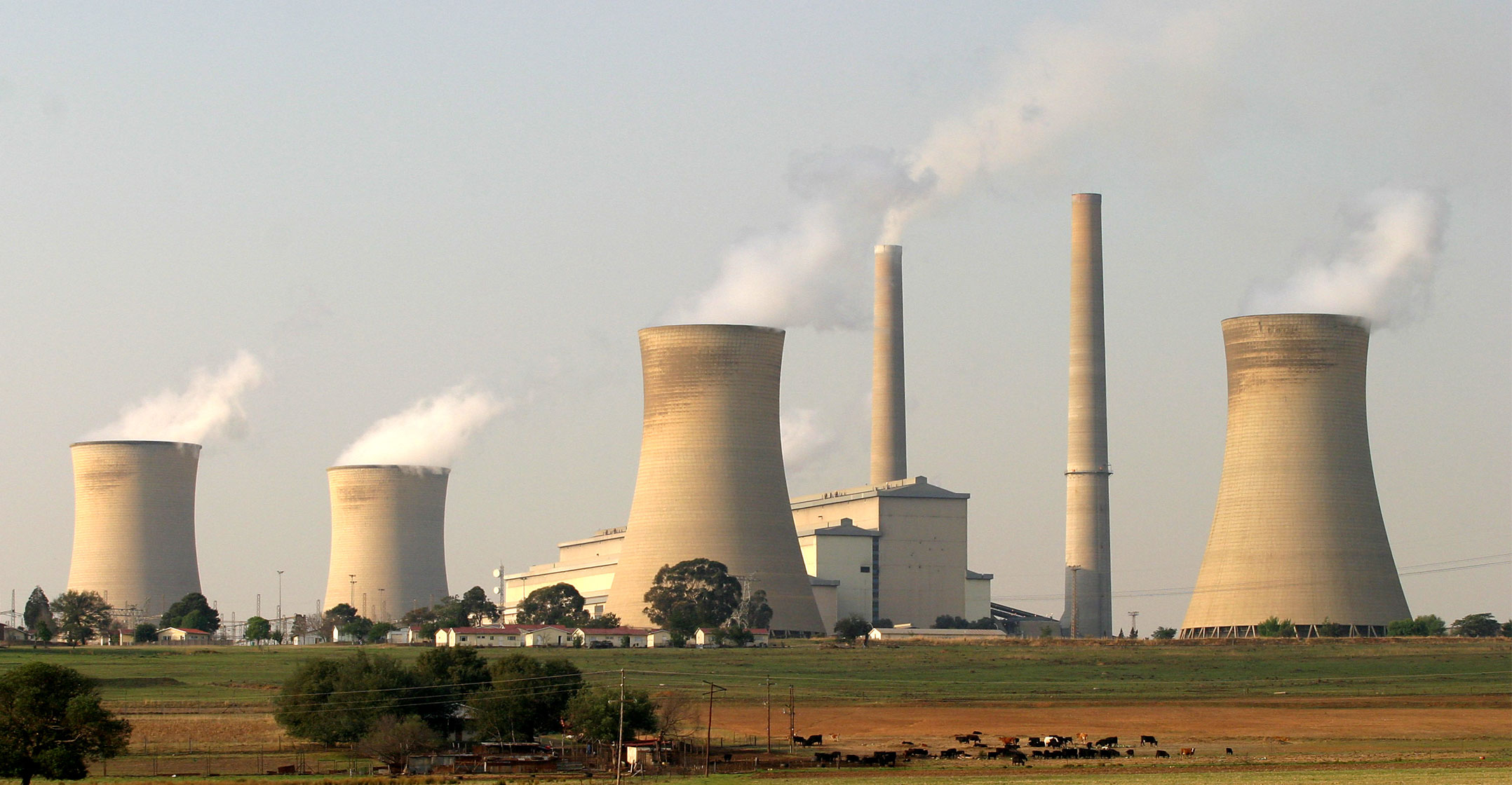
    Eskom’s workforce is hugely bloated

    Ramaphosa also faces a divided and competitive labour movement. In 2014, the National Union of Metalworkers of South Africa, an industrial union, took its 340 000 members out of Cosatu. Meanwhile, the Association of Mineworkers and Construction Union has rapidly risen to challenge the NUM.

    Bheki Ntshalintshali, the general secretary of Cosatu, said he believes Ramaphosa “has a background and better understanding of the problems a trade union faces”, but the president’s post-union career is problematic for him in his relations with labour unions.

    The unions and Ramaphosa are on a collision course. We have an immovable object and an unstoppable force

    Ramaphosa’s business career has included a coal-mining venture with Glencore, running the South African franchise of McDonald’s and the chairmanship of some of the country’s biggest companies. As president, he has distanced himself from his business activities, selling some and ceding management of others, but he still has a fortune of several hundred million dollars, according to Forbes.

    A violent incident in 2012 also hurt Ramaphosa’s labour credentials. He was accused by unionists of instigating the massacre of 34 mineworkers by police at a Marikana mine, which his company co-owned with Lonmin. He has denied the allegations.

    Something must happen

    Enoch Godongwana, the ANC’s head of economic transformation, says Ramaphosa and other ex-unionists in his government, such as mines minister Gwede Mantashe, “understand the terrain; they also know the individuals within the labour movement”.

    But something will have to be done. Eskom is struggling to keep the lights on, the country’s sole remaining investment-grade credit rating is at risk, unemployment hovers at 27% and growth in 2018 was a paltry 0.8%.

    “The unions and Ramaphosa are on a collision course,” said Andrew Levy, managing partner of Andrew Levy Employment, which advises companies on labour relations and monitors industrial action. “We have an immovable object and an unstoppable force.”  — Reported by Antony Sguazzin, (c) 2019 Bloomberg LP



    Cosatu Cyril Ramaphosa Eskom top
    WhatsApp YouTube Follow on Google News Add as preferred source on Google
    Share. Facebook Twitter LinkedIn WhatsApp Telegram Email Copy Link
    Previous ArticleScanning – so many choices, so much support
    Next Article Huawei defies global troubles with strong sales growth

    Related Posts

    BMW South Africa warns EV policy paralysis is stalling investment - Peter van Binsbergen

    BMW South Africa warns EV policy paralysis is stalling investment

    29 January 2026
    Outa warns homeowners against rushing to register rooftop solar

    Outa warns homeowners against rushing to register rooftop solar

    27 January 2026
    Digital IDs will launch before year-end, government says - Maropene Ramokgopa

    Digital IDs will launch before year-end, government says

    23 January 2026
    Company News
    Breaking silos with SAS: Agile insurance in an uncertain world

    Breaking silos with SAS: agile insurance in an uncertain world

    2 February 2026
    Stellar year expected for Digicloud Africa and its reseller partners - Gregory MacLennan

    Stellar year expected for Digicloud Africa and its reseller partners

    2 February 2026
    How to subscribe to South Africa's best tech podcasts - TechCentral

    How to subscribe to South Africa’s best tech podcasts

    2 February 2026
    Opinion
    South Africa's skills advantage is being overlooked at home - Richard Firth

    South Africa’s skills advantage is being overlooked at home

    29 January 2026
    Why Elon Musk's Starlink is a 'hard no' for me - Songezo Zibi

    Why Elon Musk’s Starlink is a ‘hard no’ for me

    26 January 2026
    South Africa's new fibre broadband battle - Duncan McLeod

    South Africa’s new fibre broadband battle

    20 January 2026

    Subscribe to Updates

    Get the best South African technology news and analysis delivered to your e-mail inbox every morning.

    Latest Posts
    Xneelo breaks ground on second Samrand data centre

    Xneelo breaks ground on second Samrand data centre

    3 February 2026
    Heavyweights backing ZARU, a new rand-based stablecoin in South Africa

    Heavyweights backing ZARU, a new rand-based stablecoin

    3 February 2026
    China's Haier takes aim at Samsung, LG and Hisense in South Africa

    China’s Haier takes aim at Samsung, LG and Hisense in South Africa

    3 February 2026
    South African tech start-ups that sold big on the world stage

    South African tech start-ups that sold big on the world stage

    3 February 2026
    © 2009 - 2026 NewsCentral Media
    • Cookie policy (ZA)
    • TechCentral – privacy and Popia

    Type above and press Enter to search. Press Esc to cancel.

    Manage consent

    TechCentral uses cookies to enhance its offerings. Consenting to these technologies allows us to serve you better. Not consenting or withdrawing consent may adversely affect certain features and functions of the website.

    Functional Always active
    The technical storage or access is strictly necessary for the legitimate purpose of enabling the use of a specific service explicitly requested by the subscriber or user, or for the sole purpose of carrying out the transmission of a communication over an electronic communications network.
    Preferences
    The technical storage or access is necessary for the legitimate purpose of storing preferences that are not requested by the subscriber or user.
    Statistics
    The technical storage or access that is used exclusively for statistical purposes. The technical storage or access that is used exclusively for anonymous statistical purposes. Without a subpoena, voluntary compliance on the part of your Internet Service Provider, or additional records from a third party, information stored or retrieved for this purpose alone cannot usually be used to identify you.
    Marketing
    The technical storage or access is required to create user profiles to send advertising, or to track the user on a website or across several websites for similar marketing purposes.
    • Manage options
    • Manage services
    • Manage {vendor_count} vendors
    • Read more about these purposes
    View preferences
    • {title}
    • {title}
    • {title}