Close Menu
TechCentralTechCentral

    Subscribe to the newsletter

    Get the best South African technology news and analysis delivered to your e-mail inbox every morning.

    Facebook X (Twitter) YouTube LinkedIn
    WhatsApp Facebook X (Twitter) LinkedIn YouTube
    TechCentralTechCentral
    • News
      Vuyani Jarana: Mobile coverage masks a deeper broadband failure

      Vuyani Jarana: Mobile coverage masks a deeper broadband failure

      30 January 2026
      SABC Plus to flight Microsoft AI training videos

      SABC Plus to flight Microsoft AI training videos

      30 January 2026
      Fibre ducts

      Fibre industry consolidation in KZN

      30 January 2026
      Watts & Wheels S1E3: 'BYD's Corolla Cross challenger'

      Watts & Wheels S1E3: ‘BYD’s Corolla Cross challenger’

      30 January 2026
      What ordinary South Africans really think of AI

      What ordinary South Africans really think of AI

      30 January 2026
    • World
      Apple acquires audio AI start-up Q.ai

      Apple acquires audio AI start-up Q.ai

      30 January 2026
      SpaceX IPO may be largest in history

      SpaceX IPO may be largest in history

      28 January 2026
      Nvidia throws AI at the weather

      Nvidia throws AI at weather forecasting

      27 January 2026
      Debate erupts over value of in-flight Wi-Fi

      Debate erupts over value of in-flight Wi-Fi

      26 January 2026
      Intel takes another hit - Intel CEO Lip-Bu Tan. Laure Andrillon/Reuters

      Intel takes another hit

      23 January 2026
    • In-depth
      How liberalisation is rewiring South Africa's power sector

      How liberalisation is rewiring South Africa’s power sector

      21 January 2026
      The top-performing South African tech shares of 2025

      The top-performing South African tech shares of 2025

      12 January 2026
      Digital authoritarianism grows as African states normalise internet blackouts

      Digital authoritarianism grows as African states normalise internet blackouts

      19 December 2025
      TechCentral's South African Newsmakers of 2025

      TechCentral’s South African Newsmakers of 2025

      18 December 2025
      Black Friday goes digital in South Africa as online spending surges to record high

      Black Friday goes digital in South Africa as online spending surges to record high

      4 December 2025
    • TCS
      TCS+ | How Cloud On Demand is helping SA businesses succeed in the cloud - Xhenia Rhode, Dion Kalicharan

      TCS+ | Cloud On Demand and Consnet: inside a real-world AWS partner success story

      30 January 2026
      Watts & Wheels S1E3: 'BYD's Corolla Cross challenger'

      Watts & Wheels S1E2: ‘China attacks, BMW digs in, Toyota’s sublime supercar’

      23 January 2026

      TCS+ | Why cybersecurity is becoming a competitive advantage for SA businesses

      20 January 2026
      Watts & Wheels S1E3: 'BYD's Corolla Cross challenger'

      Watts & Wheels: S1E1 – ‘William, Prince of Wheels’

      8 January 2026
      TCS+ | Africa's digital transformation - unlocking AI through cloud and culture - Cliff de Wit Accelera Digital Group

      TCS+ | Cloud without culture won’t deliver AI: Accelera’s Cliff de Wit

      12 December 2025
    • Opinion
      South Africa's skills advantage is being overlooked at home - Richard Firth

      South Africa’s skills advantage is being overlooked at home

      29 January 2026
      Why Elon Musk's Starlink is a 'hard no' for me - Songezo Zibi

      Why Elon Musk’s Starlink is a ‘hard no’ for me

      26 January 2026
      South Africa's new fibre broadband battle - Duncan McLeod

      South Africa’s new fibre broadband battle

      20 January 2026
      AI moves from pilots to production in South African companies - Nazia Pillay SAP

      AI moves from pilots to production in South African companies

      20 January 2026
      South Africa's new fibre broadband battle - Duncan McLeod

      ANC’s attack on Solly Malatsi shows how BEE dogma trumps economic reality

      14 December 2025
    • Company Hubs
      • Africa Data Centres
      • AfriGIS
      • Altron Digital Business
      • Altron Document Solutions
      • Altron Group
      • Arctic Wolf
      • AvertITD
      • Braintree
      • CallMiner
      • CambriLearn
      • CYBER1 Solutions
      • Digicloud Africa
      • Digimune
      • Domains.co.za
      • ESET
      • Euphoria Telecom
      • Incredible Business
      • iONLINE
      • IQbusiness
      • Iris Network Systems
      • LSD Open
      • NEC XON
      • Netstar
      • Network Platforms
      • Next DLP
      • Ovations
      • Paracon
      • Paratus
      • Q-KON
      • SevenC
      • SkyWire
      • Solid8 Technologies
      • Telit Cinterion
      • Tenable
      • Vertiv
      • Videri Digital
      • Vodacom Business
      • Wipro
      • Workday
      • XLink
    • Sections
      • AI and machine learning
      • Banking
      • Broadcasting and Media
      • Cloud services
      • Contact centres and CX
      • Cryptocurrencies
      • Education and skills
      • Electronics and hardware
      • Energy and sustainability
      • Enterprise software
      • Financial services
      • Information security
      • Internet and connectivity
      • Internet of Things
      • Investment
      • IT services
      • Lifestyle
      • Motoring
      • Public sector
      • Retail and e-commerce
      • Satellite communications
      • Science
      • SMEs and start-ups
      • Social media
      • Talent and leadership
      • Telecoms
    • Events
    • Advertise
    TechCentralTechCentral
    Home » Sections » Energy and sustainability » World needs 200 000 offshore wind turbines

    World needs 200 000 offshore wind turbines

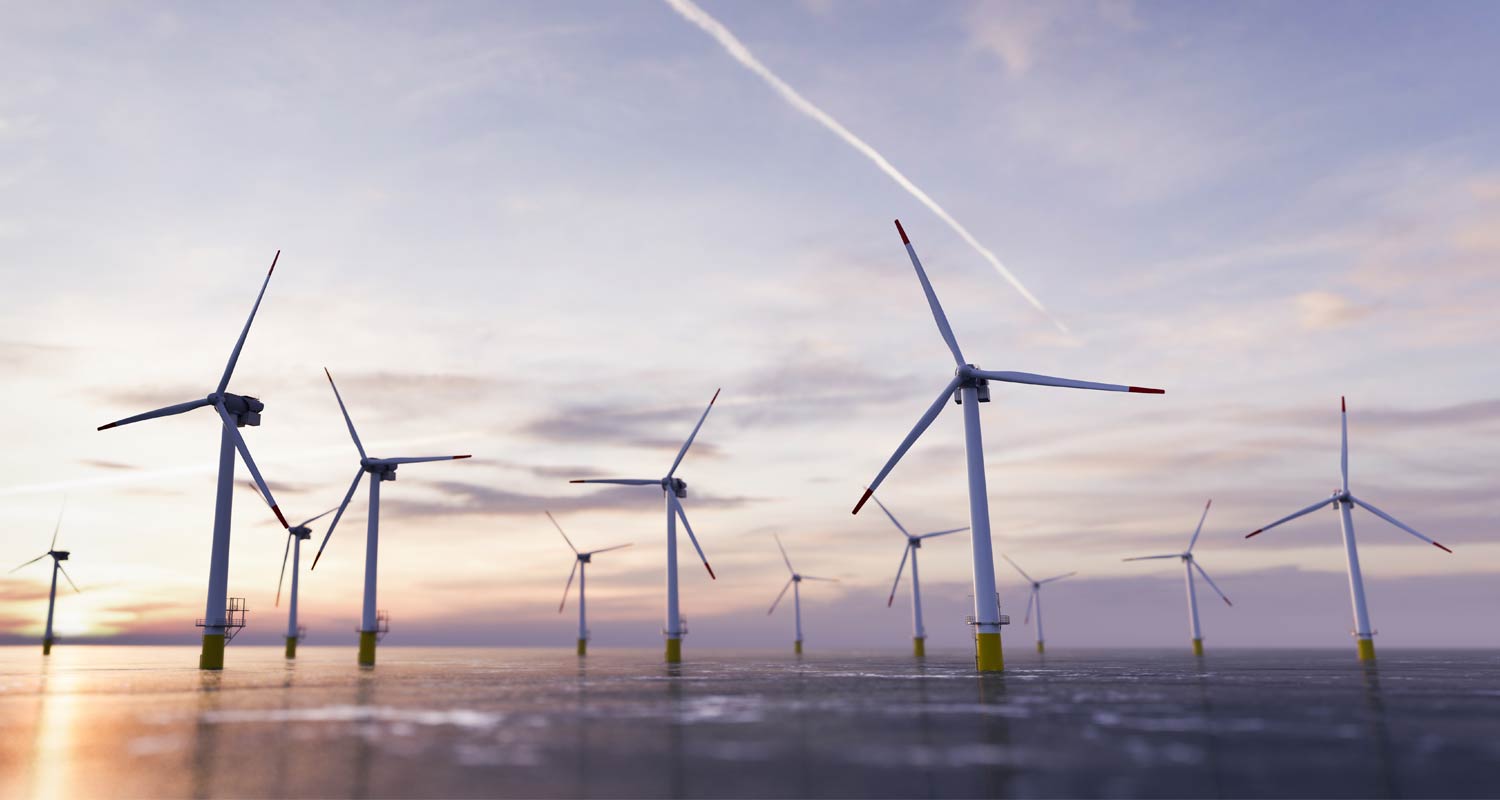
    To reach “net zero”, the world may need as many 200 000 offshore wind turbines generating 2TW of energy.
    By The Conversation14 July 2023
    Twitter LinkedIn Facebook WhatsApp Email Telegram Copy Link
    News Alerts
    WhatsApp

    To reach “net zero”, the world may need as many 200 000 offshore wind turbines generating 2TW of energy.

    To put this in context, by the end of 2022, 63GW of offshore wind capacity had been installed worldwide. Within the next 28 years, the offshore wind energy sector needs to expand so that it is capable of producing 32 times its current energy capacity.

    But where do we put all these extra offshore wind farms? Their locations will need to be chosen to maximise their energy output and their social benefits, while ensuring they have the minimum impact possible on the environment. Balancing all these factors is not a straightforward task.

    The area of ocean we’ll need for offshore wind is around 500 000sq km, which is roughly the size of France

    To work out where to place new turbines, a good starting point is to define how much of the ocean we need to use in order to meet the 2050 net zero targets. This calculation depends on the dimensions of the turbines, how wind power technology is likely to evolve between now and 2050, and the exact configuration of the turbines within a wind farm.

    Together, these factors control the future “power density” of offshore wind farms – how much offshore wind capacity can be installed per unit area of space in the ocean. The figure required for achieving net zero is 4MW per square kilometre. This means the area of ocean we’ll need for offshore wind is around 500 000sq km, which is roughly the size of France.

    Once the total space is known, the next task is to gather data on the factors that constrain infrastructure development in the ocean. There are numerous constraints, from ensuring there is adequate windspeed for turbines to turn, to avoiding shipping lanes and marine protected areas, to whether seabed conditions are difficult to build in.

    No-go zones

    Some types of constraint create “no-go zones”, because an offshore wind farm would cause clear and unacceptable disruption to an existing activity, such as a site used for military exercises, for oil drilling or a shipping lane.

    For other constraints, it’s a case of working out whether the net impact of a wind farm is harmful to the environment or the activities already there. It’s important to identify how crowded prospective sites are, as this provides a baseline, or starting point, for assessing a site’s suitability.

    Our recent research shows how such considerations can be used to identify suitable future sites for offshore wind farms, using UK waters as a case study.

    The UK is a leading region for offshore wind, so the country offers insights into the challenges faced globally in placing new wind farms. The UK is also a leader in legislating for net zero, including plans for transforming energy infrastructure.

    Our study used 34 different layers of constraints, from which the available space for future sites is defined by excluding the no-go and crowded zones. We identified the available ocean space for future offshore wind turbines as covering an area of about 240 000 sq km, which is equivalent to the area of the UK’s landmass.
    The data further reveals that, to achieve the basic net zero target for domestic electrification in the UK, 7% of that available area will need to be used for offshore wind farms. Domestic electrification refers to the conversion of homes to electric heating from (predominantly) gas.

    For more ambitious decarbonisation targets for offshore wind, accounting for increased domestic electricity demand among other things, the required space rises to 44%.

    If future offshore wind farms are to be shared out equally across the space available for them, up to 70% of future sites will overlap with one to three constraints. Moreover, about 90% of future sites will have to be in deep water (roughly 60m in depth).

    New technology, such as floating platforms, will be crucial to enable wind turbines to be installed in these places.

    Our study suggests that the huge expansion of offshore wind farms required to meet net zero targets may be achievable. Furthermore, it can be done without increasing the average level of overlap with existing activities in UK waters.


    However, it’s still possible that an expansion of offshore wind could harm the environment or limit existing ocean activities. For example, in the case of marine protected zones, wind farms could stop fish and animals from spreading into adjacent parts of the ocean. Potentially, this would undermine some of the objectives behind creating the protected zone in the first place.

    Increasing interaction between wind farms, natural ecosystems, heritage sites such as shipwrecks, and human activities is inevitable. Without careful planning and study, these interactions could harm the environment and disrupt wider human activities. They must therefore be anticipated and addressed proactively.

    The move to turbines in deeper water and further away from shore, however, poses some real challenges. It is these challenges that will need to be overcome by improved technology.The Conversation

    • The authors of this article are Hugo Putuhena, research fellow in offshore renewable energy; Fraser Sturt, professor of archaeology; and Susan Gourvenec, Royal Academy of Engineering chair in emerging technologies – Intelligent & Resilient Ocean Engineering, all at the University of Southampton
    • This article is republished from The Conversation under a Creative Commons licence

    Get TechCentral’s daily newsletter


    WhatsApp YouTube Follow on Google News Add as preferred source on Google
    Share. Facebook Twitter LinkedIn WhatsApp Telegram Email Copy Link
    Previous ArticleSigns emerging of a thaw in the crypto winter
    Next Article Twitter vs Threads: why Musk could prevail yet

    Related Posts

    Vuyani Jarana: Mobile coverage masks a deeper broadband failure

    Vuyani Jarana: Mobile coverage masks a deeper broadband failure

    30 January 2026
    TCS+ | How Cloud On Demand is helping SA businesses succeed in the cloud - Xhenia Rhode, Dion Kalicharan

    TCS+ | Cloud On Demand and Consnet: inside a real-world AWS partner success story

    30 January 2026
    Huawei turns 25 in South Africa, celebrates with major device discounts

    Huawei turns 25 in South Africa, celebrates with major device discounts

    30 January 2026
    Company News
    Huawei turns 25 in South Africa, celebrates with major device discounts

    Huawei turns 25 in South Africa, celebrates with major device discounts

    30 January 2026
    Phishing has not disappeared, but it has grown up - KnowBe4

    Phishing has not disappeared, but it has grown up

    30 January 2026
    Smartphone affordability: South Africa's new economic divide - PayJoy

    Smartphone affordability: South Africa’s new economic divide

    29 January 2026
    Opinion
    South Africa's skills advantage is being overlooked at home - Richard Firth

    South Africa’s skills advantage is being overlooked at home

    29 January 2026
    Why Elon Musk's Starlink is a 'hard no' for me - Songezo Zibi

    Why Elon Musk’s Starlink is a ‘hard no’ for me

    26 January 2026
    South Africa's new fibre broadband battle - Duncan McLeod

    South Africa’s new fibre broadband battle

    20 January 2026

    Subscribe to Updates

    Get the best South African technology news and analysis delivered to your e-mail inbox every morning.

    Latest Posts
    Vuyani Jarana: Mobile coverage masks a deeper broadband failure

    Vuyani Jarana: Mobile coverage masks a deeper broadband failure

    30 January 2026
    TCS+ | How Cloud On Demand is helping SA businesses succeed in the cloud - Xhenia Rhode, Dion Kalicharan

    TCS+ | Cloud On Demand and Consnet: inside a real-world AWS partner success story

    30 January 2026
    Huawei turns 25 in South Africa, celebrates with major device discounts

    Huawei turns 25 in South Africa, celebrates with major device discounts

    30 January 2026
    SABC Plus to flight Microsoft AI training videos

    SABC Plus to flight Microsoft AI training videos

    30 January 2026
    © 2009 - 2026 NewsCentral Media
    • Cookie policy (ZA)
    • TechCentral – privacy and Popia

    Type above and press Enter to search. Press Esc to cancel.

    Manage consent

    TechCentral uses cookies to enhance its offerings. Consenting to these technologies allows us to serve you better. Not consenting or withdrawing consent may adversely affect certain features and functions of the website.

    Functional Always active
    The technical storage or access is strictly necessary for the legitimate purpose of enabling the use of a specific service explicitly requested by the subscriber or user, or for the sole purpose of carrying out the transmission of a communication over an electronic communications network.
    Preferences
    The technical storage or access is necessary for the legitimate purpose of storing preferences that are not requested by the subscriber or user.
    Statistics
    The technical storage or access that is used exclusively for statistical purposes. The technical storage or access that is used exclusively for anonymous statistical purposes. Without a subpoena, voluntary compliance on the part of your Internet Service Provider, or additional records from a third party, information stored or retrieved for this purpose alone cannot usually be used to identify you.
    Marketing
    The technical storage or access is required to create user profiles to send advertising, or to track the user on a website or across several websites for similar marketing purposes.
    • Manage options
    • Manage services
    • Manage {vendor_count} vendors
    • Read more about these purposes
    View preferences
    • {title}
    • {title}
    • {title}