In a stretch of cattle country about 120km north-west of Houston, contractors have started clearing land for what Elon Musk claims will be the largest building ever constructed.
The project is called Terafab. It is a joint venture between Tesla and SpaceX, and its purpose is narrow even if its scale is not: to manufacture the AI chips Musk’s companies need and cannot buy in sufficient quantity from anyone else. The aim, in Musk’s words, is a full terawatt of compute a year from a single site.
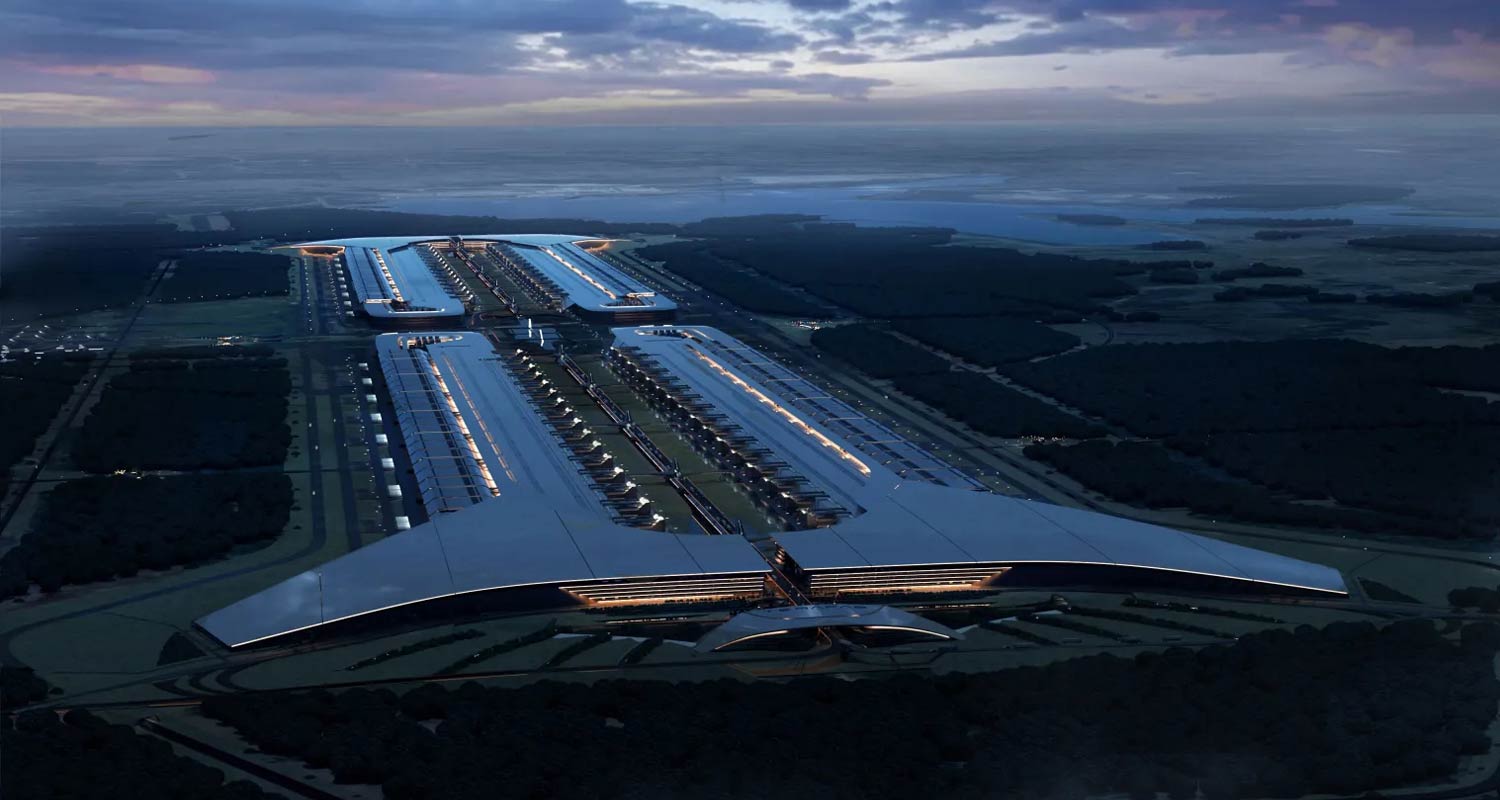
“Terafab Texas will be the largest and most valuable building on Earth by far,” Musk wrote on X on 6 August, alongside the first renderings. “And it will be stunningly beautiful.”
Terafab Texas will be the largest and most valuable building on Earth by far.
And it will be stunningly beautiful. pic.twitter.com/4NweOqTL7y
— Elon Musk (@elonmusk) August 6, 2026
Across four planned phases, the complex is meant to span roughly 9.3 million square metres of manufacturing space spread across four enormous rectangular buildings, the largest of them reportedly running about 4km end to end.
South Africa has nothing remotely comparable, so the comparisons have to be borrowed.
Terafab’s planned 9.3km² of floor space would blanket the whole of Cape Town’s city centre nearly six times over (the central city improvement district covering 1.6km²). Put differently, it is seven and a half V&A Waterfronts, or about two-thirds of the entire OR Tambo airport site. Measured against sport, it is the pitch at Loftus Versfeld laid down roughly 1 300 times over.
The money is on the same scale. Tesla and SpaceX have committed US$16.8-billion to phase 1, about R271-billion at current exchange rates, with filings pointing to as much as $119-billion across all four phases, roughly R1.9-trillion. South Africa’s entire consolidated government spending for 2026/2027 is R2.67-trillion. One project, on one site in Texas, could end up costing – spread over a decade of construction – about 70% of what the South African state spends in a single year.
Terafab is expected to employ at least 3 000 people – and its binding commitment is smaller still. Under a tax agreement with Grimes County, the company must spend at least $5-billion by the end of 2030 and create 1 800 full-time jobs by the end of 2035, in exchange for a decade of county property tax breaks and a $30-million state grant.
Why build it at all
Musk reasoning is that Tesla, SpaceX and xAI already absorb a meaningful share of the world’s available contract chip-making capacity, and on SpaceX’s own projections, their combined future demand will exceed what the global industry can supply.
“That rate is much less than we’d like,” Musk said of the foundry capacity available to him when he launched the project in March. “We either build the Terafab or we don’t have the chips, and we need the chips, so we build the Terafab.”
Musk, who is known for his hyperbole, has called it “the most epic chip-building exercise in history by far”. The target is to produce chips for Tesla’s Optimus robots and Cybercabs as well as radiation-hardened processors for SpaceX’s planned orbital data centres.
Terafab is also meant to house logic fabrication, memory production, advanced packaging, testing and photomask manufacture on one site, so design iterations never have to be shipped between continents – a combination Musk told the launch event exists nowhere else in the world.
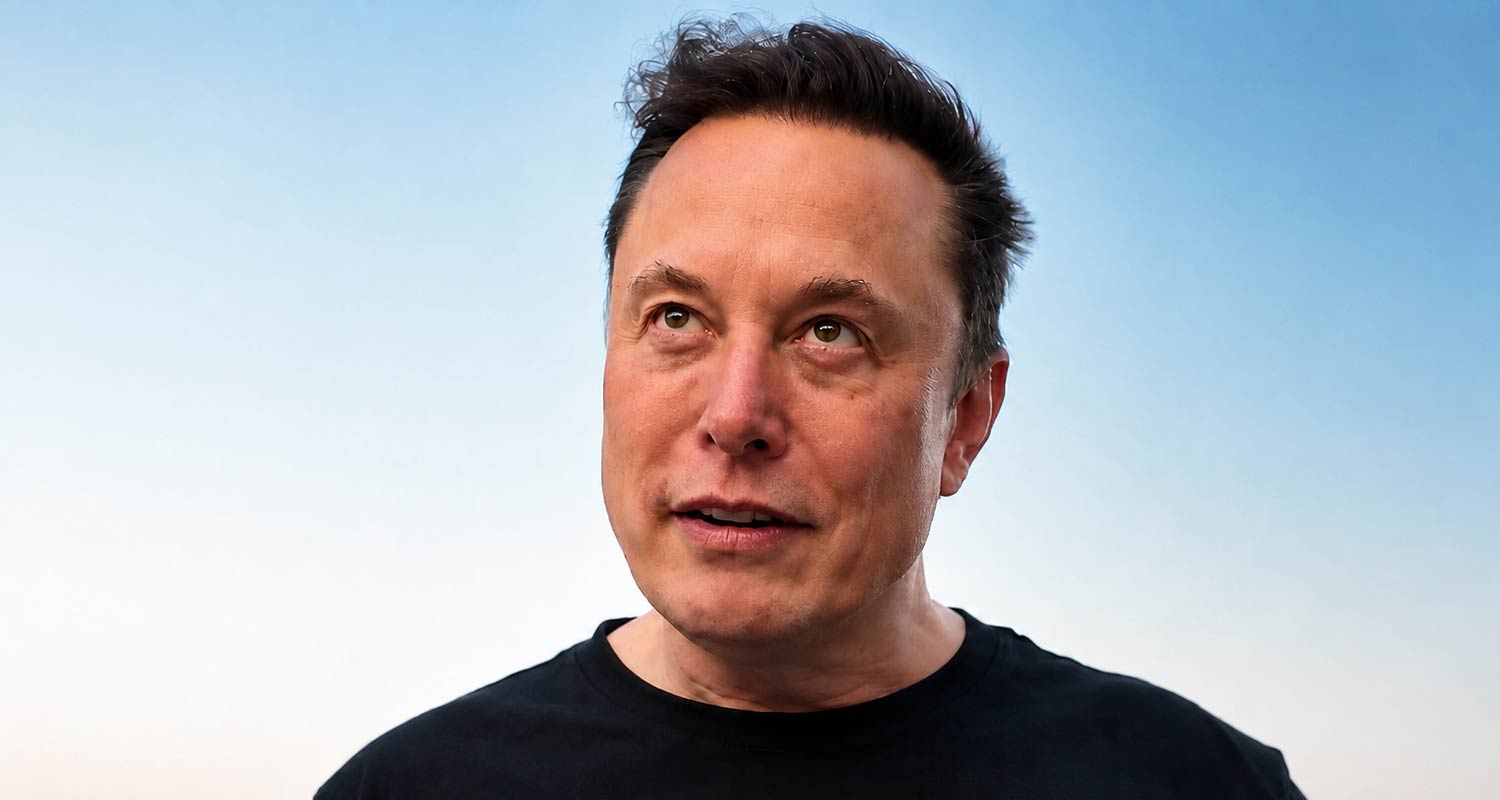
Asked what all of this is ultimately for, he reached past the balance sheet. Citing Isaac Asimov and Iain Banks, and the idea of humanity as a galactic civilisation, he said: “We want to make that real. Not just fiction, to turn science fiction to science fact.”
Intel is the technology partner, with Tesla reported in April as the first major customer for its 14A process. Intel has committed to high-volume 14A (1.4-nanometre) production in 2028 but has not publicly confirmed a binding Terafab deal.
The plant is not expected to draw power from the Texas grid. SpaceX will build its own natural gas plants on site, paired with what its energy development lead, Riley Trettel, called “very large battery arrays”. Water will come from the Gibbons Creek dam rather than local groundwater.
Read: South Africans took a sizeable bite of SpaceX after historic IPO
Nothing is certain yet. There is no confirmed ground-breaking date, and the price tag has carried four different figures in five months: $20-billion to $25-billion at launch, $55-billion in SpaceX’s May listing prospectus, then $16.8-billion for phase 1 against a $119-billion ceiling. That prospectus described Terafab as a general framework with no binding commitments.
Semiconductor analyst Mark LaPedus puts the odds it never happens at 80%, noting neither company has ever run a fab. Nearly 900 Grimes County residents have petitioned commissioners for water, road and environmental guarantees. — © 2026 NewsCentral Media
- Subscribe to TechCentral’s daily newsletter
- Get breaking news alerts on WhatsApp