
Close Menu
TechCentralTechCentral

    Subscribe to the newsletter

    Get the best South African technology news and analysis delivered to your e-mail inbox every morning.

    Facebook X (Twitter) YouTube LinkedIn
    WhatsApp Facebook X (Twitter) LinkedIn YouTube
    TechCentralTechCentral
    • News
      End of an era for South Africa's payments system

      End of an era for South Africa’s payments system

      9 September 2026
      Meet the CIO | Shoprite's Chris Shortt on what a supermarket becomes

      Meet the CIO | Shoprite’s Chris Shortt on what a supermarket becomes

      9 September 2026
      Meta's new AI agent can spend your money on your behalf - Mark Zuckerberg

      Meta’s new AI agent can spend your money on your behalf

      9 September 2026
      Coalition leads public revolt against treasury's crypto draft

      Coalition leads public revolt against treasury’s crypto draft

      9 September 2026

      Dis-Chem gets serious about e-commerce – again

      8 September 2026
    • World
      'This is not circular': Jensen Huang defends $3.5-billion MediaTek deal

      ‘This is not circular’: Jensen Huang defends $3.5-billion MediaTek deal

      2 September 2026
      AI-generated music banned from Australian charts

      AI-generated music banned from Australian charts

      26 August 2026
      Traders brace for a R4.5-trillion swing in Nvidia's value

      Traders brace for a R4.5-trillion swing in Nvidia’s value

      25 August 2026
      Russia building its own Starlink - and faster than expected - Vadym Skibitskyi

      Russia building its own Starlink – and faster than expected

      11 August 2026
      Meta AI will now tell parents if their teen is in crisis

      Meta AI will now tell parents if their teen is in crisis

      17 July 2026
    • In-depth
      Google DeepMind CEO Demis Hassabis. Image: John Sears

      The plan to stop AI from breaking the world

      16 July 2026
      The internet has a Strait of Hormuz problem

      The internet has a Strait of Hormuz problem

      15 July 2026
      AI boom sparks rally, frenzy and fear

      AI boom sparks rally, frenzy and fear

      11 June 2026
      Every plug-in hybrid on sale in South Africa, ranked by price - Lamborghini Temerario

      Every plug-in hybrid on sale in South Africa, ranked by price

      7 June 2026
      What Wi-Fi 8 will mean for wireless networks

      What Wi-Fi 8 will mean for wireless networks

      1 June 2026
    • TCS
      Rubicon's EV charging network is profitable - and growing fast - Watts & Wheels

      Rubicon’s EV charging network is profitable – and growing fast

      8 September 2026
      Winstone Jordaan on building a national EV charging network

      Winstone Jordaan on building a national EV charging network

      2 September 2026
      Watts & Wheels S1E8: 'Tesla lands in Africa, just not here'

      Watts & Wheels S1E8: ‘Tesla lands in Africa, just not here’

      24 August 2026
      TCS | Herotel CEO Van Zyl Botha on beating Starlink to South Africa

      TCS | Herotel CEO Van Zyl Botha on beating Starlink to South Africa

      14 August 2026
      Meet the CIO | Discovery's Derek Wilcocks on AI, guardrails and growth

      Meet the CIO | Derek Wilcocks on how AI personalised Vitality

      13 August 2026
    • Opinion
      The fragile joint in the Capitec machine - Pambos Soteriades

      The R197-billion market the banks can’t reach

      25 August 2026
      South African tech's compounding debt problem - Jannie van Zyl

      Management consulting as we know it is over

      21 August 2026
      South African tech's compounding debt problem - Jannie van Zyl

      The most dangerous customer is the quiet one

      10 August 2026
      South African tech's compounding debt problem - Jannie van Zyl

      South African tech’s compounding debt problem

      29 July 2026
      The fragile joint in the Capitec machine - Pambos Soteriades

      Best network, worst vibes: the puzzle of SA telecoms

      20 July 2026
    • Company Hubs
      • 1Stream
      • Africa Data Centres
      • AfriGIS
      • Altron Digital Business
      • Altron Document Solutions
      • Altron Group
      • Arctic Wolf
      • Ascent Technology
      • AvertITD
      • BBD
      • Braintree
      • CallMiner
      • CambriLearn
      • CM.com
      • Contactable
      • CYBER1 Solutions
      • Digicloud Africa
      • Digimune
      • Domains.co.za
      • ESET
      • Euphoria Telecom
      • HOSTAFRICA
      • Incredible Business
      • iONLINE
      • IQbusiness
      • Iris Network Systems
      • Kaspersky
      • LSD Open
      • Mitel
      • NEC XON
      • Netstar
      • Network Platforms
      • Next DLP
      • Ovations
      • Paracon
      • Paratus
      • Q-KON
      • SevenC
      • SkyWire
      • Solid8 Technologies
      • Telit Cinterion
      • Telviva
      • Tenable
      • Vertiv
      • Videri Digital
      • Vodacom Business
      • Vox
      • Wipro
      • Workday
      • XLink
    • Sections
      • AI and machine learning
      • Banking
      • Broadcasting and Media
      • Cloud services
      • Contact centres and CX
      • Cryptocurrencies
      • Education and skills
      • Electronics and hardware
      • Energy and sustainability
      • Enterprise software
      • Financial services
      • HealthTech
      • Information security
      • Internet and connectivity
      • Internet of Things
      • Investment
      • IT services
      • Lifestyle
      • Policy and regulation
      • Public sector
      • Retail and e-commerce
      • Satellite communications
      • Science
      • SMEs and start-ups
      • Social media
      • Talent and leadership
      • Telecoms
      • Watts & Wheels
    • Events
    • Advertise
    TechCentralTechCentral
    Home » Sections » Cryptocurrencies » Coalition leads public revolt against treasury’s crypto draft

    Coalition leads public revolt against treasury’s crypto draft

    VALR, Luno, AltCoinTrader and EasyEquities have joined a coalition fighting treasury's proposed cross-border crypto ban.
    By Fanie van Rooyen9 September 2026
    Twitter LinkedIn Facebook WhatsApp Email Telegram Copy Link
    Get breaking news on WhatsApp

    Coalition leads public revolt against treasury's crypto draft

    South Africa’s biggest regulated crypto platforms have taken their fight public, forming a coalition and launching a petition against draft rules that would bar local companies from making cross-border payments in crypto assets.

    The coalition has given itself the pointed acronym Catastrophe — Crypto Asset Taskforce for Advancing Sound, Technology-Neutral Regulation for Opportunity, Prosperity and a Healthy Economy — and brings together VALR, Luno, AltCoinTrader and EasyEquities alongside professors, lawyers, economists and entrepreneurs. It launches on Wednesday, 9 September, three weeks before the comment period closes on 30 September.

    At issue is the draft crypto asset manual for cross-border activities, published in early August by national treasury and the Reserve Bank’s financial surveillance department, alongside the draft capital flow management regulations that will replace the Exchange Control Regulations of 1961.

    At issue is the draft crypto asset manual for cross-border activities, published in early August

    The coalition has two objections. The first is that South African companies would be barred from using regulated crypto rails for cross-border transactions that are perfectly lawful through a bank. Local firms may hold and trade crypto domestically but may not enter into transactions deemed an import or export of capital — so a software company invoicing an American client in dollar-denominated stablecoins would have no lawful way to receive the money through a licensed local provider.

    The second is what the campaign calls the self-custody one-way street. An individual may move crypto assets from an authorised South African provider into a personal wallet, but moving them back is designated non-permissible. “Good regulation should encourage activity to return to the regulated system — not create a one-way door out of it,” the campaign says on its website.

    Kganyago’s own words

    Catastrophe’s central argument is one it has borrowed from the governor of the Reserve Bank. Speaking at the MTN Group Fintech summit last week, Lesetja Kganyago set out the thinking behind the central bank’s shift from entity-based to activity-based regulation of the payment system. “The principle is straightforward: similar payment activities should be subject to similar regulatory expectations, whether they are performed by a bank or a fintech,” he said.

    Not applying that principle to cross-border payments, the coalition argues, would be a departure from technology-neutral regulation. Banks, authorised dealers and licensed crypto providers may need different operational rules, it says, but equivalent activities should attract equivalent permissions.

    Hundreds of licensed crypto asset service providers operate in South Africa, according to the campaign, employing thousands of people and paying billions of rand in corporate income tax, PAYE and VAT. Catastrophe says those jobs would be threatened if the rules pass as drafted, and that billions in foreign investment is already on hold, though it names no investors.

    Regulatory lobbying is usually done out of sight, in written submissions and closed meetings. Asked why the industry had gone public instead, VALR CEO Farzam Ehsani — speaking as a signatory rather than for the campaign — said the stakes justified it.
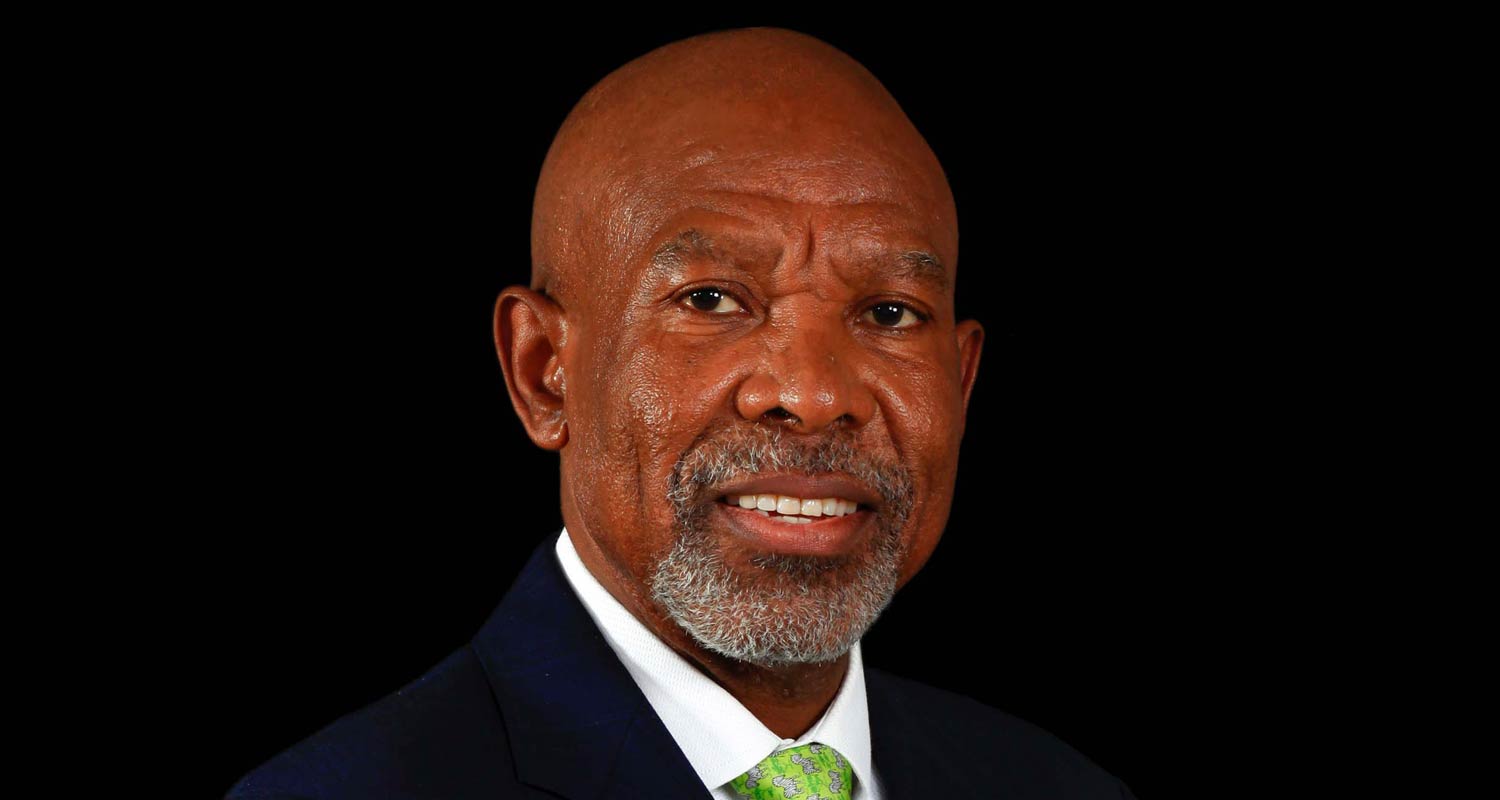
    Reserve Bank governor Lesetja Kganyago
    Reserve Bank governor Lesetja Kganyago

    The industry had engaged with policymakers for years and would continue to, he told TechCentral, but the drafts carried potentially far-reaching consequences for South African businesses, consumers and the wider digital asset industry. “It’s important that those who may be affected understand what is being proposed and have an opportunity to make their voices heard,” he said. The campaign, he added, was meant to broaden participation in the consultation.

    Ehsani made a similar case in a submission last month, arguing that prohibiting legitimate corporate activity through regulated providers “is likely to drive transactions underground or offshore” and cost the authorities the visibility they are seeking. He has argued previously for scrapping exchange controls entirely while keeping reporting obligations.

    The commercial stakes were illustrated on Tuesday, 8 September, when Luno announced a partnership with US-regulated digital clearing house Meridian letting institutional clients mint stablecoins the moment a dollar payment lands. Dollars arriving by ACH, FedWire or Swift are minted automatically into USDC or USDT and settle into the client’s Luno wallet, replacing over-the-counter processes that can take hours or days. It launches in South Africa first, on the class F digital asset business licence Luno recently obtained in Bermuda.

    The appeal of stablecoins to institutional treasurers is less about crypto and more about control

    “The appeal of stablecoins to institutional treasurers is less about crypto and more about control,” said Paul Harker, Luno’s global head of legal and corporate strategy. “A business can only plan its cash flow if it can get dollars when it needs them, not only when its bank, its counterparty and the correspondent network all happen to be open at the same time.”

    Luno flagged in the same announcement that the draft rules could put the product out of reach locally, because the prior approval contemplated would negate the point of instant settlement. The demand is not theoretical: the IMF reported in June that dollar-pegged tokens have become a significant cross-border channel in Nigeria, where scarce dollar liquidity leaves businesses few alternatives.

    TechCentral has reached out to Luno, EasyEquities and the Reserve Bank for comment on the formation of the new crypto coalition.

    ‘Avenue to circumvent exchange controls’

    The complaint is partly one of timing: Mastercard closed its acquisition of BVNK for up to US$1.8-billion in August, the biggest of a run of stablecoin deals by the global payment networks.

    Catastrophe’s minimum ask is a level playing field: let local businesses transact across borders in crypto, let assets move both ways between regulated platforms and self-custody, and regulate the risk rather than the technology. Its ideal is for South Africa to leave exchange controls behind altogether. It says it will dissolve once it has won a better outcome.

    Treasury and the Reserve Bank say the treatment of crypto is meant to minimise regulatory arbitrage between entities doing cross-border business. When treasury first signalled the move in February, it put the concern plainly: “As crypto payments are borderless, they present an avenue to circumvent exchange controls.”

    Both sides, in other words, want the same thing: crypto activity inside the regulated system, where it can be seen. What they disagree about is which set of rules will keep it there.  — © 2026 NewsCentral Media

    Add TechCentral as a preferred source on GoogleFollow TechCentral on Google NewsGet breaking news on WhatsApp


    AltCoinTrader Catastrophe EasyEquities Farzam Ehsani Lesetja Kganyago Luno Meridian Paul Harker South African Reserve Bank VALR
    WhatsApp YouTube
    Share. Facebook Twitter LinkedIn WhatsApp Telegram Email Copy Link
    Previous ArticleDis-Chem gets serious about e-commerce – again
    Next Article A petaflop on a desk – rethinking AI infrastructure for South Africa

    Related Posts

    End of an era for South Africa's payments system

    End of an era for South Africa’s payments system

    9 September 2026
    If it quacks like a duck: Kganyago on regulating fintechs - Reserve Bank governor Lesetja Kganyago

    If it quacks like a duck: Kganyago on regulating fintechs

    1 September 2026
    The fragile joint in the Capitec machine - Pambos Soteriades

    The R197-billion market the banks can’t reach

    25 August 2026
    Company News
    Can an online school produce a scientist? CambriLearn has an independent answer

    Can an online school produce a scientist? CambriLearn has an independent answer

    9 September 2026
    The ASUS ExpertCenter Pro ET900N from Altron Arrow

    A petaflop on a desk – rethinking AI infrastructure for South Africa

    9 September 2026
    How dual-source technology is changing laser engraving

    How dual-source technology is changing laser engraving

    8 September 2026
    Opinion
    The fragile joint in the Capitec machine - Pambos Soteriades

    The R197-billion market the banks can’t reach

    25 August 2026
    South African tech's compounding debt problem - Jannie van Zyl

    Management consulting as we know it is over

    21 August 2026
    South African tech's compounding debt problem - Jannie van Zyl

    The most dangerous customer is the quiet one

    10 August 2026

    Subscribe to Updates

    Get the best South African technology news and analysis delivered to your e-mail inbox every morning.

    Latest Posts
    End of an era for South Africa's payments system

    End of an era for South Africa’s payments system

    9 September 2026
    Meet the CIO | Shoprite's Chris Shortt on what a supermarket becomes

    Meet the CIO | Shoprite’s Chris Shortt on what a supermarket becomes

    9 September 2026
    Meta's new AI agent can spend your money on your behalf - Mark Zuckerberg

    Meta’s new AI agent can spend your money on your behalf

    9 September 2026
    Can an online school produce a scientist? CambriLearn has an independent answer

    Can an online school produce a scientist? CambriLearn has an independent answer

    9 September 2026
    © 2009 - 2026 NewsCentral Media
    Built and maintained by Chronon
    • Cookie policy (ZA)
    • TechCentral – privacy and Popia

    Type above and press Enter to search. Press Esc to cancel.

    Manage consent

    TechCentral uses cookies to enhance its offerings. Consenting to these technologies allows us to serve you better. Not consenting or withdrawing consent may adversely affect certain features and functions of the website.

    Functional Always active
    The technical storage or access is strictly necessary for the legitimate purpose of enabling the use of a specific service explicitly requested by the subscriber or user, or for the sole purpose of carrying out the transmission of a communication over an electronic communications network.
    Preferences
    The technical storage or access is necessary for the legitimate purpose of storing preferences that are not requested by the subscriber or user.
    Statistics
    The technical storage or access that is used exclusively for statistical purposes. The technical storage or access that is used exclusively for anonymous statistical purposes. Without a subpoena, voluntary compliance on the part of your Internet Service Provider, or additional records from a third party, information stored or retrieved for this purpose alone cannot usually be used to identify you.
    Marketing
    The technical storage or access is required to create user profiles to send advertising, or to track the user on a website or across several websites for similar marketing purposes.
    • Manage options
    • Manage services
    • Manage {vendor_count} vendors
    • Read more about these purposes
    View preferences
    • {title}
    • {title}
    • {title}