
Before we defend or abolish exchange control, we should ask a simpler question: what is the policy actually trying to achieve?
It is usually justified by three objectives:
- To control the movement of financial and real assets into and out of South Africa and prevent the unauthorised export of capital;
- To protect the country’s foreign currency reserves; and
- To avoid interfering with the efficient operation of the commercial, industrial and financial system.
These sound reasonable. But the first two rest on a mental model that is increasingly outdated. They imagine capital as something that physically leaves the country – gold bars, banknotes or bearer instruments crossing a border. They imagine the rand as something the state must defend by spending scarce dollars, and a private citizen converting rand into dollars as a direct loss to South Africa. In a modern digital banking system, that is not what happens.
Most rand today are not notes and coins. They are digital entries on the balance sheets of South African banks – by some estimates more than 97% of the money supply. A digital rand exists only because a South African bank records a rand liability to a customer. It cannot be packed into a suitcase or loaded onto a ship, and it cannot sit in a New York, London, Dubai or Singapore account as rand unless there is a South African banking relationship behind it.
So, when someone says “money left South Africa”, we should ask what exactly left.
Take a simple example. Person A has R1-million in a South African bank account and wants to pay a hospital abroad. He asks his bank to exchange the rand for dollars and send the dollars to the hospital. From his perspective, he has externalised R1-million: his local balance is gone and the foreign hospital has its dollars.
Not the same thing
But Person A cannot buy dollars unless someone else sells them. Party B gives up dollars and receives rand. The rand has not left South Africa – it has simply moved from Person A’s account to Party B’s, or to another rand account held through the local banking system. Person A has externalised value; Party B has internalised it. From a macroeconomic perspective, no rand left the system. Only ownership changed.
That distinction matters, because exchange control often treats individual externalisation as though it were macroeconomic externalisation. They are not the same thing.
Read: Treasury’s crypto crackdown is a betrayal of Mandela’s promise
Something does happen when many people want to buy dollars at once: the price of dollars in rand rises – the rand depreciates. But that is an exchange-rate adjustment, not a physical draining of rand from the country. In a floating-rate system, that price is meant to adjust; the exchange rate is the market-clearing mechanism between those who want rand and those who want foreign currency. If more people want dollars than rand at a given price, the rand weakens until someone is willing to hold it at the new level.
That can have consequences – for inflation, for confidence, for the credibility demanded of monetary and fiscal policy. But it is not the same as capital “leaving” South Africa. The real problem is not that rand disappears; it is whether South Africa is attractive enough that people want to hold rand assets in the first place.

The second argument for exchange control is that South Africa must protect its foreign currency reserves. This, too, needs unpacking. Reserves are not the country’s private stock of dollars; they are official public-sector foreign assets held by the South African Reserve Bank and, in relevant respects, national treasury, used for external obligations, liquidity, confidence and shock absorption. They are not touched every time a South African buys dollars, invests offshore, pays a foreign supplier or buys a crypto asset.
In a normal private foreign-exchange transaction, a willing buyer and a willing seller swap rand and foreign currency. The Reserve Bank’s reserves are not involved unless it chooses to intervene, or unless the state itself is making foreign-currency payments. The same principle, this author argues, applies to a crypto transaction as to a forex one.
Under a fixed exchange rate, the Reserve Bank might have to sell reserves to defend a particular rand level. But South Africa no longer has a fixed rate. The Reserve Bank does not target a level; it may smooth disorderly conditions, but it does not defend a price. The idea that exchange control is needed to stop ordinary South Africans from draining reserves misreads how the system works.
South Africa has already learnt this the hard way. In the late 1990s, the Reserve Bank tried to defend the currency in very difficult conditions. It was costly and unsuccessful: interest rates rose sharply, the economy suffered, the rand weakened anyway and the losses were ultimately absorbed by the public sector.
That experience supports the modern position – let the rate float, and build macroeconomic credibility through price stability, fiscal sustainability and institutional confidence. If the rand weakens, the answer is not to trap capital. It is to make South Africa more investable.
What exchange control really does
Exchange control does not keep digital rand inside South Africa; the rand is already here by design. What it does is something else – and it runs straight into the third stated objective, of not interfering with the efficient operation of the commercial, industrial and financial system. A regime of pre-approval, discretion and restriction necessarily interferes with ordinary commercial and financial activity.
It creates friction and uncertainty. It hands officials discretion over lawful private transactions. It makes international investors worry about whether they can get money in and out, makes local entrepreneurs less globally competitive and encourages offshore structuring. Above all, it signals that South Africa is not fully confident in its own investment proposition. That is damaging, because capital is confidence: it goes where it is welcomed, protected, respected and free to move.
Read: Clashing judgments leave South Africa’s crypto law unsettled
There is a deeper question of economic freedom here. If exchange control does not prevent macroeconomic capital flight, and does not protect reserves in the way people assume, then what exactly is it restricting? In any meaningful macroeconomic sense, it no longer stops capital leaving. What it restricts is freedom – the freedom of citizens to allocate their savings, of entrepreneurs to build globally competitive companies and of investors to enter South Africa confident that they can also leave.
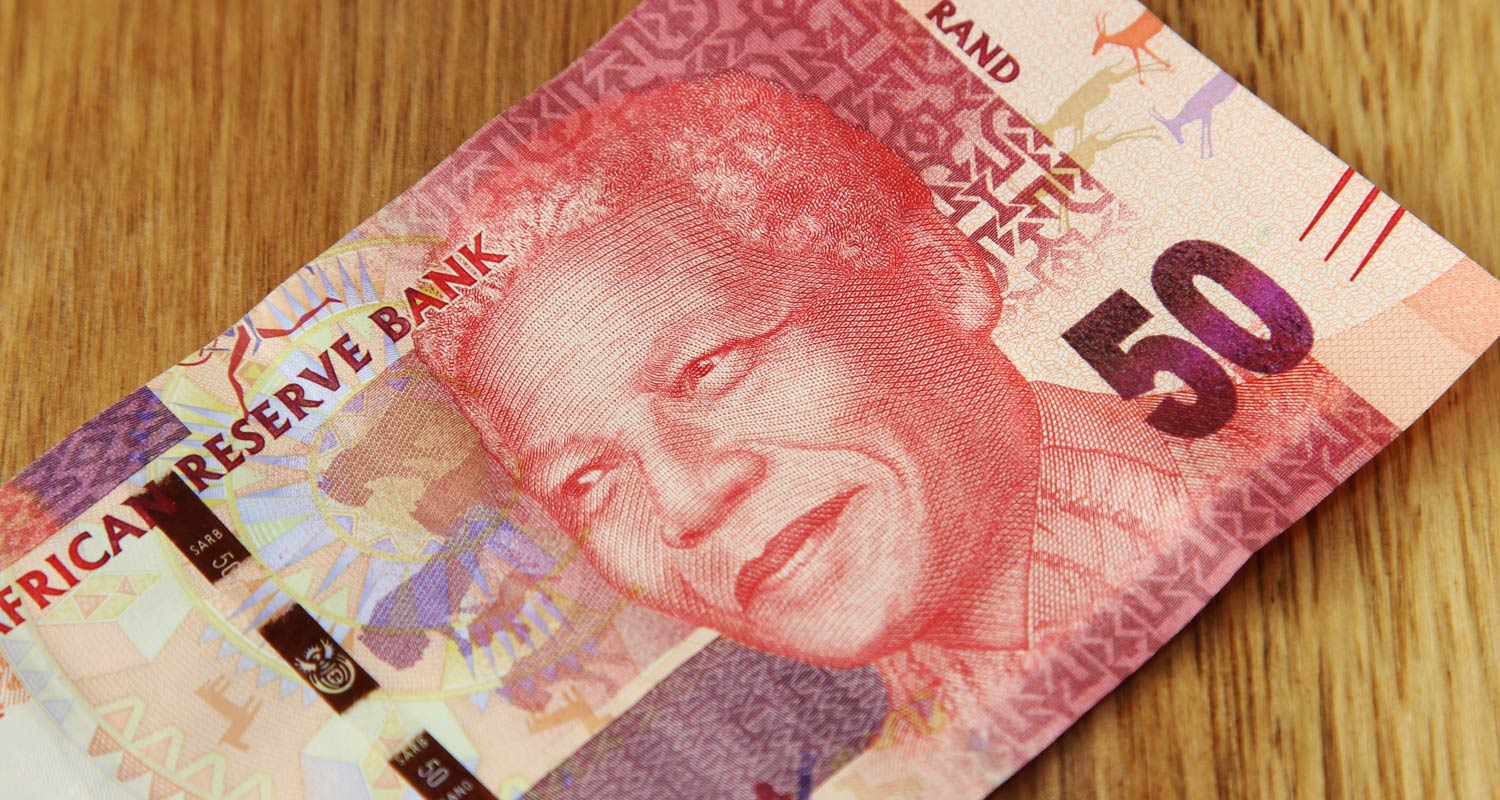
A policy that restricts individual liberty may be justified if it clearly protects the public interest. But if its core justification rests on a model of the financial system from more than half a century ago – one that has not kept pace with how digital money, foreign-exchange markets and reserves actually work – it should be reconsidered. South Africans should be free to save, invest, support family, build businesses and take part in the global economy, subject to tax compliance, anti-money laundering (AML) rules, sanctions law and proper financial supervision. Those are legitimate objectives. They do not require exchange control as a system of pre-approval and restriction; they require a modern system of disclosure, reporting, supervision and enforcement.
The better question
The question should not be how we stop people taking money out. It should be how we make South Africa a place where people want to bring money in – through strong institutions, sound monetary policy, credible fiscal policy, clear tax rules, effective AML enforcement and modern reporting.
If the concern is tax evasion, enforce tax law. If it is illicit financial flows, enforce AML and beneficial ownership rules. If it is systemic risk, use prudential and macroprudential tools. If it is financial crime, supervise intermediaries properly. But do not reach for a blunt exchange-control architecture built for the problems of a previous age.
Read: South Africa’s crypto progress on the line
Abolishing exchange control would not mean abolishing oversight. It would mean replacing pre-approval, suspicion and restriction with disclosure, reporting, supervision and enforcement. It would signal that South Africa is ready to compete for global capital and more attractive for foreign direct investment. It would help entrepreneurs raise capital, encourage companies to domicile here rather than offshore, increase capital formation, support employment, broaden the tax base and strengthen South Africa’s role as a financial centre for Africa. And, paradoxically, by making South Africa more open, it would make it more resilient.
Exchange control was built for a different world – of physical bearer assets, managed exchange rates, sanctions, isolation and scarce reserves. South Africa today needs the opposite posture: openness, confidence and investment, and a shift from a fear-based capital regime to a confidence-based one.
Digital rand cannot be packed into a suitcase and taken offshore. Reserves are not depleted every time a private person buys dollars. And the rand is not strengthened by forcing people to hold it – it is protected by being worth holding. South Africa should abolish exchange control as a system of pre-approval and restriction and replace it with a modern framework built on reporting, transparency, tax compliance, AML enforcement, prudential supervision and the rule of law.
This is not an argument for no oversight. It is an argument for better oversight – one that protects financial integrity without restricting lawful capital movement, protects the tax base without making citizens ask permission to invest, and protects the financial system without telling the world that capital is welcome only if it leaves by permission.
Former President Nelson Mandela envisioned a South Africa without exchange controls. In his 1996 state of the nation address, he said: “For us, it is not a matter of whether, but of when, these controls will be phased out.” Thirty years on, it is time to realise that vision. The future of South Africa will not be built by controlling exits. It will be built by becoming a country people want to enter.
- The author, Farzam Ehsani, is co-founder and CEO of VALR. He was previously blockchain lead at Rand Merchant Bank and the FirstRand Group, and the inaugural chairman of the South African Financial Blockchain Consortium. He studied economics at the University of California, Berkeley
- Subscribe to TechCentral’s daily newsletter
- Get breaking news alerts on WhatsApp