
Close Menu
TechCentralTechCentral

    Subscribe to the newsletter

    Get the best South African technology news and analysis delivered to your e-mail inbox every morning.

    Facebook X (Twitter) YouTube LinkedIn
    WhatsApp Facebook X (Twitter) LinkedIn YouTube
    TechCentralTechCentral
    • News
      How AI agents are reshaping banking in South Africa - Lindelani Ramukumba, Absa

      How agentic AI is reshaping banking in South Africa

      5 April 2026
      South Africa's 5G boom is bypassing rural areas: Icasa

      South Africa’s 5G boom is bypassing rural areas: Icasa

      5 April 2026
      WhatsApp is eating South African operators' revenue

      WhatsApp is eating South African operators’ revenue

      4 April 2026
      DeepSeek V4 to run on Huawei silicon as China builds its own AI stack

      DeepSeek V4 to run on Huawei silicon as China builds its own AI stack

      4 April 2026
      Gaping holes in South African government cyber defences

      Gaping holes in South African government cyber defences

      2 April 2026
    • World
      Amazon in talks to buy satellite operator Globalstar

      Amazon in talks to buy satellite operator Globalstar

      2 April 2026

      Apple plans to open Siri to rival AI services

      27 March 2026
      It's official: ads are coming to ChatGPT

      It’s official: ads are coming to ChatGPT

      23 March 2026
      Mystery Chinese AI model revealed to be Xiaomi's

      Mystery Chinese AI model revealed to be Xiaomi’s

      19 March 2026
      A mystery AI model has developers buzzing

      A mystery AI model has developers buzzing

      18 March 2026
    • In-depth
      The biggest untapped EV market on Earth is hiding in plain sight

      The biggest untapped EV market on Earth is hiding in plain sight

      1 April 2026
      The R18-billion tech giant hiding in plain sight - Jens Montanana

      The R16-billion tech giant hiding in plain sight

      26 March 2026
      The last generation of coders

      The last generation of coders

      18 February 2026
      Sentech is in dire straits

      Sentech is in dire straits

      10 February 2026
      How liberalisation is rewiring South Africa's power sector

      How liberalisation is rewiring South Africa’s power sector

      21 January 2026
    • TCS
      TCS | MTN's Divysh Joshi on the strategy behind Pi - Divyesh Joshi

      TCS | MTN’s Divyesh Joshi on the strategy behind Pi

      1 April 2026
      Anoosh Rooplal

      TCS | Anoosh Rooplal on the Post Office’s last stand

      27 March 2026
      Meet the CIO | HealthBridge CTO Anton Fatti on the future of digital health

      Meet the CIO | Healthbridge CTO Anton Fatti on the future of digital health

      23 March 2026
      TCS+ | Arctic Wolf unpacks the evolving threat landscape for SA businesses - Clare Loveridge and Jason Oehley

      TCS+ | Arctic Wolf unpacks the evolving threat landscape for SA businesses

      19 March 2026
      TCS+ | Vox Kiwi: a wireless solution promising a fibre-like experience - Theo van Zyl

      TCS+ | Vox Kiwi: a wireless solution promising a fibre-like experience

      13 March 2026
    • Opinion
      The conflict of interest at the heart of PayShap's slow adoption - Cheslyn Jacobs

      The conflict of interest at the heart of PayShap’s slow adoption

      26 March 2026
      South Africa's energy future hinges on getting wheeling right - Aishah Gire

      South Africa’s energy future hinges on getting wheeling right

      10 March 2026
      Hold the doom: the case for a South African comeback - Duncan McLeod

      Apple just dropped a bomb on the Windows world

      5 March 2026
      VC's centre of gravity is shifting - and South Africa is in the frame - Alison Collier

      VC’s centre of gravity is shifting – and South Africa is in the frame

      3 March 2026
      Hold the doom: the case for a South African comeback - Duncan McLeod

      Hold the doom: the case for a South African comeback

      26 February 2026
    • Company Hubs
      • 1Stream
      • Africa Data Centres
      • AfriGIS
      • Altron Digital Business
      • Altron Document Solutions
      • Altron Group
      • Arctic Wolf
      • Ascent Technology
      • AvertITD
      • BBD
      • Braintree
      • CallMiner
      • CambriLearn
      • CYBER1 Solutions
      • Digicloud Africa
      • Digimune
      • Domains.co.za
      • ESET
      • Euphoria Telecom
      • HOSTAFRICA
      • Incredible Business
      • iONLINE
      • IQbusiness
      • Iris Network Systems
      • Kaspersky
      • LSD Open
      • Mitel
      • NEC XON
      • Netstar
      • Network Platforms
      • Next DLP
      • Ovations
      • Paracon
      • Paratus
      • Q-KON
      • SevenC
      • SkyWire
      • Solid8 Technologies
      • Telit Cinterion
      • Telviva
      • Tenable
      • Vertiv
      • Videri Digital
      • Vodacom Business
      • Wipro
      • Workday
      • XLink
    • Sections
      • AI and machine learning
      • Banking
      • Broadcasting and Media
      • Cloud services
      • Contact centres and CX
      • Cryptocurrencies
      • Education and skills
      • Electronics and hardware
      • Energy and sustainability
      • Enterprise software
      • Financial services
      • HealthTech
      • Information security
      • Internet and connectivity
      • Internet of Things
      • Investment
      • IT services
      • Lifestyle
      • Motoring
      • Policy and regulation
      • Public sector
      • Retail and e-commerce
      • Satellite communications
      • Science
      • SMEs and start-ups
      • Social media
      • Talent and leadership
      • Telecoms
    • Events
    • Advertise
    TechCentralTechCentral
    Home » Sections » Cloud services » A cloud mastermind: Meet IBM’s new CEO, Arvind Krishna

    A cloud mastermind: Meet IBM’s new CEO, Arvind Krishna

    By Agency Staff2 February 2020
    Twitter LinkedIn Facebook WhatsApp Email Telegram Copy Link
    News Alerts
    WhatsApp
    Arvind Krishna

    In July 2017, IBM executive Arvind Krishna walked into a routine meeting with senior leaders and delivered a surprise pitch that changed the course of the iconic 108-year-old company’s future.

    For months Krishna, the head of IBM’s cloud computing division, had been thinking about a way to connect clients’ most important data, which was often held on private servers, to public cloud servers run by others including IBM, Amazon.com and Microsoft. Finally he proposed a way, creating IBM’s so-called hybrid multi-cloud strategy.

    The company was coming off 19 consecutive quarters of shrinking revenue and lagging far behind rivals in cloud computing, the lucrative new field in business technology, when Krishna stood in front of a crowd of executives, including CEO Ginni Rometty, at the company’s Armonk, New York headquarters. He ran a live demonstration of some of the hybrid cloud products from his Mac laptop.

    Though generally respected by her peers, Rometty, 62, inherited many challenges that she was ultimately unable to overcome

    “I showed an early version, not yet complete, of what we could do to about 60 or 70 senior leaders from inside IBM,” Krishna said in an interview last year. “I think the light bulb went off for everybody.” The first question he received from the group was: when will it be ready to go to market?

    IBM launched its hybrid cloud product three months later. Rometty called it a “game changer” for the company. Last year, at Krishna’s suggestion, IBM acquired open-source software provider Red Hat for US$34-billion to further that vision — a strategy some Wall Street pundits believe will finally breathe life back into Big Blue.

    On Thursday, IBM announced that Rometty would be stepping down after almost 40 years at the company and Krishna would be taking over. Though generally respected by her peers, Rometty, 62, inherited many challenges that she was ultimately unable to overcome. During her tenure, revenue and IBM’s valuation shrank by 25%, in opposition to other tech companies and the broader market, which have seen spectacular gains. Rometty, who will step down as CEO effective 6 April, will stay on as executive chairman to the end of the year.

    Radical transformation

    Restoring IBM even part way back to its glory days will require a radical transformation, steering the company away from its slow-growing unprofitable legacy businesses and toward the future of modern computing. Analysts say Krishna is up for the task.

    Krishna, 57, has spent his entire career at IBM and witnessed the company’s ups and downs as it went from the world leader in computing and IT services to missing the cloud revolution and falling behind nimbler, younger rivals like Amazon.

    Krishna’s elevation is reminiscent of the appointment of Satya Nadella, Microsoft’s cloud chief, into the CEO role in 2014. Like Krishna, Nadella also bet big on the cloud and won, boosting Microsoft’s market valuation to more than $1-trillion. IBM shares gained 4.5% on Friday after the announcement of the leadership change, valuing the company at about $126-billion.
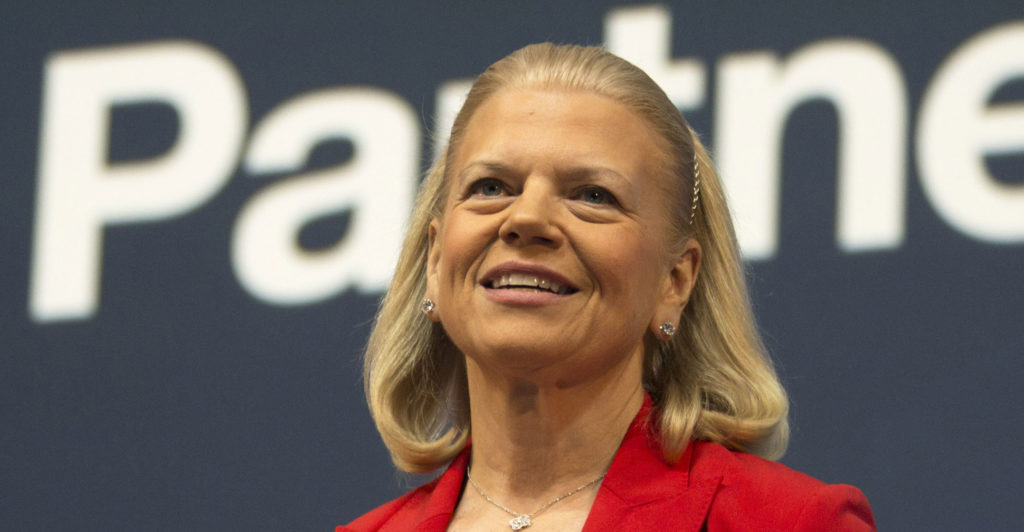
    Ginni Rometty

    As the new CEO of IBM, Krishna would be a “Nadella-like” leader — calm but deep, firm but unaggressive, said Rishikesha Krishnan, a professor of strategy at the Indian Institute of Management in Bangalore. “If a company intends to make a serious shift or change, he’d be the man.”

    Krishnan studied with Krishna at India’s premier engineering school, the Indian Institute of Technology Kanpur. “IQ levels on the campus are high, but even then he stood out as smart and articulate,” Krishnan said.

    Soft-spoken, relaxed and accessible, Krishna represents a new leadership style for IBM, which has an entrenched culture of bureaucracy and formalities. On a recent trip to India, he spent hours in the IBM cafeteria chatting to whomever approached him, according to a person who observed the interaction but didn’t want to be named describing a private event. He socialised with team members until the early hours of the morning, answering questions and offering market insights.

    Maybe we should have done it a year or two earlier, but then there’s this question of would the world be ready?

    Krishna joined IBM in 1990 after studying in Kanpur and obtaining a PhD in electrical engineering from the University of Illinois Urbana-Champaign. With vast industry knowledge and a tendency to speak at a rapid pace, Krishna can be hard to keep up with but is known for a willingness to simplify complex terms.

    In an interview last February, Krishna was asked to describe hybrid-cloud computing in two sentences. He gave a thorough and speedy analysis of the intersection between public cloud, private cloud, data centres, applications, existing infrastructure and other technical terms. At the end of his answer, Krishna said: “Now that wasn’t quite two sentences, but it was no more than two minutes.” He then laughed, adding: “Was that all intelligible?”

    IBM’s hybrid cloud strategy was “a long time coming”, Krishna said. “Maybe we should have done it a year or two earlier, but then there’s this question of would the world be ready? I think if we’d done it in 2015 it might’ve been too early.”

    Not fast enough

    Others disagree, saying one of the main criticisms against Rometty was not launching IBM’s transition soon enough. IBM has a lot of catching up to do in the trillion-dollar cloud market where Amazon and Microsoft are far out in front, followed by Google. They are all developing similar software in the hybrid-cloud market, too. While IBM gained ground with the Red Hat purchase, the fierce competition with such formidable rivals won’t leave much room for error.

    Former longtime IBM employee and historian James Cortada, a senior research fellow at the University of Minnesota, said hybrid cloud represents the company’s third radical transformation in its history. In the 1950s, IBM moved from tabulating equipment to computers; in the 1990s, it shifted to software and services; and now hybrid is the future. “Rometty initiated that next fundamental transition or transformation for the company, but that went too slowly for a lot of people,” Cortada said.
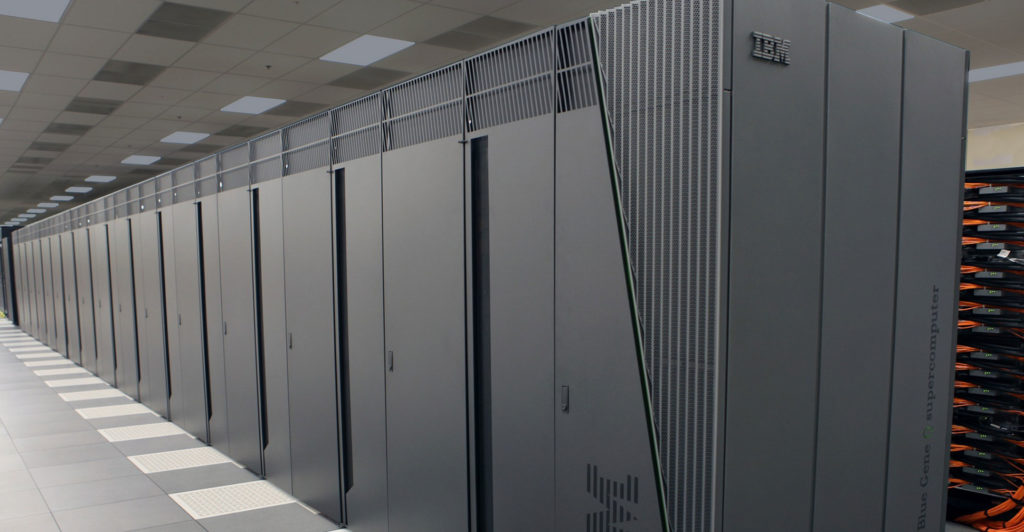
    Krishna will also benefit from a strong partner in Jim Whitehurst, the 52-year-old CEO of Red Hat who was elevated to IBM president, the first time the company has given an executive that title on its own.

    Whitehurst has been running a smaller but much faster growing company at the cutting edge of cloud migration, said Stifel Nicolaus & Co analyst David Grossman. The combination of the two of them sets up a “very interesting and complimentary team”.

    Together, Krishna and Whitehurst bring software to the core of the company.

    “Now the two top dogs running IBM are cloud purists,” said Steve Duplessie, founder of Enterprise Strategy Group. “The old IBM died a while ago and they had to change. This lets them remake themselves before it’s too late.”  — Reported by Olivia Carville, with assistance from Saritha Rai, (c) 2020 Bloomberg LP

    Follow TechCentral on Google News Add TechCentral as your preferred source on Google


    Amazon Arvind Krishna Ginni Rometty Google IBM Microsoft Red Hat Satya Nadella top
    WhatsApp YouTube
    Share. Facebook Twitter LinkedIn WhatsApp Telegram Email Copy Link
    Previous ArticleJust five companies control bitcoin network operations
    Next Article Cosatu to present R254-billion plan to save Eskom

    Related Posts

    Amazon in talks to buy satellite operator Globalstar

    Amazon in talks to buy satellite operator Globalstar

    2 April 2026
    'It's done for my industry': the SA director betting everything on AI film - Donovan Marsh

    The SA director betting everything on AI filmmaking

    31 March 2026
    Microsoft rolls out big Copilot upgrades

    Microsoft rolls out big Copilot upgrades

    31 March 2026
    Company News
    Synthesis helps financial enterprises transform with new Gemini Enterprise - Digicloud Africa

    Synthesis helps financial enterprises transform with new Gemini Enterprise

    2 April 2026
    The next churn wave is already in your contact centre conversations - CallMiner

    The next churn wave is already in your contact centre conversations

    2 April 2026
    Mining's problem isn't output, it's execution - Workday

    Mining’s problem isn’t output, it’s execution – Workday

    1 April 2026
    Opinion
    The conflict of interest at the heart of PayShap's slow adoption - Cheslyn Jacobs

    The conflict of interest at the heart of PayShap’s slow adoption

    26 March 2026
    South Africa's energy future hinges on getting wheeling right - Aishah Gire

    South Africa’s energy future hinges on getting wheeling right

    10 March 2026
    Hold the doom: the case for a South African comeback - Duncan McLeod

    Apple just dropped a bomb on the Windows world

    5 March 2026

    Subscribe to Updates

    Get the best South African technology news and analysis delivered to your e-mail inbox every morning.

    Latest Posts
    How AI agents are reshaping banking in South Africa - Lindelani Ramukumba, Absa

    How agentic AI is reshaping banking in South Africa

    5 April 2026
    South Africa's 5G boom is bypassing rural areas: Icasa

    South Africa’s 5G boom is bypassing rural areas: Icasa

    5 April 2026
    WhatsApp is eating South African operators' revenue

    WhatsApp is eating South African operators’ revenue

    4 April 2026
    DeepSeek V4 to run on Huawei silicon as China builds its own AI stack

    DeepSeek V4 to run on Huawei silicon as China builds its own AI stack

    4 April 2026
    © 2009 - 2026 NewsCentral Media
    • Cookie policy (ZA)
    • TechCentral – privacy and Popia

    Type above and press Enter to search. Press Esc to cancel.

    Manage consent

    TechCentral uses cookies to enhance its offerings. Consenting to these technologies allows us to serve you better. Not consenting or withdrawing consent may adversely affect certain features and functions of the website.

    Functional Always active
    The technical storage or access is strictly necessary for the legitimate purpose of enabling the use of a specific service explicitly requested by the subscriber or user, or for the sole purpose of carrying out the transmission of a communication over an electronic communications network.
    Preferences
    The technical storage or access is necessary for the legitimate purpose of storing preferences that are not requested by the subscriber or user.
    Statistics
    The technical storage or access that is used exclusively for statistical purposes. The technical storage or access that is used exclusively for anonymous statistical purposes. Without a subpoena, voluntary compliance on the part of your Internet Service Provider, or additional records from a third party, information stored or retrieved for this purpose alone cannot usually be used to identify you.
    Marketing
    The technical storage or access is required to create user profiles to send advertising, or to track the user on a website or across several websites for similar marketing purposes.
    • Manage options
    • Manage services
    • Manage {vendor_count} vendors
    • Read more about these purposes
    View preferences
    • {title}
    • {title}
    • {title}