 Long before streaming became the preferred medium for the consumption of entertainment, terrestrial pay-television – and later satellite television – disrupted South Africa’s media landscape from the mid-1980s, and for decades that followed.
Nearly 10 years after South Africa’s maiden television broadcast – by the state-owned SABC in 1976 – Naspers launched the country’s first pay-TV channel, M-Net, in 1986, paving the way for what would later become Africa’s first digital satellite TV service, aptly named DStv.
The technology used to deliver DStv’s service to the public has grown with the complexity of the offering over the years. The service has moved from analogue to satellite, single to dual-view, standard to high-definition and now 4K-quality internet streaming. With each technological leap, DStv introduced a new decoder and remote control to match the new capabilities.
TechCentral had a look back at every decoder (excluding GOtv terrestrial boxes sold elsewhere in Africa), from the very first M-Net box to the latest DStv Explora Ultra, and how they have changed over the past 38 years.
Pre-satellite era (1986 – 1994)
M-Net, short for Electronic Media Network, was launched as an analogue channel that used terrestrial broadcasting equipment in the same way that the SABC did at the time (and still mostly does). It was the first private subscription channel in South Africa.
The original M-Net decoder was called the Grinel and came with a remote control. Five thousand Grinel decoders were manufactured between August 1986 and March 1987 – at a peak rate of a thousand decoders a month. The system used to encrypt the M-Net signal to block access for non-subscribers – remember the squiggly lines on encrypted broadcasts? – was developed by Pieter den Toonder and his team at Irdeto.
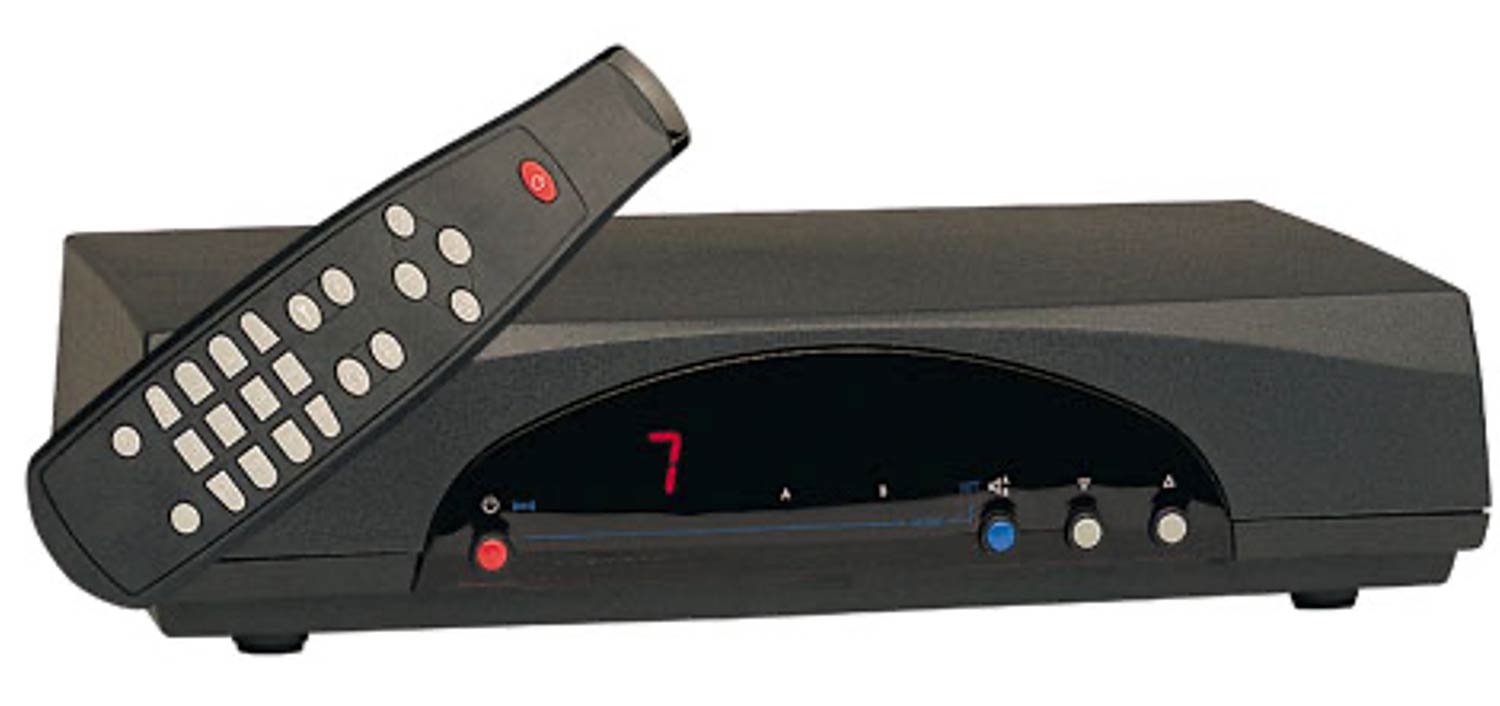
“This decoder was quite expensive and consisted of no less than 10 different PC boards filled with components that were difficult to assemble. The remote control unit was bought from OAK Industries in the US,” MultiChoice told TechCentral.
The M-Net Mark 1 soon followed in 1987. This unit boasted a powder-coated steel case with plastic fascia and was manufactured under contract by TEK Electronics in East London and National Panasonic Company in Cape Town (each factory manufactured 50 000 units at a collective rate of 500/day).
More important than the visual elements were the improvements in the underlying chipset technology. Large-scale integration of chipsets – a major innovation at the time – enabled industrialisation of the decoder by allowing for a single PC board. MultiChoice said some of the chips had nick names like Popeye, Peanuts, Hiccup and Hagar the Horrible. Similar to the previous model, the Mark 1’s remote control unit was also not manufactured in South Africa but in Korea, by Samsung.
Further innovations in design led to the M-Net Mark 2 decoder. The Mark 2’s all-plastic, charcoal-coloured housing allowed for cost savings and had a more robust design. This decoder won an industrial design award in 1988.
The cost savings laid the groundwork for scale, so although only 100 000 Mark 1 units were manufactured, more than 600 000 Mark 2s were built by TEK and NPC. These decoders retailed at R799 and the remote control unit was now manufactured in South Africa by STC Electronics in Boksburg. The Mark 2s were manufactured in both PAL I and PAL B/G broadcast standards to serve the needs in other parts of Africa.
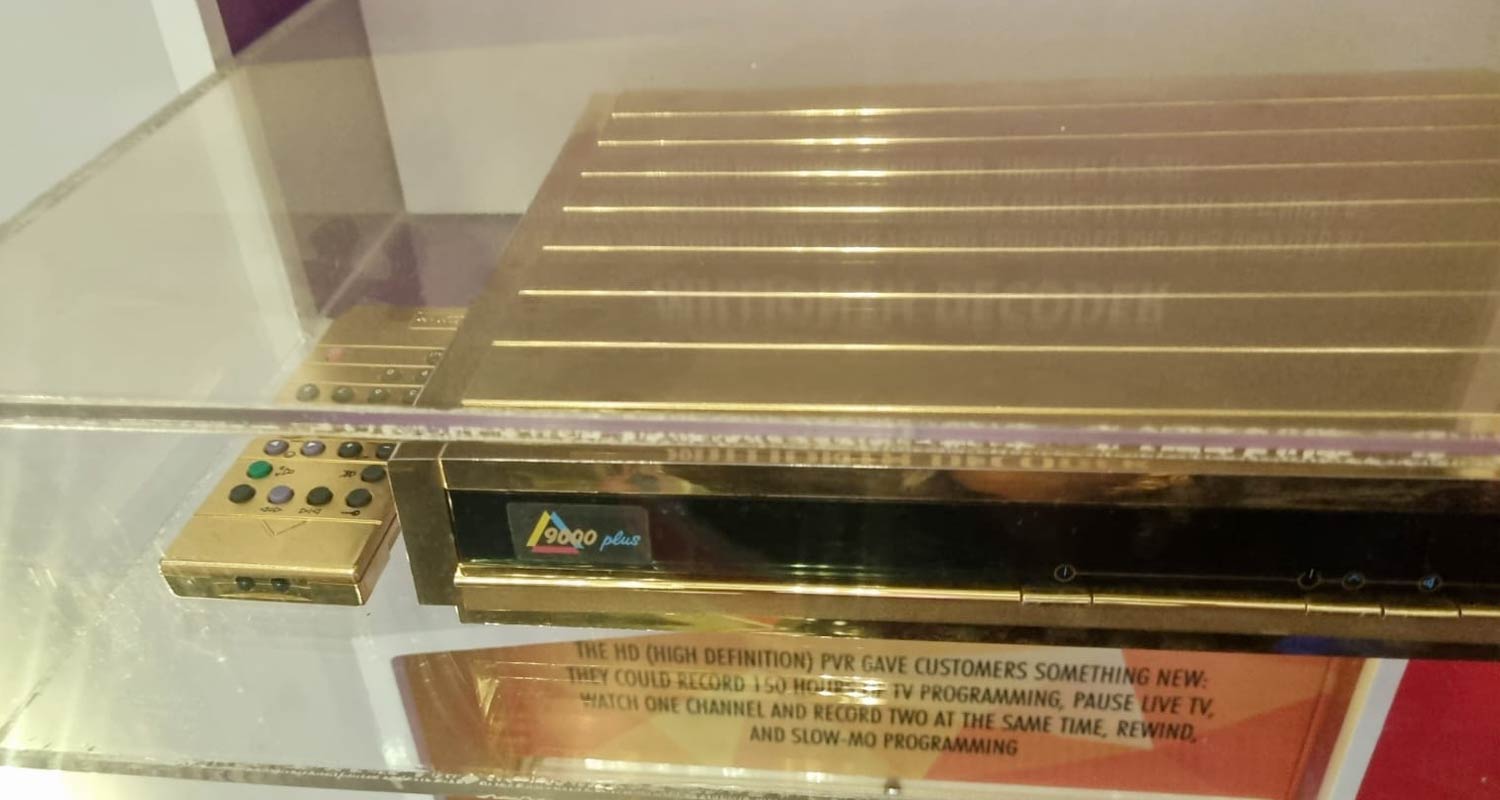
Also notable in this era were the Compact decoder of 1991, which boosted subscription numbers because of its lower R399 selling price (but, weirdly, it sold without a remote), and the 9000 plus, which was sold from 1992 and was the first decoder capable of producing stereo audio output and could store 39 channels instead of the eight that previous decoders were limited to.
In 1993, to commemorate the manufacturing of its millionth decoder, M-Net created a 24-carat gold-plated 9000 plus, which was unveiled by the late businessman and anti-apartheid activist Nthato Motlana at a ceremony at the company’s Decoder Centre.
The dawn of satellite and the introduction of DStv (1995 – 2002)
The formation of MultiChoice in 1995 saw the introduction of South Africa’s first satellite-based television service, DStv. DStv was only the second digital satellite TV offering in the world and the first outside the US.
Although this was the beginning of a period of unprecedented growth for MultiChoice, it was marred by disaster when a fire broke out and burned down the NPC factory in December 1995. This hampered production of the new Comcrypt decoder, which was originally meant for the European market. Production recommenced less than a month later, however, and Comcrypt production would eventually exceed 1.7 million units, with 116 000 sold locally and even more exported to Europe and other African markets.
Read: Load shedding double whammy for MultiChoice
Also produced in 1995 was the Pace 500, M-Net’s first digital decoder, which was followed by the UK-manufactured 610 model in 1997. The earlier part of this era was dominated by Panasat machines including the 510, 520, 630 and 635. Durban-based UEC would go on to revolutionise the aesthetics of the decoder’s design by adding the MultiChoice logo to the fascia on its 645, 660 and 720 models. Some 504 000 units of the UEC 720 were sold in all.
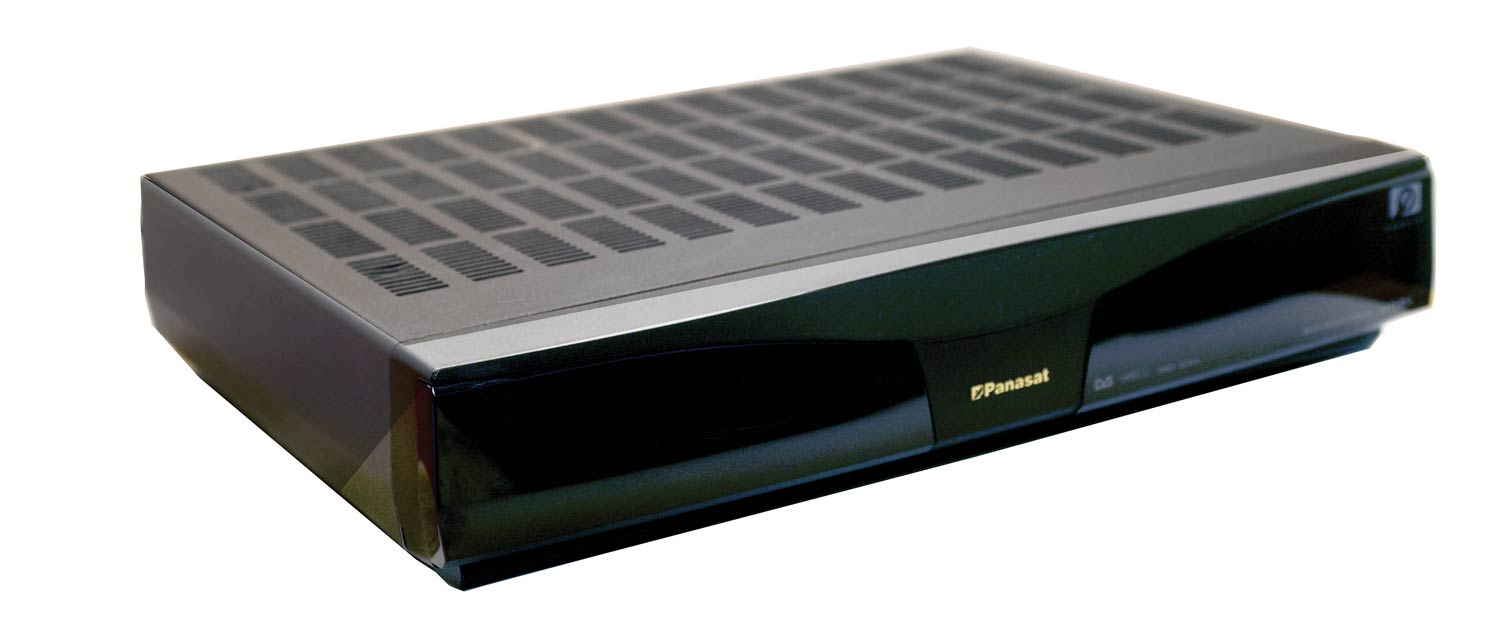 The added benefits of a digital unit, as opposed to analogue, began to show value with the introduction of the decoder colloquially known as the “Zapper”. This range of single-view, standard-definition decoders ran higher-level “1.04” software that allowed customers to “zap” from one channel to another. Along with the added speed, the next generation of these decoders ran EN2 software and could connect to the internet for TV Mail (e-mail), weather services and games.
Dual-view, PVR and streaming (2003 – present)
In 2003, MultiChoice introduced its first dual-view decoder, allowing customers to watch to different channels, on different TVs within the same home, at the same time. The feature was accompanied by an access fee which would allow dual-view functionality if paid for but keep the decoder working in single-view when not.
Fast-forward to 2005 and MultiChoice released its first personal video recording (PVR) decoder, which was also the first dual-view PVR decoder in the world. “At launch, this decoder did not have Catch Up or BoxOffice, these were added later,” said MultiChoice.
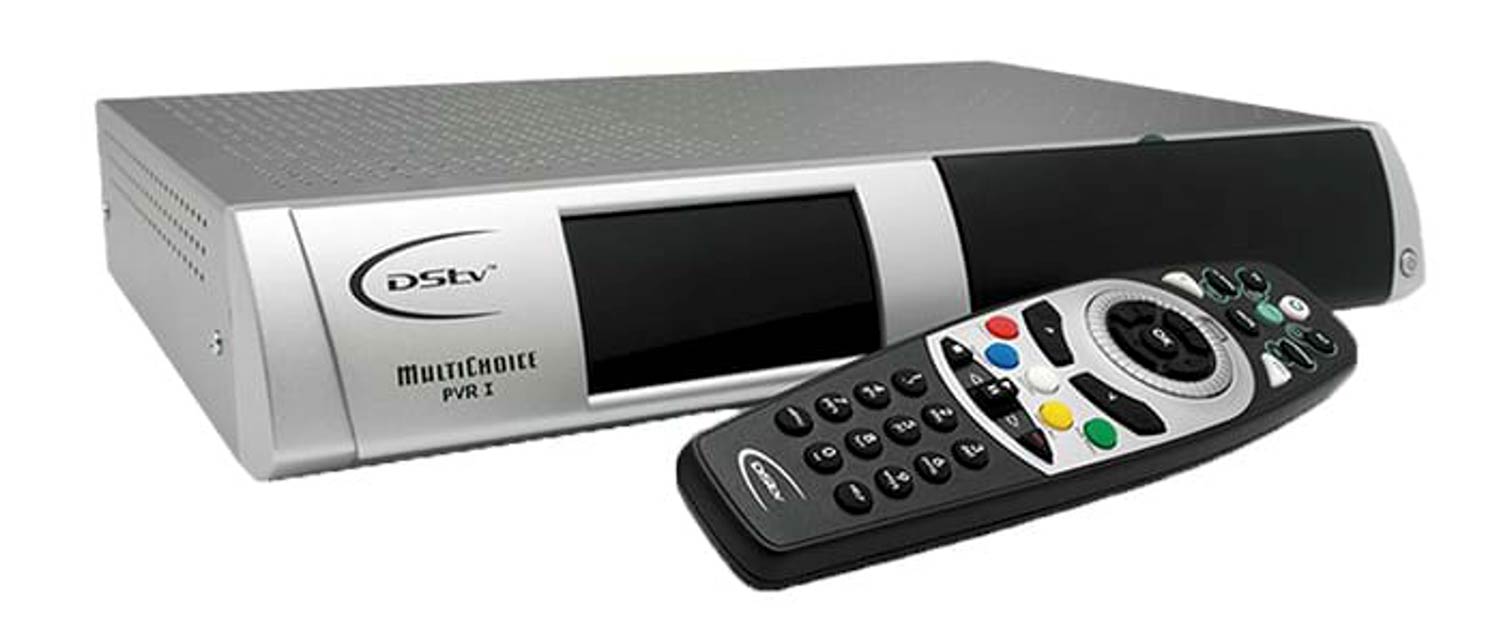 The second-generation PVR, released in 2008, improved on its predecessor by upgrading from standard-definition (SD) to high-definition (HD) video quality. Dual-view functionality was removed from this model, but a new XtraView feature made watching multiple channels at the same time a possibility. Recording capacity was also increased due to higher storage capacity.
In 2013, the company integrated its offering with internet capabilities in the Explora decoder. This unit connected to the internet via a USB port to a Wi-Fi dongle. The Explora made significant improvements in user interface design and experience, with a “Watch Later” feature allowing users to download shows onto their set-top box for later viewing. Users with a subscription to the MultiChoice-owned streaming platform Showmax could also stream that from the Explora.
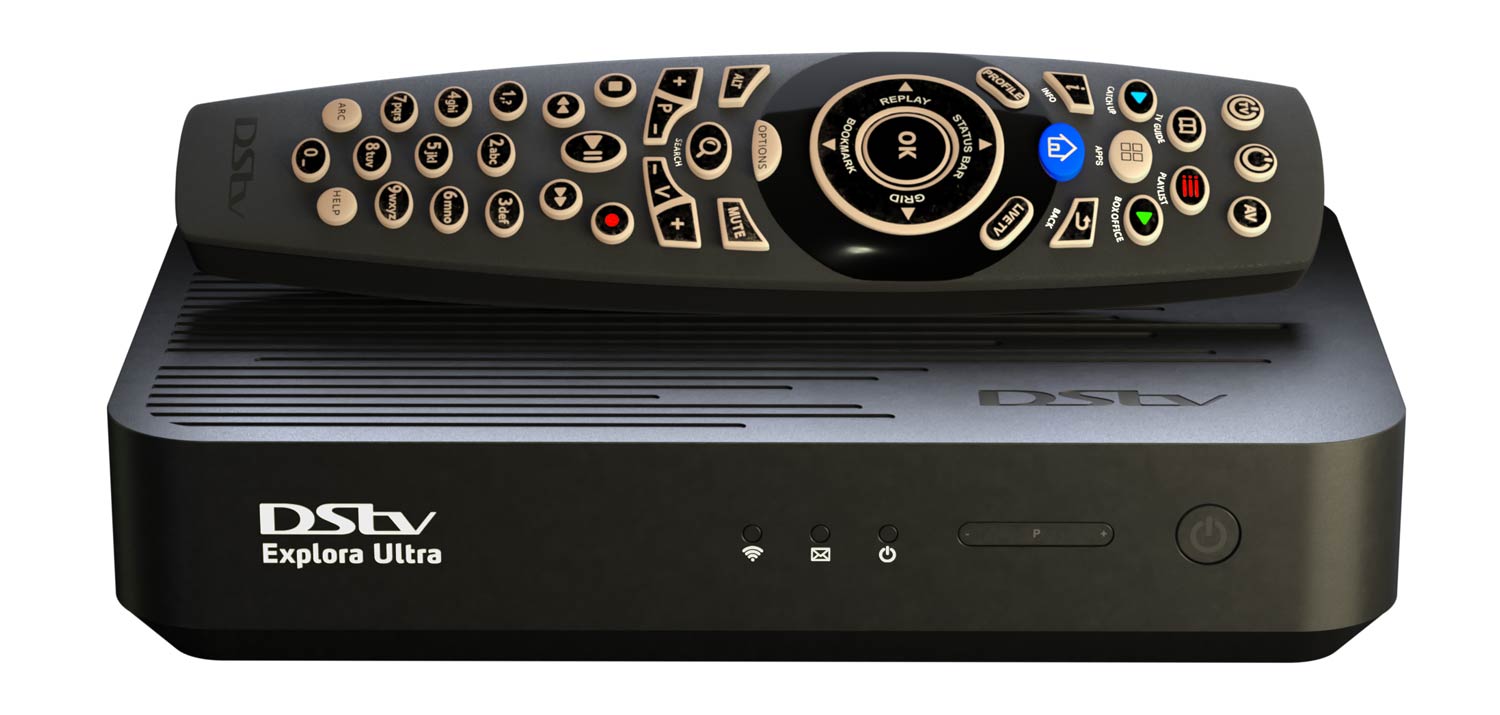 The Explora Ultra, released in 2020, has Wi-Fi built into the unit and is 4K-capable. The unit also accommodates third-party apps such as Netflix, Disney+ and Prime Video. The Streama, a non-satellite streaming box released in 2022, is a more compact device that supports 4K video with HDR 10 for video and Dolby Atmos virtual surround sound.
A very different future
Despite the decades of innovation in decoder technology, the growth in high-bandwidth internet access is driving consumer behaviour away from set-top boxes and towards cloud-based streaming services.
In August, MultiChoice launched its DStv Stream offering, which makes all the packages, services and channels available on its satellite platform accessible via login credentials through a variety of internet-capable devices including desktop and laptop computers, smart TVs, generic TV boxes, tablets and smartphones. As the world — and South Africa — moves away from satellite to streaming, it’s entirely possible decoders won’t be needed at all much longer. — (c) 2023 NewsCentral Media
Get breaking news alerts from TechCentral on WhatsApp