Amazon Leo has told communications regulator Icasa that it may not be able to provide affordable satellite broadband in South Africa if the authority does not adopt a proposed “frequency factor” that would lower spectrum fees for higher-frequency bands.
The warning came during Icasa’s public hearings on Thursday into draft amendments to the radio frequency spectrum regulations of 2015 and associated fees regulations of 2010.
The draft amendments, gazetted on 15 May, give effect to Icasa’s inquiry into the licensing framework for satellite services and cover the registration of satellite operators, revised fee formulas, blanket licensing of terminal networks, the protection of radio astronomy facilities and the use of earth stations in motion.
The frequency factor is a multiplier in Icasa’s fee formula. Setting a lower value for a band reduces what an operator pays per megahertz of spectrum used in it. Satellite systems increasingly work in bands well above those used by mobile networks, so where the regulator sets those multipliers determines a large part of an operator’s annual spectrum bill.
Presenting for Amazon Leo, Helen Kyeyune, regulatory and licensing affairs lead for sub-Saharan Africa, positioned the fee question as one of affordability.
“We support the frequency factor and the reduction in weighting for higher bands,” she said, arguing that higher bands are less congested and that satellite spectrum is shared and non-exclusive rather than exclusively assigned. “If the frequency factor is not implemented, that becomes really difficult.”
‘Complementary’
That, she said, cuts against Amazon Leo’s mission “to deliver fast, affordable broadband to unserved and underserved communities around the world”.
Kyeyune positioned the company as a complement to mobile operators rather than a competitor. “We like to see ourselves as complementary or even enablers,” she said, pointing to agreements with local operators to extend their networks. Anything that lowers Amazon’s costs helps those partners price more affordably, she argued.
Read: SpaceX breaks cover at Icasa satellite spectrum hearings
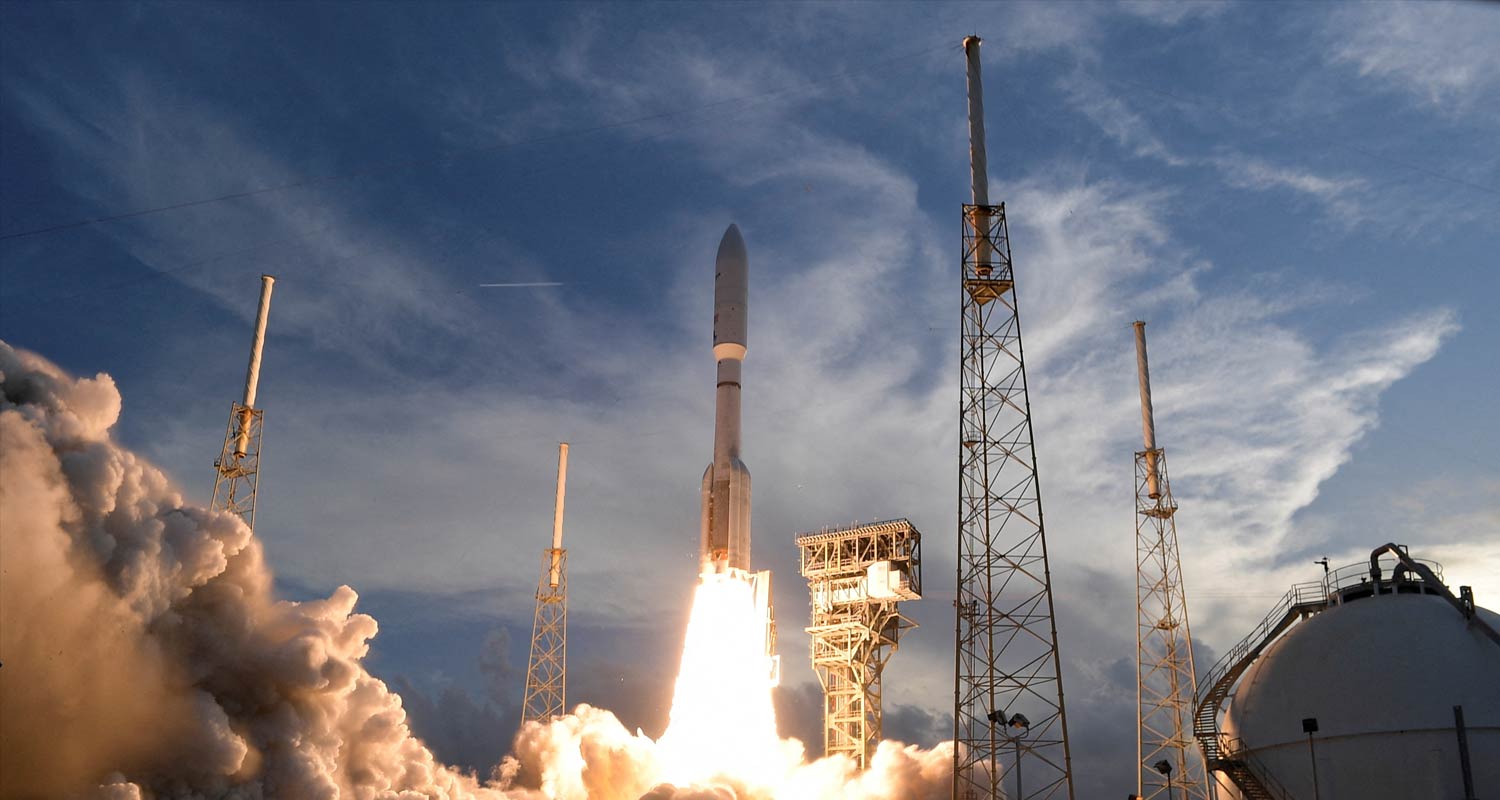
Amazon Leo, the low-Earth-orbit constellation run by Amazon subsidiary Kuiper Systems and renamed from Project Kuiper in November 2025, has committed more than US$10-billion to the system. It launched its first 27 production satellites in April 2025. After its 14th mission on 2 July, Amazon Leo vice president of business and product Chris Weber put the constellation at more than 390 satellites – enough, he said, to support continuous service across initial latitudes.
Deployment is nonetheless running well behind schedule. Amazon’s US Federal Communications Commission licence required 1 618 satellites, half the authorised constellation of 3 236, to be in orbit by 30 July 2026. That deadline passed last month with the constellation at roughly a quarter of the target, and Amazon has asked the FCC for an extension. The company began an enterprise preview of the service in November and has yet to open it to consumers.
Kyeyune cited International Telecommunication Union estimates that connecting everyone meaningfully by 2030 will cost between $2.6-trillion and $2.8-trillion, and pointed to the gap between high-income countries, where the ITU puts internet use at 94%, and low-income countries, at 23%.
Three priorities
In its written submission, signed by senior licensing and regulatory affairs lead Madeleine Lottenbach and filed on the 29 June deadline, Amazon Leo set out detailed comments but told the hearing it would focus on three:
- The first is the proposed no-fee registration of foreign satellite space segment operators under the new section 28B. Amazon supports it, Kyeyune said, “precisely because registration confers no right to provide services”, giving Icasa visibility of who is operating over the country.
- The second is blanket licensing of user terminals, which Amazon welcomed. Satellite terminals will proliferate much as personal devices have, with each home potentially owning one, so licensing them individually would be impractical.
- The third is the fee factor. Beyond backing the frequency factor, Amazon asked Icasa to define “principal hub station” and “hub ground station”, to clarify how frequencies above 50GHz will be treated, and to confirm that the gateway fee applies to a cluster of gateway earth stations, since such systems commonly run multiple gateways as one network.
On the fee structure, Amazon Leo and its fiercest competitor want much the same thing. SpaceX, which appeared at the same hearings, also asked Icasa to extend the frequency factor table above 50GHz, to charge the gateway fee per licence rather than per station so a single licence can cover multiple gateways, and to confirm that a blanket licence covers an entire fleet of terminals.
The hearings come as satellite competition intensifies. Icasa told the market in June that new satellite operators cannot obtain network licences directly, while rival Starlink’s route to a licence remains blocked after SpaceX refused to meet the requirement that licensees be 30% owned by historically disadvantaged groups, which Icasa says cannot be substituted without amending the Electronic Communications Act. SpaceX has yet to lodge a formal licence application.
Amazon Leo, by contrast, sits upstream as a wholesaler. Its retail face in South Africa is Maziv-owned Herotel, which unveiled the Evry brand in July and does not expect to switch on service before 2027. – © 2026 NewsCentral Media
- Subscribe to TechCentral’s daily newsletter
- Get breaking news alerts on WhatsApp