
Close Menu
TechCentralTechCentral

    Subscribe to the newsletter

    Get the best South African technology news and analysis delivered to your e-mail inbox every morning.

    Facebook X (Twitter) YouTube LinkedIn
    WhatsApp Facebook X (Twitter) LinkedIn YouTube
    TechCentralTechCentral
    • News
      Haier plants its flag in South Africa

      Haier plants its flag in South Africa

      2 February 2026
      Microsoft's winning formula is starting to fray - Satya Nadella

      Microsoft’s winning formula may be starting to fray

      2 February 2026
      Meet the CIO | Inside the JSE's tech engine with CIO Tebalo Tsoaeli

      Meet the CIO | Inside the JSE’s tech engine with CIO Tebalo Tsoaeli

      2 February 2026
      Crypto has gone mainstream - will South African regulators catch up in 2026? - Marius Reitz

      Crypto has gone mainstream – will South African regulators catch up in 2026?

      2 February 2026
      Sixty60 smashes 100 million orders

      Shoprite keeps Sixty60 momentum as group sales rise 7.2%

      2 February 2026
    • World
      Apple acquires audio AI start-up Q.ai

      Apple acquires audio AI start-up Q.ai

      30 January 2026
      SpaceX IPO may be largest in history

      SpaceX IPO may be largest in history

      28 January 2026
      Nvidia throws AI at the weather

      Nvidia throws AI at weather forecasting

      27 January 2026
      Debate erupts over value of in-flight Wi-Fi

      Debate erupts over value of in-flight Wi-Fi

      26 January 2026
      Intel takes another hit - Intel CEO Lip-Bu Tan. Laure Andrillon/Reuters

      Intel takes another hit

      23 January 2026
    • In-depth
      How liberalisation is rewiring South Africa's power sector

      How liberalisation is rewiring South Africa’s power sector

      21 January 2026
      The top-performing South African tech shares of 2025

      The top-performing South African tech shares of 2025

      12 January 2026
      Digital authoritarianism grows as African states normalise internet blackouts

      Digital authoritarianism grows as African states normalise internet blackouts

      19 December 2025
      TechCentral's South African Newsmakers of 2025

      TechCentral’s South African Newsmakers of 2025

      18 December 2025
      Black Friday goes digital in South Africa as online spending surges to record high

      Black Friday goes digital in South Africa as online spending surges to record high

      4 December 2025
    • TCS
      TCS+ | How Cloud On Demand is helping SA businesses succeed in the cloud - Xhenia Rhode, Dion Kalicharan

      TCS+ | Cloud On Demand and Consnet: inside a real-world AWS partner success story

      30 January 2026
      Watts & Wheels S1E3: 'BYD's Corolla Cross challenger'

      Watts & Wheels S1E3: ‘BYD’s Corolla Cross challenger’

      30 January 2026
      Watts & Wheels S1E3: 'BYD's Corolla Cross challenger'

      Watts & Wheels S1E2: ‘China attacks, BMW digs in, Toyota’s sublime supercar’

      23 January 2026

      TCS+ | Why cybersecurity is becoming a competitive advantage for SA businesses

      20 January 2026
      Watts & Wheels S1E3: 'BYD's Corolla Cross challenger'

      Watts & Wheels: S1E1 – ‘William, Prince of Wheels’

      8 January 2026
    • Opinion
      South Africa's skills advantage is being overlooked at home - Richard Firth

      South Africa’s skills advantage is being overlooked at home

      29 January 2026
      Why Elon Musk's Starlink is a 'hard no' for me - Songezo Zibi

      Why Elon Musk’s Starlink is a ‘hard no’ for me

      26 January 2026
      South Africa's new fibre broadband battle - Duncan McLeod

      South Africa’s new fibre broadband battle

      20 January 2026
      AI moves from pilots to production in South African companies - Nazia Pillay SAP

      AI moves from pilots to production in South African companies

      20 January 2026
      South Africa's new fibre broadband battle - Duncan McLeod

      ANC’s attack on Solly Malatsi shows how BEE dogma trumps economic reality

      14 December 2025
    • Company Hubs
      • Africa Data Centres
      • AfriGIS
      • Altron Digital Business
      • Altron Document Solutions
      • Altron Group
      • Arctic Wolf
      • AvertITD
      • Braintree
      • CallMiner
      • CambriLearn
      • CYBER1 Solutions
      • Digicloud Africa
      • Digimune
      • Domains.co.za
      • ESET
      • Euphoria Telecom
      • Incredible Business
      • iONLINE
      • IQbusiness
      • Iris Network Systems
      • LSD Open
      • NEC XON
      • Netstar
      • Network Platforms
      • Next DLP
      • Ovations
      • Paracon
      • Paratus
      • Q-KON
      • SevenC
      • SkyWire
      • Solid8 Technologies
      • Telit Cinterion
      • Tenable
      • Vertiv
      • Videri Digital
      • Vodacom Business
      • Wipro
      • Workday
      • XLink
    • Sections
      • AI and machine learning
      • Banking
      • Broadcasting and Media
      • Cloud services
      • Contact centres and CX
      • Cryptocurrencies
      • Education and skills
      • Electronics and hardware
      • Energy and sustainability
      • Enterprise software
      • Financial services
      • Information security
      • Internet and connectivity
      • Internet of Things
      • Investment
      • IT services
      • Lifestyle
      • Motoring
      • Public sector
      • Retail and e-commerce
      • Satellite communications
      • Science
      • SMEs and start-ups
      • Social media
      • Talent and leadership
      • Telecoms
    • Events
    • Advertise
    TechCentralTechCentral
    Home » Sections » Retail and e-commerce » Amazon, Walmart face the ire of 70 million Indian shopkeepers

    Amazon, Walmart face the ire of 70 million Indian shopkeepers

    By Agency Staff2 December 2019
    Twitter LinkedIn Facebook WhatsApp Email Telegram Copy Link
    News Alerts
    WhatsApp

    In the heart of New Delhi’s largest wholesale bazaar, merchants who normally compete with each other have united against a common enemy.

    “Amazon, Flipkart!” one merchant after another shouts into a microphone from a small stage in Sadar Bazaar’s central traffic circle. Some 50 other shopkeepers gathered around shout back in unison: “Go back! Go back!”

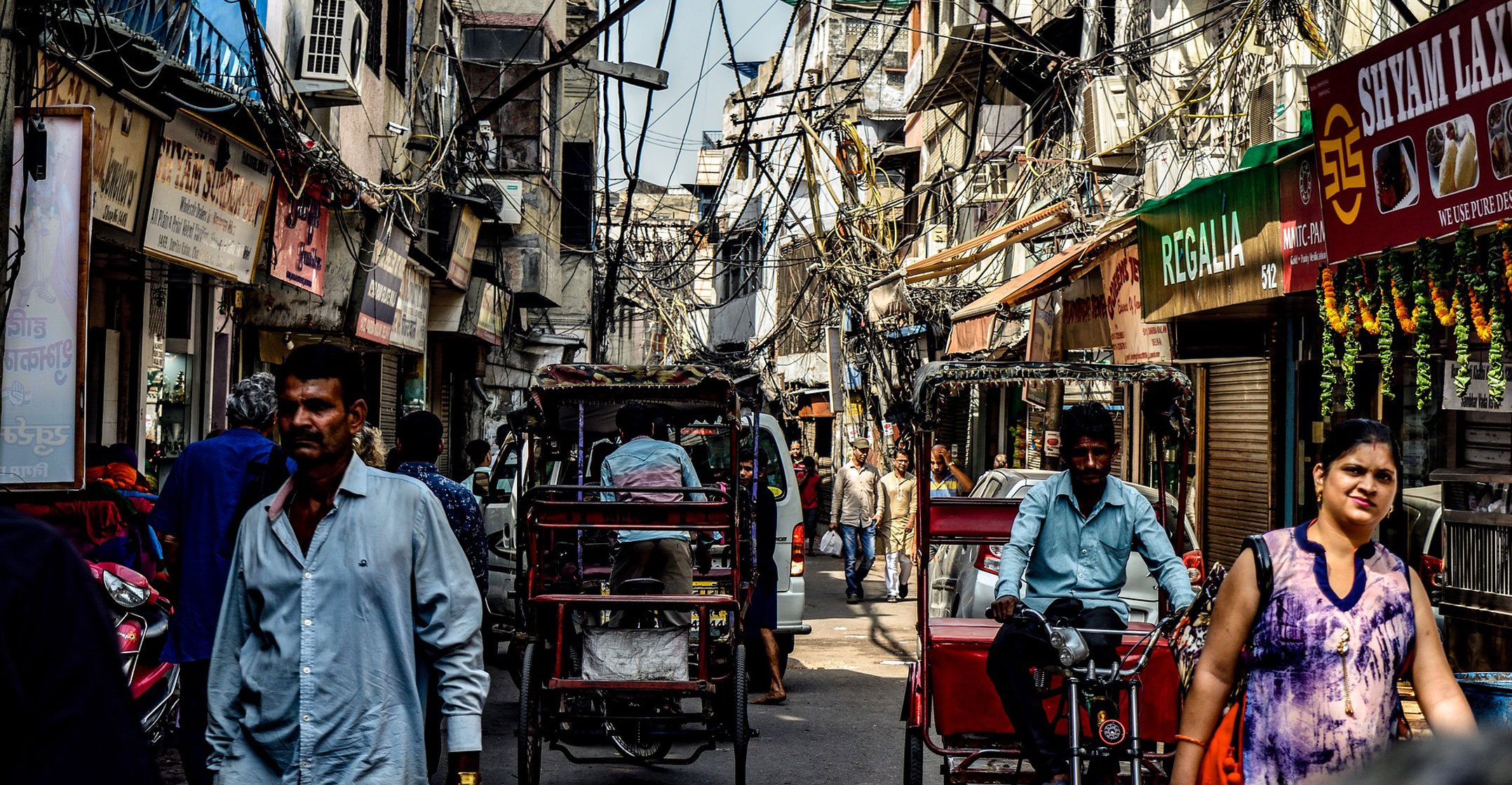
    The sit-in, which created more chaos than usual among the rickshaws, motorbikes and ox-carts plying the market road, was one of as many as 700 protests against Amazon.com and Walmart — owner of local e-commerce leader Flipkart — that organisers say took place at bazaars across India on a recent Wednesday.

    At stake is the future of retailing in a country with 1.3 billion consumers, where Walmart and Amazon have sunk billions of dollars

    India’s shopkeepers are mobilising against the global e-commerce giants, alleging they are engaged in predatory pricing in violation of new rules meant to protect local businesses. At stake is the future of retailing in a country with 1.3 billion consumers, where Walmart and Amazon have sunk billions of dollars trying the crack the market and capture its growth potential.

    “Amazon and Flipkart are a second version of the East India company,” said Praveen Khandelwal, national secretary of the Confederation of All India Traders at the Delhi protest, referring to the British trading house whose arrival in India kicked off nearly 200 years of colonial rule. “The motive of Amazon and Flipkart is not to do business, but to monopolise and control.”

    India’s government in October announced an investigation into the allegations of predatory pricing. Amazon and Walmart said in statements last week that their operations comply with Indian laws, and that they act only as a third-party marketplace.

    Backlash

    The conflict comes amid a broader global backlash against the breakneck expansion of tech firms — from protests by taxi drivers against an Uber clone in Jakarta, to couriers for a Softbank-backed delivery start-up creating a bonfire of their backpacks in Bogota in protest of low wages and poor benefits.

    Representing about 70 million small merchants who collectively control almost 90% of India’s retail trade, India’s shopkeepers union has shown itself to be a strong political force. The traders are an important part of the voter base of Prime Minister Narendra Modi’s Bharatiya Janata Party.

    “For a government, especially a government of the BJP, which has the support of small businessmen, it may not be prudent or politically advisable to totally ignore such demands,” said Sandeep Shastri, a political scientist at Jain University in Bangalore. “They would have to be seen taking some steps at least.”
    The union’s power is a significant reason the government has placed such onerous restrictions on foreign retailers — including a minimum US$100-million investment and strict local sourcing rules. Because of the hurdles, the likes of Walmart and Carrefour have all but given up on opening their eponymous stores in the country.

    The shopkeepers won a key victory against the foreign e-commerce players last year when the government tightened regulations on how the platforms are allowed to sell goods. The rules, aimed at creating a level playing field on pricing, forced Amazon and Flipkart to pull thousands of items from their virtual shelves and restructure large parts of their local operations.

    The changes, coming after Walmart announced its acquisition of Flipkart, threw the foreign companies into chaos and prompted analysts to question their India investments. With Amazon shut out of China and Walmart’s e-commerce performance in the US decidedly mixed, both companies have settled on India as key to growth. Amazon CEO Jeff Bezos has pledged to spend $5.5-billion to win India, while Walmart’s $16-billion Flipkart deal was the retailer’s biggest ever.

    The flash point for the latest escalation was Diwali, a Hindu festival that’s occasion for a gift-giving bonanza

    Now the shopkeepers are alleging Amazon and Flipkart are circumventing the rules with predatory pricing and deep discounting. They are demanding the government shut down the companies’ online marketplaces until they are in compliance.

    Amazon said its sellers have complete discretion on what price to sell their products. Flipkart said it provides sellers with data to help determine what product offerings will sell best at what price, but business decisions are ultimately the sellers’ to make.

    The flash point for the latest escalation was Diwali, a Hindu festival that’s occasion for a gift-giving bonanza akin to Christmas in Western countries. This year’s festival in October came amid a slowdown in consumer spending that’s hit everyone from car makers to shampoo sellers. But while the shopkeepers union said its members saw as much as a 60% drop in Diwali sales, Amazon and Flipkart managed to report record revenue from the six-day festival.

    ‘Violation’

    The shopkeepers union argued that the online holiday deals must be in violation of the new rules, prompting commerce minister Piyush Goyal to announce an investigation.

    “E-commerce companies have no right to offer discounts or adopt predatory prices,” Goyal said in October. “Selling products cheaper and resulting the retail sector to incur losses is not allowed.” Another government official said policy makers are looking at setting up a dedicated e-commerce regulator.

    A spokesman for the commerce and industry ministry didn’t respond to an e-mail seeking comment.

    Vinod Kumar, a 35-year-old shopkeeper selling women’s cosmetics in the Delhi bazaar, is looking for relief. Standing by his small stall, he picks up a bottle of a rosewater-based hair product. He sells it for 40 rupees (US$0.56), but says customers can get it from Amazon or Flipkart for 30 rupees, with delivery right to their home.

    “If everything is available online, why would anyone come here to face the heat and the crowds?” he says. “My business is shrinking by the day.”

    Kumar says if the situation continues he may go out of business, as many other shops already have.

    Overall data show sales at traditional mom-and-pop shops are still growing in India. Though these stores have seen a decline in their share of total retail sales since 2014 as e-commerce and organised retail chains grab market share, the consumer market is expanding at such a pace that absolute spending with mom-and-pop shops increased nearly 60%, according to consultancy Technopak Advisors. That pace of absolute growth is projected to slow slightly to 50% over the next five years.

    That may be cold comfort to Muhammad Yusuf. The 72-year-old, who runs a jewellery shop at the Delhi bazaar, says he’s unable to match the prices online, has cut his staff from six employees to two and is in danger of not being able to pay rent.

    Yusuf is conspicuous in the e-commerce protest, however, in that he’s sporting a fleece jacket bearing the Amazon logo. Asked why he’s wearing it, he shrugs and says he needed something to keep him warm and found it in a clothing stall nearby. He bought it because it was cheap.  — Reported by Ari Altstedter, with assistance from Shruti Srivastava, (c) 2019 Bloomberg LP



    Amazon Flipkart Jeff Bezos top Walmart
    WhatsApp YouTube Follow on Google News Add as preferred source on Google
    Share. Facebook Twitter LinkedIn WhatsApp Telegram Email Copy Link
    Previous ArticleNigeria to allow more payment providers to boost banking access
    Next Article Ford agrees to R35-million fine over burning Kugas

    Related Posts

    AI replaces people as Amazon cuts 16 000 corporate jobs

    AI replaces people as Amazon cuts 16 000 corporate jobs

    28 January 2026
    Amazon brings image-based shopping to South Africa - Robert Koen

    Amazon brings image-based shopping to South Africa

    27 January 2026
    Wikipedia moves to monetise AI giants' reliance on its content

    Wikipedia moves to monetise AI giants’ reliance on its content

    15 January 2026
    Company News
    Breaking silos with SAS: Agile insurance in an uncertain world

    Breaking silos with SAS: agile insurance in an uncertain world

    2 February 2026
    Stellar year expected for Digicloud Africa and its reseller partners - Gregory MacLennan

    Stellar year expected for Digicloud Africa and its reseller partners

    2 February 2026
    How to subscribe to South Africa's best tech podcasts - TechCentral

    How to subscribe to South Africa’s best tech podcasts

    2 February 2026
    Opinion
    South Africa's skills advantage is being overlooked at home - Richard Firth

    South Africa’s skills advantage is being overlooked at home

    29 January 2026
    Why Elon Musk's Starlink is a 'hard no' for me - Songezo Zibi

    Why Elon Musk’s Starlink is a ‘hard no’ for me

    26 January 2026
    South Africa's new fibre broadband battle - Duncan McLeod

    South Africa’s new fibre broadband battle

    20 January 2026

    Subscribe to Updates

    Get the best South African technology news and analysis delivered to your e-mail inbox every morning.

    Latest Posts
    Haier plants its flag in South Africa

    Haier plants its flag in South Africa

    2 February 2026
    Microsoft's winning formula is starting to fray - Satya Nadella

    Microsoft’s winning formula may be starting to fray

    2 February 2026
    Meet the CIO | Inside the JSE's tech engine with CIO Tebalo Tsoaeli

    Meet the CIO | Inside the JSE’s tech engine with CIO Tebalo Tsoaeli

    2 February 2026
    Crypto has gone mainstream - will South African regulators catch up in 2026? - Marius Reitz

    Crypto has gone mainstream – will South African regulators catch up in 2026?

    2 February 2026
    © 2009 - 2026 NewsCentral Media
    • Cookie policy (ZA)
    • TechCentral – privacy and Popia

    Type above and press Enter to search. Press Esc to cancel.

    Manage consent

    TechCentral uses cookies to enhance its offerings. Consenting to these technologies allows us to serve you better. Not consenting or withdrawing consent may adversely affect certain features and functions of the website.

    Functional Always active
    The technical storage or access is strictly necessary for the legitimate purpose of enabling the use of a specific service explicitly requested by the subscriber or user, or for the sole purpose of carrying out the transmission of a communication over an electronic communications network.
    Preferences
    The technical storage or access is necessary for the legitimate purpose of storing preferences that are not requested by the subscriber or user.
    Statistics
    The technical storage or access that is used exclusively for statistical purposes. The technical storage or access that is used exclusively for anonymous statistical purposes. Without a subpoena, voluntary compliance on the part of your Internet Service Provider, or additional records from a third party, information stored or retrieved for this purpose alone cannot usually be used to identify you.
    Marketing
    The technical storage or access is required to create user profiles to send advertising, or to track the user on a website or across several websites for similar marketing purposes.
    • Manage options
    • Manage services
    • Manage {vendor_count} vendors
    • Read more about these purposes
    View preferences
    • {title}
    • {title}
    • {title}