Anthropic has opened a research preview of the Model Hardware Standard, a specification that lets AI agents discover and operate physical devices – microscopes, liquid handlers, robotic arms, lasers – without a custom integration for each one.
The claim is that work that takes a laboratory weeks or months, and usually needs a specialist, drops to hours or minutes. The evidence Anthropic published alongside the announcement is more interesting than the claim.
QuEra Computing builds quantum computers using neutral atoms. Its lasers must hold their frequency to roughly one part in a trillion, and when a door opens or the temperature shifts, that lock drops. A human operator takes five to 10 minutes to recover it. In a university lab, somebody drives in at 2am to do it.
QuEra had already tried to automate this. A team of four – a laser systems engineer, a software engineer, an algorithms specialist and a tester – spent several months building a script that recovered the lock 58% of the time, taking about 150 seconds per attempt.
The company then handed the same problem to Claude through MHS. Four instances of the model ran a loop overnight: one proposing changes, one writing them, one running them against the live laser, one reading the logs and deciding what to try next. By morning, recovery was taking about six seconds. In a later blind test across 700 trials, the script it had written recovered the lock 695 times – a 99.3% success rate.
QuEra then pointed it at lock quality, governed by 12 interdependent parameters. Its own specialist’s tuning measured 15.7mV of residual error. Over 363 experiments and 16 unattended hours, the agent got it to 1.55mV. The specialist retuned the laser from scratch by his usual method, without seeing the result, and both were measured on a phase noise analyser. They matched across the band except at one resonance, where the manual tune had left about a thousand times more noise. Over a 19-hour run, the agent’s settings never lost the lock. The expert’s dropped it about 1.6 times an hour.
Plain language
MHS introduces a standardised driver with a small set of commands – read a temperature, set a temperature – that any device can act on, and makes each device discoverable across a network. It also lets users describe a machine’s characteristics in plain language, including things not discernible from code, such as how heavy a robot arm is and therefore how carefully it must be moved.
Carnegie Mellon researchers wired up a liquid handler, a plate reader, a robotic arm and monitoring cameras spread across three computers with incompatible interfaces – one of which had no programmatic interface at all, only a screen – in about eight hours, against the several weeks a vendor-built setup takes. A University of Washington doctoral student connected six instruments in under a week, including writing the drivers.
Claude learns about the physical world through text and images, it says, so its spatial and physical reasoning still needs expert oversight, Anthropic said.
A clear illustration of this comes from Genentech, which used MHS to automate a protein assay. When bubbles formed in a viscous sample and triggered errors, the model’s instinct was to retry in the same well with different settings, which agitated the liquid and made more bubbles. Researchers had to explain that the error was physical rather than a software fault before it changed approach.
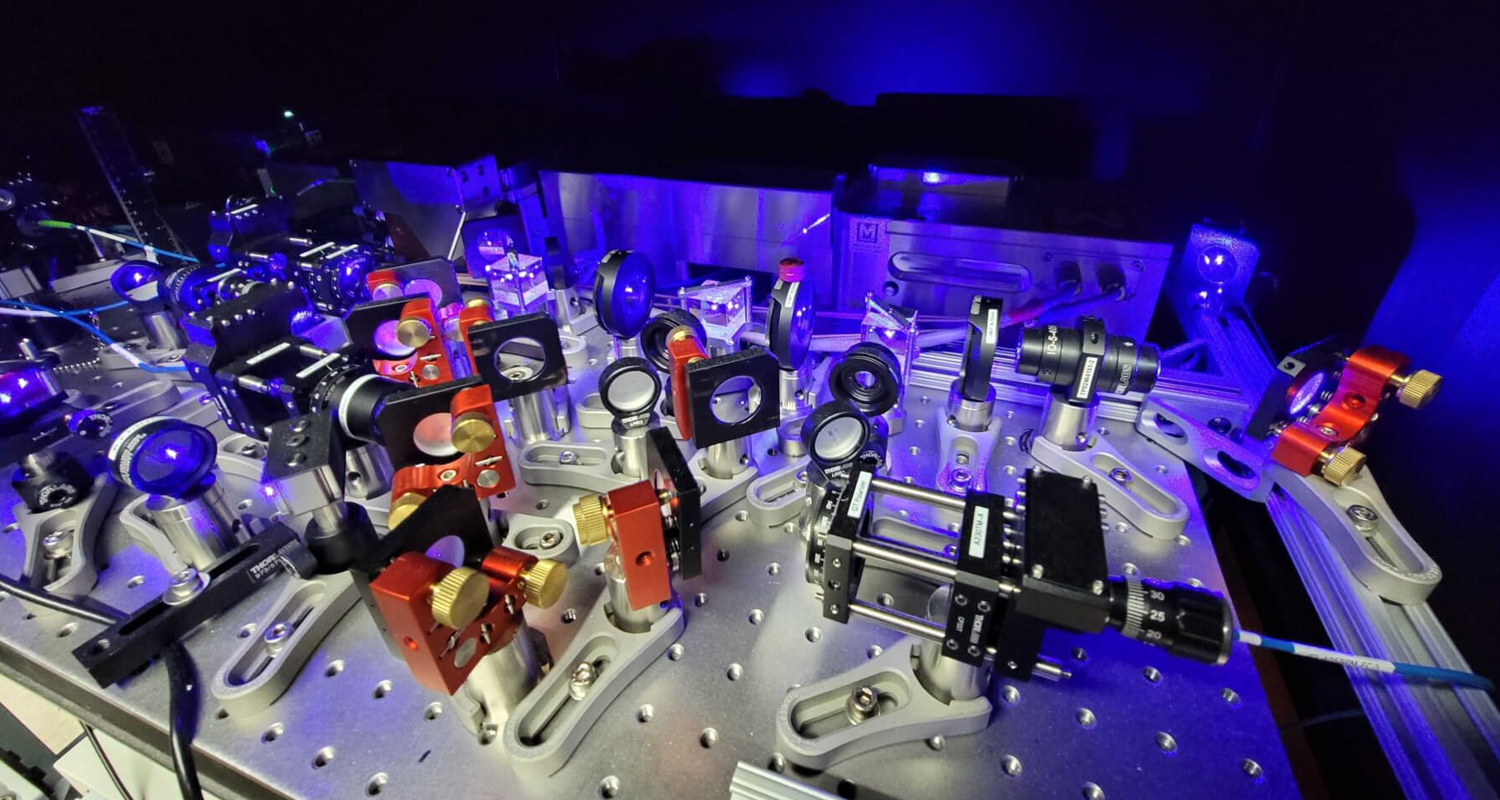
QuEra reported something similar: when the hardware itself went wrong, the agent could not troubleshoot, because its understanding of the rig was programmatic rather than physical. It also stopped and waited for human approval so often that experiments sometimes paused overnight.
Second standard
The business logic is worth noting. In November 2024 Anthropic released the Model Context Protocol, a standard for connecting AI models to software tools. OpenAI adopted it, Google and Microsoft followed, and Anthropic subsequently donated it to the Linux Foundation.
MHS extends the same approach to physical devices, and is reached through MCP. It is also model-agnostic: nothing about it requires Claude. Anthropic said it will open-source the standard once safety evaluations are further along, and is developing what it calls a physical safety road map.
Hardware vendors are already building support. Amazon Web Services is adding it to its Strands Robots library, Tecan to its Fluent liquid handlers, QIAGEN to a nucleic acid purification platform, and MBF Bioscience to the software running laser-scanning microscopes in hundreds of neuroscience labs. Danaher, Doosan Robotics, Universal Robots, Hugging Face and Raspberry Pi are also involved.
Read: Meta could become Anthropic’s landlord in $10-billion deal
For a company that does not own the largest model, owning the interface layer is a defensible position. Whether that works twice is an open question.
The constraint MHS attacks is not money for instruments. It is the scarce engineer who can make instruments from different vendors talk to each other, and South African research institutions have fewer of those than they need. Access is by application, through a waitlist, and the first cohort is drawn from science, robotics, electronics and manufacturing. – © 2026 NewsCentral Media
- Subscribe to TechCentral’s daily newsletter
- Get breaking news alerts on WhatsApp