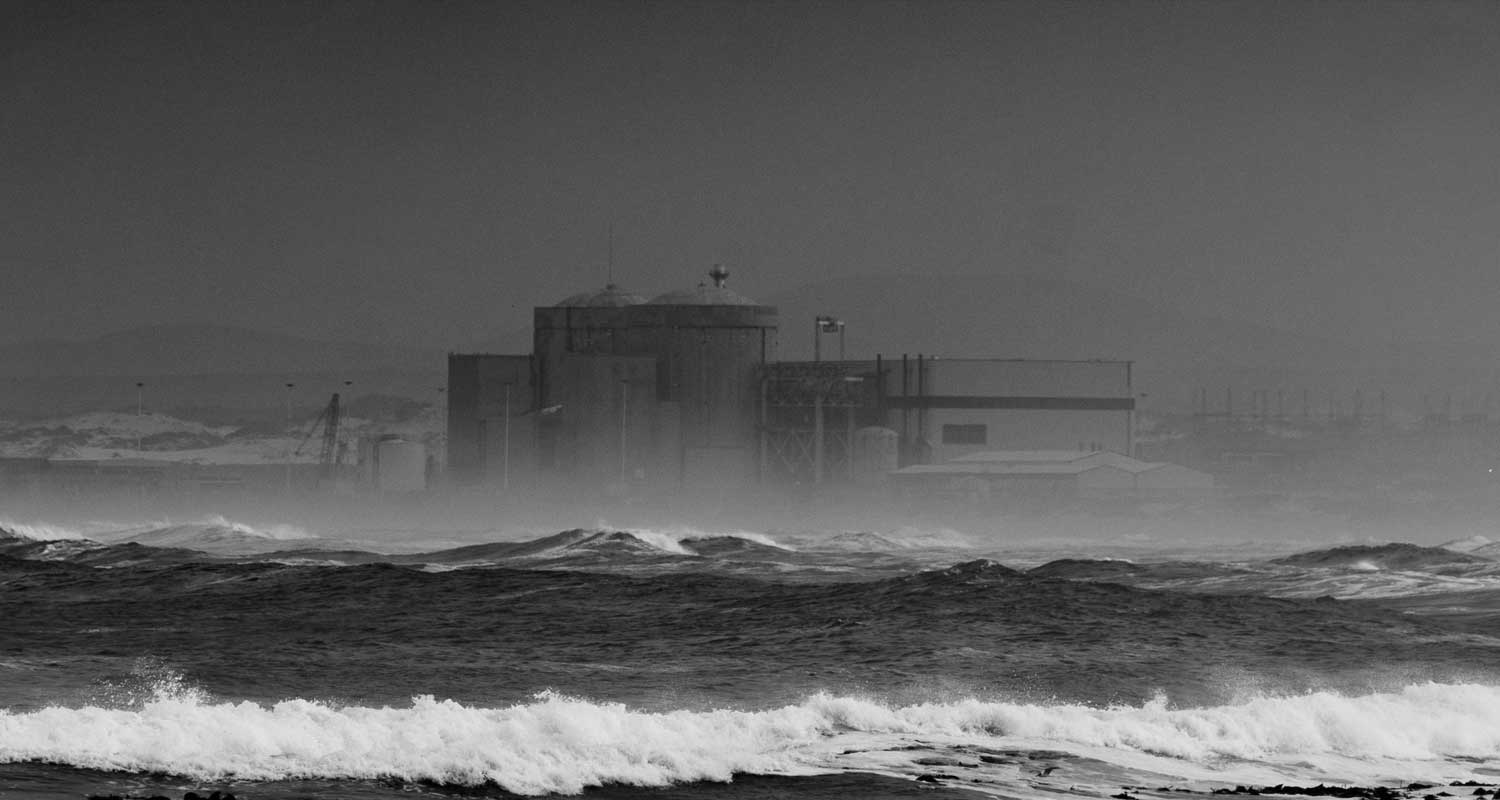
Africa’s only nuclear power station is generating no electricity. Eskom said on Thursday that Koeberg unit 1 was taken offline just before 1am following a turbine trip, and that the unit was removed from service safely and within procedure.
The statement does not mention that unit 2 has been out of service since 26 April, on a 150-day maintenance and refuelling outage tied to the station’s life-extension programme. It is due back in November.
- Update: Eskom said on Monday, 31 August that Koeberg unit 1 had been returned to service.
With both units down, more than 1.8GW of baseload capacity is off the grid. Eskom said the removal of unit 1’s capacity “poses no risk to the national electricity supply”, that it has sufficient generation available and that the grid remains stable and secure.
The utility said all plant monitoring confirmed operating conditions remained stable, that nuclear safety was never compromised and that there was no risk to employees, the public or the environment. The cause of the trip is under investigation.
Thursday’s trip is the second interruption to unit 1 in seven days. On 21 August, Eskom cut the unit to 50% of capacity after a cooling water pump shut down automatically because of a buildup of marine material in the seawater intake.
Thursday’s statement describes that as generation being “temporarily reduced … as a precautionary measure due to seawater intake challenges linked to a sardine influx”. The reduction was a halving of output, or roughly 465MW, and lasted several days.
The sardines
Large numbers of dead sardines have washed up along the Western Cape coast this month, with the City of Cape Town clearing beaches between Silwerstroomstrand and Milnerton. The department of forestry, fisheries & the environment confirmed on 14 August that it had detected genetic material from pilchard herpesvirus in sampled fish.
The cause is not settled. The department found the virus in both dead sardines and, at lower levels, in apparently healthy ones, which it said suggests the virus alone may not be sufficient to cause mass mortality. Scientists are also examining harmful algae, low oxygen and unusual ocean conditions.
Eskom said the mortality event is under inter-agency investigation and that “there is currently no evidence linking these incidents to Koeberg nuclear power station’s operations”.
Unit 2’s outage has not been uneventful. In May, a crane stalled while lifting a 150-tonne low-pressure turbine rotor, dropping it into an incorrect position. Eskom said recovery teams repositioned it and inspections found no significant damage, and that the outage schedule was unaffected.
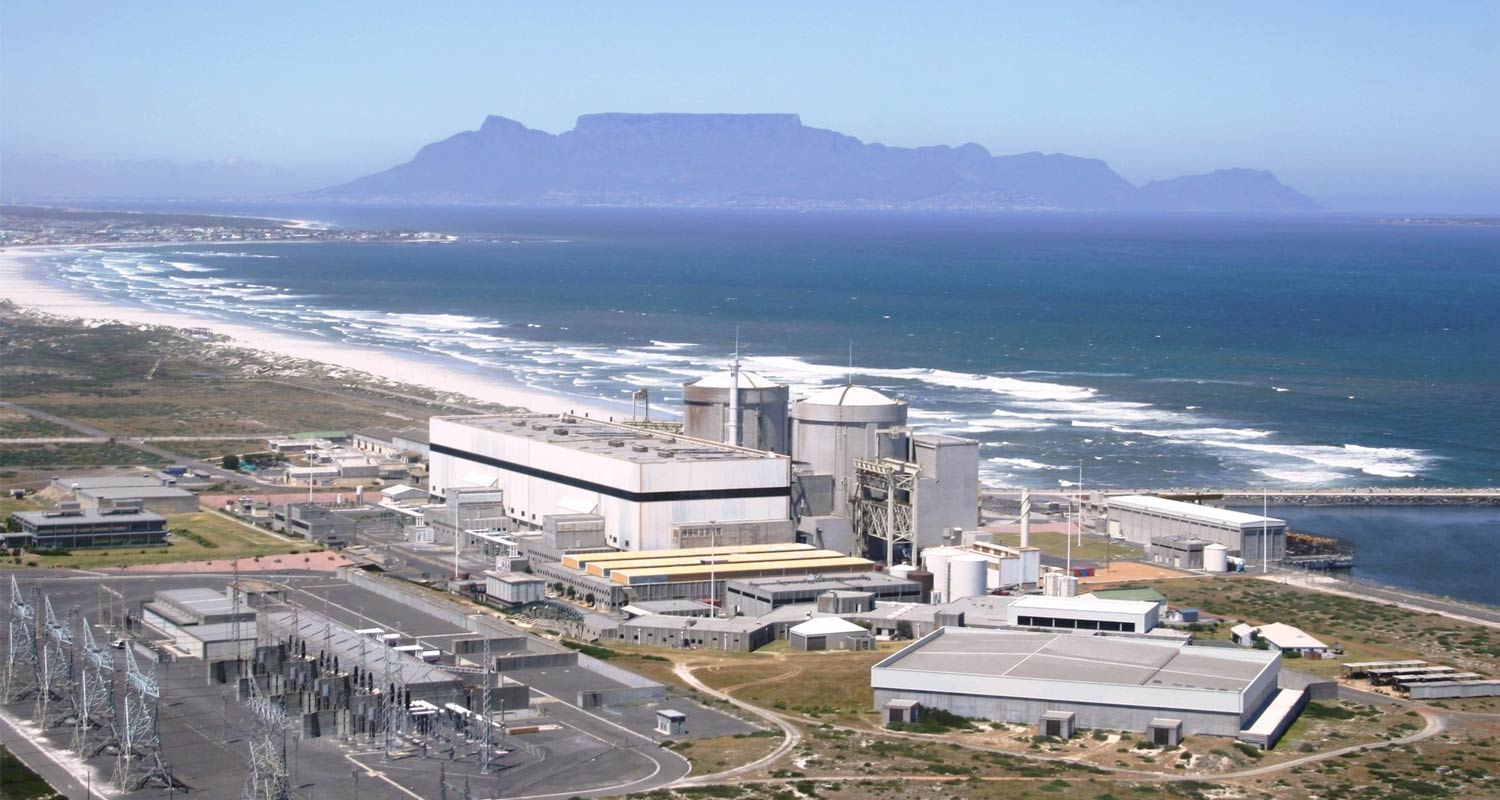
In July, the National Nuclear Regulator disclosed that it was reviewing airborne contamination events inside the unit 2 reactor building, detected on 30 June, 2 July and 7 July during eddy current testing of the unit’s new steam generators. Eskom and the regulator said the events were contained, classified “level 0” on the international scale and posed no risk to the public.
Both units are running on 20-year licence extensions granted after a multibillion-rand programme that included replacing unit 2’s three steam generators. Unit 2 returned to service at the end of December 2024 and this is its first major inspection cycle since. — © 2026 NewsCentral Media
- Subscribe to TechCentral’s daily newsletter
- Get breaking news alerts on WhatsApp