

Close Menu
TechCentralTechCentral

    Subscribe to the newsletter

    Get the best South African technology news and analysis delivered to your e-mail inbox every morning.

    Facebook X (Twitter) YouTube LinkedIn
    WhatsApp Facebook X (Twitter) LinkedIn YouTube
    TechCentralTechCentral
    • News
      Blu Label takes R5.2-billion Cell C hit, touts clean slate ahead

      Blu Label takes R5.2-billion Cell C hit, touts clean slate ahead

      19 February 2026
      MeerKAT detects most powerful natural radio laser ever observed

      MeerKAT detects most powerful natural radio laser ever observed

      19 February 2026
      How AI is rewriting the rules of consulting - Mark Allderman

      How AI is rewriting the rules of consulting

      19 February 2026
      Crackdown on students gambling away Nsfas money online

      Crackdown on students gambling away Nsfas money online

      19 February 2026
      Meta may launch AI-powered smartwatch in 2026

      Meta may launch AI-powered smartwatch in 2026

      19 February 2026
    • World
      Prominent Southern African journalist targeted with Predator spyware

      Prominent Southern African journalist targeted with Predator spyware

      18 February 2026
      More drama in Warner Bros tug of war

      More drama in Warner Bros tug of war

      17 February 2026
      Russia bans WhatsApp

      Russia bans WhatsApp

      12 February 2026
      EU regulators take aim at WhatsApp

      EU regulators take aim at WhatsApp

      9 February 2026
      Musk hits brakes on Mars mission

      Musk hits brakes on Mars mission

      9 February 2026
    • In-depth
      How liberalisation is rewiring South Africa's power sector

      How liberalisation is rewiring South Africa’s power sector

      21 January 2026
      The top-performing South African tech shares of 2025

      The top-performing South African tech shares of 2025

      12 January 2026
      Digital authoritarianism grows as African states normalise internet blackouts

      Digital authoritarianism grows as African states normalise internet blackouts

      19 December 2025
      TechCentral's South African Newsmakers of 2025

      TechCentral’s South African Newsmakers of 2025

      18 December 2025
      Black Friday goes digital in South Africa as online spending surges to record high

      Black Friday goes digital in South Africa as online spending surges to record high

      4 December 2025
    • TCS
      Watts & Wheels S1E4: 'We drive an electric Uber'

      Watts & Wheels S1E4: ‘We drive an electric Uber’

      10 February 2026
      TCS+ | How Cloud On Demand is helping SA businesses succeed in the cloud - Xhenia Rhode, Dion Kalicharan

      TCS+ | Cloud On Demand and Consnet: inside a real-world AWS partner success story

      30 January 2026
      Watts & Wheels S1E4: 'We drive an electric Uber'

      Watts & Wheels S1E3: ‘BYD’s Corolla Cross challenger’

      30 January 2026
      Watts & Wheels S1E4: 'We drive an electric Uber'

      Watts & Wheels S1E2: ‘China attacks, BMW digs in, Toyota’s sublime supercar’

      23 January 2026

      TCS+ | Why cybersecurity is becoming a competitive advantage for SA businesses

      20 January 2026
    • Opinion
      A million reasons monopolies don't work - Duncan McLeod

      A million reasons monopolies don’t work

      10 February 2026
      The author, Business Leadership South Africa CEO Busi Mavuso

      Eskom unbundling U-turn threatens to undo hard-won electricity gains

      9 February 2026
      South Africa's skills advantage is being overlooked at home - Richard Firth

      South Africa’s skills advantage is being overlooked at home

      29 January 2026
      Why Elon Musk's Starlink is a 'hard no' for me - Songezo Zibi

      Why Elon Musk’s Starlink is a ‘hard no’ for me

      26 January 2026
      A million reasons monopolies don't work - Duncan McLeod

      South Africa’s new fibre broadband battle

      20 January 2026
    • Company Hubs
      • Africa Data Centres
      • AfriGIS
      • Altron Digital Business
      • Altron Document Solutions
      • Altron Group
      • Arctic Wolf
      • AvertITD
      • Braintree
      • CallMiner
      • CambriLearn
      • CYBER1 Solutions
      • Digicloud Africa
      • Digimune
      • Domains.co.za
      • ESET
      • Euphoria Telecom
      • Incredible Business
      • iONLINE
      • IQbusiness
      • Iris Network Systems
      • LSD Open
      • Mitel
      • NEC XON
      • Netstar
      • Network Platforms
      • Next DLP
      • Ovations
      • Paracon
      • Paratus
      • Q-KON
      • SevenC
      • SkyWire
      • Solid8 Technologies
      • Telit Cinterion
      • Tenable
      • Vertiv
      • Videri Digital
      • Vodacom Business
      • Wipro
      • Workday
      • XLink
    • Sections
      • AI and machine learning
      • Banking
      • Broadcasting and Media
      • Cloud services
      • Contact centres and CX
      • Cryptocurrencies
      • Education and skills
      • Electronics and hardware
      • Energy and sustainability
      • Enterprise software
      • Financial services
      • Information security
      • Internet and connectivity
      • Internet of Things
      • Investment
      • IT services
      • Lifestyle
      • Motoring
      • Public sector
      • Retail and e-commerce
      • Satellite communications
      • Science
      • SMEs and start-ups
      • Social media
      • Talent and leadership
      • Telecoms
    • Events
    • Advertise
    TechCentralTechCentral
    Home » In-depth » Apple, Google face revolt over app store ‘tax’

    Apple, Google face revolt over app store ‘tax’

    By Agency Staff22 August 2018
    Twitter LinkedIn Facebook WhatsApp Email Telegram Copy Link
    News Alerts
    WhatsApp

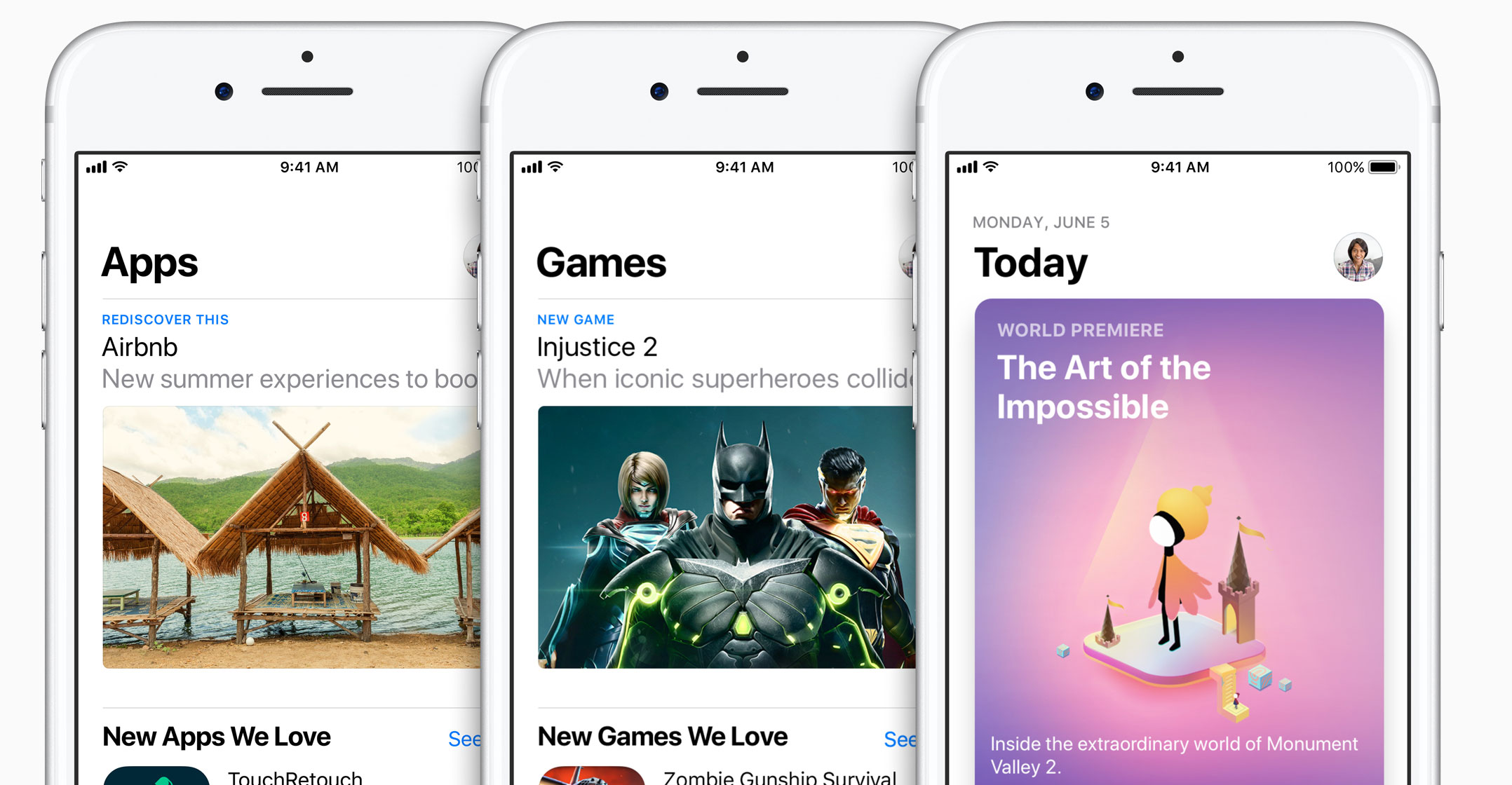
    A backlash against the app stores of Apple and Google is gaining steam, with a growing number of companies saying the tech giants are collecting too high a tax for connecting consumers to developers’ wares.

    Netflix and videogame makers Epic Games and Valve are among companies that have recently tried to usurp the app stores or complained about the cost of the tolls Apple and Google charge.

    Grumbling about app store economics isn’t new. But the number of complaints, combined with new ways of reaching users, regulatory scrutiny and competitive pressure are threatening to undermine what have become digital goldmines for Apple and Google.

    The dollars are just getting so big. They just don’t want to be paying Apple and Google billions

    “It feels like something bubbling up here,” said Ben Schachter, an analyst at Macquarie. “The dollars are just getting so big. They just don’t want to be paying Apple and Google billions.”

    Apple and Google launched their app stores in 2008, and they soon grew into powerful marketplaces that matched the creations of millions of independent developers with billions of smartphone users. In exchange, the companies take up to 30% of the money consumers pay developers.

    For most of the decade, the companies won praise for helping to build an app economy that’s projected to grow to US$157-billion in 2022, from $82-billion last year. But more recently, smartphones and apps have become so important for reaching customers that these app stores have been criticised for taking too big a share of the spoils. Rather than supporting innovation, Apple and Google are being talked about as tax collectors inhibiting the flow of dollars between creators and consumers.

    “They’re very aggressive about making sure companies aren’t trying to work around their billing,” said Alex Austin, co-founder of mobile company Branch. “They have whole teams reviewing these flows to ensure they get their tax.”

    Last week, Schachter co-authored a report arguing that current app store fees were unsustainable. Apple and Google take 30% of subscription dollars and in-app purchases made on iPhones and Android phones using Google’s app store (effectively all those outside China). About two years ago, the companies lowered that cut to 15% in some cases.

    Big hit

    If app store commissions fell to a blended rate of 5-15%, that would knock up to 21% off Apple’s earnings, before interest and tax, by fiscal 2020, Macquarie estimated. Google could lose up to 20% by the same measure, according to the brokerage firm. The technology giants are expected to earn more than $50-billion each, before interest and tax, in 2020, according to analyst forecast data compiled by Bloomberg.

    This is particularly worrying for Apple investors, who are expecting the App Store to support the growth of the company’s services business. Apple often highlights the financial success of its App Store on conference calls with analysts.

    Google is susceptible given its legal problems. A recent European Union antitrust ruling requires the company to stop automatically installing its app store on Android phones in Europe. (Google is fighting the charges.) That may compel more app makers to circumvent Google, luring in customers through the Web or through partnerships with other companies. “Around the world, everyone is looking for ways to push back against American tech,” Schachter said. “This feels like a natural way to go about it.”

    Complaints about app store taxes became louder in 2015 as Apple and Google waded deeper into the digital content business, making them rivals not just digital distribution partners. In 2015, music streaming company Spotify began emailing customers that they should cancel subscriptions purchased through Apple’s app store.

    On Tuesday, video streaming company Netflix said it’s testing a way to bypass Apple in-app subscriptions by sending users to its own website. Currently, Netflix users on iPads and iPhones can subscribe via the App Store’s in-app-purchasing system. This makes subscribing simpler, but also gives Apple a 15% cut of those subscriptions. And as of May, Google Play billing for Netflix was unavailable to new or rejoining customers, according to Netflix’s website.

    On iPhones in the US, Netflix was the number one entertainment app by consumer spend and the most downloaded entertainment app on the Google Play store over the last 90 days, according to App Annie, which tracks the industry.

    By killing off the app store tax, it’d effectively reduce the last barrier for a large fraction of companies

    The videogame industry has also worked to avoid app store taxes this year. Valve’s Steam, the largest distributor of videogames for PCs, planned to release a free iPhone app that let gamers keep playing while away from their computers. Apple blocked the app. Soon after, the tech giant updated its app review guidelines to ban anything that looks like an app store within an app or gives users the ability to “browse, select, or purchase software not already owned or licensed by the user”, according to Reuters.

    More recently, Epic Games, the maker of hit video game Fortnite, opted to ditch Google’s app store. Epic executive Tim Sweeney said the 30% app store fee is a “high cost” in a world where publishers must bare the expense of developing, operating and supporting their games.

    “Middlemen distributors are no longer required,” he added.

    Fortnite has grossed $200-million on the Apple App Store since its release there in March, according to Sensor Tower, which tracks app purchases. Apple could make as much as $135-million in fees from the title, Sensor Tower estimates, while Google misses out on at least $50-million.

    A Google spokeswoman declined to comment. In defence of the app store model, Apple and Google have highlighted their ability to filter out fake apps and malicious software, and to distribute apps widely. The companies handle identity and payment details, taking friction out of the sign-up process. Promotion inside their app stores can transform a company’s fortunes overnight.

    ‘Fool’s errand’

    Indeed, only the most popular online services can risk not being in Apple and Google’s app stores. Skipping these powerful distribution channels is a “fool’s errand” for most publishers, according to Danielle Levitas, a senior vice president at App Annie. And few other game developers are joining Epic. Electronic Arts and Glu Mobile are sticking with their current distribution system, which includes app stores.

    According to Branch co-founder Austin, this just shows how broken the system is. Most developers want to use the app stores, but some are reluctant to pay Apple and Google, so they have to take their chances on the Web, he said. His firm offers software tools that let companies identify paying subscribers before directing them to their apps.

    “If you’re a small up-and-coming company, you can’t really sell subscriptions on the mobile Web,” he said. “By killing off the app store tax, it’d effectively reduce the last barrier for a large fraction of companies.”  — Reported by Mark Bergen and Christopher Palmeri, with assistance from Lucas Shaw, (c) 2018 Bloomberg LP



    Apple Epic Games Google Netflix top Valve
    WhatsApp YouTube Follow on Google News Add as preferred source on Google
    Share. Facebook Twitter LinkedIn WhatsApp Telegram Email Copy Link
    Previous ArticleInflation hits 10-month high
    Next Article Xiaomi delivers 68% leap in revenue

    Related Posts

    More drama in Warner Bros tug of war

    More drama in Warner Bros tug of war

    17 February 2026
    More drama in Warner Bros tug of war

    The battle for Warner Bros may be far from over

    16 February 2026
    David Ellison

    David Ellison just won’t quit

    11 February 2026
    Company News
    Customers have new expectations. Is your CX ready? 1Stream

    Customers have new expectations. Is your CX ready?

    19 February 2026
    South Africa's cybersecurity challenge is not a tool problem - Nicholas Applewhite, Trinexia South Africa

    South Africa’s cybersecurity challenge is not a tool problem

    19 February 2026
    The quiet infrastructure powering AI: why long-life IOT networks matter more than ever - Sigfox South Africa

    The quiet infrastructure powering AI: why long-life IoT networks matter more than ever

    18 February 2026
    Opinion
    A million reasons monopolies don't work - Duncan McLeod

    A million reasons monopolies don’t work

    10 February 2026
    The author, Business Leadership South Africa CEO Busi Mavuso

    Eskom unbundling U-turn threatens to undo hard-won electricity gains

    9 February 2026
    South Africa's skills advantage is being overlooked at home - Richard Firth

    South Africa’s skills advantage is being overlooked at home

    29 January 2026

    Subscribe to Updates

    Get the best South African technology news and analysis delivered to your e-mail inbox every morning.

    Latest Posts
    Blu Label takes R5.2-billion Cell C hit, touts clean slate ahead

    Blu Label takes R5.2-billion Cell C hit, touts clean slate ahead

    19 February 2026
    MeerKAT detects most powerful natural radio laser ever observed

    MeerKAT detects most powerful natural radio laser ever observed

    19 February 2026
    How AI is rewriting the rules of consulting - Mark Allderman

    How AI is rewriting the rules of consulting

    19 February 2026
    Crackdown on students gambling away Nsfas money online

    Crackdown on students gambling away Nsfas money online

    19 February 2026
    © 2009 - 2026 NewsCentral Media
    • Cookie policy (ZA)
    • TechCentral – privacy and Popia

    Type above and press Enter to search. Press Esc to cancel.

    Manage consent

    TechCentral uses cookies to enhance its offerings. Consenting to these technologies allows us to serve you better. Not consenting or withdrawing consent may adversely affect certain features and functions of the website.

    Functional Always active
    The technical storage or access is strictly necessary for the legitimate purpose of enabling the use of a specific service explicitly requested by the subscriber or user, or for the sole purpose of carrying out the transmission of a communication over an electronic communications network.
    Preferences
    The technical storage or access is necessary for the legitimate purpose of storing preferences that are not requested by the subscriber or user.
    Statistics
    The technical storage or access that is used exclusively for statistical purposes. The technical storage or access that is used exclusively for anonymous statistical purposes. Without a subpoena, voluntary compliance on the part of your Internet Service Provider, or additional records from a third party, information stored or retrieved for this purpose alone cannot usually be used to identify you.
    Marketing
    The technical storage or access is required to create user profiles to send advertising, or to track the user on a website or across several websites for similar marketing purposes.
    • Manage options
    • Manage services
    • Manage {vendor_count} vendors
    • Read more about these purposes
    View preferences
    • {title}
    • {title}
    • {title}