Close Menu
TechCentralTechCentral

    Subscribe to the newsletter

    Get the best South African technology news and analysis delivered to your e-mail inbox every morning.

    Facebook X (Twitter) YouTube LinkedIn
    WhatsApp Facebook X (Twitter) LinkedIn YouTube
    TechCentralTechCentral
    • News
      Nedbank hires MTN's former tech chief as group CIO - Nikos Angelopoulos

      Nedbank hires MTN’s former tech chief as group CIO

      31 July 2026
      Eskom's diesel bill falls 86% as breakdowns hit eight-year low

      Eskom’s diesel bill falls 86% as breakdowns hit eight-year low

      31 July 2026
      Ramaphosa signs off on taking the grid away from Eskom

      Ramaphosa signs off on taking the grid away from Eskom

      31 July 2026
      Microsoft just had the biggest day in stock market history

      Microsoft just had the biggest day in stock market history

      31 July 2026
      MTN Nigeria's growth engine stalled in second quarter - Karl Toriola

      MTN Nigeria’s growth engine stalled in second quarter

      31 July 2026
    • World
      Meta AI will now tell parents if their teen is in crisis

      Meta AI will now tell parents if their teen is in crisis

      17 July 2026
      IBM shares crash 25% as AI upends software spending - Arvind Krishna

      IBM shares crash 25% as AI upends software spending

      15 July 2026
      Jony Ive's first OpenAI device: an AI smart speaker - Jony Ive and Sam Altman

      Jony Ive’s first OpenAI device: an AI smart speaker

      15 July 2026
      Stripe, Advent in talks to buy PayPal for $53-billion

      Stripe, Advent in talks to buy PayPal for $53-billion

      15 July 2026
      Memory crisis sends smartphone market into steep decline

      Memory crisis sends smartphone market into steep decline

      13 July 2026
    • In-depth
      The plan to stop AI from breaking the world - Google DeepMind CEO Demis Hassabis. Image: John Sears

      The plan to stop AI from breaking the world

      16 July 2026
      The internet has a Strait of Hormuz problem

      The internet has a Strait of Hormuz problem

      15 July 2026
      AI boom sparks rally, frenzy and fear

      AI boom sparks rally, frenzy and fear

      11 June 2026
      Every plug-in hybrid on sale in South Africa, ranked by price - Lamborghini Temerario

      Every plug-in hybrid on sale in South Africa, ranked by price

      7 June 2026
      What Wi-Fi 8 will mean for wireless networks

      What Wi-Fi 8 will mean for wireless networks

      1 June 2026
    • TCS
      TCS+ | Why South African workers must become supervisors of digital labour - Accelera Digital Group Cliff de Wit

      TCS+ | Why South African workers must become supervisors of digital labour

      31 July 2026
      TCS | Rapid deployment rules can't work without municipalities: ACT - Nomvuyiso Batyi

      TCS | Icasa’s rules skip the real bottleneck: ACT

      30 July 2026
      TCS+ | iStore Business on why Apple makes sense for SMEs - Sudesh Pillay and Tamia Nontsikelelo

      TCS+ | iStore Business on why Apple makes sense for SMEs

      30 July 2026
      TCS+ | A smarter approach to cloud for South African businesses - Joel Chacko and Jonathan Oaker

      TCS+ | A smarter approach to cloud for South African businesses

      28 July 2026
      TCS | How Optasia lends billions to people banks can't see - Salvador Anglada

      TCS | How Optasia lends billions to people banks can’t see

      23 July 2026
    • Opinion
      The author, Jannie van Zyl

      Selling vapour is corporate suicide in slow motion

      16 July 2026
      Brazil's online gambling crackdown is a lesson for South Africa

      How Amazon outmanoeuvred Starlink in South Africa

      15 July 2026
      The Popia problem with agentic AI - Herman Haasbroek

      The Popia problem with agentic AI

      14 July 2026
      The author, Fanie van Rooyen

      South Africa can still catch the AI wave – here’s how

      7 July 2026
      The author, Fanie van Rooyen

      The AI utopia South Africa can’t afford

      1 July 2026
    • Company Hubs
      • 1Stream
      • Africa Data Centres
      • AfriGIS
      • Altron Digital Business
      • Altron Document Solutions
      • Altron Group
      • Arctic Wolf
      • Ascent Technology
      • AvertITD
      • BBD
      • Braintree
      • CallMiner
      • CambriLearn
      • CM Telecom
      • Contactable
      • CYBER1 Solutions
      • Digicloud Africa
      • Digimune
      • Domains.co.za
      • ESET
      • Euphoria Telecom
      • HOSTAFRICA
      • Incredible Business
      • iONLINE
      • IQbusiness
      • Iris Network Systems
      • Kaspersky
      • LSD Open
      • Mitel
      • NEC XON
      • Netstar
      • Network Platforms
      • Next DLP
      • Ovations
      • Paracon
      • Paratus
      • Q-KON
      • SevenC
      • SkyWire
      • Solid8 Technologies
      • Telit Cinterion
      • Telviva
      • Tenable
      • Vertiv
      • Videri Digital
      • Vodacom Business
      • Vox
      • Wipro
      • Workday
      • XLink
    • Sections
      • AI and machine learning
      • Banking
      • Broadcasting and Media
      • Cloud services
      • Contact centres and CX
      • Cryptocurrencies
      • Education and skills
      • Electronics and hardware
      • Energy and sustainability
      • Enterprise software
      • Financial services
      • HealthTech
      • Information security
      • Internet and connectivity
      • Internet of Things
      • Investment
      • IT services
      • Lifestyle
      • Policy and regulation
      • Public sector
      • Retail and e-commerce
      • Satellite communications
      • Science
      • SMEs and start-ups
      • Social media
      • Talent and leadership
      • Telecoms
      • Watts & Wheels
    • Events
    • Advertise
    TechCentralTechCentral
    Home » In-depth » Big Tech has a big problem: antitrust regulators

    Big Tech has a big problem: antitrust regulators

    By Agency Staff5 June 2019
    Twitter LinkedIn Facebook WhatsApp Email Telegram Copy Link
    News Alerts
    WhatsApp

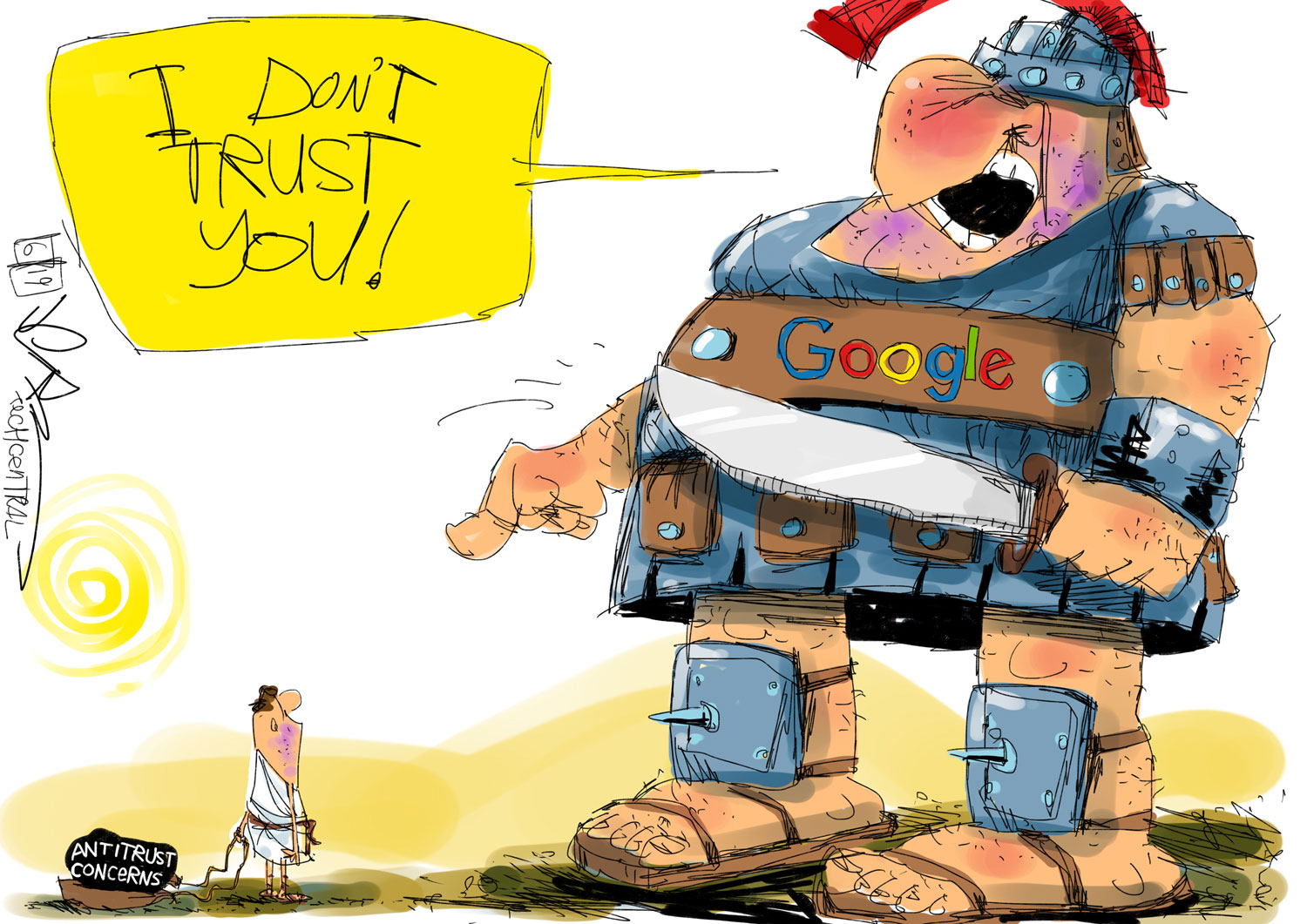
    The future of the tech industry was once decided by messianic entrepreneurs (assisted by venture capitalists and assorted Silicon Valley boosters) pumping out their sermons to rapt crowds in cavernous arenas. Today, it’s the fustier crew of competition regulators and policy wonks — more commonly spotted in carpeted conference rooms — who appear to have seized the pulpit.

    Investors in Apple, Facebook and Alphabet will no doubt testify to this shift in power after the threat of US antitrust action caused their shares to fall at the start of this week. (Apple’s have rallied slightly.)

    There was certainly a great show of purpose from the attendees at an OECD trust-buster gathering that I attended in Paris on Monday, helped no doubt by the Americans finally starting to follow Europe’s lead in tackling the tech giants’ monopolistic tendencies. Margrethe Vestager, the EU’s top competition official, lined up with officials from the US department of justice and Federal Trade Commission, as well as top regulators from Britain, France and Germany, to offer pointers about what lies in store for the industry.

    Instagram had 30 million users at the time Facebook acquired it. Today, it has more than a billion

    While there’s still plenty of tension between officials on both sides of the Atlantic, the overall picture was of a regulatory class that’s determined to make up for lost time. Even in Europe, there’s a sense of having left too much in the hands of the market for too long. Vestager, looking back over her five-year tenure that resulted in three fines against Google, admitted: “We could have been faster.”

    Regret is a powerful thing, especially when the political pressure to act is rising. The example of Instagram was frequently referred to as something that flew under everyone’s radar: its sale to Facebook for US$1-billion was waved through in 2012, largely because it had a handful of staff, earned no revenue and was to be kept at arm’s length. The fact that Instagram is now a behemoth in its own right has woken up regulators to the need to take a tougher line on big tech gobbling up promising start-ups.

    Objections

    Instagram had 30 million users at the time Facebook acquired it. Today, it has more than a billion. Crucially, Instagram shares vast amounts of user data with its parent network, a practice that drew objections from German regulators earlier this year. Back in 2012, though, there were few concerns: UK competition watchdogs wrote at the time that most third parties “did not believe that photo apps are attractive to advertisers”, citing the fact that “limited” user data was captured.

    In fairness to Facebook founder Mark Zuckerberg, it’s not his fault that he had a more acute grasp of Instagram’s potential, but this shouldn’t stop the market cops from trying to up their game to avoid even more social media power ending up in one man’s hands.

    How many other Instagrams have flown under the radar? It’s hard to say. Andrea Coscelli, head of the UK’s Competition and Markets Authority, estimates that Amazon, Apple, Facebook, Google and Microsoft have together bought close to 250 companies in the past five years. For every big-budget acquisition like Facebook’s WhatsApp deal, there are several like “tbh”, a teen social network bought by Zuckerberg in 2017 and quietly shut down afterwards.

    Margrethe Vestager

    There’s a feeling among regulators that start-ups aren’t really being given the chance to grow and compete — they get bought as soon as they enter Big Tech’s “kill zone” (where promising potential rivals are simply taken out). Expect more of a push to tackle this practice, such as by lowering the burden of evidence required to identify potential anticompetitive harm from a takeover. Ariel Ezrachi, professor of competition law at Oxford University, says officials are becoming alert to “the cost of doing nothing”.

    So, should Google, Facebook and the rest expect a concerted antitrust crackdown from the US to match the EU’s? Maybe, though at the OECD meeting there wasn’t much appetite for aggressive action like break-ups. Both the DOJ official Andrew Finch and the FTC’s Noah Phillips were at pains to stress that size wasn’t bad in itself; but “big, behaving badly” is a problem, Finch said. As such, hefty fines are a more likely outcome.

    While there are plenty of other American voices calling for a revival of the kind of monopoly dismantling seen during the days of John D Rockefeller, Finch said the current era felt less like the Gilded Age and more like the 1990s and 2000s, when companies used patents to stunt the growth of their rivals. “These moments tend to work themselves out,” he told me. Not exactly the kind of tub-thumping in which Elizabeth Warren might engage.

    So the smart money’s still on Europe taking the more adventurous and aggressive antitrust measures. But there’s no ignoring the shift on both sides of the Atlantic. People want tougher rules, and they will come.  — By Lionel Laurent, (c) 2019 Bloomberg LP

    Follow TechCentral on Google News Add TechCentral as your preferred source on Google


    Amazon Apple Facebook Google Instagram Margrethe Vestager Mark Zuckerberg Microsoft top
    WhatsApp YouTube
    Share. Facebook Twitter LinkedIn WhatsApp Telegram Email Copy Link
    Previous ArticleLanDynamix future-proofs Graphica in move to cloud
    Next Article BMW, Jaguar Land Rover join forces on electric cars

    Related Posts

    Microsoft just had the biggest day in stock market history

    Microsoft just had the biggest day in stock market history

    31 July 2026
    Meta cash flow collapses as AI bill hits $145-billion - Mark Zuckerberg

    Meta cash flow collapses as AI bill hits $145-billion

    30 July 2026
    TCS+ | iStore Business on why Apple makes sense for SMEs - Sudesh Pillay and Tamia Nontsikelelo

    TCS+ | iStore Business on why Apple makes sense for SMEs

    30 July 2026
    Company News
    Domains.co.za launches self-hosted n8n VPS hosting

    Domains.co.za launches self-hosted n8n VPS hosting

    31 July 2026
    Smarter.tech '26 shows why smarter technology begins with context - Obsidian Systems

    Context is the missing piece in enterprise AI: Obsidian

    31 July 2026
    Huawei launches 12 intelligent transport solutions in South Africa - Sam Tang

    Huawei launches 12 intelligent transport solutions in South Africa

    30 July 2026
    Opinion
    The author, Jannie van Zyl

    Selling vapour is corporate suicide in slow motion

    16 July 2026
    Brazil's online gambling crackdown is a lesson for South Africa

    How Amazon outmanoeuvred Starlink in South Africa

    15 July 2026
    The Popia problem with agentic AI - Herman Haasbroek

    The Popia problem with agentic AI

    14 July 2026

    Subscribe to Updates

    Get the best South African technology news and analysis delivered to your e-mail inbox every morning.

    Latest Posts
    Nedbank hires MTN's former tech chief as group CIO - Nikos Angelopoulos

    Nedbank hires MTN’s former tech chief as group CIO

    31 July 2026
    Eskom's diesel bill falls 86% as breakdowns hit eight-year low

    Eskom’s diesel bill falls 86% as breakdowns hit eight-year low

    31 July 2026
    Ramaphosa signs off on taking the grid away from Eskom

    Ramaphosa signs off on taking the grid away from Eskom

    31 July 2026
    TCS+ | Why South African workers must become supervisors of digital labour - Accelera Digital Group Cliff de Wit

    TCS+ | Why South African workers must become supervisors of digital labour

    31 July 2026
    © 2009 - 2026 NewsCentral Media
    Built and maintained by Chronon
    • Cookie policy (ZA)
    • TechCentral – privacy and Popia

    Type above and press Enter to search. Press Esc to cancel.

    Manage consent

    TechCentral uses cookies to enhance its offerings. Consenting to these technologies allows us to serve you better. Not consenting or withdrawing consent may adversely affect certain features and functions of the website.

    Functional Always active
    The technical storage or access is strictly necessary for the legitimate purpose of enabling the use of a specific service explicitly requested by the subscriber or user, or for the sole purpose of carrying out the transmission of a communication over an electronic communications network.
    Preferences
    The technical storage or access is necessary for the legitimate purpose of storing preferences that are not requested by the subscriber or user.
    Statistics
    The technical storage or access that is used exclusively for statistical purposes. The technical storage or access that is used exclusively for anonymous statistical purposes. Without a subpoena, voluntary compliance on the part of your Internet Service Provider, or additional records from a third party, information stored or retrieved for this purpose alone cannot usually be used to identify you.
    Marketing
    The technical storage or access is required to create user profiles to send advertising, or to track the user on a website or across several websites for similar marketing purposes.
    • Manage options
    • Manage services
    • Manage {vendor_count} vendors
    • Read more about these purposes
    View preferences
    • {title}
    • {title}
    • {title}