Close Menu
TechCentralTechCentral

    Subscribe to the newsletter

    Get the best South African technology news and analysis delivered to your e-mail inbox every morning.

    Facebook X (Twitter) YouTube LinkedIn
    WhatsApp Facebook X (Twitter) LinkedIn YouTube
    TechCentralTechCentral
    • News
      Haier plants its flag in South Africa

      Haier plants its flag in South Africa

      2 February 2026
      Microsoft's winning formula is starting to fray - Satya Nadella

      Microsoft’s winning formula may be starting to fray

      2 February 2026
      Meet the CIO | Inside the JSE's tech engine with CIO Tebalo Tsoaeli

      Meet the CIO | Inside the JSE’s tech engine with CIO Tebalo Tsoaeli

      2 February 2026
      Crypto has gone mainstream - will South African regulators catch up in 2026? - Marius Reitz

      Crypto has gone mainstream – will South African regulators catch up in 2026?

      2 February 2026
      Sixty60 smashes 100 million orders

      Shoprite keeps Sixty60 momentum as group sales rise 7.2%

      2 February 2026
    • World
      Apple acquires audio AI start-up Q.ai

      Apple acquires audio AI start-up Q.ai

      30 January 2026
      SpaceX IPO may be largest in history

      SpaceX IPO may be largest in history

      28 January 2026
      Nvidia throws AI at the weather

      Nvidia throws AI at weather forecasting

      27 January 2026
      Debate erupts over value of in-flight Wi-Fi

      Debate erupts over value of in-flight Wi-Fi

      26 January 2026
      Intel takes another hit - Intel CEO Lip-Bu Tan. Laure Andrillon/Reuters

      Intel takes another hit

      23 January 2026
    • In-depth
      How liberalisation is rewiring South Africa's power sector

      How liberalisation is rewiring South Africa’s power sector

      21 January 2026
      The top-performing South African tech shares of 2025

      The top-performing South African tech shares of 2025

      12 January 2026
      Digital authoritarianism grows as African states normalise internet blackouts

      Digital authoritarianism grows as African states normalise internet blackouts

      19 December 2025
      TechCentral's South African Newsmakers of 2025

      TechCentral’s South African Newsmakers of 2025

      18 December 2025
      Black Friday goes digital in South Africa as online spending surges to record high

      Black Friday goes digital in South Africa as online spending surges to record high

      4 December 2025
    • TCS
      TCS+ | How Cloud On Demand is helping SA businesses succeed in the cloud - Xhenia Rhode, Dion Kalicharan

      TCS+ | Cloud On Demand and Consnet: inside a real-world AWS partner success story

      30 January 2026
      Watts & Wheels S1E3: 'BYD's Corolla Cross challenger'

      Watts & Wheels S1E3: ‘BYD’s Corolla Cross challenger’

      30 January 2026
      Watts & Wheels S1E3: 'BYD's Corolla Cross challenger'

      Watts & Wheels S1E2: ‘China attacks, BMW digs in, Toyota’s sublime supercar’

      23 January 2026

      TCS+ | Why cybersecurity is becoming a competitive advantage for SA businesses

      20 January 2026
      Watts & Wheels S1E3: 'BYD's Corolla Cross challenger'

      Watts & Wheels: S1E1 – ‘William, Prince of Wheels’

      8 January 2026
    • Opinion
      South Africa's skills advantage is being overlooked at home - Richard Firth

      South Africa’s skills advantage is being overlooked at home

      29 January 2026
      Why Elon Musk's Starlink is a 'hard no' for me - Songezo Zibi

      Why Elon Musk’s Starlink is a ‘hard no’ for me

      26 January 2026
      South Africa's new fibre broadband battle - Duncan McLeod

      South Africa’s new fibre broadband battle

      20 January 2026
      AI moves from pilots to production in South African companies - Nazia Pillay SAP

      AI moves from pilots to production in South African companies

      20 January 2026
      South Africa's new fibre broadband battle - Duncan McLeod

      ANC’s attack on Solly Malatsi shows how BEE dogma trumps economic reality

      14 December 2025
    • Company Hubs
      • Africa Data Centres
      • AfriGIS
      • Altron Digital Business
      • Altron Document Solutions
      • Altron Group
      • Arctic Wolf
      • AvertITD
      • Braintree
      • CallMiner
      • CambriLearn
      • CYBER1 Solutions
      • Digicloud Africa
      • Digimune
      • Domains.co.za
      • ESET
      • Euphoria Telecom
      • Incredible Business
      • iONLINE
      • IQbusiness
      • Iris Network Systems
      • LSD Open
      • NEC XON
      • Netstar
      • Network Platforms
      • Next DLP
      • Ovations
      • Paracon
      • Paratus
      • Q-KON
      • SevenC
      • SkyWire
      • Solid8 Technologies
      • Telit Cinterion
      • Tenable
      • Vertiv
      • Videri Digital
      • Vodacom Business
      • Wipro
      • Workday
      • XLink
    • Sections
      • AI and machine learning
      • Banking
      • Broadcasting and Media
      • Cloud services
      • Contact centres and CX
      • Cryptocurrencies
      • Education and skills
      • Electronics and hardware
      • Energy and sustainability
      • Enterprise software
      • Financial services
      • Information security
      • Internet and connectivity
      • Internet of Things
      • Investment
      • IT services
      • Lifestyle
      • Motoring
      • Public sector
      • Retail and e-commerce
      • Satellite communications
      • Science
      • SMEs and start-ups
      • Social media
      • Talent and leadership
      • Telecoms
    • Events
    • Advertise
    TechCentralTechCentral
    Home » Sections » Talent and leadership » Tech billionaires need a break from their reality distortion fields

    Tech billionaires need a break from their reality distortion fields

    Tech billionaires are so deep in their own reality distortion fields that their perception of the world can get dangerously warped.
    By Parmy Olson1 April 2025
    Twitter LinkedIn Facebook WhatsApp Email Telegram Copy Link
    News Alerts
    WhatsApp
    Tech billionaires need a break from their reality distortion fields - Mark Zuckerberg
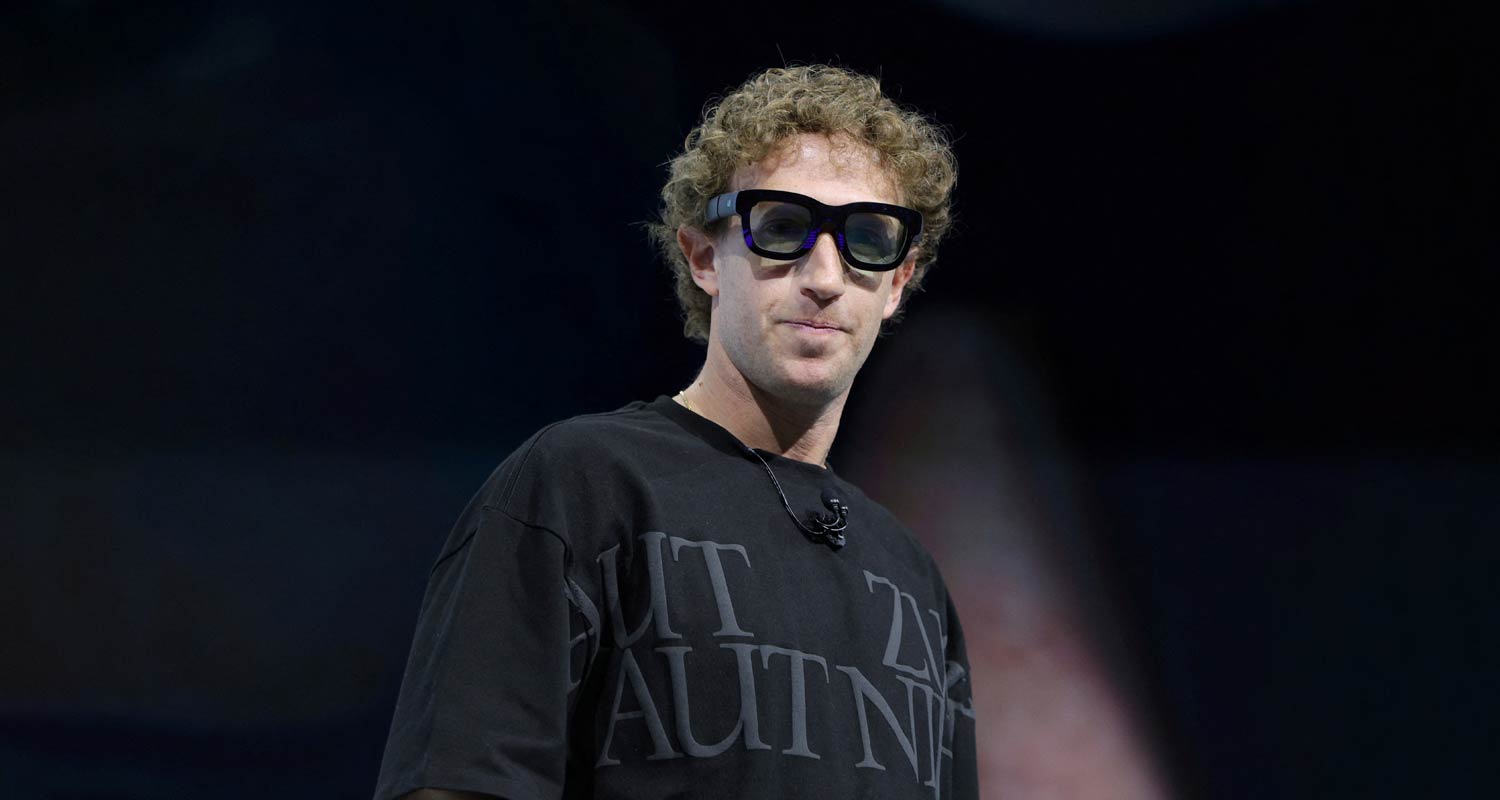
    Meta CEO Mark Zuckerberg tries on Orion AR glasses at the Meta Connect annual event at the company’s headquarters in Menlo Park, California. Manuel Orbegozo/Reuters

    Tech billionaires are so deep in their own reality distortion fields that their perception of the world can get dangerously warped.

    That’s the conclusion I drew from reading Sarah Wynn-Williams’ astonishing memoir about her time running global policy at Meta Platforms. The company has sought to block its publication, offering a case study in the Streisand effect and vaulting Careless People to the top of the charts on Amazon.com.

    The book chimed with what I previously heard from former Meta executives about the company’s hypocrisy, its obsessive drive for growth and CEO Mark Zuckerberg’s fixation on developing a fanbase. But Wynn-Williams’ vantage point in his inner orbit and that of and former chief operating officer Sheryl Sandberg, detailing the power they wielded, also highlighted a dire need for limits to some tech leadership tenures.

    No single person should lead a platform for billions of users for more than a decade, never mind more than 20 years

    Wynn-Williams doesn’t offer answers, but here’s one: no single person should lead a platform for billions of users for more than a decade, never mind more than 20 years as Zuckerberg has done. Over the years and amid a string of political leaders entering and exiting power, he has been a constant presence, a monarch in a hoodie. Perhaps he needs a break just like them.

    Wynn-Williams was at Facebook from 2011 to 2018. She persuaded early executives to make her the company’s first head of global policy because she believed in Facebook as a force for good. Over time, she watched with detached and horrified fascination as Zuckerberg exercised his growing power. She was in his private jet when a policy director explained how the company likely helped Donald Trump clinch his first presidential election in 2016.

    All the power

    Zuckerberg would give speeches to heads of state whose countries’ annual economic output paled in comparison to Facebook’s own revenue, and rather than speak about national issues he’d talk of presiding over a “global community”. And it was clear that presidents and prime ministers accepted that power imbalance. They frequently asked him if Facebook could put its thumb on the scale to garner more political support, Wynn-Williams writes, and when Zuckerberg spoke at an international summit after Trump’s win, they asked him not about the spread of conspiracy theories and polarisation on his site, but softball questions about civic engagement. “Trump’s election elevated Mark in their eyes,” Wynn-Williams writes.

    Read: Zuckerberg says companies need more ‘masculine energy’

    In the book, Zuckerberg handles all this power in the way many would expect. He wanted more. He asked his advisers about running for president and spent a year in travelling across America in 2017 to meet citizens in swing states. Few humans in history have accumulated this much wealth (US$204-billion as of the time of writing for Zuckerberg) or the ability to influence billions of people at once. Not to mention a stomach-churning circle of sycophants. Sandberg’s advisers showered her with praise after a speech, even after texting each other about how boring it was, and they let Zuckerberg win at board games, according to Wynn-Williams.

    The billionaires eventually get bored, the memoir shows, with Zuckerberg glassy eyed at presidential meetings and Sandberg, author of Lean In, uninterested when her staff repeatedly tell her about thousands of women protesting in Washington in 2017, shortly after Trump’s inauguration.

    Elon Musk
    Elon Musk

    Wynn-Williams was banned by a court order from promoting her book, but she did manage to record a podcast interview with Bari Weiss, founder of media company The Free Press. When asked to speculate on Zuckerberg’s mindset, she says that he “looks at the world like it’s a big board game, like it’s a game of Risk”.

    To that end, expanding his territory into China became an obsession. It promised impressive growth and still does today — between 2023 and 2024, Meta’s China revenue increased 34% to $18.4-billion. Wynn-Williams’ book includes internal memos discussing the special access Facebook proposed giving to the Chinese Communist Party. Facebook managers admit at one point that passing data of dissident Chinese Facebook users to the CCP “could lead to death, torture and incarceration”. Did that make Facebook’s staff uncomfortable? No, says Wynn-Williams, thanks to the broader effects of Zuckerberg’s reality distortion field.

    Read: New Intel CEO Lip-Bu Tan has a history as a successful underdog

    The problem of such highly concentrated power is that the price of a single person’s questionable decision is paid at scale. Facebook shouldn’t have morphed into Meta, for instance. It would have made more business sense to experiment with virtual reality as a side project. But Zuckerberg has majority voting control over his company, and so his idea to pivot to VR is costing the company $100-billion, with little obvious upside. Ironically, he barely talks about the metaverse now. He mentioned the term twice during his latest quarterly earnings call, compared with 15 times when he was more excited about it two years ago.

    Zuckerberg, Sandberg, Musk and others exist in echo chambers largely insulated from criticism

    Worse is when powerful tech billionaires go off the rails. Elon Musk’s online behaviour became more reactionary and troll-like around the time he bought Twitter. He has targeted his critics with bans and lawsuits, spread conspiracy theories and made impulsive policy changes that have driven away advertisers. While millions of people have ditched the site, Musk’s influence (not least now in the White House) means he has transformed a major social platform and online discourse.

    But we tolerate such behaviour in part because of expectations laid in Silicon Valley of giving tech founders the time, space and money they need to pursue their vision, no matter how crazy it seems. Such ideas lead to founder worship, and Zuckerberg, Sandberg, Musk and others exist in echo chambers largely insulated from criticism.

    Unchecked power

    It doesn’t have to be that way. Shareholders or regulators should demand limits on founders who oversee these platforms to prevent the reality distortion that decades of unchecked power can bring. Well-run democracies have term limits for their leadership, and while corporate CEOs don’t, the unprecedented societal influence that tech leaders have calls for some sort of cutoff point. It’s a radical proposition and would take a combination of shareholder activism, voluntary governance reform and potentially even regulation to make it happen.

    Read: Elon Musk consolidates power as xAI swallows X

    But consider the unprecedented global influence some tech companies now have, not only as the largest public firms in history but in their ability to affect the mental well-being and information environments of billions of people. CEOs in consumer goods, automotive and even finance don’t wield such power. Yet companies like Google, OpenAI and Meta make up a new category that demands proportional oversight in the same way financial firms face special regulations because of their systemic influence. Novel forms of power require novel checks and balances. And as artificial intelligence looks to be just as transformative as social media, we’d do well to prevent it from becoming further concentrated and unchecked.  — (c) 2025 Bloomberg LP

    Get breaking news from TechCentral on WhatsApp. Sign up here.

    Don’t miss:

    From metaverse mess to AI powerhouse: Zuckerberg’s comeback is complete



    Elon Musk Facebook Mark Zuckerberg Meta Platforms Sarah Wynn-Williams
    WhatsApp YouTube Follow on Google News Add as preferred source on Google
    Share. Facebook Twitter LinkedIn WhatsApp Telegram Email Copy Link
    Previous ArticleHow stablecoins could unlock trade in South Africa
    Next Article Icasa wants control of Rica

    Related Posts

    Starlink updates privacy policy to allow consumer data to train AI

    Privacy alarm as SpaceX opens Starlink user data to AI models

    2 February 2026
    A single Musk super-company may be taking shape - Elon Musk

    A single Musk super-company may be taking shape

    30 January 2026
    Tesla abandons traditional EV growth for a high-stakes AI future

    Tesla abandons traditional EV growth for a high-stakes AI future

    29 January 2026
    Company News
    Breaking silos with SAS: Agile insurance in an uncertain world

    Breaking silos with SAS: agile insurance in an uncertain world

    2 February 2026
    Stellar year expected for Digicloud Africa and its reseller partners - Gregory MacLennan

    Stellar year expected for Digicloud Africa and its reseller partners

    2 February 2026
    How to subscribe to South Africa's best tech podcasts - TechCentral

    How to subscribe to South Africa’s best tech podcasts

    2 February 2026
    Opinion
    South Africa's skills advantage is being overlooked at home - Richard Firth

    South Africa’s skills advantage is being overlooked at home

    29 January 2026
    Why Elon Musk's Starlink is a 'hard no' for me - Songezo Zibi

    Why Elon Musk’s Starlink is a ‘hard no’ for me

    26 January 2026
    South Africa's new fibre broadband battle - Duncan McLeod

    South Africa’s new fibre broadband battle

    20 January 2026

    Subscribe to Updates

    Get the best South African technology news and analysis delivered to your e-mail inbox every morning.

    Latest Posts
    Haier plants its flag in South Africa

    Haier plants its flag in South Africa

    2 February 2026
    Microsoft's winning formula is starting to fray - Satya Nadella

    Microsoft’s winning formula may be starting to fray

    2 February 2026
    Meet the CIO | Inside the JSE's tech engine with CIO Tebalo Tsoaeli

    Meet the CIO | Inside the JSE’s tech engine with CIO Tebalo Tsoaeli

    2 February 2026
    Crypto has gone mainstream - will South African regulators catch up in 2026? - Marius Reitz

    Crypto has gone mainstream – will South African regulators catch up in 2026?

    2 February 2026
    © 2009 - 2026 NewsCentral Media
    • Cookie policy (ZA)
    • TechCentral – privacy and Popia

    Type above and press Enter to search. Press Esc to cancel.

    Manage consent

    TechCentral uses cookies to enhance its offerings. Consenting to these technologies allows us to serve you better. Not consenting or withdrawing consent may adversely affect certain features and functions of the website.

    Functional Always active
    The technical storage or access is strictly necessary for the legitimate purpose of enabling the use of a specific service explicitly requested by the subscriber or user, or for the sole purpose of carrying out the transmission of a communication over an electronic communications network.
    Preferences
    The technical storage or access is necessary for the legitimate purpose of storing preferences that are not requested by the subscriber or user.
    Statistics
    The technical storage or access that is used exclusively for statistical purposes. The technical storage or access that is used exclusively for anonymous statistical purposes. Without a subpoena, voluntary compliance on the part of your Internet Service Provider, or additional records from a third party, information stored or retrieved for this purpose alone cannot usually be used to identify you.
    Marketing
    The technical storage or access is required to create user profiles to send advertising, or to track the user on a website or across several websites for similar marketing purposes.
    • Manage options
    • Manage services
    • Manage {vendor_count} vendors
    • Read more about these purposes
    View preferences
    • {title}
    • {title}
    • {title}