 Last year, cargo containers began appearing near electricity substations connected to the recently built Grand Ethiopian Renaissance Dam, Africa’s largest. Inside were stacks of powerful, energy-guzzling computers.
It was a telltale sign that Chinese bitcoin miners, having bounced from country to country in search of cheap power and benign regulations since Beijing cast them out two years before, had arrived in the Horn of Africa.
Buffeted by political and economic headwinds, they were lured by some of the world’s lowest electricity costs — as well as an increasingly friendly government. Ethiopia, which allowed bitcoin mining starting in 2022 even though it still bans cryptocurrency trading, has bolstered ties with China over the past decade, and several Chinese companies helped build the US$4.8-billion dam the miners plan to draw their power from.
Ethiopia has emerged as a rare opportunity for all firms that mine the original cryptocurrency, as climate change and power scarcity fuel a backlash against the $16-billion/year industry (at bitcoin’s current price) elsewhere. But it holds special appeal for Chinese companies, which once dominated bitcoin mining but have struggled to compete with local rivals in Texas, the current hub.
It is also a risky gamble, for the companies and Ethiopia alike. A succession of developing countries like Kazakhstan and Iran initially embraced bitcoin mining, only to turn on the sector when its energy use threatened to fuel domestic discontent. China’s reign as the epicentre of bitcoin mining came to an abrupt end in 2021, when the government banned it. Dozens of companies were forced to leave.
“Firstly, countries can run out of available electricity, leaving no room for miners to expand,” said Jaran Mellerud, CEO of Hashlabs Mining. “Secondly, miners can suddenly be deemed unwelcome by the government and be forced to pack up and leave.”
Wary
Ethiopian officials are wary of the controversy that accompanies bitcoin mining, according to industry executives who spoke on condition of anonymity to avoid jeopardising government relations. Even after new generation capacity came online, almost half the population live without access to electricity, making mining a delicate topic. At the same time, it represents a potentially lucrative source of foreign-exchange earnings.
Ethiopia has already risen to become one of the world’s top recipients ofbBitcoin mining machines, according to an estimate from mining services provider Luxor Technology. That’s even as Luxor’s first major deals to ship equipment there came in September, said chief operations officer Ethan Vera.
The state power monopoly says it has struck power supply deals with 21 bitcoin miners. All but two of them are Chinese.
Read: German police seize R40-billion in bitcoin
“Ethiopia will become one of the most popular destinations for Chinese miners,” said Nuo Xu, founder of China Digital Mining Association, which organises exhibitions and facilitates trading in mining machines. He’s arranging a trip to Ethiopia for a group of Chinese mining executives to tour potential sites.
That bitcoin miners are willing to ship equipment worth tens of millions of dollars to a country that just two years ago emerged from a civil war in its north is a testament to the fraught political and economic environment in which they exist.
 The companies play a crucial role maintaining the bitcoin network by using powerful computers (or “rigs” in industry argot) to solve mathematical puzzles and validate encrypted transactions on the blockchain. In return, they receive rewards in bitcoin released from the network.
It’s a volatile business, with revenues tracking the token’s rise and fall. Miner Core Scientific plunged into bankruptcy in December 2022 as cryptocurrency markets crashed; 13 months later it won court approval to exit chapter 11 after the price of bitcoin jumped almost 150%.
The rigs use vast amounts of power, so access to cheap electricity is a critical competitive advantage. Bitcoin mining consumed 121TWh of power in 2023, the Cambridge Centre for Alternative Finance estimates — similar to Argentina’s use. Electricity can account for as much as 80% of miners’ operating costs, according to Mellerud.
This explains why low-cost power has largely dictated where miners put much of their equipment in the past few years: first in China, then in places like Iran, Kazakhstan, Russia and northern Sweden, and most recently Texas. What those places have in common is relatively cheap energy.
The reliance on abundant power is also a major vulnerability because it can put miners in competition for electricity with factories and households, exposing them to political backlash.
When Kazakzstan imposed fresh curbs and taxes on miners, “it basically killed the industry”, said Hashlabs co-founder Alen Makhmetov. Two years after the clampdown, his 10MW facility there is still sitting idle.
And in an era when rising temperatures wreak havoc around the world, bitcoin mining is increasingly seen as a contributor to global warming that doesn’t serve any productive purpose — even though miners have claimed they’re increasingly tapping clean energy. A study by United Nations University published in October estimated that two-thirds of the electricity used for bitcoin mining in 2020 and 2021 was generated using fossil fuels.
Forex windfall
The Ethiopian government permitted bitcoin mining mainly because the companies pay in foreign currency for the electricity they consume, Yodahe A Zemichael, deputy director at the Information Network Security Administration, said in a response to questions. In the written reply, he used terms like “high-performance computing” and “data mining” instead of bitcoin mining.
“Ethiopia is heavily regulated,” said Nemo Semret, CEO of local miner QRB Labs, who helped lobby officials to permit bitcoin mining. “Introducing a new sector like this has been a big challenge, and we’ve been working for the last two years to get all the necessary permissions from the government.”
The government has adopted a directive to regulate “cryptographic products” including mining, according to Yodahe. He added that issuing licences “is being done in a sandbox and it’s in an early stage”, declining to say how many permits have been granted so far.
Read: Short on cash, El Salvador doubles down on bitcoin dream
Semret said uncertainty persists among miners about how authorities will oversee them longer term, and Yodahe declined to say whether the directive has been shared with industry participants.
Yet for bitcoin miners — especially Chinese ones — Ethiopia represents a unique blend of economic and political advantages. Some executives even speak of it as a possible rival to Texas, which represents as much as a quarter of the global capacity to create bitcoin.
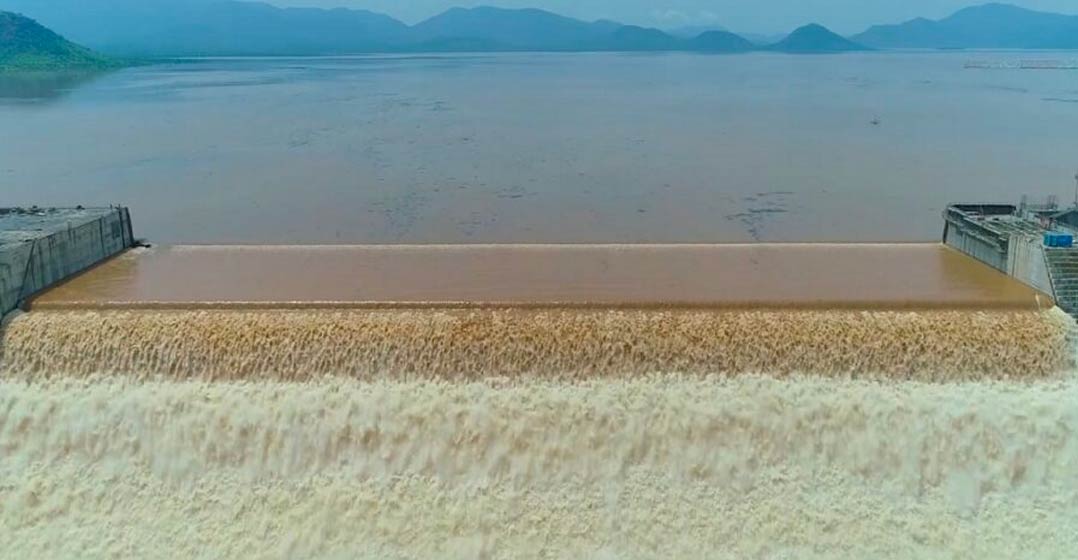
The African country’s capacity to supply electricity for creating bitcoin may rival that of Texas in a few years, according to a senior executive at Bitmain, the Beijing-based firm that’s the dominant supplier of rigs. The opening of the GERD project increased Ethiopia’s installed generation capacity to 5.3GW, 92% of which comes from hydropower, a renewable energy source.
Once GERD is fully completed, Ethiopia’s generation capacity will double, according to Ethiopian Electric Power. It charges bitcoin miners a fixed rate of 3.14 US cents per kilowatt hour for electricity drawn from substations, marketing and business development director Hiwot Eshetu said in an interview.
While that’s similar to the average in Texas, rates in the Lone Star State can swing wildly, Luxor’s Vera said, making profits there less predictable. In Ethiopia, the price will fall once miners connect directly to power plants, according to Hiwot. He added that EEP has paused signing new contracts “to ensure a well-controlled and managed process”.
Advantages
BWP, which hosts machines operated by miners from China and other countries, started shipping equipment to Ethiopia early last year. In December, the company announced on X that it was opening a 120MW data center for mining equipment — sizeable even by Texas standards — in Addis Ababa, the capital.
CEO Vitaliy Borshenko said Ethiopia’s advantages go beyond cheap, renewable power.
“The ideal temperature for the miners is 5-25ºC,” he said, citing recommendations from rig maker Bitmain. “That is right in the average range of temperature in Ethiopia.” Addis Ababa is almost 2 400m above sea level, far higher than most Alpine ski-resort towns.
Read: Bitcoin: now just another dull asset class
Such is the lure that some Chinese firms aren’t waiting for an official green light before starting operations, said Xu of the China Digital Mining Association. “Miners present themselves as factories or agriculture companies” to get electricity rather than seek government approval to create bitcoin, he said without naming them. Yodahe didn’t respond to a request for comment on such practices.
Their confidence is underpinned by geopolitics. China is the biggest source of foreign direct investment in Ethiopia as well as its top bilateral creditor. The Chinese government and financial institutions lent almost $15-billion for 70 “mega projects” in the African nation from 2006 to 2018, Ethiopia’s finance ministry said in December.
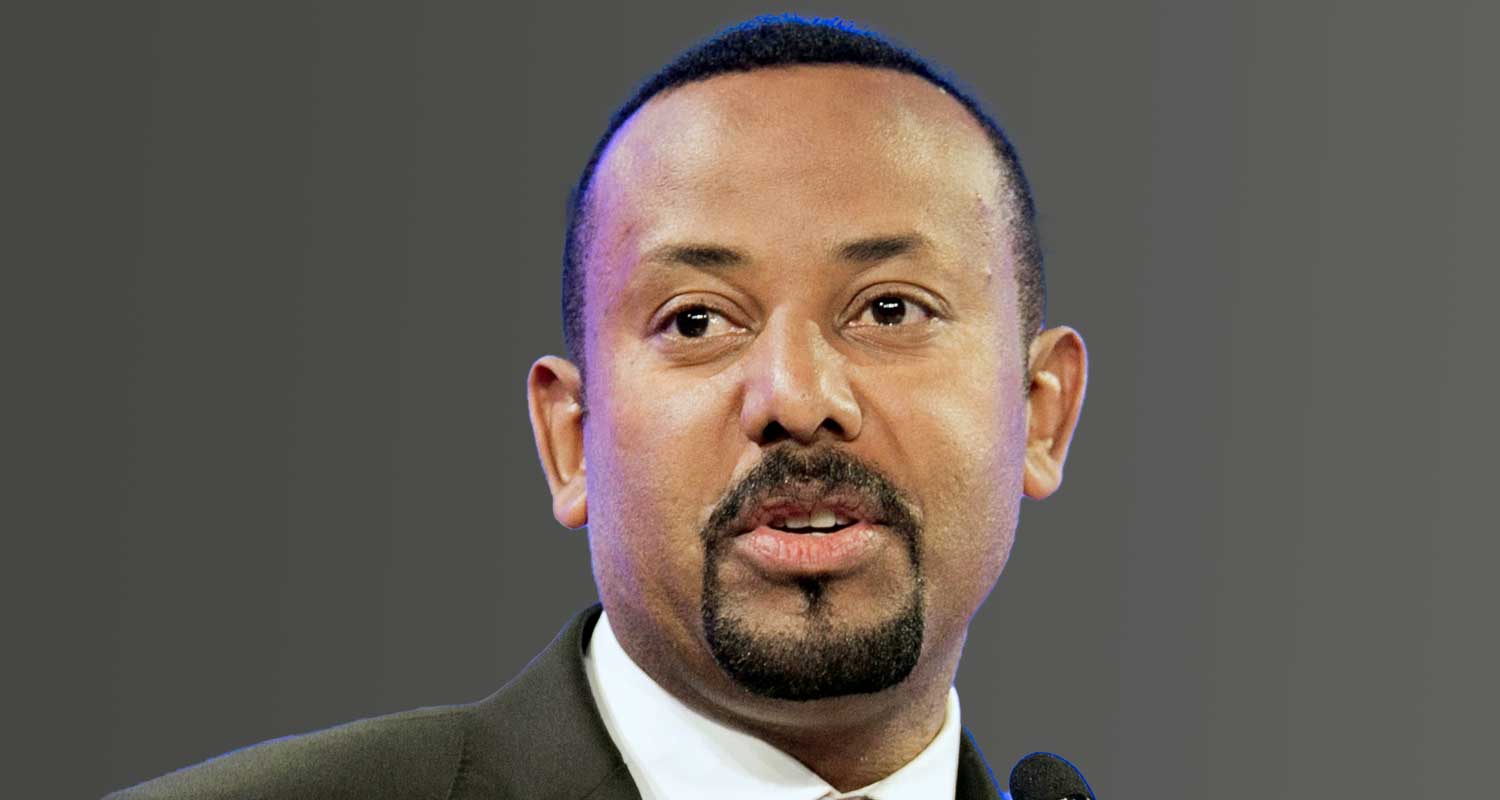
Ethiopia was one of 17 nations China upgraded ties with last year as President Xi Jinping wooed partners from the Global South. In October, Xi hosted Ethiopian Prime Minister Abiy Ahmed in Beijing as the two countries elevated their relations to an “all-weather strategic partnership”, according to the official Xinhua news agency.
The Horn of Africa country desperately needs foreign-currency inflows. It is in negotiations for a bailout from the International Monetary Fund after defaulting on an interest payment to private creditors in December. The month before, it reached an agreement with bilateral creditors to suspend payments.
Encouraged by China’s rising stature in Africa, Chinese bitcoin miners are also starting to look at countries like Angola and Nigeria, said Xu.
“The Chinese miners don’t have any problems building sites in Africa,” he said. “It is like another Chinese province.” — David Pan and Fasika Tadesse, (c) 2024 Bloomberg LP