Browsing: In-depth

Kenya and Tanzania are to get high-speed fibre-to-the-home connections offering a triple-play bundle of broadband, telephony and cable television thanks to a US$200m investment from the private sector. The company behind the project, Wananchi — which is backed by Cisco Capital and East Africa Capital Partners — says it would love to do the same in SA, but the regulatory environment here precludes it from doing so.

Telkom is trying urgently to renegotiate multiple contracts entered into by its troubled Nigerian subsidiary Multi-Links. If it can’t reach new agreements with the suppliers, Multi-Links could be forced to shut up shop. That’s the stark warning from Telkom acting CEO Jeffrey Hedberg, who had been running the Nigerian business until a few weeks ago, when he was called on by Telkom’s board to head up the group following the premature departure of former CEO Reuben September.

Ousted communications director-general Mamodupi Mohlala says the way communications minister Siphiwe Nyanda fired her was akin to a “public execution”. Mohlala tells TechCentral that she had questioned the minister on several issues related to the running of the department. “But I never expected it to come to a head like this.”

Super 5 Media, once one of SA’s most promising new pay-TV operators, is coming apart at the seams. TechCentral can reveal exclusively that management has gone to ground amid signs the company, once regarded as the strongest potential competitor to incumbent MultiChoice and its DStv service, is collapsing.

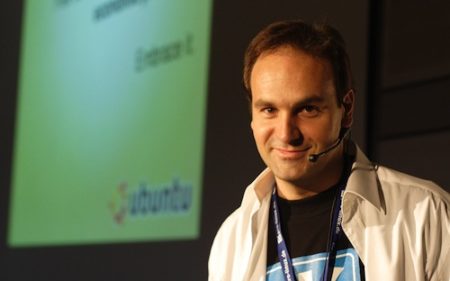
Technology billionaire Mark Shuttleworth has slammed government’s failure to fix problems at the Independent Communications Authority of SA (Icasa), warning ongoing capacity problems at the regulator are hampering economic growth. Shuttleworth, speaking to TechCentral following Icasa’s decision last week to postpone an auction of valuable radio frequency spectrum, says there is no “clear prioritisation of telecommunications as a vital source of growth in the SA economy”.

Mobile operators are appealing to the department of justice to extend the deadline of the Regulation of Interception and Communication Act (Rica), says Vodacom Group CEO Pieter Uys. The act requires that all telecommunications providers and Internet providers register customer details, including their ID numbers and physical addresses. The process has to be completed by January next year, after which unregistered customers have to be cut off from the networks.

There will soon be clarity on how hundreds of millions of rand in the Universal Service Fund will be spent. The money is meant to be used to facilitate the roll-out of telecommunications infrastructure in underserviced and rural parts of SA, but has remained largely untapped for years. Now Phineas Moleele, the newly appointed CEO at the Universal Service & Access Agency of SA (Usaasa), the government body established to administer the fund, is promising to start using the money in the fund.

With MTN’s cellular network acquisitions in emerging markets on hold, analysts say the group can probably be considered a mature business. But there are still opportunities in the business services sector, they say. MTN told shareholders on Thursday that acquisition opportunities in emerging markets are becoming harder to find.

MTN says it will have to start investigating options to improve cash returns meaningfully to shareholders as the emerging market telecommunications sector matures.

That’s the shock assessment of the cellular group’s outgoing president and CEO Phuthuma Nhleko. Nhleko will address the company’s annual general meeting on Thursday afternoon, giving shareholders a peek at what they can expect to see at its interim results presentation next month.

The proposed acquisition by Japan’s Nippon Telegraph and Telephone Corp (NTT) of Dimension Data will give the SA-headquartered IT group’s Internet Solutions (IS) division access to one of the world’s largest telecommunications companies. IS MD Derek Wilcocks, reacting to the news of the proposed R24,4bn all-cash deal, says it’s “incredibly positive” for IS as it will make the Didata unit part of one of the “strongest global networks, with data centres around the world”.