Close Menu
TechCentralTechCentral

    Subscribe to the newsletter

    Get the best South African technology news and analysis delivered to your e-mail inbox every morning.

    Facebook X (Twitter) YouTube LinkedIn
    WhatsApp Facebook X (Twitter) LinkedIn YouTube
    TechCentralTechCentral
    • News
      MTN's first AI target? Itself - Charles Molapisi

      MTN’s first AI target? Itself

      11 June 2026
      Anthropic vs OpenAI and the bitter battle for the future of AI - Dario Amodei and Sam Altman

      Anthropic vs OpenAI and the bitter battle for the future of AI

      11 June 2026
      Lost in translation: why AI voice agents fail South Africans

      Lost in translation: why AI voice agents fail South Africans

      11 June 2026
      Pick n Pay stores to double as nationwide e-waste drop-off network

      Pick n Pay stores to double as nationwide e-waste drop-off network

      11 June 2026
      The projects leading Eskom's 32GW renewables charge

      The projects leading Eskom’s 32GW renewables charge

      11 June 2026
    • World
      Trouble at Xbox

      Trouble at Xbox

      11 June 2026
      Meta declares war on Israeli spyware firm

      Meta declares war on Israeli spyware firm

      8 June 2026
      Meta takes on OpenAI and Anthropic in enterprise AI

      Meta takes on OpenAI and Anthropic in enterprise AI

      4 June 2026
      AI demand sparks 'chipflation' warning

      AI demand sparks ‘chipflation’ warning

      4 June 2026
      Astronomers discover exoplanets with magnetic fields

      Strange winds reveal magnetic fields on distant ‘hot Jupiters’

      2 June 2026
    • In-depth
      Every plug-in hybrid on sale in South Africa, ranked by price - Lamborghini Temerario

      Every plug-in hybrid on sale in South Africa, ranked by price

      7 June 2026
      What Wi-Fi 8 will mean for wireless networks

      What Wi-Fi 8 will mean for wireless networks

      1 June 2026
      Alfa's electric rebel - Alfa Romeo Junior Elettrica Veloce

      Alfa’s electric rebel

      29 April 2026
      Africa switches on as Europe dims the lights

      Africa switches on as Europe dims the lights

      9 April 2026
      The biggest untapped EV market on Earth is hiding in plain sight

      The biggest untapped EV market on Earth is hiding in plain sight

      1 April 2026
    • TCS
      Watts & Wheels S1E5: 'A Bentley of the bush and a car that swims'

      Watts & Wheels S1E5: ‘A Bentley of the bush and a car that swims’

      8 June 2026
      TCS | Charge's R1.8-billion bet on an off-grid EV future - Charge chairman Joubert Roux

      TCS | Charge’s R1.8-billion bet on an off-grid EV future

      18 May 2026
      TCS+ | The Up&Up Group on the hidden cost of AI - Jason Harrison

      TCS+ | The Up&Up Group on the hidden cost of AI

      13 May 2026
      Michael Rossouw

      TCS+ | The retirement decision most South Africans get wrong

      6 May 2026
      TCS | The Cape Town start-up listening for TB with AI - Braden van Breda

      TCS | The Cape Town start-up listening for TB with AI

      4 May 2026
    • Opinion

      Clashing judgments leave South Africa’s crypto law unsettled

      2 June 2026
      The author, Pambos Soteriades

      The trap inside South Africa’s banking MVNO boom

      1 June 2026
      The hidden cost of social media age bans is everyone's privacy - Petrus Potgieter

      The hidden cost of social media age bans is everyone’s privacy

      29 May 2026
      Treasury's crypto crackdown is a betrayal of Mandela's promise - Duncan McLeod

      Treasury’s crypto crackdown is a betrayal of Mandela’s promise

      22 May 2026
      South Africa is sleepwalking into another AI policy failure - Celeste Labuschagne

      South Africa is sleepwalking into another AI policy failure

      20 May 2026
    • Company Hubs
      • 1Stream
      • Africa Data Centres
      • AfriGIS
      • Altron Digital Business
      • Altron Document Solutions
      • Altron Group
      • Arctic Wolf
      • Ascent Technology
      • AvertITD
      • BBD
      • Braintree
      • CallMiner
      • CambriLearn
      • CM Telecom
      • Contactable
      • CYBER1 Solutions
      • Digicloud Africa
      • Digimune
      • Domains.co.za
      • ESET
      • Euphoria Telecom
      • HOSTAFRICA
      • Incredible Business
      • iONLINE
      • IQbusiness
      • Iris Network Systems
      • Kaspersky
      • LSD Open
      • Mitel
      • NEC XON
      • Netstar
      • Network Platforms
      • Next DLP
      • Ovations
      • Paracon
      • Paratus
      • Q-KON
      • SevenC
      • SkyWire
      • Solid8 Technologies
      • Telit Cinterion
      • Telviva
      • Tenable
      • Vertiv
      • Videri Digital
      • Vodacom Business
      • Wipro
      • Workday
      • XLink
    • Sections
      • AI and machine learning
      • Banking
      • Broadcasting and Media
      • Cloud services
      • Contact centres and CX
      • Cryptocurrencies
      • Education and skills
      • Electronics and hardware
      • Energy and sustainability
      • Enterprise software
      • Financial services
      • HealthTech
      • Information security
      • Internet and connectivity
      • Internet of Things
      • Investment
      • IT services
      • Lifestyle
      • Motoring
      • Policy and regulation
      • Public sector
      • Retail and e-commerce
      • Satellite communications
      • Science
      • SMEs and start-ups
      • Social media
      • Talent and leadership
      • Telecoms
    • Events
    • Advertise
    TechCentralTechCentral
    Home » Sections » Electronics and hardware » China rushes to swap Western tech for domestic options

    China rushes to swap Western tech for domestic options

    China has stepped up spending to replace Western-made technology with domestic alternatives.
    By Agency Staff26 October 2023
    Twitter LinkedIn Facebook WhatsApp Email Telegram Copy Link
    News Alerts
    WhatsApp

    China has stepped up spending to replace Western-made technology with domestic alternatives as Washington tightens curbs on high-tech exports to its rival, according to government tenders, research documents and four people familiar with the matter.

    Details of tenders from the government, military and state-linked entities show an acceleration in domestic substitution since last year.

    China has spent heavily on replacing computer equipment, and the telecommunications and financial sectors are probably the next target, said two people familiar with the industries. State-backed researchers also identified digital payments as particularly vulnerable to possible Western hacking, according to a review of their work, making a push to indigenise such technology likely.

    In 2022, Huawei’s enterprise business reported C¥133-billion in sales, up 30% on the previous year

    The number of tenders from state-owned enterprises, government and military bodies to nationalise equipment doubled to 235 from 119 in the 12 months after September 2022, according to a finance ministry database. In the same period, the value of awarded projects listed on the database totalled C¥156.9-million, or more than triple the previous year.

    While the database represents only a fraction of tender bids nationwide, it is the largest collection of state tenders publicly available and mirrors third-party data. China spent C¥1.4-trillion (R3.6-trillion) replacing foreign hardware and software in 2022, marking a year-on-year increase of 16.2%, according to IT research firm First New Voice.

    But Beijing’s lack of advanced chip manufacturing capabilities prevents it from completely substituting products with alternatives that are entirely locally made, analysts say.

    ‘Technical chops’

    Previous domestic substitution efforts stalled because China did not have the “technical chops to pull off localisation until now, and to a certain extent they still kind of don’t”, said Kendra Schaefer, head of tech policy research at Beijing-based consultancy Trivium China.

    SOEs were instructed last year to replace office software systems with domestic products by 2027, the first time such specific deadlines were imposed, according to five brokerage firms that cited a September 2022 order from China’s state asset regulator. The order could not be independently verified.

    Domestic replacement projects this year have targeted markedly sensitive infrastructure, the tenders show.

    Read: Risc-V emerges as new front in US-China tech war

    One partially redacted tender for a “certain government department in Gansu province” assigned C¥4.4-million to replace an intelligence-gathering system’s equipment, without providing specifics.

    People’s Liberation Army units in the north-eastern city of Harbin and Xiamen in the south last December meanwhile issued tenders to replace foreign-made computers.
    US pressure
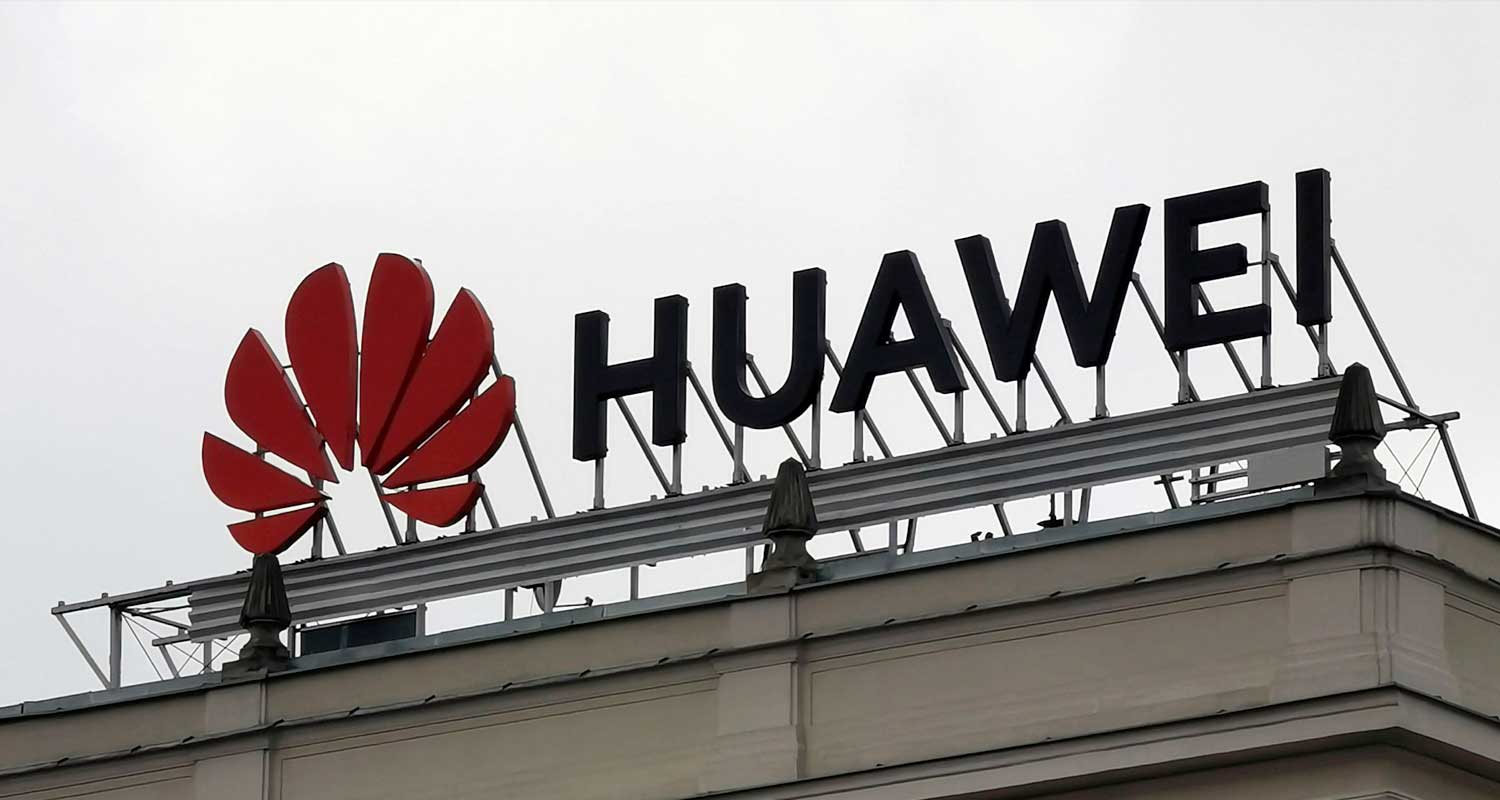
    Huawei … in demand in China

    Tech researchers such as Mo Jianlei of the Chinese Academy of Sciences, the country’s largest state-run research organisation, said the Chinese government was increasingly concerned about Western equipment being hacked by foreign powers.

    The state asset regulator did not return a request for comment.

    Over the past year, state-linked researchers also called on Beijing to strengthen anti-hacking defences in its financial infrastructure due to geopolitical concerns. One March research paper highlighted the dependence of China’s UnionPay credit card system on US software firm BMC for settlements.

    Read: Why WeChat wins (in China)

    “Beware of security vulnerabilities in hardware and software set by the US side … build a financial security ‘firewall’,” the researchers wrote. BMC declined to comment.

    An article published this year in the journal Cyberspace Security by researchers from the state-run China Telecommunications Corporation concluded the country was overdependent on chips made by US giant Qualcomm for backend management, as well as on the iOS and Android systems.

    The state regulator’s 2022 order pushed SOEs away from US companies such as Microsoft and Adobe

    “They are all firmly controlled by American companies,” the researchers wrote.

    As China has not signed World Trade Organisation clauses governing public procurement, the substitution effort does not appear to violate international accords, according to the US treasury. The US has implemented similar rules barring Chinese companies from public sector bids.

    Qualcomm, Google and Apple did not immediately return requests for comment.

    China’s effort to build an independent computing system dates back to at least its 2006 five-year plan for science and technology development, which listed the semiconductor and software systems sectors as national priorities.

    China’s SOEs

    This effort spawned state-owned companies that are increasingly winning major contracts. Two firms awarded the Harbin tenders were subsidiaries of China Electronics Corporation and China Electronics Technology Group Corporation — both heavily targeted by US sanctions.

    The state regulator’s 2022 order pushed SOEs away from US companies such as Microsoft and Adobe, according to an employee of a Beijing-based firm that develops domestic office-processing software.

    China Tobacco, for example, in July began switching some subsidiaries from Microsoft Windows to Huawei’s EulerOS, according to an employee of a software vendor that services the state-owned manufacturer. The people spoke on condition of anonymity because they were not authorised to discuss clients and competitors.

    Read: China’s Baidu claims it’s caught up with ChatGPT

    For years, Western tech companies have shared their source code and entered into partnerships with domestic firms to address Beijing’s concerns, but prominent computer scientists such as Ni Guangnan of the Chinese Academy of Engineering have said such measures are not sufficient for China’s security needs.

    China Tobacco, Microsoft and Adobe did not respond to requests for comment.
    In September, Reuters and other outlets reported that some employees of central government agencies were banned from using iPhones at work.

    “In certain sectors, customers … are opting for domestic suppliers, with foreign suppliers frequently facing informal barriers,” the European Union Chamber of Commerce in Beijing said in response to questions.

    In a 2023 American Chamber of Commerce in Shanghai report, 89% of the organization’s tech business members named procurement practices favoring domestic competitors as a regulatory obstacle. It was the highest percentage of any sector.

    Read: Nvidia’s RTX 4090 graphics card caught up in US-China trade war

    AmCham Shanghai president Eric Zheng acknowledged China’s national security concerns but said he hoped “normal procurement procedures will not be politicised so that US companies can compete fairly and pursue commercial opportunities … to benefit both countries”.

    The US department of commerce, China Electronics Corporation and China Electronics Technology Group Corporation did not return requests for comment.

    Despite heavy spending on domestic substitution, foreign firms are still dominant suppliers for banking and telecoms database management.

    Chinese tech conglomerate Huawei has emerged as the leading firm in this replacement cycle, according to three people familiar with China’s enterprise tech industry, who spoke on condition of anonymity given the sensitivity of the issue.

    In 2022, Huawei’s enterprise business, which includes software and cloud computing operations, reported C¥133-billion in sales, up 30% on the previous year. One of the people said privately held Huawei was seen as more nimble than state-owned groups in rolling out products and executing projects. The other two sources highlighted Huawei’s broad product suite — spanning chips to software — as an advantage.

    Clients also prize Huawei for its ability to process data on internal company servers and external cloud networks, as well as its wide offering of cybersecurity products, according to the employee of a China Tobacco tech supplier.

    Read: China targets Foxconn, a key iPhone assembler

    Huawei declined to comment.

    The replacement drive has redrawn entire subsectors of the software industry. The combined China market share held by five major foreign makers of database management systems – the majority of which are American — dropped from 57.3% in 2018 to 27.3% by the end of 2022, according to industry group IDC.

    Database technology

    Despite heavy spending on domestic substitution, however, foreign firms are still dominant suppliers for banking and telecoms database management. Non-Chinese companies held 90% of market share for banking database systems at the end of 2022, according to EqualOcean, a tech consultancy.

    Financial institutions are generally reluctant to switch database systems despite government pressure, said one of the industry sources, adding that they have higher stability requirements than many other sectors and local players cannot yet match their needs.

    Even for PCs, banks that switch from an international brand to China’s dominant supplier Lenovo would still be reliant on critical chip components provided by Western firms, one of the industry sources said.  — (c) 2023 Reuters

    Get breaking news alerts from TechCentral on WhatsApp

    Follow TechCentral on Google News Add TechCentral as your preferred source on Google


    Huawei
    WhatsApp YouTube
    Share. Facebook Twitter LinkedIn WhatsApp Telegram Email Copy Link
    Previous ArticleTCS | Mesh.trade’s Connie Bloem on the future of finance
    Next Article Vat so! EskomSePush becomes EskomSeKant

    Related Posts

    Huawei claims chip design breakthrough

    Huawei claims chip design breakthrough

    25 May 2026
    How African enterprises can leapfrog the AI infrastructure trap - Huawei Cloud

    How African enterprises can leapfrog the AI infrastructure trap

    22 May 2026
    DeepSeek's long-awaited V4 model enters preview

    DeepSeek’s long-awaited V4 model enters preview

    24 April 2026
    Company News
    10 benefits to online learning through Richfield

    10 benefits to online learning through Richfield

    11 June 2026
    Why a payments company tracks South Africa's financial pulse - Altron Fintech

    Why a payments company tracks South Africa’s financial pulse

    11 June 2026
    More speakers, free sponsored sessions at Pan African DataCentres event

    More speakers, free sponsored sessions at Pan African DataCentres event

    10 June 2026
    Opinion

    Clashing judgments leave South Africa’s crypto law unsettled

    2 June 2026
    The author, Pambos Soteriades

    The trap inside South Africa’s banking MVNO boom

    1 June 2026
    The hidden cost of social media age bans is everyone's privacy - Petrus Potgieter

    The hidden cost of social media age bans is everyone’s privacy

    29 May 2026

    Subscribe to Updates

    Get the best South African technology news and analysis delivered to your e-mail inbox every morning.

    Latest Posts
    MTN's first AI target? Itself - Charles Molapisi

    MTN’s first AI target? Itself

    11 June 2026
    Anthropic vs OpenAI and the bitter battle for the future of AI - Dario Amodei and Sam Altman

    Anthropic vs OpenAI and the bitter battle for the future of AI

    11 June 2026
    Lost in translation: why AI voice agents fail South Africans

    Lost in translation: why AI voice agents fail South Africans

    11 June 2026
    Pick n Pay stores to double as nationwide e-waste drop-off network

    Pick n Pay stores to double as nationwide e-waste drop-off network

    11 June 2026
    © 2009 - 2026 NewsCentral Media
    • Cookie policy (ZA)
    • TechCentral – privacy and Popia

    Type above and press Enter to search. Press Esc to cancel.

    Manage consent

    TechCentral uses cookies to enhance its offerings. Consenting to these technologies allows us to serve you better. Not consenting or withdrawing consent may adversely affect certain features and functions of the website.

    Functional Always active
    The technical storage or access is strictly necessary for the legitimate purpose of enabling the use of a specific service explicitly requested by the subscriber or user, or for the sole purpose of carrying out the transmission of a communication over an electronic communications network.
    Preferences
    The technical storage or access is necessary for the legitimate purpose of storing preferences that are not requested by the subscriber or user.
    Statistics
    The technical storage or access that is used exclusively for statistical purposes. The technical storage or access that is used exclusively for anonymous statistical purposes. Without a subpoena, voluntary compliance on the part of your Internet Service Provider, or additional records from a third party, information stored or retrieved for this purpose alone cannot usually be used to identify you.
    Marketing
    The technical storage or access is required to create user profiles to send advertising, or to track the user on a website or across several websites for similar marketing purposes.
    • Manage options
    • Manage services
    • Manage {vendor_count} vendors
    • Read more about these purposes
    View preferences
    • {title}
    • {title}
    • {title}