
Close Menu
TechCentralTechCentral

    Subscribe to the newsletter

    Get the best South African technology news and analysis delivered to your e-mail inbox every morning.

    Facebook X (Twitter) YouTube LinkedIn
    WhatsApp Facebook X (Twitter) LinkedIn YouTube
    TechCentralTechCentral
    • News
      Critical PHP vulnerabilities put a large part of the web at risk

      Critical PHP vulnerabilities put a large part of the web at risk

      21 October 2026
      Vodacom pitches a lighter AI rulebook as Pretoria redraws its policy

      Vodacom pitches a lighter AI rulebook as Pretoria redraws its policy

      21 October 2026
      Disney opens its vault to Netflix in South Africa

      Disney opens its vault to Netflix in South Africa

      21 October 2026
      Newspapers hit with import duty to save South Africa's last newsprint machine

      Newspapers hit with import duty to save South Africa’s last newsprint machine

      21 October 2026
      Before South Africa licenses Starlink, it should look at Ukraine

      Before South Africa licenses Starlink, it should look at Ukraine

      21 October 2026
    • World
      OpenAI turns the tables on Apple in trade secrets fight

      OpenAI turns the tables on Apple in trade secrets fight

      15 October 2026
      Google's Gemini 4 Argon is finally here

      Google’s Gemini 4 Argon is finally here

      14 October 2026
      Apple's new HomeView smart home hub

      Apple takes another shot at the smart home

      13 October 2026
      AI is now holding up the world economy, says IMF

      AI is now propping up the world economy, says IMF

      12 October 2026
      SpaceX takes aim at US wireless carriers with spectrum acquisition

      Starlink is coming for your mobile operator

      9 October 2026
    • In-depth

      10 days that changed the course of AI

      21 September 2026
      Meta to the AI industry: slow down without us - Mark Zuckerberg

      Meta to the AI industry: slow down without us

      16 September 2026
      Google DeepMind CEO Demis Hassabis. Image: John Sears

      The plan to stop AI from breaking the world

      16 July 2026
      The internet has a Strait of Hormuz problem

      The internet has a Strait of Hormuz problem

      15 July 2026
      AI boom sparks rally, frenzy and fear

      AI boom sparks rally, frenzy and fear

      11 June 2026
    • TCS
      W&W | LDV's Gerhard Moolman on electric bakkies, fleet orders and 'school fees'

      W&W | LDV’s Gerhard Moolman on electric bakkies and fleets

      9 October 2026
      TCS | Frogfoot sees bigger fibre deals coming - TechCentral Show guests Abraham van der Merwe and Shane Chorley

      TCS | Frogfoot sees bigger fibre deals coming

      8 October 2026
      Meet the CIO | Vodacom's Mohamed Sami on the agentic future

      Meet the CIO | Vodacom’s Mohamed Sami on the agentic future

      5 October 2026
      Lexi Novitske, general partner at Norrsken22, on the TechCentral Show

      TCS | Norrsken22’s Lexi Novitske on how China is winning African tech

      1 October 2026
      TCS | Dominic White and Adam Ely on AI agents going rogue

      TCS | Dominic White and Adam Ely on AI agents going rogue

      29 September 2026
    • Opinion
      Nonkqubela Thathakahle Jordan-Dyani

      Why cybersecurity is now a national security issue for South Africa

      15 October 2026
      When a machine can choose, who does it become? Fanie van Rooyen

      When a machine can choose, who does it become?

      9 October 2026
      Let South Africans jailbreak their way to digital sovereignty - Dirk de Vos

      Let South Africans jailbreak their way to digital sovereignty

      5 October 2026
      South Africa's next energy crisis is in the accounts department - Craig Holmes

      South Africa’s next energy crisis is in the accounts department

      29 September 2026
      The steam engine lesson AI doomsayers keep missing - Sam Clarke

      The steam engine lesson AI doomsayers keep missing

      28 September 2026
    • Company News
      • 1Stream
      • Africa Data Centres
      • AfriGIS
      • Altron Digital Business
      • Altron Document Solutions
      • Altron Group
      • Arctic Wolf
      • Ascent Technology
      • AvertITD
      • BBD
      • Braintree
      • CallMiner
      • CambriLearn
      • CM.com
      • Contactable
      • CYBER1 Solutions
      • Digicloud Africa
      • Digimune
      • Domains.co.za
      • ESET
      • Euphoria Telecom
      • HOSTAFRICA
      • Incredible Business
      • iONLINE
      • IQbusiness
      • Iris Network Systems
      • Kaspersky
      • LSD Open
      • Mitel
      • NEC XON
      • Netstar
      • Network Platforms
      • Next DLP
      • Ovations
      • Paracon
      • Paratus
      • Publishared
      • Q-KON
      • SevenC
      • SkyWire
      • Solid8 Technologies
      • Telit Cinterion
      • Telviva
      • Tenable
      • Vertiv
      • Videri Digital
      • Vodacom Business
      • Vox
      • Wipro
      • Workday
      • XLink
    • Sections
      • AI and machine learning
      • Banking
      • Broadcasting and media
      • Cloud services
      • Contact centres and CX
      • Cryptocurrencies
      • Education and skills
      • Electronics and hardware
      • Energy and sustainability
      • Enterprise software
      • Fintech and payments
      • HealthTech
      • Information security
      • Internet and connectivity
      • Internet of things
      • Investment
      • IT services
      • Lifestyle
      • Policy and regulation
      • Public sector
      • Retail and e-commerce
      • Satellite communications
      • Science
      • SMEs and start-ups
      • Social media
      • Talent and leadership
      • Telecoms
      • Watts & Wheels
    • Events
    • Advertise
    TechCentralTechCentral
    Home » World » China to retaliate over US tech restrictions

    China to retaliate over US tech restrictions

    By Agency Staff16 October 2020
    Twitter LinkedIn Facebook WhatsApp Email Telegram Copy Link
    Get breaking news on WhatsApp

    Alejandro Luengo/Unsplash.com

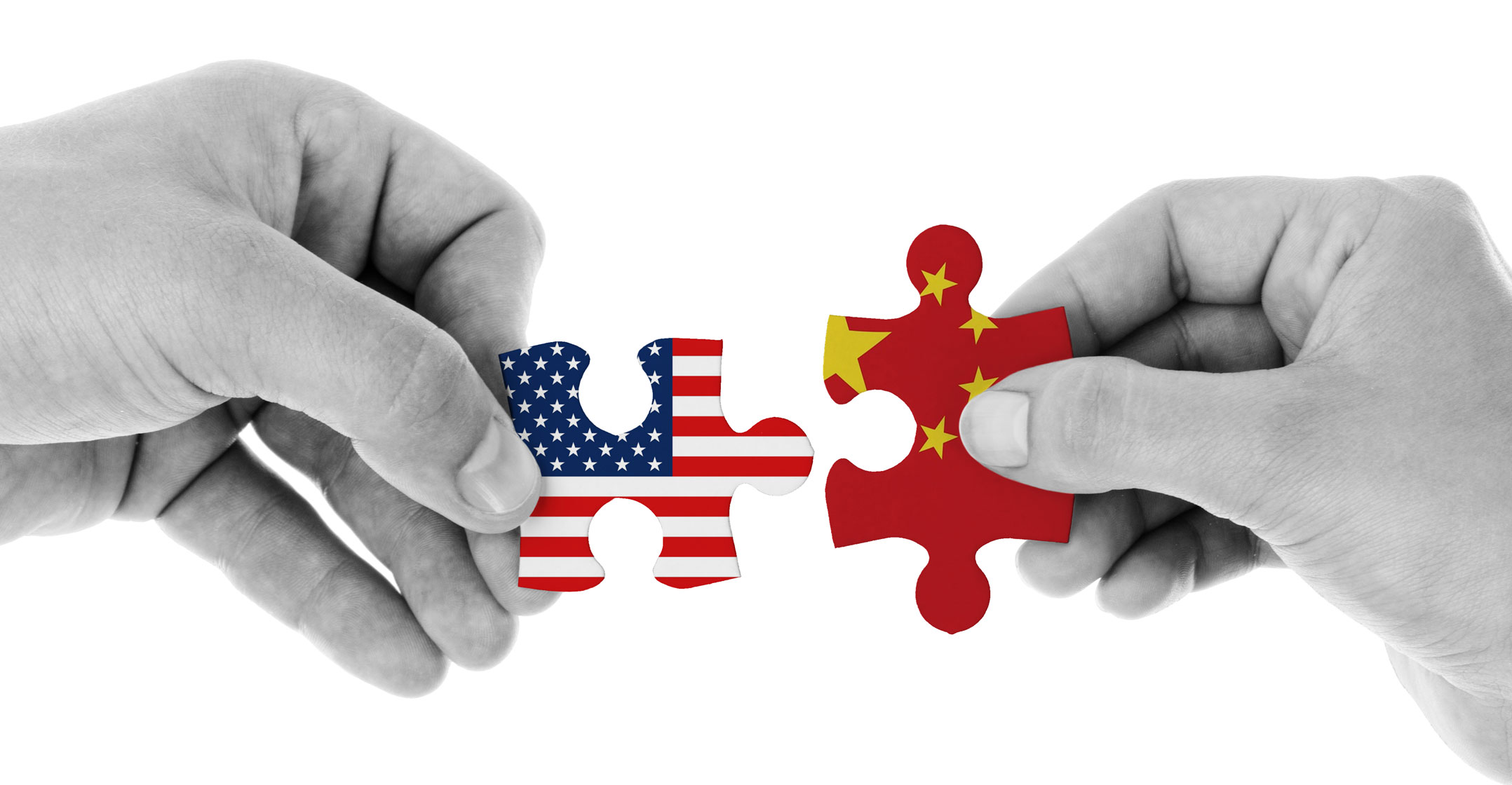
    China is set to pass a new law that would restrict sensitive exports vital to national security, expanding its toolkit of policy options as competition grows with the US over access to technologies that will drive the modern economy.

    China’s top legislative body, the National People’s Congress Standing Committee, is expected to adopt the measure in a session that concludes on Saturday. The Export Control Law primarily aims to protect China’s national security by regulating the export of sensitive materials and technologies that appear on a control list. It would apply to all companies in China, including foreign-invested ones.

    The measure would add to Beijing’s regulatory arsenal, which also includes a tech export restriction catalogue and an unreliable entity list. The law would also help put China on a similar footing to the US, which regularly uses export controls and licences strategically against its adversaries.

    The measure would add to Beijing’s regulatory arsenal, which also includes a tech export restriction catalogue and an unreliable entity list

    Mounting tensions between China and the US have spilled over into the realm of technology. Big Chinese companies including Huawei Technologies, ByteDance’s TikTok, Tencent’s WeChat and Semiconductor Manufacturing International find themselves in Washington’s cross-hairs.

    “Chinese authorities may have learned a lesson from the US and other countries,” said Qing Ren, a partner at Global Law Office in Beijing.

    A report carried by official Xinhua News Agency said the draft law stipulates that China could take reciprocal measures against a certain country or region that has “abused export control measures and damaged China’s national security and interests”.

    Controlled items

    The official Legal Daily reported on Thursday that some legislators had suggested source codes, algorithms and technical documents be added as controlled items, and that China should set up some restrictions on exporting technologies on which Beijing has a competitive edge, such as 5G and quantum communications.

    Whether Beijing will allow the export of valuable Chinese technology is one of the biggest uncertainties hovering over the partial sale of TikTok to Oracle and American investors. China in August asserted the right to block the deal by adding speech recognition and recommendation technology — the core of TikTok’s global popularity — to a list of regulated exports.

    The existing control lists are much narrower than the one used by the US, staying limited to materials that could be used for nuclear, chemical or biological weapons, Ren said. If it’s expanded in the future “then more products or technologies will be subject to export control in China”, he said.

    Huawei is China’s leading technology company

    While the US is generally ahead of China in most spheres, China controls critical aspects of technology in industries from wireless networking to unmanned aerial vehicles.

    American officials have warned that Huawei — the leader in next-generation wireless patents — controls a tenth of worldwide essential 5G patents, and its deep involvement in international standards-setting could post a threat to US national security. The company ranked among the top 10 recipients of US patents in 2019 — helping China become the fourth biggest recipient of American patents, behind Japan and South Korea but ahead of Germany for the first time.

    Chinese companies have also made headway in dominating certain niches. Shenzhen-based DJI Technology controls something like three-quarters of the global consumer drones market. Display maker BOE Technology Group is aggressively filing patents in its bid to get into next-generation OLED screens for smartphones.

    Foreign ministry officials have repeatedly accused Washington of stretching and abusing the concept of national security…

    And in artificial intelligence, companies from Alibaba Group to Tencent and upstarts like SenseTime Group are taking advantage of unparalleled reserves of data to advance in areas such as facial recognition.

    When approved, China’s law will be applied extra-territorially, taking a page from the US Export Administration Regulations’ long-arm jurisdiction that Beijing has frequently criticised. Foreign ministry officials have repeatedly accused Washington of stretching and abusing the concept of national security in justifying actions against Chinese companies.

    China is the biggest exporting country in the world and overseas sales provide jobs for millions of people, so it will be careful not to abuse the law, said Mei Xinyu, a researcher at a research group under China’s commerce ministry. “We highly value China’s image as a reliable supplier in the international market,” Mei said. “So we wouldn’t expand the scope of export control at will.”

    Higher priority

    China’s ministry of commerce first published a draft of the legislation in June 2017. It went through two reviews by the NPC in December 2019 and at the end of June. When the draft bill was introduced for its first review, minister of commerce Zhong Shan explained to the national legislature that export control is a mechanism aimed at “honouring international obligations such as nonproliferation and safeguarding national security and developmental interests”.

    But in a draft reviewed in June, national security was given higher priority.

    “Threats to national security could come from various fields, including the economic field,” said Cui Fan, a professor of international trade at the University of International Business and Economics. “But we can’t confuse normal competition between companies with threats to economic security and national interests.”
    The latest version further clarifies the scope of controlled items and punishment measures for violations. Government departments overseeing export control should publish export control guidance in a timely manner, a spokesperson of the NPC’s legislative affairs commission said on Monday, without elaborating.

    Foreign companies need not fear the law since it applied equally to all companies operating in China, according to Ren from Global Law Office. Still, he said, foreign-invested companies should be careful if their activities involve the export of technologies.

    “Chinese employees maybe are not allowed to release the controlled technologies to their foreign colleagues,” Ren said. “This depends on the very specific circumstances of the each individual company. But it could happen.”  — (c) 2020 Bloomberg LP

    Add TechCentral as a preferred source on GoogleFollow TechCentral on Google NewsGet breaking news on WhatsApp


    ByteDance Huawei Oracle Tencent TikTok top
    WhatsApp YouTube
    Share. Facebook Twitter LinkedIn WhatsApp Telegram Email Copy Link
    Previous ArticleTwitter revises hacked documents policy after Post dispute
    Next Article SA needs a national database of addresses: How it could be done

    Related Posts

    Netflix is losing the battle for your screen time

    Netflix is losing the battle for your screen time

    16 October 2026
    MTN hits 10Gbit/s wireless speeds in South African 5G-Advanced trial

    MTN hits 10Gbit/s wireless speeds in South African 5G-Advanced trial

    13 October 2026
    The AI trade is cracking

    The AI trade is cracking

    13 October 2026
    Company News
    How to choose a .co.za domain without paying more later

    How to choose a .co.za domain without paying more later

    20 October 2026
    Winners, from left: Zandile Monaisa (Rand Refinery), Sibongakonke Kheswa (PSG Capital), Stefan Links (Forestry South Africa), Thabang Modiba (Mondelez International), Charmaine Ncube (Razor PR), Shaun Burger-Smal (Bestmed Medical Scheme), Nandipha Ngcobo (Transnet), Tracy Mulwela (Vodacom), Cheryl-Lynn Freeman (Mzansi Business Services), Yasheen Harrielall (Zutari), Valentine Mabaso (Taonga Business Group) and Thabang Thlaku (African Rainbow Minerals). Image: Rising Star Awards

    Celebrating South Africa’s rising stars: the leaders shaping what comes next

    19 October 2026
    Paratus Zambia delivers Starlink to thousands of children in Family Legacy schools

    Paratus Zambia delivers Starlink to thousands of children in Family Legacy schools

    15 October 2026
    Opinion
    Nonkqubela Thathakahle Jordan-Dyani

    Why cybersecurity is now a national security issue for South Africa

    15 October 2026
    When a machine can choose, who does it become? Fanie van Rooyen

    When a machine can choose, who does it become?

    9 October 2026
    Let South Africans jailbreak their way to digital sovereignty - Dirk de Vos

    Let South Africans jailbreak their way to digital sovereignty

    5 October 2026

    Subscribe to Updates

    Get the best South African technology news and analysis delivered to your e-mail inbox every morning.

    Latest Posts
    Critical PHP vulnerabilities put a large part of the web at risk

    Critical PHP vulnerabilities put a large part of the web at risk

    21 October 2026
    Vodacom pitches a lighter AI rulebook as Pretoria redraws its policy

    Vodacom pitches a lighter AI rulebook as Pretoria redraws its policy

    21 October 2026
    Disney opens its vault to Netflix in South Africa

    Disney opens its vault to Netflix in South Africa

    21 October 2026
    Newspapers hit with import duty to save South Africa's last newsprint machine

    Newspapers hit with import duty to save South Africa’s last newsprint machine

    21 October 2026
    © 2009 - 2026 NewsCentral Media
    Built and maintained by Chronon
    • Cookie policy (ZA)
    • TechCentral – privacy and Popia

    Type above and press Enter to search. Press Esc to cancel.

    Manage consent

    TechCentral uses cookies to enhance its offerings. Consenting to these technologies allows us to serve you better. Not consenting or withdrawing consent may adversely affect certain features and functions of the website.

    Functional Always active
    The technical storage or access is strictly necessary for the legitimate purpose of enabling the use of a specific service explicitly requested by the subscriber or user, or for the sole purpose of carrying out the transmission of a communication over an electronic communications network.
    Preferences
    The technical storage or access is necessary for the legitimate purpose of storing preferences that are not requested by the subscriber or user.
    Statistics
    The technical storage or access that is used exclusively for statistical purposes. The technical storage or access that is used exclusively for anonymous statistical purposes. Without a subpoena, voluntary compliance on the part of your Internet Service Provider, or additional records from a third party, information stored or retrieved for this purpose alone cannot usually be used to identify you.
    Marketing
    The technical storage or access is required to create user profiles to send advertising, or to track the user on a website or across several websites for similar marketing purposes.
    • Manage options
    • Manage services
    • Manage {vendor_count} vendors
    • Read more about these purposes
    View preferences
    • {title}
    • {title}
    • {title}
    🇿🇦 Sign up to the TechCentral newsletter