

Close Menu
TechCentralTechCentral

    Subscribe to the newsletter

    Get the best South African technology news and analysis delivered to your e-mail inbox every morning.

    Facebook X (Twitter) YouTube LinkedIn
    WhatsApp Facebook X (Twitter) LinkedIn YouTube
    TechCentralTechCentral
    • News
      Vula Medical named as South Africa's 2025 app of the year

      Vula Medical named as South Africa’s 2025 app of the year

      5 December 2025
      Netflix, Warner Bros talks raise fresh headaches for MultiChoice

      Netflix, Warner Bros talks raise fresh headaches for MultiChoice

      5 December 2025
      Big Microsoft 365 price increases coming next year

      Big Microsoft price increases coming next year

      5 December 2025
      Vodacom to take control of Safaricom in R36-billion deal - Shameel Joosub

      Vodacom to take control of Safaricom in R36-billion deal

      4 December 2025
      Black Friday goes digital in South Africa as online spending surges to record high

      Black Friday goes digital in South Africa as online spending surges to record high

      4 December 2025
    • World
      Amazon and Google launch multi-cloud service for faster connectivity

      Amazon and Google launch multi-cloud service for faster connectivity

      1 December 2025
      Google makes final court plea to stop US breakup

      Google makes final court plea to stop US breakup

      21 November 2025
      Bezos unveils monster rocket: New Glenn 9x4 set to dwarf Saturn V

      Bezos unveils monster rocket: New Glenn 9×4 set to dwarf Saturn V

      21 November 2025
      Tech shares turbocharged by Nvidia's stellar earnings

      Tech shares turbocharged by stellar Nvidia earnings

      20 November 2025
      Config file blamed for Cloudflare meltdown that disrupted the web

      Config file blamed for Cloudflare meltdown that disrupted the web

      19 November 2025
    • In-depth
      Jensen Huang Nvidia

      So, will China really win the AI race?

      14 November 2025
      Valve's Linux console takes aim at Microsoft's gaming empire

      Valve’s Linux console takes aim at Microsoft’s gaming empire

      13 November 2025
      iOCO's extraordinary comeback plan - Rhys Summerton

      iOCO’s extraordinary comeback plan

      28 October 2025
      Why smart glasses keep failing - no, it's not the tech - Mark Zuckerberg

      Why smart glasses keep failing – it’s not the tech

      19 October 2025
      BYD to blanket South Africa with megawatt-scale EV charging network - Stella Li

      BYD to blanket South Africa with megawatt-scale EV charging network

      16 October 2025
    • TCS
      TCS+ | How Cloud on Demand helps partners thrive in the AWS ecosystem - Odwa Ndyaluvane and Xenia Rhode

      TCS+ | How Cloud On Demand helps partners thrive in the AWS ecosystem

      4 December 2025
      TCS | MTN Group CEO Ralph Mupita on competition, AI and the future of mobile

      TCS | Ralph Mupita on competition, AI and the future of mobile

      28 November 2025
      TCS | Dominic Cull on fixing South Africa's ICT policy bottlenecks

      TCS | Dominic Cull on fixing South Africa’s ICT policy bottlenecks

      21 November 2025
      TCS | BMW CEO Peter van Binsbergen on the future of South Africa's automotive industry

      TCS | BMW CEO Peter van Binsbergen on the future of South Africa’s automotive industry

      6 November 2025
      TCS | Why Altron is building an AI factory - Bongani Andy Mabaso

      TCS | Why Altron is building an AI factory in Johannesburg

      28 October 2025
    • Opinion
      Your data, your hardware: the DIY AI revolution is coming - Duncan McLeod

      Your data, your hardware: the DIY AI revolution is coming

      20 November 2025
      Zero Carbon Charge founder Joubert Roux

      The energy revolution South Africa can’t afford to miss

      20 November 2025
      It's time for a new approach to government IT spend in South Africa - Richard Firth

      It’s time for a new approach to government IT spend in South Africa

      19 November 2025
      How South Africa's broken Rica system fuels murder and mayhem - Farhad Khan

      How South Africa’s broken Rica system fuels murder and mayhem

      10 November 2025
      South Africa's AI data centre boom risks overloading a fragile grid - Paul Colmer

      South Africa’s AI data centre boom risks overloading a fragile grid

      30 October 2025
    • Company Hubs
      • Africa Data Centres
      • AfriGIS
      • Altron Digital Business
      • Altron Document Solutions
      • Altron Group
      • Arctic Wolf
      • AvertITD
      • Braintree
      • CallMiner
      • CambriLearn
      • CYBER1 Solutions
      • Digicloud Africa
      • Digimune
      • Domains.co.za
      • ESET
      • Euphoria Telecom
      • Incredible Business
      • iONLINE
      • IQbusiness
      • Iris Network Systems
      • LSD Open
      • NEC XON
      • Netstar
      • Network Platforms
      • Next DLP
      • Ovations
      • Paracon
      • Paratus
      • Q-KON
      • SevenC
      • SkyWire
      • Solid8 Technologies
      • Telit Cinterion
      • Tenable
      • Vertiv
      • Videri Digital
      • Vodacom Business
      • Wipro
      • Workday
      • XLink
    • Sections
      • AI and machine learning
      • Banking
      • Broadcasting and Media
      • Cloud services
      • Contact centres and CX
      • Cryptocurrencies
      • Education and skills
      • Electronics and hardware
      • Energy and sustainability
      • Enterprise software
      • Financial services
      • Information security
      • Internet and connectivity
      • Internet of Things
      • Investment
      • IT services
      • Lifestyle
      • Motoring
      • Public sector
      • Retail and e-commerce
      • Satellite communications
      • Science
      • SMEs and start-ups
      • Social media
      • Talent and leadership
      • Telecoms
    • Events
    • Advertise
    TechCentralTechCentral
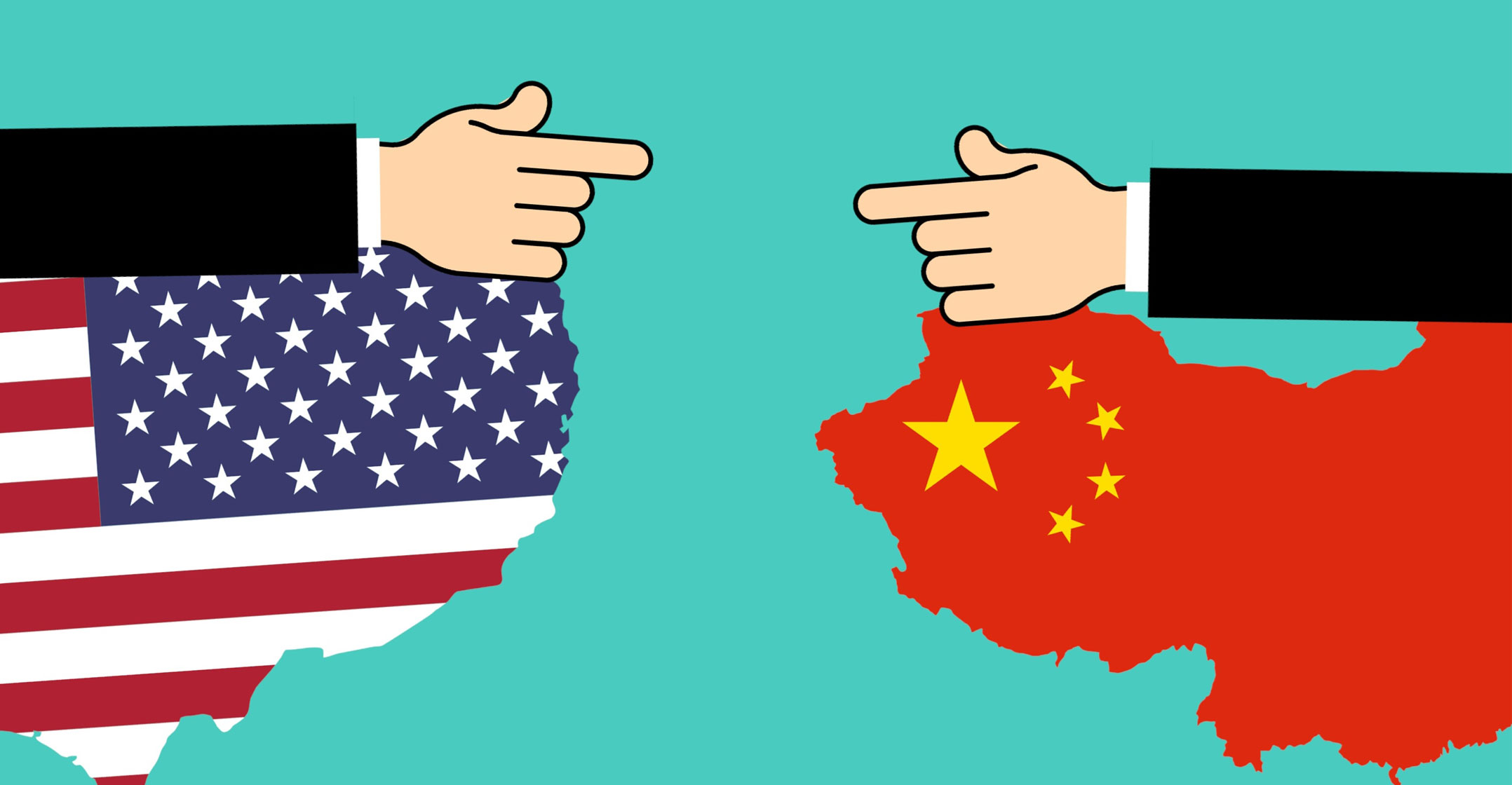
    Home » In-depth » China’s a tough US rival, but is it really cheating?

    China’s a tough US rival, but is it really cheating?

    By Agency Staff16 January 2019
    Twitter LinkedIn Facebook WhatsApp Email Telegram Copy Link
    News Alerts
    WhatsApp

    Repetition breeds reality. Such is the case with allegations the US has levelled at China in their budding economic Cold War. Across the American political spectrum, it’s now taken for granted that China forces US companies to transfer critical technology in order to do business on the mainland, engages in rampant hacking and theft of intellectual property, and massively and unfairly subsidises its high-tech industries — all of which contributes to fears that the country poses an existential threat to America’s prosperity.

    Like many longtime observers of China, I’ve been getting more than my fair share of airtime over the past several months. Typically, the interview starts with a false premise followed by a loaded question: “Everyone knows that China is stealing hundreds of billions of dollars a year in US intellectual property. Isn’t it high time for America to stand up to its greatest economic threat?”

    But what exactly does “everybody” really know? This assertion is drawn from the findings of the “IP Commission Report” co-chaired by two renowned public servants, former US director of national intelligence Dennis Blair and former Utah governor Jon Huntsman Jr, now ambassador to Russia. In 2017, the commission estimated that IP theft cost the US economy somewhere between US$225-billion and $600-billion annually, an exceptionally broad range. Stolen trade secrets are thought to account for 80-90% of the total, the remainder being counterfeit and pirated hardware and software. 

    When it comes to stolen trade secrets, there’s a problem. There’s no hard data to support the estimates

    When it comes to stolen trade secrets, though, there’s a problem. There’s no hard data to support the estimates. The IP Commission rests its case on a 2014 study by PricewaterhouseCoopers and the Center for Responsible Enterprise and Trade, which itself relies on dubious “proxy modelling” — in essence, coming up with statistical guesstimates using available data on nefarious activities such as narcotics trafficking, corruption, occupational fraud and illicit financial flows. While these are problematic features of any nation, it takes a rather large leap of faith to convert this information into the 1-3% of GDP that the IP Commission claims is lost to theft of intellectual property.

    Dubious

    The commission’s estimates of how much of this loss to attribute to China are even more dubious. They come from the US Customs and Border Patrol, which reported $1.35-billion in seizures of counterfeit and pirated goods in 2015. Another model — this one constructed by researchers at the OECD — was used to convert this to a US total. Then, 87% of that was attributed to China — 52% from the mainland and 35% from Hong Kong. With no direct tally available for pirated software, once again a “model” (from the Business Software Alliance) was used to impute 61% of that total to Asia-Pacific. 

    Meanwhile, no attempt was made to quantify the Chinese share of stolen trade secrets, which, as noted above, accounts for the bulk of the overall estimate of America’s IP losses. The bottom line: the only thing “everybody knows” about China’s alleged IP theft from the US comes from flimsy evidence derived from highly dubious models.

    Unfortunately, an equally suspicious approach was used to support the case levelled by the US Trade Representative (USTR) in the so-called Section 301 report published last March and used to justify America’s tariff war against China. The heart of the USTR’s case is that companies are forced to transfer technology when they enter into mainland joint ventures.

    Within the JV structure, a voluntary contract between two parties, it’s hardly shocking that US and Chinese partners share talent, strategies, operating systems, process designs and, yes, production technologies in their collective efforts to build a new business.

    America’s case against China is based on anecdotes and shaky evidence that don’t stand up to serious scrutiny

    But, even the USTR confesses it has no hard evidence to prove that this sharing is forced — the essence of the allegation. Buried on page 19 of the 182-page USTR report is the admission that “transfer policies and practices have become more implicit, often carried out through oral instructions and ‘behind closed doors’”. Here, following the highly questionable precedent of the IP Commission, the USTR also rests its case on proxy surveys conducted by the US-China Business Council, in which 19% of respondents claim they’ve been forced to transfer technology to their Chinese partners. Curiously, in the council’s latest survey (conducted in 2018), 99% of respondents saw no deterioration in IP protection over the past year.

    Bias even creeps into the evidence on cyberattacks presented by the USTR. While there have been reports of very recent cyber incursions by state-sponsored Chinese hackers, most of the allegations documented by the USTR predate a September 2015 cyber accord signed by Presidents Barack Obama and Xi Jinping.

    Far from perfect

    Finally, while state-sponsored industrial policies (such as “Made in China 2025”) are alleged to be a unique and unfair effort by China to dominate leading-edge industries such as artificial intelligence, little mention is made of similar industrial policies long supported by Japan, Germany, and even the US through its Pentagon-centric R&D programme. Nor is there any effort to provide serious economic analysis of the outsize US-China bilateral trade imbalance — the political lightning rod in the trade battle — as but one piece of America’s multilateral deficits with 102 nations that have long afflicted a savings-short US economy.

    China is far from perfect and must be held accountable for verifiable economic transgressions. But America’s case against China is based on anecdotes and shaky evidence that don’t stand up to serious scrutiny. As a trade war now morphs into a cold war, the current US administration would be wise to stop relying on such “alternative facts” to wage its battles.  — Written by Stephen Roach, (c) 2019 Bloomberg LP


    Stephen Roach
    Subscribe to TechCentral Subscribe to TechCentral
    Share. Facebook Twitter LinkedIn WhatsApp Telegram Email Copy Link
    Previous ArticleApple releases battery cases for latest iPhones
    Next Article VO₂max: the gold standard for measuring fitness explained
    Company News
    Beat the summer heat with Samsung's WindFree air conditioners

    Beat the summer heat with Samsung’s WindFree air conditioners

    5 December 2025
    AI is not a technology problem - iqbusiness

    AI is not a technology problem – iqbusiness

    5 December 2025
    Telcos are sitting on a data gold mine - but few know what do with it - Phillip du Plessis

    Telcos are sitting on a data gold mine – but few know what do with it

    4 December 2025
    Opinion
    Your data, your hardware: the DIY AI revolution is coming - Duncan McLeod

    Your data, your hardware: the DIY AI revolution is coming

    20 November 2025
    Zero Carbon Charge founder Joubert Roux

    The energy revolution South Africa can’t afford to miss

    20 November 2025
    It's time for a new approach to government IT spend in South Africa - Richard Firth

    It’s time for a new approach to government IT spend in South Africa

    19 November 2025

    Subscribe to Updates

    Get the best South African technology news and analysis delivered to your e-mail inbox every morning.

    Latest Posts
    Vula Medical named as South Africa's 2025 app of the year

    Vula Medical named as South Africa’s 2025 app of the year

    5 December 2025
    Beat the summer heat with Samsung's WindFree air conditioners

    Beat the summer heat with Samsung’s WindFree air conditioners

    5 December 2025
    Netflix, Warner Bros talks raise fresh headaches for MultiChoice

    Netflix, Warner Bros talks raise fresh headaches for MultiChoice

    5 December 2025
    Big Microsoft 365 price increases coming next year

    Big Microsoft price increases coming next year

    5 December 2025
    © 2009 - 2025 NewsCentral Media
    • Cookie policy (ZA)
    • TechCentral – privacy and Popia

    Type above and press Enter to search. Press Esc to cancel.

    Manage consent

    TechCentral uses cookies to enhance its offerings. Consenting to these technologies allows us to serve you better. Not consenting or withdrawing consent may adversely affect certain features and functions of the website.

    Functional Always active
    The technical storage or access is strictly necessary for the legitimate purpose of enabling the use of a specific service explicitly requested by the subscriber or user, or for the sole purpose of carrying out the transmission of a communication over an electronic communications network.
    Preferences
    The technical storage or access is necessary for the legitimate purpose of storing preferences that are not requested by the subscriber or user.
    Statistics
    The technical storage or access that is used exclusively for statistical purposes. The technical storage or access that is used exclusively for anonymous statistical purposes. Without a subpoena, voluntary compliance on the part of your Internet Service Provider, or additional records from a third party, information stored or retrieved for this purpose alone cannot usually be used to identify you.
    Marketing
    The technical storage or access is required to create user profiles to send advertising, or to track the user on a website or across several websites for similar marketing purposes.
    • Manage options
    • Manage services
    • Manage {vendor_count} vendors
    • Read more about these purposes
    View preferences
    • {title}
    • {title}
    • {title}