Close Menu
TechCentralTechCentral

    Subscribe to the newsletter

    Get the best South African technology news and analysis delivered to your e-mail inbox every morning.

    Facebook X (Twitter) YouTube LinkedIn
    WhatsApp Facebook X (Twitter) LinkedIn YouTube
    TechCentralTechCentral
    • News
      MultiChoice scraps annual DStv price hikes for 2026 - David Mignot

      MultiChoice scraps annual DStv price hike

      20 February 2026
      What Gen Z really thinks about the tech world it inherited - Tinashe Mazodze

      What Gen Z really thinks about the tech world it inherited

      20 February 2026
      Showmax 'can't continue' in its current form

      Showmax ‘can’t continue’ in its current form

      20 February 2026
      Free Market Foundation slams treasury's proposed gambling tax

      Free Market Foundation slams treasury’s proposed gambling tax

      20 February 2026
      South Africa's dynamic spectrum breakthrough - Paul Colmer

      South Africa’s dynamic spectrum breakthrough

      20 February 2026
    • World
      Prominent Southern African journalist targeted with Predator spyware

      Prominent Southern African journalist targeted with Predator spyware

      18 February 2026
      More drama in Warner Bros tug of war

      More drama in Warner Bros tug of war

      17 February 2026
      Russia bans WhatsApp

      Russia bans WhatsApp

      12 February 2026
      EU regulators take aim at WhatsApp

      EU regulators take aim at WhatsApp

      9 February 2026
      Musk hits brakes on Mars mission

      Musk hits brakes on Mars mission

      9 February 2026
    • In-depth
      How liberalisation is rewiring South Africa's power sector

      How liberalisation is rewiring South Africa’s power sector

      21 January 2026
      The top-performing South African tech shares of 2025

      The top-performing South African tech shares of 2025

      12 January 2026
      Digital authoritarianism grows as African states normalise internet blackouts

      Digital authoritarianism grows as African states normalise internet blackouts

      19 December 2025
      TechCentral's South African Newsmakers of 2025

      TechCentral’s South African Newsmakers of 2025

      18 December 2025
      Black Friday goes digital in South Africa as online spending surges to record high

      Black Friday goes digital in South Africa as online spending surges to record high

      4 December 2025
    • TCS
      Watts & Wheels S1E4: 'We drive an electric Uber'

      Watts & Wheels S1E4: ‘We drive an electric Uber’

      10 February 2026
      TCS+ | How Cloud On Demand is helping SA businesses succeed in the cloud - Xhenia Rhode, Dion Kalicharan

      TCS+ | Cloud On Demand and Consnet: inside a real-world AWS partner success story

      30 January 2026
      Watts & Wheels S1E4: 'We drive an electric Uber'

      Watts & Wheels S1E3: ‘BYD’s Corolla Cross challenger’

      30 January 2026
      Watts & Wheels S1E4: 'We drive an electric Uber'

      Watts & Wheels S1E2: ‘China attacks, BMW digs in, Toyota’s sublime supercar’

      23 January 2026

      TCS+ | Why cybersecurity is becoming a competitive advantage for SA businesses

      20 January 2026
    • Opinion
      A million reasons monopolies don't work - Duncan McLeod

      A million reasons monopolies don’t work

      10 February 2026
      The author, Business Leadership South Africa CEO Busi Mavuso

      Eskom unbundling U-turn threatens to undo hard-won electricity gains

      9 February 2026
      South Africa's skills advantage is being overlooked at home - Richard Firth

      South Africa’s skills advantage is being overlooked at home

      29 January 2026
      Why Elon Musk's Starlink is a 'hard no' for me - Songezo Zibi

      Why Elon Musk’s Starlink is a ‘hard no’ for me

      26 January 2026
      A million reasons monopolies don't work - Duncan McLeod

      South Africa’s new fibre broadband battle

      20 January 2026
    • Company Hubs
      • Africa Data Centres
      • AfriGIS
      • Altron Digital Business
      • Altron Document Solutions
      • Altron Group
      • Arctic Wolf
      • AvertITD
      • Braintree
      • CallMiner
      • CambriLearn
      • CYBER1 Solutions
      • Digicloud Africa
      • Digimune
      • Domains.co.za
      • ESET
      • Euphoria Telecom
      • Incredible Business
      • iONLINE
      • IQbusiness
      • Iris Network Systems
      • LSD Open
      • Mitel
      • NEC XON
      • Netstar
      • Network Platforms
      • Next DLP
      • Ovations
      • Paracon
      • Paratus
      • Q-KON
      • SevenC
      • SkyWire
      • Solid8 Technologies
      • Telit Cinterion
      • Tenable
      • Vertiv
      • Videri Digital
      • Vodacom Business
      • Wipro
      • Workday
      • XLink
    • Sections
      • AI and machine learning
      • Banking
      • Broadcasting and Media
      • Cloud services
      • Contact centres and CX
      • Cryptocurrencies
      • Education and skills
      • Electronics and hardware
      • Energy and sustainability
      • Enterprise software
      • Financial services
      • Information security
      • Internet and connectivity
      • Internet of Things
      • Investment
      • IT services
      • Lifestyle
      • Motoring
      • Public sector
      • Retail and e-commerce
      • Satellite communications
      • Science
      • SMEs and start-ups
      • Social media
      • Talent and leadership
      • Telecoms
    • Events
    • Advertise
    TechCentralTechCentral
    Home » World » China’s Covid crackdown offers glimpse into the surveillance state

    China’s Covid crackdown offers glimpse into the surveillance state

    By Agency Staff26 May 2020
    Twitter LinkedIn Facebook WhatsApp Email Telegram Copy Link
    News Alerts
    WhatsApp
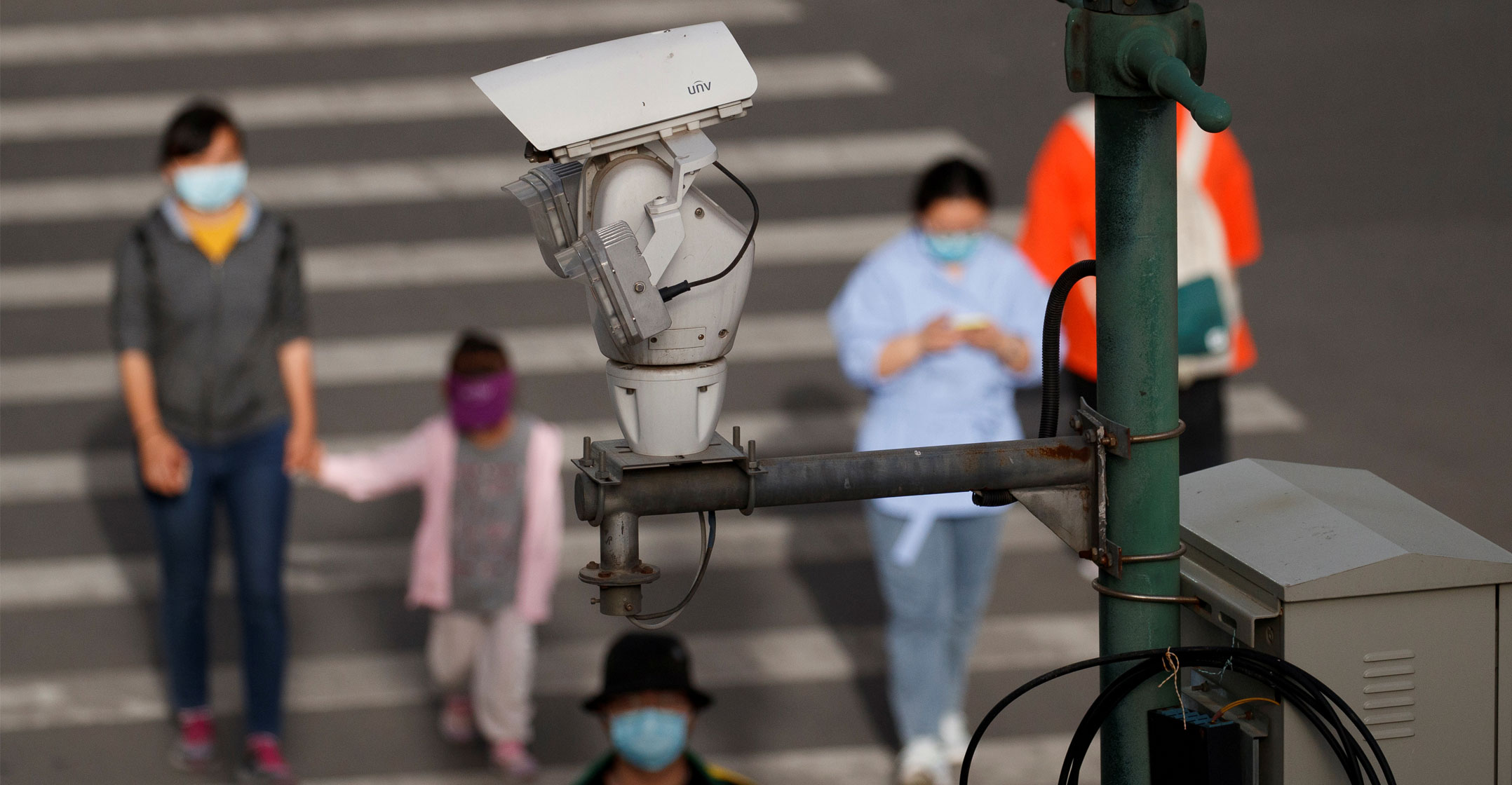
    A CCTV security surveillance camera overlooks a street as people walk following the spread of the coronavirus disease in Beijing, China, 11 May 2020. Image: Thomas Peter/Reuters

    The coronavirus outbreak in China has given unprecedented glimpses into how an extensive system of surveillance cameras works, as monitoring stations are rebranded epidemic “war rooms” helping to check people’s movements and stifle the disease.

    China is trying to build one of the world’s most sophisticated surveillance technology networks, with hundreds of millions of cameras in public places and increasing use of techniques such as smartphone monitoring and facial recognition.

    This year, cities and villages across the country have used the system for what the government has labelled “an all-out people’s war on coronavirus”.

    Despite the hi-tech ambitions of the system, it is heavily dependent on a lot of people watching footage on screens

    While authorities have primarily used mobile location data and ID-linked tracing apps to flag people coming back from abroad for quarantine, the camera surveillance system has played a crucial role, according to officials, state media and residents.

    The network has been used to trace the contacts of people confirmed as infected with the virus, and to punish businesses and individuals flouting restrictions.

    “This is a war situation,” said a civil servant surnamed Wang in Tianjin city, who was involved in tracing thousands of people linked to a coronavirus cluster at a department store. “We must adopt war-time thinking.”

    ‘Grid members’

    Despite the hi-tech ambitions of the system, it is heavily dependent on a lot of people watching footage on screens. Known as “grid members”, they sit in monitoring rooms or squint over smartphone feeds from the networks of cameras.

    “This type of surveillance is far more human driven than it is tech driven, said James Leibold, associate professor at Australia’s La Trobe University, who researched similar systems in China’s far-west Xinjiang.

    State media, officials and local governments have given accounts of the system in action in the campaign against the coronavirus.

    A CCTV security surveillance camera overlooks a street as a woman walks past following the spread of the novel coronavirus disease in Beijing, China, 11 May 2020. Image: Thomas Peter/Reuters

    In Donghan village in Hubei, the province where the coronavirus emerged late last year, grid member Liu Ganhe saw six villagers gathering without masks, so he called the authorities.

    “Village cadres rushed to the scene to disperse the crowd and educate the people,” media said, praising the “wartime restrictions” the system was able to enforce.

    The county’s system cost US$5.6-million and included more than 4 400 cameras, it said.

    Grid member He Haijun spotted villagers getting together in Yongzhou county in Hunan province, so he shouted at them through a village loudspeaker, state media reported. “Within two minutes, the villagers returned to their homes,” it reported.

    It does carry this perception that someone is watching you, and that does moderate people’s behaviour and shifts people’s thinking over time

    The use of loudspeakers to break up gatherings was something that residents of four villages in northeast China confirmed. Authorities have also installed cameras outside the homes of people coming from the virus hotspot of Hubei and from overseas.

    In Xiangtan, another Hunan city, the system was used to locate a man found with a high temperature at a shopping centre who slipped away on a motor bike, state media reported. Officials tracked him using cameras and sent public security officers to admonish him.

    State media has published pictures of officials watching multiple screens in police stations. Others show volunteer staff scouring footage and sharing clips on messaging apps.

    ‘It actually works’

    While the surveillance may be rudimentary in places, public knowledge of the system likely helps with enforcement. “It does carry this perception that someone is watching you, and that does moderate people’s behaviour and shifts people’s thinking over time,” said Leibold. “I think that is going to be one of the long-term lessons from Covid, that it actually works.”

    Details shared by residents and officials suggest machine learning and facial recognition also played a role in big cities.

    In Tianjin, 100km from Beijing, officials went door to door tracing people linked to the department store outbreak in late February, using data from surveillance footage, officials and residents said.

    A CCTV security surveillance camera overlooks a street as a man walks following the spread of the coronavirus disease in Beijing, China, 12 May 2020. Image: Thomas Peter/Reuters

    Officials determined the exact time that infected shop workers were exposed to customers and then traced people captured in footage around the store at the time.

    Local authority equipment procurement documents, available on various websites and collected by Reuters, give details of the area’s surveillance system that includes facial recognition technology that can trace a person’s movement for up to 90 days.

    More than 9 000 people were quarantined.

    “The cadres discovered them one by one through scans made by public security cameras,” the Tianjin civil servant said.  — Reported by Cate Cadell, (c) 2020 Reuters

    Follow TechCentral on Google News Add TechCentral as your preferred source on Google


    top
    WhatsApp YouTube
    Share. Facebook Twitter LinkedIn WhatsApp Telegram Email Copy Link
    Previous ArticleProsecutors summon Samsung heir in fraud probe
    Next Article Tencent to invest R1.2-trillion in ‘new infrastructure’

    Related Posts

    18GW in unplanned breakdowns cripple Eskom

    2 November 2021

    Nersa kicks the Karpowership can down the road

    13 September 2021

    If you think South African load shedding is bad, try Zimbabwe’s

    13 September 2021
    Company News
    Service is everyone's problem now - and that's exactly why the Atlassian Service Collection matters

    Service is everyone’s problem now – why the Atlassian Service Collection matters

    20 February 2026
    Customers have new expectations. Is your CX ready? 1Stream

    Customers have new expectations. Is your CX ready?

    19 February 2026
    South Africa's cybersecurity challenge is not a tool problem - Nicholas Applewhite, Trinexia South Africa

    South Africa’s cybersecurity challenge is not a tool problem

    19 February 2026
    Opinion
    A million reasons monopolies don't work - Duncan McLeod

    A million reasons monopolies don’t work

    10 February 2026
    The author, Business Leadership South Africa CEO Busi Mavuso

    Eskom unbundling U-turn threatens to undo hard-won electricity gains

    9 February 2026
    South Africa's skills advantage is being overlooked at home - Richard Firth

    South Africa’s skills advantage is being overlooked at home

    29 January 2026

    Subscribe to Updates

    Get the best South African technology news and analysis delivered to your e-mail inbox every morning.

    Latest Posts
    MultiChoice scraps annual DStv price hikes for 2026 - David Mignot

    MultiChoice scraps annual DStv price hike

    20 February 2026
    What Gen Z really thinks about the tech world it inherited - Tinashe Mazodze

    What Gen Z really thinks about the tech world it inherited

    20 February 2026
    Showmax 'can't continue' in its current form

    Showmax ‘can’t continue’ in its current form

    20 February 2026
    Free Market Foundation slams treasury's proposed gambling tax

    Free Market Foundation slams treasury’s proposed gambling tax

    20 February 2026
    © 2009 - 2026 NewsCentral Media
    • Cookie policy (ZA)
    • TechCentral – privacy and Popia

    Type above and press Enter to search. Press Esc to cancel.

    Manage consent

    TechCentral uses cookies to enhance its offerings. Consenting to these technologies allows us to serve you better. Not consenting or withdrawing consent may adversely affect certain features and functions of the website.

    Functional Always active
    The technical storage or access is strictly necessary for the legitimate purpose of enabling the use of a specific service explicitly requested by the subscriber or user, or for the sole purpose of carrying out the transmission of a communication over an electronic communications network.
    Preferences
    The technical storage or access is necessary for the legitimate purpose of storing preferences that are not requested by the subscriber or user.
    Statistics
    The technical storage or access that is used exclusively for statistical purposes. The technical storage or access that is used exclusively for anonymous statistical purposes. Without a subpoena, voluntary compliance on the part of your Internet Service Provider, or additional records from a third party, information stored or retrieved for this purpose alone cannot usually be used to identify you.
    Marketing
    The technical storage or access is required to create user profiles to send advertising, or to track the user on a website or across several websites for similar marketing purposes.
    • Manage options
    • Manage services
    • Manage {vendor_count} vendors
    • Read more about these purposes
    View preferences
    • {title}
    • {title}
    • {title}