Close Menu
TechCentralTechCentral

    Subscribe to the newsletter

    Get the best South African technology news and analysis delivered to your e-mail inbox every morning.

    Facebook X (Twitter) YouTube LinkedIn
    WhatsApp Facebook X (Twitter) LinkedIn YouTube
    TechCentralTechCentral
    • News
      Broadband Infraco in limbo

      Broadband Infraco in limbo

      11 February 2026
      Home affairs' R10 ID fee is forcing companies to rethink identity verification

      Standard Bank joins smart ID push with fee-free launch

      11 February 2026
      Zscaler assets seized from South African data centres

      Zscaler assets seized from South African data centres

      11 February 2026
      SA app wants to end guesswork in online grocery shopping - We Need Milk CEO Arjan van den Berg

      SA app wants to end guesswork in online grocery shopping

      11 February 2026
      Absa appoints M-Pesa boss to lead personal and private banking - Sitoyo Lopokoiyit

      Absa appoints M-Pesa boss to lead personal and private banking

      11 February 2026
    • World
      EU regulators take aim at WhatsApp

      EU regulators take aim at WhatsApp

      9 February 2026
      Musk hits brakes on Mars mission

      Musk hits brakes on Mars mission

      9 February 2026
      Crypto firm accidentally sends R700-billion in bitcoin to its users

      Crypto firm accidentally sends R700-billion in bitcoin to its users

      8 February 2026
      AI won't replace software, says Nvidia CEO amid market rout - Jensen Huang

      AI won’t replace software, says Nvidia CEO amid market rout

      4 February 2026
      Apple acquires audio AI start-up Q.ai

      Apple acquires audio AI start-up Q.ai

      30 January 2026
    • In-depth
      How liberalisation is rewiring South Africa's power sector

      How liberalisation is rewiring South Africa’s power sector

      21 January 2026
      The top-performing South African tech shares of 2025

      The top-performing South African tech shares of 2025

      12 January 2026
      Digital authoritarianism grows as African states normalise internet blackouts

      Digital authoritarianism grows as African states normalise internet blackouts

      19 December 2025
      TechCentral's South African Newsmakers of 2025

      TechCentral’s South African Newsmakers of 2025

      18 December 2025
      Black Friday goes digital in South Africa as online spending surges to record high

      Black Friday goes digital in South Africa as online spending surges to record high

      4 December 2025
    • TCS
      Watts & Wheels S1E4: 'We drive an electric Uber'

      Watts & Wheels S1E4: ‘We drive an electric Uber’

      10 February 2026
      TCS+ | How Cloud On Demand is helping SA businesses succeed in the cloud - Xhenia Rhode, Dion Kalicharan

      TCS+ | Cloud On Demand and Consnet: inside a real-world AWS partner success story

      30 January 2026
      Watts & Wheels S1E4: 'We drive an electric Uber'

      Watts & Wheels S1E3: ‘BYD’s Corolla Cross challenger’

      30 January 2026
      Watts & Wheels S1E4: 'We drive an electric Uber'

      Watts & Wheels S1E2: ‘China attacks, BMW digs in, Toyota’s sublime supercar’

      23 January 2026

      TCS+ | Why cybersecurity is becoming a competitive advantage for SA businesses

      20 January 2026
    • Opinion
      South Africa's skills advantage is being overlooked at home - Richard Firth

      South Africa’s skills advantage is being overlooked at home

      29 January 2026
      Why Elon Musk's Starlink is a 'hard no' for me - Songezo Zibi

      Why Elon Musk’s Starlink is a ‘hard no’ for me

      26 January 2026
      South Africa's new fibre broadband battle - Duncan McLeod

      South Africa’s new fibre broadband battle

      20 January 2026
      AI moves from pilots to production in South African companies - Nazia Pillay SAP

      AI moves from pilots to production in South African companies

      20 January 2026
      South Africa's new fibre broadband battle - Duncan McLeod

      ANC’s attack on Solly Malatsi shows how BEE dogma trumps economic reality

      14 December 2025
    • Company Hubs
      • Africa Data Centres
      • AfriGIS
      • Altron Digital Business
      • Altron Document Solutions
      • Altron Group
      • Arctic Wolf
      • AvertITD
      • Braintree
      • CallMiner
      • CambriLearn
      • CYBER1 Solutions
      • Digicloud Africa
      • Digimune
      • Domains.co.za
      • ESET
      • Euphoria Telecom
      • Incredible Business
      • iONLINE
      • IQbusiness
      • Iris Network Systems
      • LSD Open
      • NEC XON
      • Netstar
      • Network Platforms
      • Next DLP
      • Ovations
      • Paracon
      • Paratus
      • Q-KON
      • SevenC
      • SkyWire
      • Solid8 Technologies
      • Telit Cinterion
      • Tenable
      • Vertiv
      • Videri Digital
      • Vodacom Business
      • Wipro
      • Workday
      • XLink
    • Sections
      • AI and machine learning
      • Banking
      • Broadcasting and Media
      • Cloud services
      • Contact centres and CX
      • Cryptocurrencies
      • Education and skills
      • Electronics and hardware
      • Energy and sustainability
      • Enterprise software
      • Financial services
      • Information security
      • Internet and connectivity
      • Internet of Things
      • Investment
      • IT services
      • Lifestyle
      • Motoring
      • Public sector
      • Retail and e-commerce
      • Satellite communications
      • Science
      • SMEs and start-ups
      • Social media
      • Talent and leadership
      • Telecoms
    • Events
    • Advertise
    TechCentralTechCentral
    Home » Sections » Internet and connectivity » China’s military minds fret over Starlink

    China’s military minds fret over Starlink

    China needs the capability to shoot down low-Earth-orbit Starlink satellites, according to Chinese military researchers.
    By Agency Staff8 March 2023
    Twitter LinkedIn Facebook WhatsApp Email Telegram Copy Link
    News Alerts
    WhatsApp

    China needs the capability to shoot down low-Earth-orbit Starlink satellites and defend tanks and helicopters against shoulder-fired Javelin missiles, according to Chinese military researchers who are studying Russia’s struggles in Ukraine in planning for possible conflict with US-led forces in Asia.

    A Reuters review of almost 100 articles in more than 20 defence journals reveals an effort across China’s military-industrial complex to scrutinise the impact of US weapons and technology that could be deployed against Chinese forces in a war over Taiwan.

    The Chinese-language journals, which also examine Ukrainian sabotage operations, reflect the work of hundreds of researchers across a network of People’s Liberation Army (PLA)-linked universities, state-owned weapons manufacturers and military intelligence think-tanks.

    Half a dozen papers by PLA researchers highlight Chinese concern at the role of Starlink

    While Chinese officials have avoided any openly critical comments about Moscow’s actions or battlefield performance as they call for peace and dialogue, the publicly available journal articles are more candid in their assessments of Russian shortcomings.

    China’s defence ministry did not respond to a request for comment about the researchers’ findings. Reuters could not determine how closely the conclusions reflect the thinking among China’s military leaders.

    Two military attaches and another diplomat familiar with China’s defence studies said the Communist Party’s Central Military Commission, headed by President Xi Jinping, ultimately sets and directs research needs, and that it was clear from the volume of material that Ukraine was an opportunity the military leadership wanted to seize. The three people and other diplomats spoke to Reuters on the condition of anonymity because they were not authorised to discuss their work publicly.

    ‘Unity of action’

    A US defence official told Reuters that despite differences with the situation in Taiwan, the Ukraine war offered insights for China.

    “A key lesson the world should take away from the rapid international response to Russia’s invasion of Ukraine is that aggression will increasingly be met with unity of action,” said the official, who spoke on the condition of anonymity because of the topic’s sensitivity, without addressing concerns raised in the Chinese research about specific US capabilities.

    Half a dozen papers by PLA researchers highlight Chinese concern at the role of Starlink, a satellite network developed by Elon Musk’s US-based space exploration company SpaceX, in securing the communications of Ukraine’s military amid Russian missile attacks on the country’s power grid.

    “The excellent performance of Starlink satellites in this Russian-Ukrainian conflict will certainly prompt the US and Western countries to use Starlink extensively” in possible hostilities in Asia, said a September article co-written by researchers at the Army Engineering University of the PLA.

    The authors deemed it “urgent” for China — which aims to develop its own similar satellite network – to find ways to shoot down or disable Starlink. SpaceX did not respond to a request for comment.

    China has been studying Russia’s invasion of Ukraine, hoping to learn lessons from its northern neighbour

    The conflict has also forged an apparent consensus among Chinese researchers that drone warfare merits greater investment. China has been testing drones in the skies around Taiwan, a self-ruled democracy that Beijing has vowed to bring under its control.

    “These unmanned aerial vehicles will serve as the ‘door kicker’ of future wars,” noted one article in a tank warfare journal published by state-owned arms manufacturer Norinco, a supplier to the PLA, that described drones’ ability to neutralise enemy defences.

    While some of the journals are operated by provincial research institutes, others are official publications for central government bodies such as the State Administration of Science, Technology and Industry for National Defence, which oversees weapons production and military upgrades.

    An article in the administration’s official journal in October noted that China should improve its ability to defend military equipment in view of the “serious damage to Russian tanks, armoured vehicles and warships” inflicted by Stinger and Javelin missiles operated by Ukrainian fighters.

    Collin Koh, a security fellow at Singapore’s S Rajaratnam School of International Studies, said the Ukrainian conflict had provided impetus to longstanding efforts by China’s military scientists to develop cyberwarfare models and find ways of better protecting armour from modern Western weapons.

    Starlink is really something new for them to worry about; the military application of advanced civilian technology that they can’t easily replicate

    “Starlink is really something new for them to worry about; the military application of advanced civilian technology that they can’t easily replicate,” Koh said.

    Beyond technology, Koh said he was not surprised that Ukrainian special forces operations inside Russia were being studied by China, which, like Russia, moves troops and weapons by rail, making them vulnerable to sabotage.

    Despite its rapid modernisation, the PLA lacks recent combat experience. China’s invasion of Vietnam in 1979 was its last major battle – a conflict that rumbled on until the late 1980s.

    Reuters’ review of the Chinese journals comes amid Western concern that China may be planning to supply Russia with lethal aid for its assault on Ukraine, which Beijing denies.

    Some of the Chinese articles stress Ukraine’s relevance given the risk of a regional conflict pitting China against the US and its allies, possibly over Taiwan. The US has a policy of “strategic ambiguity” over whether it would intervene militarily to defend the island, but is bound by law to provide Taiwan with the means to defend itself.

    Unsettled

    US Central Intelligence Agency director William Burns has said that Xi has ordered his military to be ready to invade Taiwan by 2027, while noting that the Chinese leader was probably unsettled by Russia’s experience in Ukraine.

    One article, published in October by two researchers at the PLA’s National Defence University, analysed the effect of US deliveries of high-mobility artillery rocket systems (Himars) to Ukraine, and whether China’s military should be concerned.

    “If Himars dares to intervene in Taiwan in the future, what was once known as an ‘explosion-causing tool’ will suffer another fate in front of different opponents,” it concluded.

    The article highlighted China’s own advanced rocket system, supported by reconnaissance drones, and noted that Ukraine’s success with Himars had relied on US sharing of target information and intelligence via Starlink.

    Four diplomats, including the two military attaches, said PLA analysts have long worried about superior US military might, but Ukraine has sharpened their focus by providing a window on a large power’s failure to overwhelm a smaller one backed by the West.
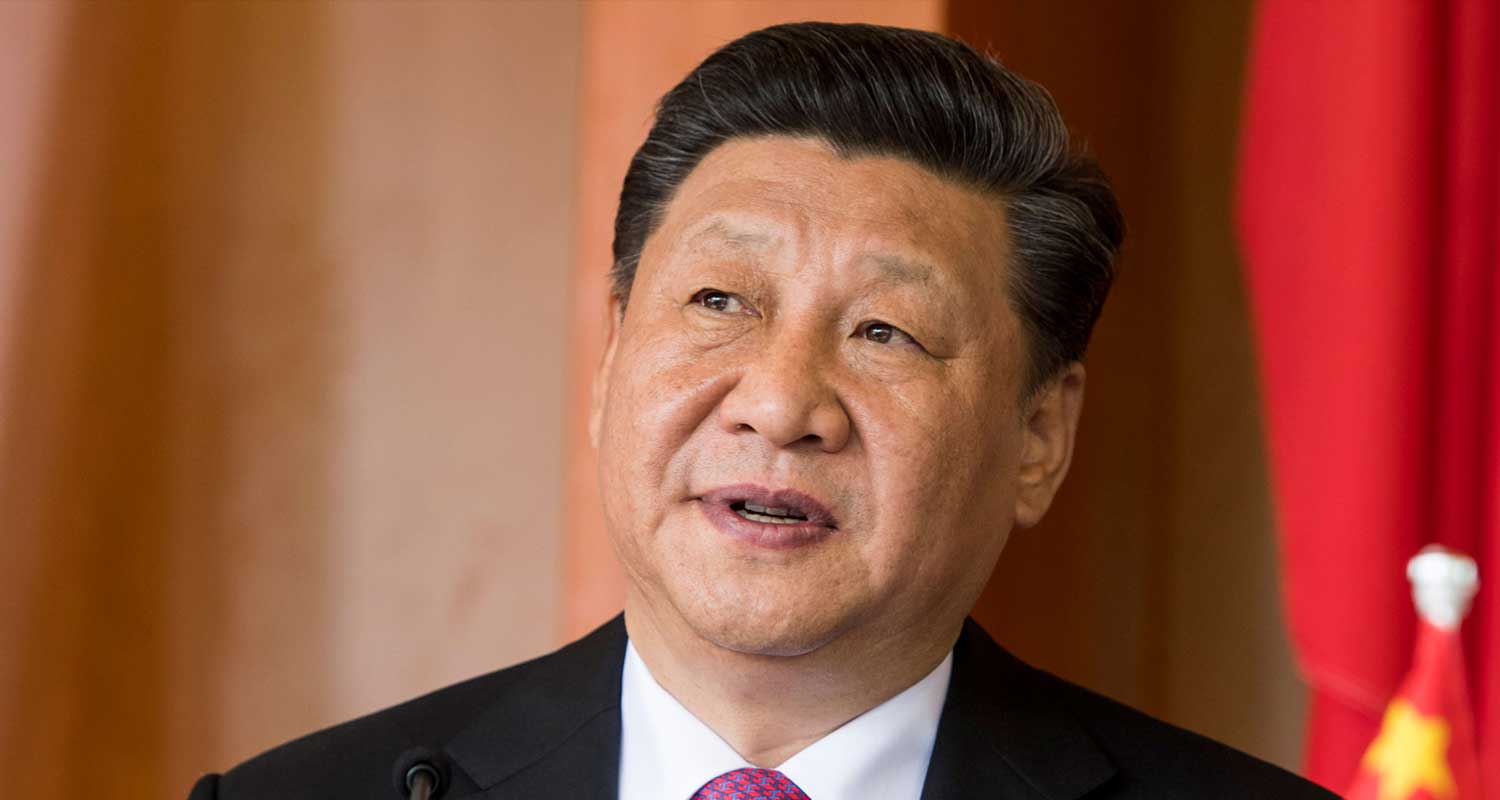
    Xi Jinping

    While that scenario has obvious Taiwan comparisons, there are differences, particularly given the island’s vulnerability to a Chinese blockade that could force any intervening militaries into a confrontation.

    Western countries, by contrast, are able to supply Ukraine by land via its European neighbours.

    References to Taiwan are relatively few in the journals reviewed by Reuters, but diplomats and foreign scholars tracking the research say that Chinese defence analysts are tasked to provide separate internal reports for senior political and military leaders. Reuters was unable to access those internal reports.

    Taiwanese defence minister Chiu Kuo-cheng said in February that China’s military is learning from Russia’s invasion of Ukraine that any attack on Taiwan would have to be swift to succeed. Taiwan is also studying the conflict to update its own battle strategies.

    Several articles analyse the strengths of the Ukrainian resistance, including special forces’ sabotage operations inside Russia, the use of the Telegram app to harness civilian intelligence, and the defence of the Azovstal steel plant in Mariupol.

    The work has covered the information war, which the researchers conclude was won by Ukraine and its allies

    Russian successes are also noted, such as tactical strikes using the Iskander ballistic missile.

    The journal Tactical Missile Technology, published by state-owned weapons manufacturer China Aerospace Science and Industry Corporation, produced a detailed analysis of the Iskander, but only released a truncated version to the public.

    Many other articles focus on the mistakes of Russia’s invading army, with one in the tank warfare journal identifying outdated tactics and a lack of unified command, while another in an electronic warfare journal said Russian communications interference was insufficient to counter Nato’s provision of intelligence to the Ukrainians, leading to costly ambushes.

    A piece published this year by researchers at the Engineering University of the People’s Armed Police assessed the insights China could glean from the blowing-up of the Kerch Bridge in Russian-occupied Crimea. The full analysis has not been released publicly, however.

    Read: Why Starlink could be a game changer in Africa

    Beyond the battlefield, the work has covered the information war, which the researchers conclude was won by Ukraine and its allies.

    One February article by researchers at the PLA Information Engineering University calls on China to preemptively prepare for a global public opinion backlash similar to that experienced by Russia.

    China should “promote the construction of cognitive confrontation platforms” and tighten control of social media to prevent Western information campaigns from influencing its people during a conflict, it said.  — Eduardo Baptista and Greg Torode, with Idrees Ali and Phil Stewart, (c) 2023 Reuters

    Get TechCentral’s daily newsletter


    Elon Musk Starlink Xi Jinping
    WhatsApp YouTube Follow on Google News Add as preferred source on Google
    Share. Facebook Twitter LinkedIn WhatsApp Telegram Email Copy Link
    Previous ArticleEU tells Musk to hire more staff to moderate Twitter
    Next Article TikTok moves to stave off growing threat of Western crackdown

    Related Posts

    Musk hits brakes on Mars mission

    Musk hits brakes on Mars mission

    9 February 2026
    Starlink considers building its own phone - Elon Musk

    Starlink considers building its own phone

    5 February 2026
    SpaceX acquires xAI in record-breaking deal

    SpaceX acquires xAI in record-breaking deal

    3 February 2026
    Company News
    How NEC XON tackled identity risk for a major telco - Michael de Neuilly Rice

    How NEC XON tackled identity risk for a major telco

    11 February 2026

    Why Acer is the strategic choice for South Africa’s educational future

    11 February 2026
    Fyndae is building Africa's human verification layer for community security and collaboration

    Fyndae wants to turn lost-item recovery into Africa’s trust infrastructure

    11 February 2026
    Opinion
    South Africa's skills advantage is being overlooked at home - Richard Firth

    South Africa’s skills advantage is being overlooked at home

    29 January 2026
    Why Elon Musk's Starlink is a 'hard no' for me - Songezo Zibi

    Why Elon Musk’s Starlink is a ‘hard no’ for me

    26 January 2026
    South Africa's new fibre broadband battle - Duncan McLeod

    South Africa’s new fibre broadband battle

    20 January 2026

    Subscribe to Updates

    Get the best South African technology news and analysis delivered to your e-mail inbox every morning.

    Latest Posts
    Broadband Infraco in limbo

    Broadband Infraco in limbo

    11 February 2026
    Home affairs' R10 ID fee is forcing companies to rethink identity verification

    Standard Bank joins smart ID push with fee-free launch

    11 February 2026
    Zscaler assets seized from South African data centres

    Zscaler assets seized from South African data centres

    11 February 2026
    SA app wants to end guesswork in online grocery shopping - We Need Milk CEO Arjan van den Berg

    SA app wants to end guesswork in online grocery shopping

    11 February 2026
    © 2009 - 2026 NewsCentral Media
    • Cookie policy (ZA)
    • TechCentral – privacy and Popia

    Type above and press Enter to search. Press Esc to cancel.

    Manage consent

    TechCentral uses cookies to enhance its offerings. Consenting to these technologies allows us to serve you better. Not consenting or withdrawing consent may adversely affect certain features and functions of the website.

    Functional Always active
    The technical storage or access is strictly necessary for the legitimate purpose of enabling the use of a specific service explicitly requested by the subscriber or user, or for the sole purpose of carrying out the transmission of a communication over an electronic communications network.
    Preferences
    The technical storage or access is necessary for the legitimate purpose of storing preferences that are not requested by the subscriber or user.
    Statistics
    The technical storage or access that is used exclusively for statistical purposes. The technical storage or access that is used exclusively for anonymous statistical purposes. Without a subpoena, voluntary compliance on the part of your Internet Service Provider, or additional records from a third party, information stored or retrieved for this purpose alone cannot usually be used to identify you.
    Marketing
    The technical storage or access is required to create user profiles to send advertising, or to track the user on a website or across several websites for similar marketing purposes.
    • Manage options
    • Manage services
    • Manage {vendor_count} vendors
    • Read more about these purposes
    View preferences
    • {title}
    • {title}
    • {title}