

Close Menu
TechCentralTechCentral

    Subscribe to the newsletter

    Get the best South African technology news and analysis delivered to your e-mail inbox every morning.

    Facebook X (Twitter) YouTube LinkedIn
    WhatsApp Facebook X (Twitter) LinkedIn YouTube
    TechCentralTechCentral
    • News
      MTN to buy back its own towers in R35-billion deal - Ralph Mupita

      MTN to buy back its own cellular towers in R35-billion deal

      17 February 2026
      Icasa gears up for South Africa's next big spectrum auction - Tshiamo Maluleka-Disemelo

      Icasa gears up for South Africa’s next big spectrum auction

      17 February 2026
      Not enough: Eskom unions spurn above-inflation wage offer

      Not enough: Eskom unions spurn above-inflation wage offer

      17 February 2026
      SA firms turn to automated dispatch as crime perception soars

      SA firms turn to automated dispatch as crime perception soars

      17 February 2026
      Blu Label lands energy trading licence from Nersa - Mark Levy

      Blu Label lands electricity trading licence from Nersa

      17 February 2026
    • World
      Prominent Southern African journalist targeted with Predator spyware

      Prominent Southern African journalist targeted with Predator spyware

      18 February 2026
      More drama in Warner Bros tug of war

      More drama in Warner Bros tug of war

      17 February 2026
      Russia bans WhatsApp

      Russia bans WhatsApp

      12 February 2026
      EU regulators take aim at WhatsApp

      EU regulators take aim at WhatsApp

      9 February 2026
      Musk hits brakes on Mars mission

      Musk hits brakes on Mars mission

      9 February 2026
    • In-depth
      How liberalisation is rewiring South Africa's power sector

      How liberalisation is rewiring South Africa’s power sector

      21 January 2026
      The top-performing South African tech shares of 2025

      The top-performing South African tech shares of 2025

      12 January 2026
      Digital authoritarianism grows as African states normalise internet blackouts

      Digital authoritarianism grows as African states normalise internet blackouts

      19 December 2025
      TechCentral's South African Newsmakers of 2025

      TechCentral’s South African Newsmakers of 2025

      18 December 2025
      Black Friday goes digital in South Africa as online spending surges to record high

      Black Friday goes digital in South Africa as online spending surges to record high

      4 December 2025
    • TCS
      Watts & Wheels S1E4: 'We drive an electric Uber'

      Watts & Wheels S1E4: ‘We drive an electric Uber’

      10 February 2026
      TCS+ | How Cloud On Demand is helping SA businesses succeed in the cloud - Xhenia Rhode, Dion Kalicharan

      TCS+ | Cloud On Demand and Consnet: inside a real-world AWS partner success story

      30 January 2026
      Watts & Wheels S1E4: 'We drive an electric Uber'

      Watts & Wheels S1E3: ‘BYD’s Corolla Cross challenger’

      30 January 2026
      Watts & Wheels S1E4: 'We drive an electric Uber'

      Watts & Wheels S1E2: ‘China attacks, BMW digs in, Toyota’s sublime supercar’

      23 January 2026

      TCS+ | Why cybersecurity is becoming a competitive advantage for SA businesses

      20 January 2026
    • Opinion
      A million reasons monopolies don't work - Duncan McLeod

      A million reasons monopolies don’t work

      10 February 2026
      The author, Business Leadership South Africa CEO Busi Mavuso

      Eskom unbundling U-turn threatens to undo hard-won electricity gains

      9 February 2026
      South Africa's skills advantage is being overlooked at home - Richard Firth

      South Africa’s skills advantage is being overlooked at home

      29 January 2026
      Why Elon Musk's Starlink is a 'hard no' for me - Songezo Zibi

      Why Elon Musk’s Starlink is a ‘hard no’ for me

      26 January 2026
      A million reasons monopolies don't work - Duncan McLeod

      South Africa’s new fibre broadband battle

      20 January 2026
    • Company Hubs
      • Africa Data Centres
      • AfriGIS
      • Altron Digital Business
      • Altron Document Solutions
      • Altron Group
      • Arctic Wolf
      • AvertITD
      • Braintree
      • CallMiner
      • CambriLearn
      • CYBER1 Solutions
      • Digicloud Africa
      • Digimune
      • Domains.co.za
      • ESET
      • Euphoria Telecom
      • Incredible Business
      • iONLINE
      • IQbusiness
      • Iris Network Systems
      • LSD Open
      • Mitel
      • NEC XON
      • Netstar
      • Network Platforms
      • Next DLP
      • Ovations
      • Paracon
      • Paratus
      • Q-KON
      • SevenC
      • SkyWire
      • Solid8 Technologies
      • Telit Cinterion
      • Tenable
      • Vertiv
      • Videri Digital
      • Vodacom Business
      • Wipro
      • Workday
      • XLink
    • Sections
      • AI and machine learning
      • Banking
      • Broadcasting and Media
      • Cloud services
      • Contact centres and CX
      • Cryptocurrencies
      • Education and skills
      • Electronics and hardware
      • Energy and sustainability
      • Enterprise software
      • Financial services
      • Information security
      • Internet and connectivity
      • Internet of Things
      • Investment
      • IT services
      • Lifestyle
      • Motoring
      • Public sector
      • Retail and e-commerce
      • Satellite communications
      • Science
      • SMEs and start-ups
      • Social media
      • Talent and leadership
      • Telecoms
    • Events
    • Advertise
    TechCentralTechCentral
    Home » World » Cities running on car batteries? It’s not that crazy

    Cities running on car batteries? It’s not that crazy

    By Agency Staff9 April 2018
    Twitter LinkedIn Facebook WhatsApp Email Telegram Copy Link
    News Alerts
    WhatsApp

    When Damien Maguire moved to the countryside outside Dublin, he struggled to keep the lights on at home because of the town’s constant power outages. He found a solution inside his electric cars: their batteries.

    A tinkerer who posts videos of his hand-built vehicles on YouTube, Maguire devised a wiring system that lets him suck power out of them when they’re parked in the garage. Now that the house and cars are connected, he can also use the batteries to store energy from his backyard solar panels, another power source that’s not totally reliable given Ireland’s weather.

    “You have the light-bulb moment,” said the 41-year-old electrical engineer. “There’s a big battery in the car, so how about I use that?”

    We really, really need storage in order to make better use of wind and solar power, and electric cars could provide it. The potential is huge

    An even bigger light-bulb moment is happening for utilities and car makers, who want to use the batteries inside electric cars as storage for the entire public power grid. The idea, known as “vehicle-to-grid”, is to someday have millions of drivers become mini electricity traders, charging up when rates are cheap and pumping energy back into the grid during peak hours or when the sun simply isn’t shining. If it works — and it’s a big if — renewable energy could get much cheaper and more widely used.

    “We really, really need storage in order to make better use of wind and solar power, and electric cars could provide it,’’ said Daniel Brenden, an analyst who studies the electricity market at BMI Research in London. “The potential is huge.’’

    Today, fewer than 1% of the world’s vehicles are electric, but by 2040 more than half of all new cars will run on the same juice as televisions, computers and hairdryers, according to estimates by Bloomberg New Energy Finance. Once cars and everything else are fed from the same source, they can share the same plumbing.

    As it stands, energy generated by wind and solar farms often goes to waste because there’s nowhere to store it. South Australia solved the problem by investing an estimated US$80-$90m to build the world’s biggest lithium-ion battery on the edge of the Outback. The result is a massive cluster of white boxes that is essentially a huge reservoir for electricity. Inside are the same batteries Tesla uses in its cars.

    Vehicle to grid

    But what if that reservoir was divided between millions of cars already on the road? That’s the vehicle-to-grid concept.

    It’s promising because the newest electric vehicles can hold enough energy to power the average US home for several days. For most drivers, whose cars sit idle 90% of the time, sharing their batteries would make good use of a very underutilised resource. (It’s like Airbnb, but with car parts instead of seldom-used apartments.) For the utilities, borrowing people’s batteries would mean not having to build or buy them.

    In the real world, though, there’s a tangle of complications. Elaborate new computer networks would have to be built, car makers and power companies would have to collaborate, and people would have to stop thinking of their cars as a private bubble. The main practical problem is getting drivers to charge up when there’s a power surplus, and getting them to give back when the public grid has a deficit, all the while making sure people’s cars never run out of juice.

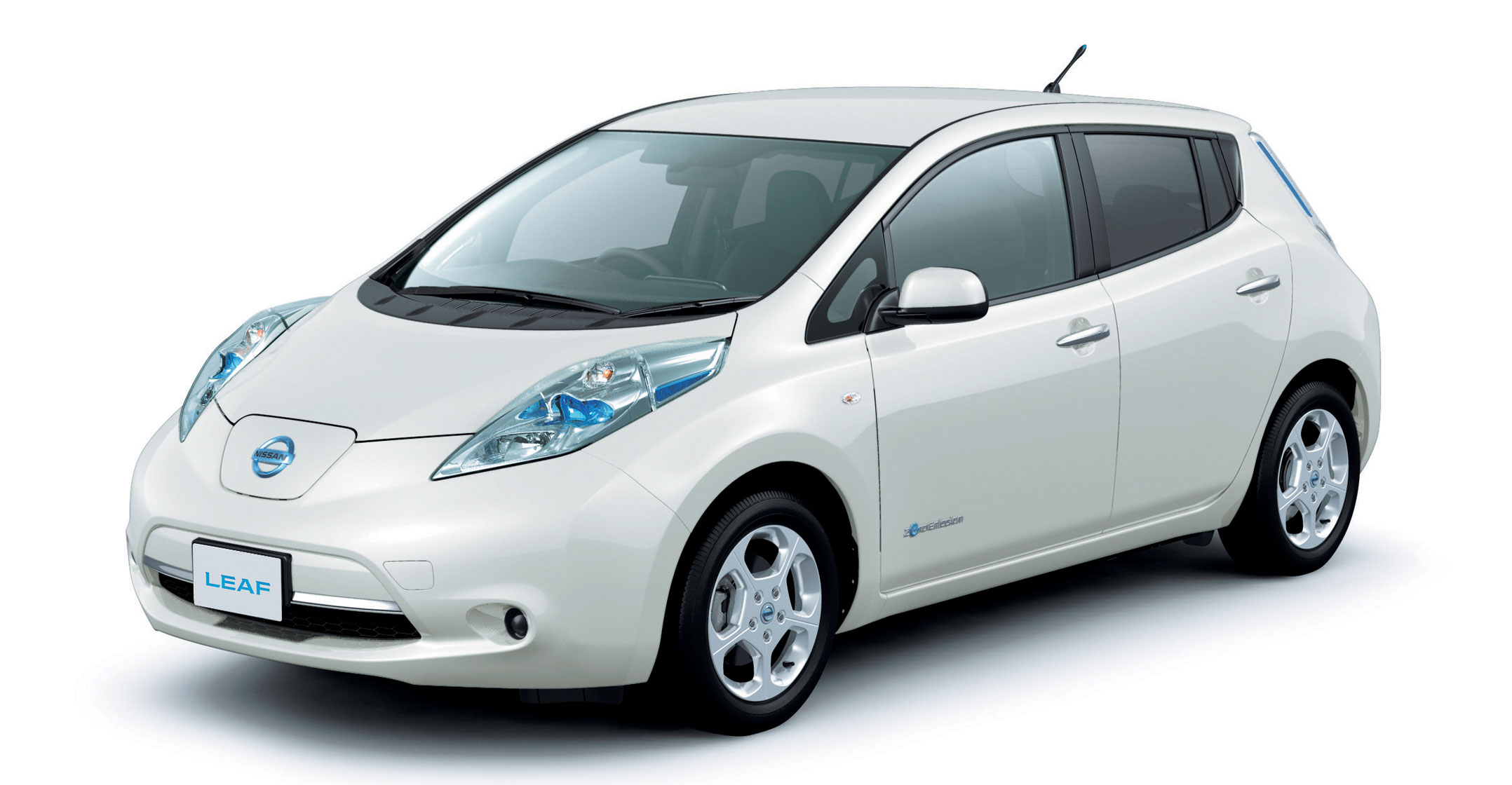
    To get a sense of the difficulties, consider the struggle the world’s number one seller of electric cars, Nissan, has had convincing customers in Japan to try a simple system like the one Maguire jerry-rigged for himself at his home in the Irish countryside.

    By allowing car batteries to serve as a residential power source, Nissan says its vehicle-to-home service cuts utility bills by about $40/month. Still, only about 7 000 car owners have adopted the system in the six years since it started, a tiny number compared with the 81 500 Leaf EVs that Nissan has sold so far in the country.

    Declining to discuss any travails, a spokesman said the company is “very pleased” with its sales and sees growing consumer interest in the technology.

    There is also a trust issue among some EV buyers, in terms of whether they trust their utility enough to manage the charging of their EV

    Meanwhile, Nissan is trying other experiments. Last year, it partnered with Japan’s biggest utility, Tokyo Electric Power, to design a vehicle-to-grid system that takes the Maguire idea and ratchets up the complexity.

    A small test this (northern hemisphere) winter showed how hard it is just to get people to charge their cars at the right time. (Selling power back to the grid is a separate can of worms.) Nissan and the utility convinced 45 of their own employees to install home chargers and try monitoring electricity demand on weekends, using a smartphone app. Even though volunteers got free shopping points on Amazon as a reward for buying power when there was glut, only about 10% succeeded.

    The big takeaway was that, since most people aren’t home in the early afternoon, the system won’t really work until there are fuelling stations all around town at places like the mall or the park. The company is looking at lots of different ways to boost participation, according to Yukio Shinoda, a Tokyo Electric manager who helped organise the trial.

    Jonn Axsen, an associate professor at Simon Fraser University in Canada, who has studied vehicle-to-grid systems, says it’s unclear whether power companies will be able pass on enough cost savings to convince car owners to cooperate. “There is also a trust issue among some EV buyers, in terms of whether they trust their utility enough to manage the charging of their EV,” he said by e-mail.

    Nuvve

    The first company to offer an actual product that allows drivers to both buy and sell power is San Diego-based Nuvve, which has succeeded by focusing on business customers in Denmark, a double-whammy of smart targeting. Company cars have predictable routines that make it easier for Nuvve’s software to calculate how much electricity can be sold back to the grid without running out of fuel on the road. (And Danes are seriously into renewable energy.)

    Since 2016, 10 businesses with a total of 50 vehicles have bought the service, according to Nuvve, which teamed up on the project with Nissan and Italian utility Enel. Tests are also underway at a handful of locations in Amsterdam, where Nuvve is collaborating with Mitsubishi Motors and Newmotion, a unit of Royal Dutch Shell that operates charging stations throughout Europe.

    It’s a slow beginning, but Nuvve CEO Gregory Poilasne says vehicle-to-grid systems could eventually speed up the adoption of electric vehicles once people realise their batteries can earn them money. Poilasne says his clients make more than $1 000/car each year by trading power to the spot market.

    For Maguire, the rural inventor, one thing that’s become clear is that car batteries can be a lot more useful than most people think. His latest challenge is seeing whether he can convert his diesel-guzzling BMW sedan into an electric car on a shoestring budget of less than $1 250.

    “I joke that one day I’m going to finish up these projects and take up golf,’’ he said. “But the more I learn about these batteries, the more I try and the more I get out of them.”  — Reported by Stephen Stapczynski, with assistance from Jason Clenfield, Chisaki Watanabe and Perry Williams, (c) 2018 Bloomberg LP


    Nissan Tesla top
    WhatsApp YouTube Follow on Google News Add as preferred source on Google
    Share. Facebook Twitter LinkedIn WhatsApp Telegram Email Copy Link
    Previous ArticleHow to stop haemorrhaging your data on Facebook
    Next Article IT spending is rising sharply, thanks to a weak dollar

    Related Posts

    South Africa must defend its car industry - before it's too late

    South Africa must defend its car industry – before it’s too late

    2 February 2026
    A single Musk super-company may be taking shape - Elon Musk

    A single Musk super-company may be taking shape

    30 January 2026
    Tesla abandons traditional EV growth for a high-stakes AI future

    Tesla abandons traditional EV growth for a high-stakes AI future

    29 January 2026
    Company News
    Scaling modern, data-driven farming across Africa - Chris Duvenage

    Scaling modern, data-driven farming across Africa

    17 February 2026
    Why getting your small business online costs less than you think

    Why getting your small business online costs less than you think

    17 February 2026
    Oni-Tel set to reinvigorate dark fibre in South Africa

    Oni-Tel set to reinvigorate dark fibre in South Africa

    17 February 2026
    Opinion
    A million reasons monopolies don't work - Duncan McLeod

    A million reasons monopolies don’t work

    10 February 2026
    The author, Business Leadership South Africa CEO Busi Mavuso

    Eskom unbundling U-turn threatens to undo hard-won electricity gains

    9 February 2026
    South Africa's skills advantage is being overlooked at home - Richard Firth

    South Africa’s skills advantage is being overlooked at home

    29 January 2026

    Subscribe to Updates

    Get the best South African technology news and analysis delivered to your e-mail inbox every morning.

    Latest Posts
    Prominent Southern African journalist targeted with Predator spyware

    Prominent Southern African journalist targeted with Predator spyware

    18 February 2026
    MTN to buy back its own towers in R35-billion deal - Ralph Mupita

    MTN to buy back its own cellular towers in R35-billion deal

    17 February 2026
    Icasa gears up for South Africa's next big spectrum auction - Tshiamo Maluleka-Disemelo

    Icasa gears up for South Africa’s next big spectrum auction

    17 February 2026
    Not enough: Eskom unions spurn above-inflation wage offer

    Not enough: Eskom unions spurn above-inflation wage offer

    17 February 2026
    © 2009 - 2026 NewsCentral Media
    • Cookie policy (ZA)
    • TechCentral – privacy and Popia

    Type above and press Enter to search. Press Esc to cancel.

    Manage consent

    TechCentral uses cookies to enhance its offerings. Consenting to these technologies allows us to serve you better. Not consenting or withdrawing consent may adversely affect certain features and functions of the website.

    Functional Always active
    The technical storage or access is strictly necessary for the legitimate purpose of enabling the use of a specific service explicitly requested by the subscriber or user, or for the sole purpose of carrying out the transmission of a communication over an electronic communications network.
    Preferences
    The technical storage or access is necessary for the legitimate purpose of storing preferences that are not requested by the subscriber or user.
    Statistics
    The technical storage or access that is used exclusively for statistical purposes. The technical storage or access that is used exclusively for anonymous statistical purposes. Without a subpoena, voluntary compliance on the part of your Internet Service Provider, or additional records from a third party, information stored or retrieved for this purpose alone cannot usually be used to identify you.
    Marketing
    The technical storage or access is required to create user profiles to send advertising, or to track the user on a website or across several websites for similar marketing purposes.
    • Manage options
    • Manage services
    • Manage {vendor_count} vendors
    • Read more about these purposes
    View preferences
    • {title}
    • {title}
    • {title}