Close Menu
TechCentralTechCentral

    Subscribe to the newsletter

    Get the best South African technology news and analysis delivered to your e-mail inbox every morning.

    Facebook X (Twitter) YouTube LinkedIn
    WhatsApp Facebook X (Twitter) LinkedIn YouTube
    TechCentralTechCentral
    • News
      Vula Medical named as South Africa's 2025 app of the year

      Vula Medical named as South Africa’s 2025 app of the year

      5 December 2025
      Netflix, Warner Bros talks raise fresh headaches for MultiChoice

      Netflix, Warner Bros talks raise fresh headaches for MultiChoice

      5 December 2025
      Big Microsoft 365 price increases coming next year

      Big Microsoft price increases coming next year

      5 December 2025
      Vodacom to take control of Safaricom in R36-billion deal - Shameel Joosub

      Vodacom to take control of Safaricom in R36-billion deal

      4 December 2025
      Black Friday goes digital in South Africa as online spending surges to record high

      Black Friday goes digital in South Africa as online spending surges to record high

      4 December 2025
    • World
      Amazon and Google launch multi-cloud service for faster connectivity

      Amazon and Google launch multi-cloud service for faster connectivity

      1 December 2025
      Google makes final court plea to stop US breakup

      Google makes final court plea to stop US breakup

      21 November 2025
      Bezos unveils monster rocket: New Glenn 9x4 set to dwarf Saturn V

      Bezos unveils monster rocket: New Glenn 9×4 set to dwarf Saturn V

      21 November 2025
      Tech shares turbocharged by Nvidia's stellar earnings

      Tech shares turbocharged by stellar Nvidia earnings

      20 November 2025
      Config file blamed for Cloudflare meltdown that disrupted the web

      Config file blamed for Cloudflare meltdown that disrupted the web

      19 November 2025
    • In-depth
      Jensen Huang Nvidia

      So, will China really win the AI race?

      14 November 2025
      Valve's Linux console takes aim at Microsoft's gaming empire

      Valve’s Linux console takes aim at Microsoft’s gaming empire

      13 November 2025
      iOCO's extraordinary comeback plan - Rhys Summerton

      iOCO’s extraordinary comeback plan

      28 October 2025
      Why smart glasses keep failing - no, it's not the tech - Mark Zuckerberg

      Why smart glasses keep failing – it’s not the tech

      19 October 2025
      BYD to blanket South Africa with megawatt-scale EV charging network - Stella Li

      BYD to blanket South Africa with megawatt-scale EV charging network

      16 October 2025
    • TCS
      TCS+ | How Cloud on Demand helps partners thrive in the AWS ecosystem - Odwa Ndyaluvane and Xenia Rhode

      TCS+ | How Cloud On Demand helps partners thrive in the AWS ecosystem

      4 December 2025
      TCS | MTN Group CEO Ralph Mupita on competition, AI and the future of mobile

      TCS | Ralph Mupita on competition, AI and the future of mobile

      28 November 2025
      TCS | Dominic Cull on fixing South Africa's ICT policy bottlenecks

      TCS | Dominic Cull on fixing South Africa’s ICT policy bottlenecks

      21 November 2025
      TCS | BMW CEO Peter van Binsbergen on the future of South Africa's automotive industry

      TCS | BMW CEO Peter van Binsbergen on the future of South Africa’s automotive industry

      6 November 2025
      TCS | Why Altron is building an AI factory - Bongani Andy Mabaso

      TCS | Why Altron is building an AI factory in Johannesburg

      28 October 2025
    • Opinion
      Your data, your hardware: the DIY AI revolution is coming - Duncan McLeod

      Your data, your hardware: the DIY AI revolution is coming

      20 November 2025
      Zero Carbon Charge founder Joubert Roux

      The energy revolution South Africa can’t afford to miss

      20 November 2025
      It's time for a new approach to government IT spend in South Africa - Richard Firth

      It’s time for a new approach to government IT spend in South Africa

      19 November 2025
      How South Africa's broken Rica system fuels murder and mayhem - Farhad Khan

      How South Africa’s broken Rica system fuels murder and mayhem

      10 November 2025
      South Africa's AI data centre boom risks overloading a fragile grid - Paul Colmer

      South Africa’s AI data centre boom risks overloading a fragile grid

      30 October 2025
    • Company Hubs
      • Africa Data Centres
      • AfriGIS
      • Altron Digital Business
      • Altron Document Solutions
      • Altron Group
      • Arctic Wolf
      • AvertITD
      • Braintree
      • CallMiner
      • CambriLearn
      • CYBER1 Solutions
      • Digicloud Africa
      • Digimune
      • Domains.co.za
      • ESET
      • Euphoria Telecom
      • Incredible Business
      • iONLINE
      • IQbusiness
      • Iris Network Systems
      • LSD Open
      • NEC XON
      • Netstar
      • Network Platforms
      • Next DLP
      • Ovations
      • Paracon
      • Paratus
      • Q-KON
      • SevenC
      • SkyWire
      • Solid8 Technologies
      • Telit Cinterion
      • Tenable
      • Vertiv
      • Videri Digital
      • Vodacom Business
      • Wipro
      • Workday
      • XLink
    • Sections
      • AI and machine learning
      • Banking
      • Broadcasting and Media
      • Cloud services
      • Contact centres and CX
      • Cryptocurrencies
      • Education and skills
      • Electronics and hardware
      • Energy and sustainability
      • Enterprise software
      • Financial services
      • Information security
      • Internet and connectivity
      • Internet of Things
      • Investment
      • IT services
      • Lifestyle
      • Motoring
      • Public sector
      • Retail and e-commerce
      • Satellite communications
      • Science
      • SMEs and start-ups
      • Social media
      • Talent and leadership
      • Telecoms
    • Events
    • Advertise
    TechCentralTechCentral
    Home » In-depth » Could our technology make us immortal?

    Could our technology make us immortal?

    By The Conversation27 August 2019
    Twitter LinkedIn Facebook WhatsApp Email Telegram Copy Link
    News Alerts
    WhatsApp

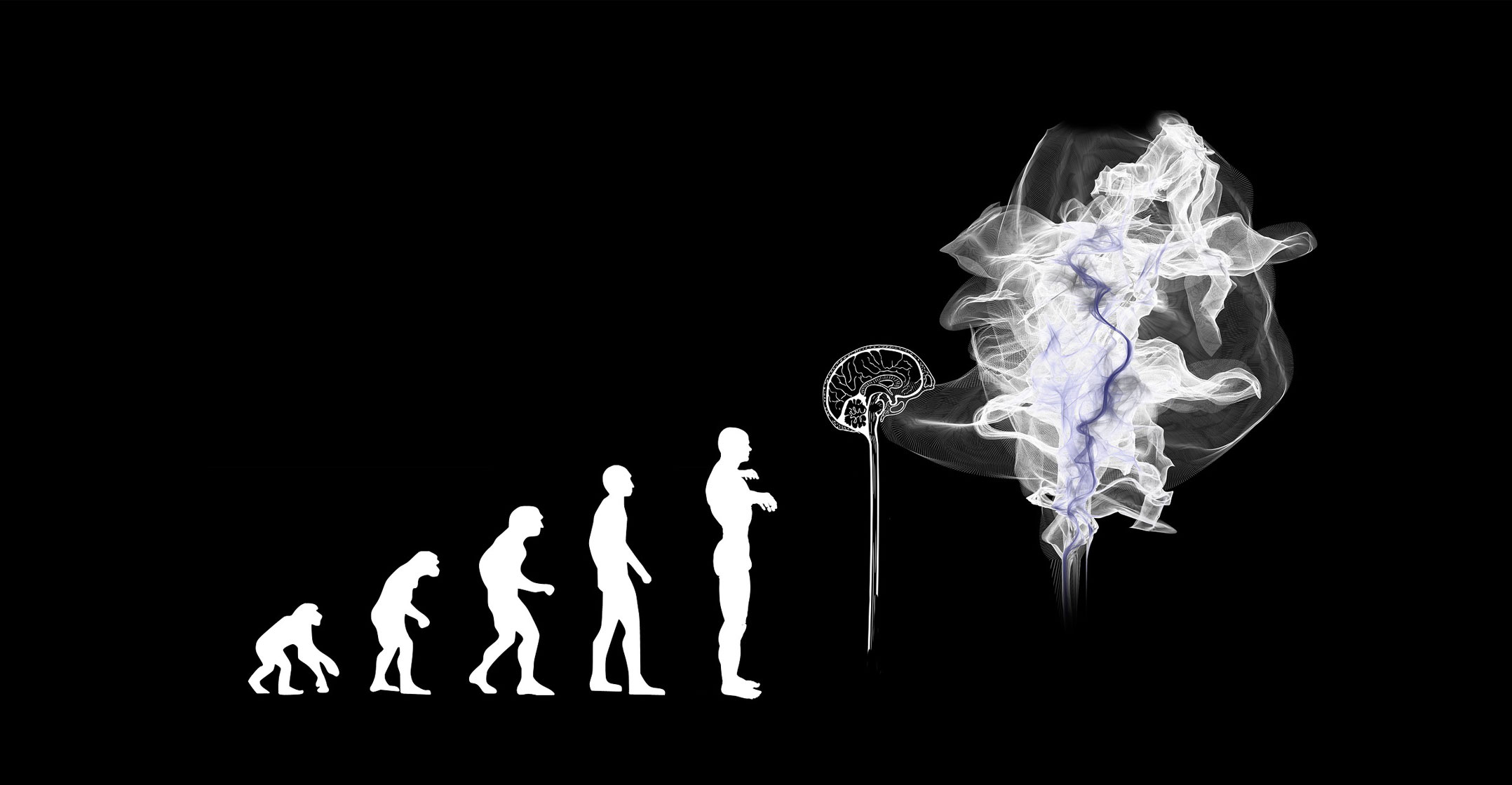
    Immortality has been a topic of discussion since the legend of the Holy Grail. Some people have gone as far as cryogenic freezing after death in the hope that one day science will have advanced enough to resurrect them. Others believe the route to immortality lies in the digital realm.

    The theory that humans can be digitised and live on within the digital confines of a computer-based existence has been the subject of debate. But until recently, no one had taken the idea much beyond research and discussion.

    Last year, a consortium of unidentified individuals launched Virternity with the stated goal of a digital life for all. A world that would be owned not by any government but by the people.

    The biggest question is whether it is even possible for a human, or any living being for that matter, to be digitised in the first place

    This digital world, Virternity said, would remove the physical constraints upon us and the planet and usher in a completely new plane of existence. Then, without any warning, Virternity disappeared.

    Although the future evolution of humanity is much discussed and conjectured, perhaps nobody had taken it quite as seriously as this. In its infancy, Virternity seemed concerned with the launch of a new digital currency, the virie, by which it proposed to fund its endeavour.

    An interesting point is that the creators of Virternity were so concerned with ensuring public ownership that very few people even know or knew who exactly they were. Their reasoning was apparently to prevent governments and their agencies subsuming their interests with corporate and other less desirable aims. But being anonymous also has its advantages if a company wants to slide into the shadows, as appears to have been the case.

    Dichotomy

    The biggest question is whether it is even possible for a human, or any living being for that matter, to be digitised in the first place. Therein lies the dichotomy of two different schools of thought.

    Those who would align themselves with thinkers such as Gilles Deleuze and Henri Bergson believe there is a higher consciousness above the physical persona or body. Such philosophical thinking rests on the idea of duality — the mind and the body are not the same. Therefore, it would seem impossible to digitise a human. How can one put the essence of a human spirit into a computer, almost like a genie into a bottle?

    Conversely, several prominent scientists and neurosurgeons contend that the physical is all there is. If one can copy the brain of a human in digital form, then the rest is easy. Copying the brain is not particularly simple, though. Proposals include making thousands of micro-thin slices of a brain and copying the neural network revealed.

    To do this, a machine would need to be constructed that can make these slices, and then a willing volunteer would need to be found. These would be physical slices from a brain preserved before death. That’s the drawback. In fact, a startup, Nectome, has been proposing to do just that and preserve your brain until the day it can be digitised.

    The person, or at least the contents of their brain, would ultimately be transferred to a computer, and thus remain alive or perhaps be reborn. Experiments have been undertaken on scanning a mouse brain but the breakthrough of digitising the entirety of even a mouse brain has not happened.

    Moving on from the mechanics that might digitise us all, what would await humanity with digital immortality? Virternity said that great scientists and artists could pursue their careers for centuries, and we need never say goodbye to our loved ones.

    Virternity would have been the first wholly immersive endeavour to replace the physical reality with a purely digital one

    The demand for planetary resources would be severely reduced to only that needed for the physical humans left on the planet and of course the computers holding the rest of us. The planet itself might return to a more natural state. We ourselves would be free of famine, pestilence and disease, and could pursue whatever life we wanted, until the end of time.

    Perhaps these sound like admirable goals, a utopian dream. But if humans were unleashed into this apparently digital world, would we take advantage of the freedom or simply go about reproducing a digital hell on earth? And what about digital viruses and other distortions of the virtual world itself?

    We already have the experience of worlds such as Second Life, a highly successful virtual world.

    Wholly immersive

    Virternity would have been the first wholly immersive endeavour to replace the physical reality with a purely digital one. Once digital, there probably would be no going back.

    Other important questions arise. How much computing power would we need to run Virternity? Where would it be based and how can we ensure that nobody will simply just switch us all off or press delete?

    Perhaps these questions never will be answered, or at least not by Virternity as it was. Perhaps a new Phoenix will arise from their ashes or someone else will take up the torch. But for now it seems we will have to wait for a digital utopia to become a fact rather than fiction.The Conversation

    • Written by David Evans Bailey, PhD researcher in virtual reality, Auckland University of Technology
    • This article is republished from The Conversation under a Creative Commons licence


    top Virternity
    Subscribe to TechCentral Subscribe to TechCentral
    Share. Facebook Twitter LinkedIn WhatsApp Telegram Email Copy Link
    Previous ArticleFrance strikes deal with US on taxing tech giants
    Next Article Huawei smartphone sales grow strongly, despite US sanctions

    Related Posts

    18GW in unplanned breakdowns cripple Eskom

    2 November 2021

    Nersa kicks the Karpowership can down the road

    13 September 2021

    If you think South African load shedding is bad, try Zimbabwe’s

    13 September 2021
    Company News
    Beat the summer heat with Samsung's WindFree air conditioners

    Beat the summer heat with Samsung’s WindFree air conditioners

    5 December 2025
    AI is not a technology problem - iqbusiness

    AI is not a technology problem – iqbusiness

    5 December 2025
    Telcos are sitting on a data gold mine - but few know what do with it - Phillip du Plessis

    Telcos are sitting on a data gold mine – but few know what do with it

    4 December 2025
    Opinion
    Your data, your hardware: the DIY AI revolution is coming - Duncan McLeod

    Your data, your hardware: the DIY AI revolution is coming

    20 November 2025
    Zero Carbon Charge founder Joubert Roux

    The energy revolution South Africa can’t afford to miss

    20 November 2025
    It's time for a new approach to government IT spend in South Africa - Richard Firth

    It’s time for a new approach to government IT spend in South Africa

    19 November 2025

    Subscribe to Updates

    Get the best South African technology news and analysis delivered to your e-mail inbox every morning.

    Latest Posts
    Vula Medical named as South Africa's 2025 app of the year

    Vula Medical named as South Africa’s 2025 app of the year

    5 December 2025
    Beat the summer heat with Samsung's WindFree air conditioners

    Beat the summer heat with Samsung’s WindFree air conditioners

    5 December 2025
    Netflix, Warner Bros talks raise fresh headaches for MultiChoice

    Netflix, Warner Bros talks raise fresh headaches for MultiChoice

    5 December 2025
    Big Microsoft 365 price increases coming next year

    Big Microsoft price increases coming next year

    5 December 2025
    © 2009 - 2025 NewsCentral Media
    • Cookie policy (ZA)
    • TechCentral – privacy and Popia

    Type above and press Enter to search. Press Esc to cancel.

    Manage consent

    TechCentral uses cookies to enhance its offerings. Consenting to these technologies allows us to serve you better. Not consenting or withdrawing consent may adversely affect certain features and functions of the website.

    Functional Always active
    The technical storage or access is strictly necessary for the legitimate purpose of enabling the use of a specific service explicitly requested by the subscriber or user, or for the sole purpose of carrying out the transmission of a communication over an electronic communications network.
    Preferences
    The technical storage or access is necessary for the legitimate purpose of storing preferences that are not requested by the subscriber or user.
    Statistics
    The technical storage or access that is used exclusively for statistical purposes. The technical storage or access that is used exclusively for anonymous statistical purposes. Without a subpoena, voluntary compliance on the part of your Internet Service Provider, or additional records from a third party, information stored or retrieved for this purpose alone cannot usually be used to identify you.
    Marketing
    The technical storage or access is required to create user profiles to send advertising, or to track the user on a website or across several websites for similar marketing purposes.
    • Manage options
    • Manage services
    • Manage {vendor_count} vendors
    • Read more about these purposes
    View preferences
    • {title}
    • {title}
    • {title}