Close Menu
TechCentralTechCentral

    Subscribe to the newsletter

    Get the best South African technology news and analysis delivered to your e-mail inbox every morning.

    Facebook X (Twitter) YouTube LinkedIn
    WhatsApp Facebook X (Twitter) LinkedIn YouTube
    TechCentralTechCentral
    • News
      MultiChoice scraps annual DStv price hikes for 2026 - David Mignot

      MultiChoice scraps annual DStv price hike

      20 February 2026
      What Gen Z really thinks about the tech world it inherited - Tinashe Mazodze

      What Gen Z really thinks about the tech world it inherited

      20 February 2026
      Showmax 'can't continue' in its current form

      Showmax ‘can’t continue’ in its current form

      20 February 2026
      Free Market Foundation slams treasury's proposed gambling tax

      Free Market Foundation slams treasury’s proposed gambling tax

      20 February 2026
      South Africa's dynamic spectrum breakthrough - Paul Colmer

      South Africa’s dynamic spectrum breakthrough

      20 February 2026
    • World
      Prominent Southern African journalist targeted with Predator spyware

      Prominent Southern African journalist targeted with Predator spyware

      18 February 2026
      More drama in Warner Bros tug of war

      More drama in Warner Bros tug of war

      17 February 2026
      Russia bans WhatsApp

      Russia bans WhatsApp

      12 February 2026
      EU regulators take aim at WhatsApp

      EU regulators take aim at WhatsApp

      9 February 2026
      Musk hits brakes on Mars mission

      Musk hits brakes on Mars mission

      9 February 2026
    • In-depth
      How liberalisation is rewiring South Africa's power sector

      How liberalisation is rewiring South Africa’s power sector

      21 January 2026
      The top-performing South African tech shares of 2025

      The top-performing South African tech shares of 2025

      12 January 2026
      Digital authoritarianism grows as African states normalise internet blackouts

      Digital authoritarianism grows as African states normalise internet blackouts

      19 December 2025
      TechCentral's South African Newsmakers of 2025

      TechCentral’s South African Newsmakers of 2025

      18 December 2025
      Black Friday goes digital in South Africa as online spending surges to record high

      Black Friday goes digital in South Africa as online spending surges to record high

      4 December 2025
    • TCS
      Watts & Wheels S1E4: 'We drive an electric Uber'

      Watts & Wheels S1E4: ‘We drive an electric Uber’

      10 February 2026
      TCS+ | How Cloud On Demand is helping SA businesses succeed in the cloud - Xhenia Rhode, Dion Kalicharan

      TCS+ | Cloud On Demand and Consnet: inside a real-world AWS partner success story

      30 January 2026
      Watts & Wheels S1E4: 'We drive an electric Uber'

      Watts & Wheels S1E3: ‘BYD’s Corolla Cross challenger’

      30 January 2026
      Watts & Wheels S1E4: 'We drive an electric Uber'

      Watts & Wheels S1E2: ‘China attacks, BMW digs in, Toyota’s sublime supercar’

      23 January 2026

      TCS+ | Why cybersecurity is becoming a competitive advantage for SA businesses

      20 January 2026
    • Opinion
      A million reasons monopolies don't work - Duncan McLeod

      A million reasons monopolies don’t work

      10 February 2026
      The author, Business Leadership South Africa CEO Busi Mavuso

      Eskom unbundling U-turn threatens to undo hard-won electricity gains

      9 February 2026
      South Africa's skills advantage is being overlooked at home - Richard Firth

      South Africa’s skills advantage is being overlooked at home

      29 January 2026
      Why Elon Musk's Starlink is a 'hard no' for me - Songezo Zibi

      Why Elon Musk’s Starlink is a ‘hard no’ for me

      26 January 2026
      A million reasons monopolies don't work - Duncan McLeod

      South Africa’s new fibre broadband battle

      20 January 2026
    • Company Hubs
      • Africa Data Centres
      • AfriGIS
      • Altron Digital Business
      • Altron Document Solutions
      • Altron Group
      • Arctic Wolf
      • AvertITD
      • Braintree
      • CallMiner
      • CambriLearn
      • CYBER1 Solutions
      • Digicloud Africa
      • Digimune
      • Domains.co.za
      • ESET
      • Euphoria Telecom
      • Incredible Business
      • iONLINE
      • IQbusiness
      • Iris Network Systems
      • LSD Open
      • Mitel
      • NEC XON
      • Netstar
      • Network Platforms
      • Next DLP
      • Ovations
      • Paracon
      • Paratus
      • Q-KON
      • SevenC
      • SkyWire
      • Solid8 Technologies
      • Telit Cinterion
      • Tenable
      • Vertiv
      • Videri Digital
      • Vodacom Business
      • Wipro
      • Workday
      • XLink
    • Sections
      • AI and machine learning
      • Banking
      • Broadcasting and Media
      • Cloud services
      • Contact centres and CX
      • Cryptocurrencies
      • Education and skills
      • Electronics and hardware
      • Energy and sustainability
      • Enterprise software
      • Financial services
      • Information security
      • Internet and connectivity
      • Internet of Things
      • Investment
      • IT services
      • Lifestyle
      • Motoring
      • Public sector
      • Retail and e-commerce
      • Satellite communications
      • Science
      • SMEs and start-ups
      • Social media
      • Talent and leadership
      • Telecoms
    • Events
    • Advertise
    TechCentralTechCentral
    Home » Opinion » Duncan McLeod » Cwele leaves behind a policy mess at telecoms

    Cwele leaves behind a policy mess at telecoms

    By Duncan McLeod28 November 2018
    Twitter LinkedIn Facebook WhatsApp Email Telegram Copy Link
    News Alerts
    WhatsApp
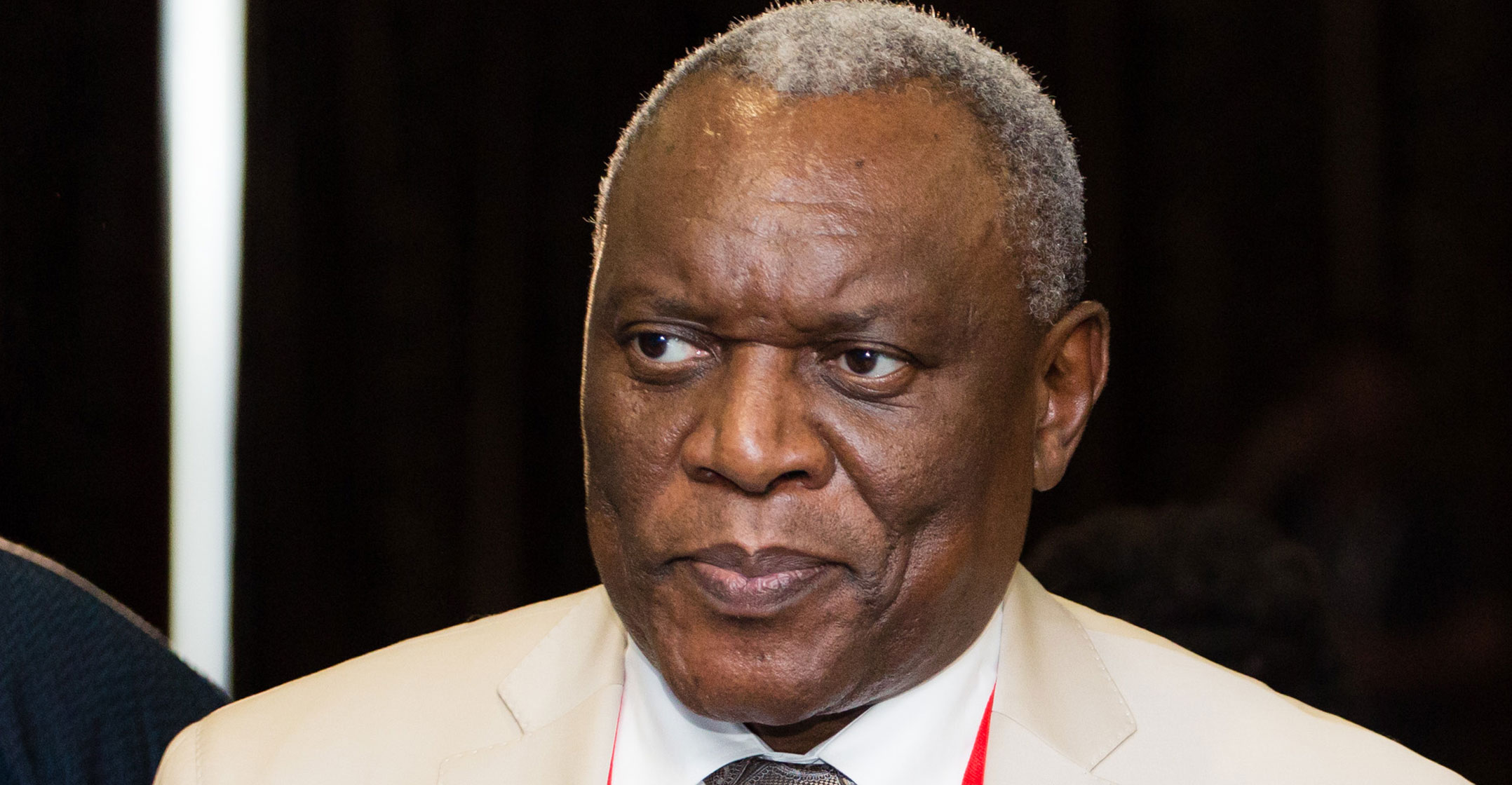
    Former telecoms minister Siyabonga Cwele. Image c/o ITU

    Newly appointed (tele)communications minister Stella Ndabeni-Abrahams has inherited a colossal mess from her predecessors in both communications and telecommunications & postal services.

    At communications, she must fast-track South Africa’s embarrassingly late digital migration programme, which was derailed by a long succession of mistakes by previous ministers.

    But her first intervention needs to be in the telecoms department, where the contentious Electronic Communications Amendment Bill — championed by the former minister, Siyabonga Cwele — must be scrapped, or withdrawn and heavily redrafted. If it isn’t, it will cause extensive and permanent damage to a critical growth industry. That’s something South Africa’s fragile economy can ill afford.

    The amendment bill is a rotten and ill-conceived piece of draft legislation that, if enacted, will chase away investment…

    Telecoms investment forms the bedrock of economic growth and job creation. Without it, South Africa has no hope of being competitive in the so-called fourth Industrial Revolution. Yet the amendment bill is a rotten and ill-conceived piece of draft legislation that, if enacted, will chase away investment and leave operators and consumers worse off.

    Many people tend to dismiss the criticism of the bill from Vodacom and MTN, the country’s two biggest mobile operators, saying the companies are simply trying to entrench their “duopoly” and keep prices high.

    Populist bandwagon

    While the two companies have arguably been too dominant in the past, it’s unwise to jump on the populist bandwagon and suggest they had it coming to them. In fact, if blame is to be apportioned for high data prices, we should be pointing fingers not at the operators but at the politicians who have made a mess of digital migration and spectrum allocation, among other things.

    As it currently stands, the amendment bill will chase away investment, leading to a degradation in the quality of broadband infrastructure in South Africa.

    It didn’t have to come to this.

    Ever since government published a white paper on telecoms policy reform several years ago, it has been warned again and again that the far-reaching proposals it was advancing were dangerous and unworkable.

    Stella Ndabeni-Abrahams … will she be a breath of fresh air?

    Cwele was (and probably still is) keen on the idea of not only starving commercial mobile operators of their lifeblood, namely access to new spectrum, but even taking away their existing spectrum assets (an arbitrary deprivation of property, and therefore unconstitutional) and handing all of this to a Woan, or wholesale open-access network.

    In other words, Cwele — who has now been shifted to home affairs — wanted government to interfere directly and substantially in a successful industry with an idea that has no proven track record anywhere in the world.

    Thankfully, intense pressure led to the former telecoms minister backing down, albeit only partially and apparently very reluctantly. Commercial operators will now get access to new spectrum, though there are worries that the Woan will be allocated far more than it needs, especially in the crucial 800MHz band, where there is space for multiple infrastructure competitors and where multiple licences should be issued.

    The view in government appears to be that the problem in South Africa’s mobile sector is that there is too much infrastructure competition

    The view in government appears to be that the problem in South Africa’s mobile sector is that there is too much infrastructure competition (and therefore duplication), and that companies should compete on services. But this misses the point that infrastructure competition is a good thing. If there’s a monopoly over infrastructure — as originally effectively proposed by Cwele’s department — network quality will deteriorate and innovation will suffer. Prices will also rise.

    But that’s not the only trouble with the amendment bill. It’s deeply problematic in many other respects, especially its requirement for operators to provide full access to their networks on a cost-orientated, wholesale and open-access basis. That amounts to gross policy overreach and undue interference in the economy.

    In a written submission on the bill ahead of a debate by MPs on the draft legislation on Thursday, Vodacom said the bill’s proposal that mobile operators should open their networks at cost-orientated rates is “practically the most intrusive intervention possible” and is “unprecedented in any other competitive sector” in South Africa and worldwide. Elsewhere, governments are trying to incentivise investment to promote mobile broadband, it said.

    Severe criticism

    MTN was even more severe in its criticism. It said government’s policy “U-turn” on infrastructure competition and its proposal to “impose blanket, cost-based open access on a competitive market” are “draconian and irrational”. It warned of a “devastating effect on the model that delivered R100-billion-plus of investment in the last decade”.

    “It will destroy the incentives that have delivered over 98% 3G coverage, a world-class 4G network (currently at 90% coverage, despite no LTE spectrum being released) and growing fibre investment, so jeopardising South Africa’s 5G future.”

    Whatever one might think of Vodacom and MTN — the two companies have plenty of detractors — it would be wrong to ignore their warnings. Together, they invest about R20-billion/year in South Africa alone. If there’s a risk that the amendment bill will undermine that investment, policy makers and MPs need to take heed.

    The author, Duncan McLeod, says politicians must resist populist urges in setting policy

    The temptation for many politicians will be to look for quick-fix solutions that attempt to bring down data prices — after all, the cost of mobile data has the potential to become a pivotal election issue. But they must resist populist urges for the sake of the country and the long-term development of the sector.

    The way to reduce prices, while ensuring South Africa continues to invest in the latest communications technologies, is by facilitating competition (including infrastructure competition), not by imposing draconian and untested policies on successful companies. That means awarding spectrum licences urgently and stripping away the mountain of red tape that is choking the sector, not adding to it like the bill proposes doing.

    Ndabeni-Abrahams has worked alongside Cwele for a long time as deputy minister, but she remains something of an enigma to the industry. One hopes she will start to fix the mess left behind by her predecessor and not double down on his mistakes. She needs to move decisively, and she needs to do it quickly.  — (c) 2018 NewsCentral Media

    • Duncan McLeod is editor of TechCentral
    Follow TechCentral on Google News Add TechCentral as your preferred source on Google


    Duncan McLeod Icasa Siyabonga Cwele Stella Ndabeni-Abrahams top
    WhatsApp YouTube
    Share. Facebook Twitter LinkedIn WhatsApp Telegram Email Copy Link
    Previous ArticleThe chip upstart beating Intel at its own game
    Next Article Telecoms bill runs into parliamentary hurdle

    Related Posts

    South Africa's dynamic spectrum breakthrough - Paul Colmer

    South Africa’s dynamic spectrum breakthrough

    20 February 2026
    Icasa gears up for South Africa's next big spectrum auction - Tshiamo Maluleka-Disemelo

    Icasa gears up for South Africa’s next big spectrum auction

    17 February 2026
    Starlink expands public advocacy campaign as it pushes for SA licence

    Starlink expands public advocacy campaign as it pushes for SA licence

    17 February 2026
    Company News
    Service is everyone's problem now - and that's exactly why the Atlassian Service Collection matters

    Service is everyone’s problem now – why the Atlassian Service Collection matters

    20 February 2026
    Customers have new expectations. Is your CX ready? 1Stream

    Customers have new expectations. Is your CX ready?

    19 February 2026
    South Africa's cybersecurity challenge is not a tool problem - Nicholas Applewhite, Trinexia South Africa

    South Africa’s cybersecurity challenge is not a tool problem

    19 February 2026
    Opinion
    A million reasons monopolies don't work - Duncan McLeod

    A million reasons monopolies don’t work

    10 February 2026
    The author, Business Leadership South Africa CEO Busi Mavuso

    Eskom unbundling U-turn threatens to undo hard-won electricity gains

    9 February 2026
    South Africa's skills advantage is being overlooked at home - Richard Firth

    South Africa’s skills advantage is being overlooked at home

    29 January 2026

    Subscribe to Updates

    Get the best South African technology news and analysis delivered to your e-mail inbox every morning.

    Latest Posts
    MultiChoice scraps annual DStv price hikes for 2026 - David Mignot

    MultiChoice scraps annual DStv price hike

    20 February 2026
    What Gen Z really thinks about the tech world it inherited - Tinashe Mazodze

    What Gen Z really thinks about the tech world it inherited

    20 February 2026
    Showmax 'can't continue' in its current form

    Showmax ‘can’t continue’ in its current form

    20 February 2026
    Free Market Foundation slams treasury's proposed gambling tax

    Free Market Foundation slams treasury’s proposed gambling tax

    20 February 2026
    © 2009 - 2026 NewsCentral Media
    • Cookie policy (ZA)
    • TechCentral – privacy and Popia

    Type above and press Enter to search. Press Esc to cancel.

    Manage consent

    TechCentral uses cookies to enhance its offerings. Consenting to these technologies allows us to serve you better. Not consenting or withdrawing consent may adversely affect certain features and functions of the website.

    Functional Always active
    The technical storage or access is strictly necessary for the legitimate purpose of enabling the use of a specific service explicitly requested by the subscriber or user, or for the sole purpose of carrying out the transmission of a communication over an electronic communications network.
    Preferences
    The technical storage or access is necessary for the legitimate purpose of storing preferences that are not requested by the subscriber or user.
    Statistics
    The technical storage or access that is used exclusively for statistical purposes. The technical storage or access that is used exclusively for anonymous statistical purposes. Without a subpoena, voluntary compliance on the part of your Internet Service Provider, or additional records from a third party, information stored or retrieved for this purpose alone cannot usually be used to identify you.
    Marketing
    The technical storage or access is required to create user profiles to send advertising, or to track the user on a website or across several websites for similar marketing purposes.
    • Manage options
    • Manage services
    • Manage {vendor_count} vendors
    • Read more about these purposes
    View preferences
    • {title}
    • {title}
    • {title}