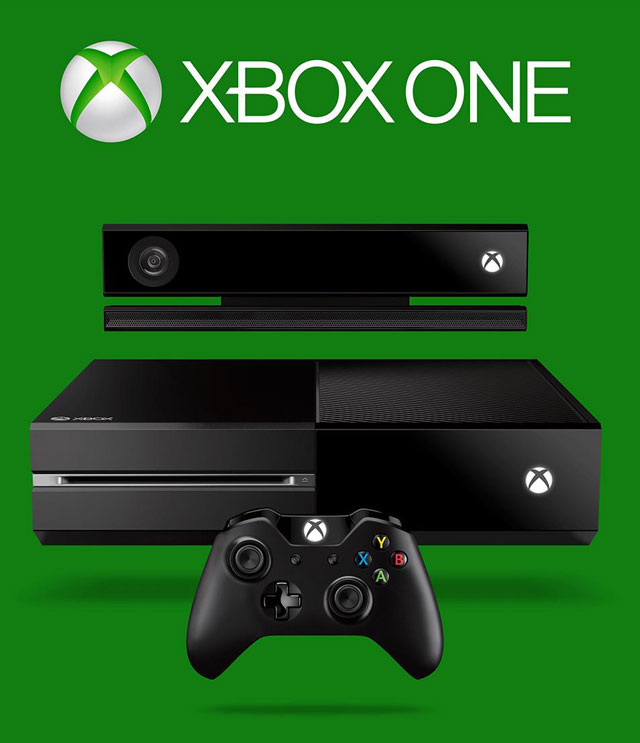
Close Menu
TechCentralTechCentral

    Subscribe to the newsletter

    Get the best South African technology news and analysis delivered to your e-mail inbox every morning.

    Facebook X (Twitter) YouTube LinkedIn
    WhatsApp Facebook X (Twitter) LinkedIn YouTube
    TechCentralTechCentral
    • News
      Only one in 10 township businesses sells online

      Only one in 10 township businesses sells online

      3 September 2026
      Rural South Africans should not have to trade competition for coverage - Paul Colmer

      Rural South Africans should not have to trade competition for coverage

      3 September 2026
      Adrian Gore sets an October date for Discovery's 'super bank'

      Adrian Gore sets an October date for Discovery’s ‘super bank’

      3 September 2026
      Discovery bolts AI-driven healthtech onto Vitality with Icario deal

      Discovery bolts AI-driven healthtech onto Vitality with Icario deal

      3 September 2026
      Uber retreats from key African markets

      Uber retreats from key African markets

      3 September 2026
    • World
      'This is not circular': Jensen Huang defends $3.5-billion MediaTek deal

      ‘This is not circular’: Jensen Huang defends $3.5-billion MediaTek deal

      2 September 2026
      AI-generated music banned from Australian charts

      AI-generated music banned from Australian charts

      26 August 2026
      Traders brace for a R4.5-trillion swing in Nvidia's value

      Traders brace for a R4.5-trillion swing in Nvidia’s value

      25 August 2026
      Russia building its own Starlink - and faster than expected - Vadym Skibitskyi

      Russia building its own Starlink – and faster than expected

      11 August 2026
      Meta AI will now tell parents if their teen is in crisis

      Meta AI will now tell parents if their teen is in crisis

      17 July 2026
    • In-depth
      Google DeepMind CEO Demis Hassabis. Image: John Sears

      The plan to stop AI from breaking the world

      16 July 2026
      The internet has a Strait of Hormuz problem

      The internet has a Strait of Hormuz problem

      15 July 2026
      AI boom sparks rally, frenzy and fear

      AI boom sparks rally, frenzy and fear

      11 June 2026
      Every plug-in hybrid on sale in South Africa, ranked by price - Lamborghini Temerario

      Every plug-in hybrid on sale in South Africa, ranked by price

      7 June 2026
      What Wi-Fi 8 will mean for wireless networks

      What Wi-Fi 8 will mean for wireless networks

      1 June 2026
    • TCS
      Winstone Jordaan on building a national EV charging network

      Winstone Jordaan on building a national EV charging network

      2 September 2026
      Watts & Wheels S1E8: 'Tesla lands in Africa, just not here'

      Watts & Wheels S1E8: ‘Tesla lands in Africa, just not here’

      24 August 2026
      TCS | Herotel CEO Van Zyl Botha on beating Starlink to South Africa

      TCS | Herotel CEO Van Zyl Botha on beating Starlink to South Africa

      14 August 2026
      Meet the CIO | Discovery's Derek Wilcocks on AI, guardrails and growth

      Meet the CIO | Derek Wilcocks on how AI personalised Vitality

      13 August 2026
      TCS | Money just became native to the internet - Steven Boykey Sidley

      TCS | Money just became native to the internet – Steven Boykey Sidley

      12 August 2026
    • Opinion
      The fragile joint in the Capitec machine - Pambos Soteriades

      The R197-billion market the banks can’t reach

      25 August 2026
      South African tech's compounding debt problem - Jannie van Zyl

      Management consulting as we know it is over

      21 August 2026
      South African tech's compounding debt problem - Jannie van Zyl

      The most dangerous customer is the quiet one

      10 August 2026
      South African tech's compounding debt problem - Jannie van Zyl

      South African tech’s compounding debt problem

      29 July 2026
      The fragile joint in the Capitec machine - Pambos Soteriades

      Best network, worst vibes: the puzzle of SA telecoms

      20 July 2026
    • Company Hubs
      • 1Stream
      • Africa Data Centres
      • AfriGIS
      • Altron Digital Business
      • Altron Document Solutions
      • Altron Group
      • Arctic Wolf
      • Ascent Technology
      • AvertITD
      • BBD
      • Braintree
      • CallMiner
      • CambriLearn
      • CM.com
      • Contactable
      • CYBER1 Solutions
      • Digicloud Africa
      • Digimune
      • Domains.co.za
      • ESET
      • Euphoria Telecom
      • HOSTAFRICA
      • Incredible Business
      • iONLINE
      • IQbusiness
      • Iris Network Systems
      • Kaspersky
      • LSD Open
      • Mitel
      • NEC XON
      • Netstar
      • Network Platforms
      • Next DLP
      • Ovations
      • Paracon
      • Paratus
      • Q-KON
      • SevenC
      • SkyWire
      • Solid8 Technologies
      • Telit Cinterion
      • Telviva
      • Tenable
      • Vertiv
      • Videri Digital
      • Vodacom Business
      • Vox
      • Wipro
      • Workday
      • XLink
    • Sections
      • AI and machine learning
      • Banking
      • Broadcasting and Media
      • Cloud services
      • Contact centres and CX
      • Cryptocurrencies
      • Education and skills
      • Electronics and hardware
      • Energy and sustainability
      • Enterprise software
      • Financial services
      • HealthTech
      • Information security
      • Internet and connectivity
      • Internet of Things
      • Investment
      • IT services
      • Lifestyle
      • Policy and regulation
      • Public sector
      • Retail and e-commerce
      • Satellite communications
      • Science
      • SMEs and start-ups
      • Social media
      • Talent and leadership
      • Telecoms
      • Watts & Wheels
    • Events
    • Advertise
    TechCentralTechCentral
    Home » Editor's pick » E3 leaves Microsoft punch-drunk

    E3 leaves Microsoft punch-drunk

    By Lance Harris14 June 2013
    Twitter LinkedIn Facebook WhatsApp Email Telegram Copy Link
    News Alerts
    WhatsApp
    Can Microsoft Ryse again after a poor E3 showing?
    Can Microsoft Ryse again after a poor E3 showing?

    A couple of weeks ago, I wrote that Microsoft’s arrogance didn’t yet compare to the hubris of Sony with the PlayStation 3 circa 2006 and that the Xbox One reveal in May wasn’t its giant enemy crab moment. Nope, it wasn’t, but after the Electronic Entertainment Expo (E3) this week in Los Angeles, the company’s Xbox division is neck-deep in PR blunders as big as Sony’s outsized crustaceans.

    At the expo, where the gaming industry gathers every year to present the hottest games and hardware, Microsoft and Sony set out the roadmaps for the release of their competing next-generation consoles later this year. After gamers gave a hostile reception to the Xbox One announcement briefing and its focus on the future of TV, Microsoft vowed that E3 would be all about games for the gamer.

    The software giant entered the E3 coliseum bloodied by weeks of bad PR about draconian digital rights management (DRM) policies planned for the upcoming Xbox One — particularly new restrictions on the lending, renting and resale of physical media games. Here, it needed to impress early adopters with compelling games as well as try to soothe their fears about DRM.

    In its conference, Microsoft came out swinging with a selection of games that seemed impressive at first glance. But then it dropped the bombshell — a hefty US$499 retail price for the Xbox One in a market where new gaming consoles such as the Nintendo Wii-U and PlayStation Vita are already struggling in the face of competition from tablets and smartphones.

    The bad news has piled on since — a continued lack of clarity about DRM; a very limited global roll-out of the console (only 21 countries will get it this year and South Africa isn’t one of them); and a bizarre hard-line stance on regional locking of content. What’s more, Microsoft has deliberately obfuscated answers to key questions such as whether it will use IP-blocking to prevent importers in countries outside launch territories from buying its product. It’s almost as if the company has already given up on the fight everywhere outside the US, UK and Canada.

    Fleeing from the press
    Ahead of the event, trouble was already brewing for Redmond. A day or two before E3, news started circulating that Microsoft had cancelled one-on-one interviews with many key gaming journos as well as a media roundtable. It was generally thought that Microsoft wanted to avoid the hard questions about used games, online requirements, TV and the power of its hardware.

    As it turns out, limiting face time with the press was one of the few smart things Microsoft has done since it announced the Xbox One. In the few interviews granted, Xbox honchos opened their mouths mostly to change feet. The content and delivery of their responses to legitimate concerns about the platform were supercilious, condescending and out of touch.
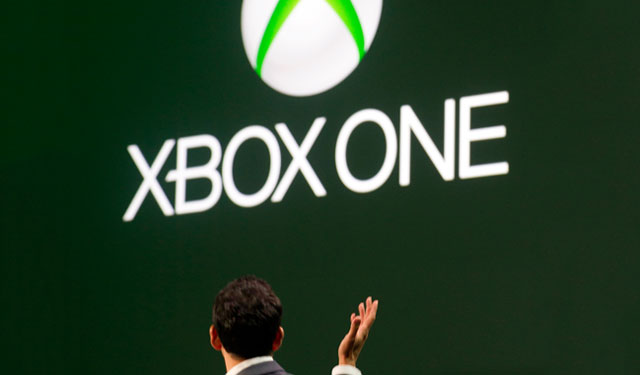
    Now what?
    Now what?

    Don’t have a good broadband connection? Be grateful that you can still buy an Xbox 360, you peasant. Should Microsoft care what customers think about its product? No, because this is not a sprint, it’s a marathon.  Also, it is customers who are uneducated and scared of change, not Microsoft who has complex terms and restrictions it is communicating in an unclear and dishonest manner.

    Did Microsoft bring the games as promised? Yes and no. There are promising exclusive titles in there — like Remedy’s television series and game, Quantum Break, yet another Halo, and Insomnaic’s colourful shooter Sunset Overdrive, but we’ll probably be waiting a year or more to play them. And the most appealing “exclusive” game — Titanfall from Call of Duty creators Infinity Ward — will also be on the Xbox 360 and PC when it launches mid-2014.

    Of the launch window exclusives, Forza 5 looks decent, but not groundbreaking, Dead Rising 3 loses the goofy humour of its predecessors, and the return of the beloved Killer Instinct franchise comes with the drawback of a potentially obnoxious free-to-play charging model.

    Ryse, which has been in the works at Crysis developer Crytek for seven years, sounds like an expensive flop. Ditto Crimson Dragon, which, like Ryse, started out development as an Xbox 360 game. And smaller games like Project Spark and D4 received such offhand treatment that it’s hard to say what they will be like. There is simply no good reason to buy an Xbox One yet, considering its price tag and drawbacks.

    The haymaker
    A few hours after the Microsoft presser, Sony took the stage to present its launch plans for the PlayStation 4. Most of the press conference was pedestrian, focusing on games we’d seen before, but towards the end of the show Sony staggered Microsoft with a haymaker that was beautiful to watch.

    With two PowerPoint slides — one detailing a $399 price point, another promising no new DRM or used games restrictions — Sony hit the most vulnerable parts of Microsoft’s strategy. Amid the excitement, no one seemed to notice that the games Sony presented were mostly lacklustre or not exclusive to its platform. (To be fair, Microsoft has already announced most its line-up for the next year, while Sony has said little about what we can expect from its own studios beyond the PS4 launch window.)

    Sony is writing the narrative for the next skirmish of the console war, and it has cast itself as the hero championing the consumer, the games developer from the one-man indie operation upwards, and the gamer. Reality is more complex, of course. Sony is just claiming the easy marketing win Microsoft handed to it.

    Sony knows all too well that the issues of used games and licensing physical media will go away as digital downloads take over in the next decade, making it a silly fight to pick with gamers. And it’s not like Sony is really doing anything truly radical for consumer rights like discouraging publishers from using DRM protections of their own.

    fsfd
    Sony revealed the PlayStation 4 hardware at E3

    But the following can be said about the Sony PlayStation that is no longer true of Microsoft Xbox. It might not be a charity, but at least Sony is thinking about the world from the perspective of its customers.

    Where Xbox’s best brains have all left — Robbie Bach, J Allard, Peter Moore — Sony’s strategists are on top of their game. And Sony knows there’s more to the world than America — heck, it seems even we will see the PS4 later this year when it’s launched. Perhaps most importantly, Sony has a clearer sense of its purpose and heritage as a gaming company than it has had for years.

    In many respects, Sony and Microsoft have reversed the positions they held in the PlayStation 3 and Xbox 360 generation. Just like the PlayStation 3, the Xbox One is less a product designed for people who play and develop games than a Trojan horse for the technologies a corporation wants to sell them.

    Controlling the future
    The PS3 was about controlling the future of physical media with Blu-ray; Microsoft hopes to use the Xbox One to carve out more market share and reassert its relevance as a consumer company in a post-PC world. The Xbox One is about pushing stuff that no one really asked for on their televisions, like Azure and Bing and Skype and the Kinect motion-sensing camera.

    Probably at least partially due to the Kinect camera and HDMI-in port shipped with every Xbox One, the machine is more expensive and yet marginally less powerful as a games machine than the PlayStation 4. Microsoft wants to use it to compete with everyone — Sony, Google, Apple, Amazon, Valve — and the result is a muddled message and a compromised console.

    Killzone Shadow Fall will be the big launch title for the PS4:

    Sure, Microsoft is not going to exit the gaming market any time soon, particularly given its current dominance in North America. It has enormous goodwill among developers and publishers who made a lot of money from the Xbox 360, meaning it won’t lack for Xbox One content. And it could still change course about the most unpopular elements of the Xbox One as it has about Windows 8. But it had potential to do so much better with the Xbox One than it will after the early fumbles.

    The final takeaway from E3? Neither Sony nor Microsoft has really given any good reason to buy their new consoles this year. The PS3 has a crackerjack set of exclusives for this year — games like Gran Turismo 6, Beyond: Two Souls, The Puppeteer and The Last of Us look more interesting than most of the content for the new consoles.

    Even the best-looking multiplatform games for the PS4 and Xbox One — Assassin’s Creed 4, Watch Dogs, Call of Duty: Ghost and so on — will be available for the PS3 and 360. For now, the most entertaining part of the next generation is watching a fight where one of the contestants is repeatedly punching itself in the face.  — (c) 2013 NewsCentral Media

    • Read more: Why did Microsoft do it?

    Follow TechCentral on Google News Add TechCentral as your preferred source on Google


    Microsoft PlayStation 4 Sony Xbox One
    WhatsApp YouTube
    Share. Facebook Twitter LinkedIn WhatsApp Telegram Email Copy Link
    Previous ArticleCyber attack downs ANC website
    Next Article Telkom in sweeping antitrust settlement

    Related Posts

    Nvidia's biggest customers are becoming its biggest threat - Jensen Huang

    Nvidia’s best customers are becoming its biggest threat

    30 August 2026
    We changed offices. Our internet didn't get the memo - Vox ISP

    We changed offices. Our internet didn’t get the memo

    26 August 2026
    Copilot is ready. Is your data? Ascent Technology - Microsoft Copilot

    Copilot is ready. Is your data?

    25 August 2026
    Company News
    How to build a security operations centre that actually works - Kaspersky

    How to build a security operations centre that actually works

    3 September 2026
    Paratus Uganda first to market with Starlink service

    Paratus Uganda first to market with Starlink service

    2 September 2026
    Solid8 brings AlgoSec Horizon to Southern Africa - Simone Santana

    Solid8 brings AlgoSec Horizon to Southern Africa

    1 September 2026
    Opinion
    The fragile joint in the Capitec machine - Pambos Soteriades

    The R197-billion market the banks can’t reach

    25 August 2026
    South African tech's compounding debt problem - Jannie van Zyl

    Management consulting as we know it is over

    21 August 2026
    South African tech's compounding debt problem - Jannie van Zyl

    The most dangerous customer is the quiet one

    10 August 2026

    Subscribe to Updates

    Get the best South African technology news and analysis delivered to your e-mail inbox every morning.

    Latest Posts
    Only one in 10 township businesses sells online

    Only one in 10 township businesses sells online

    3 September 2026
    Rural South Africans should not have to trade competition for coverage - Paul Colmer

    Rural South Africans should not have to trade competition for coverage

    3 September 2026
    Adrian Gore sets an October date for Discovery's 'super bank'

    Adrian Gore sets an October date for Discovery’s ‘super bank’

    3 September 2026
    How to build a security operations centre that actually works - Kaspersky

    How to build a security operations centre that actually works

    3 September 2026
    © 2009 - 2026 NewsCentral Media
    Built and maintained by Chronon
    • Cookie policy (ZA)
    • TechCentral – privacy and Popia

    Type above and press Enter to search. Press Esc to cancel.

    Manage consent

    TechCentral uses cookies to enhance its offerings. Consenting to these technologies allows us to serve you better. Not consenting or withdrawing consent may adversely affect certain features and functions of the website.

    Functional Always active
    The technical storage or access is strictly necessary for the legitimate purpose of enabling the use of a specific service explicitly requested by the subscriber or user, or for the sole purpose of carrying out the transmission of a communication over an electronic communications network.
    Preferences
    The technical storage or access is necessary for the legitimate purpose of storing preferences that are not requested by the subscriber or user.
    Statistics
    The technical storage or access that is used exclusively for statistical purposes. The technical storage or access that is used exclusively for anonymous statistical purposes. Without a subpoena, voluntary compliance on the part of your Internet Service Provider, or additional records from a third party, information stored or retrieved for this purpose alone cannot usually be used to identify you.
    Marketing
    The technical storage or access is required to create user profiles to send advertising, or to track the user on a website or across several websites for similar marketing purposes.
    • Manage options
    • Manage services
    • Manage {vendor_count} vendors
    • Read more about these purposes
    View preferences
    • {title}
    • {title}
    • {title}