Close Menu
TechCentralTechCentral

    Subscribe to the newsletter

    Get the best South African technology news and analysis delivered to your e-mail inbox every morning.

    Facebook X (Twitter) YouTube LinkedIn
    WhatsApp Facebook X (Twitter) LinkedIn YouTube
    TechCentralTechCentral
    • News
      Africa's most popular phones have a tracking problem

      Africa’s most popular phones have a tracking problem

      24 July 2026
      Vodacom taps UJ, AWS to build its AI talent pipeline - Vodacom Group CEO Shameel Joosub

      Vodacom taps UJ, AWS to build its AI talent pipeline

      24 July 2026
      Intel is back in the game - Intel CEO Lip-Bu Tan. Laure Andrillon/Reuters

      Intel is back in the game

      24 July 2026
      Fat bonuses at Telkom despite group missing own targets - Serame Taukobong

      Fat bonuses at Telkom despite group missing own targets

      23 July 2026
      Massive changes coming to Amazon Prime Video - Jeff Bezos

      Massive changes coming to Amazon Prime Video

      23 July 2026
    • World
      Meta AI will now tell parents if their teen is in crisis

      Meta AI will now tell parents if their teen is in crisis

      17 July 2026
      IBM shares crash 25% as AI upends software spending - Arvind Krishna

      IBM shares crash 25% as AI upends software spending

      15 July 2026
      Jony Ive's first OpenAI device: an AI smart speaker - Jony Ive and Sam Altman

      Jony Ive’s first OpenAI device: an AI smart speaker

      15 July 2026
      Stripe, Advent in talks to buy PayPal for $53-billion

      Stripe, Advent in talks to buy PayPal for $53-billion

      15 July 2026
      Memory crisis sends smartphone market into steep decline

      Memory crisis sends smartphone market into steep decline

      13 July 2026
    • In-depth
      The plan to stop AI from breaking the world - Google DeepMind CEO Demis Hassabis. Image: John Sears

      The plan to stop AI from breaking the world

      16 July 2026
      The internet has a Strait of Hormuz problem

      The internet has a Strait of Hormuz problem

      15 July 2026
      AI boom sparks rally, frenzy and fear

      AI boom sparks rally, frenzy and fear

      11 June 2026
      Every plug-in hybrid on sale in South Africa, ranked by price - Lamborghini Temerario

      Every plug-in hybrid on sale in South Africa, ranked by price

      7 June 2026
      What Wi-Fi 8 will mean for wireless networks

      What Wi-Fi 8 will mean for wireless networks

      1 June 2026
    • TCS
      TCS | How Optasia lends billions to people banks can't see - Salvador Anglada

      TCS | How Optasia lends billions to people banks can’t see

      23 July 2026
      The rands-and-cents case for electric trucks - William Kelly Watts & Wheels with Wills

      The rands-and-cents case for electric trucks

      20 July 2026
      Watts & Wheels S1E7: 'Ferrari's EV breaks the internet'

      Watts & Wheels S1E7: ‘Ferrari’s EV breaks the internet’

      8 July 2026
      TCS | Pick n Pay's Enrico Ferigolli on Penny, the AI that shops for you

      TCS | Pick n Pay’s Enrico Ferigolli on Penny, the AI that shops for you

      2 July 2026
      TCS+ | How Tracker is turning vehicle data into business strategy - Silvia Schollenberger

      TCS+ | How Tracker is turning vehicle data into business strategy

      1 July 2026
    • Opinion
      Selling vapour is corporate suicide in slow motion - Jannie van Zyl

      Selling vapour is corporate suicide in slow motion

      16 July 2026
      Brazil's online gambling crackdown is a lesson for South Africa

      How Amazon outmanoeuvred Starlink in South Africa

      15 July 2026
      The Popia problem with agentic AI - Herman Haasbroek

      The Popia problem with agentic AI

      14 July 2026
      The author, Fanie van Rooyen

      South Africa can still catch the AI wave – here’s how

      7 July 2026
      The author, Fanie van Rooyen

      The AI utopia South Africa can’t afford

      1 July 2026
    • Company Hubs
      • 1Stream
      • Africa Data Centres
      • AfriGIS
      • Altron Digital Business
      • Altron Document Solutions
      • Altron Group
      • Arctic Wolf
      • Ascent Technology
      • AvertITD
      • BBD
      • Braintree
      • CallMiner
      • CambriLearn
      • CM Telecom
      • Contactable
      • CYBER1 Solutions
      • Digicloud Africa
      • Digimune
      • Domains.co.za
      • ESET
      • Euphoria Telecom
      • HOSTAFRICA
      • Incredible Business
      • iONLINE
      • IQbusiness
      • Iris Network Systems
      • Kaspersky
      • LSD Open
      • Mitel
      • NEC XON
      • Netstar
      • Network Platforms
      • Next DLP
      • Ovations
      • Paracon
      • Paratus
      • Q-KON
      • SevenC
      • SkyWire
      • Solid8 Technologies
      • Telit Cinterion
      • Telviva
      • Tenable
      • Vertiv
      • Videri Digital
      • Vodacom Business
      • Vox
      • Wipro
      • Workday
      • XLink
    • Sections
      • AI and machine learning
      • Banking
      • Broadcasting and Media
      • Cloud services
      • Contact centres and CX
      • Cryptocurrencies
      • Education and skills
      • Electronics and hardware
      • Energy and sustainability
      • Enterprise software
      • Financial services
      • HealthTech
      • Information security
      • Internet and connectivity
      • Internet of Things
      • Investment
      • IT services
      • Lifestyle
      • Policy and regulation
      • Public sector
      • Retail and e-commerce
      • Satellite communications
      • Science
      • SMEs and start-ups
      • Social media
      • Talent and leadership
      • Telecoms
      • Watts & Wheels
    • Events
    • Advertise
    TechCentralTechCentral
    Home » Sections » Energy and sustainability » Electricity generation by farmers? ‘No,’ says state

    Electricity generation by farmers? ‘No,’ says state

    By Antoinette Slabbert20 December 2018
    Twitter LinkedIn Facebook WhatsApp Email Telegram Copy Link
    News Alerts
    WhatsApp

    The failure of energy regulator Nersa to register small-scale solar photovoltaic installations in Eskom electricity distribution areas is costing farmers dearly, says Ig du Plessis, director of power consultancy Sonfin.

    It is also stifling the development of an industry that could provide economic growth and employment, he says.

    Du Plessis says Nersa stopped such registrations in February to develop a registration process and has just published a consultation paper about a once-off R200 fee that would be required from each applicant.

    This all adds up to an astronomical amount which in the end will result in the loss of job opportunities on the farm

    These installations are exempted from the extensive process involved in obtaining generation licences from Nersa, but are required to register in terms of regulations published in November 2017. More than a year later, Nersa is still not geared to do such registrations.

    The registration process is merely administrative, and Nersa has in fact acknowledged that the applications it has received are fully compliant. It nevertheless refused to do provisional registrations pending the finalisation of the registration regime.

    In the meantime, the applicants, mostly irrigation farmers, are foregoing monthly savings in energy charges of up to R100 000 (on a 1MW system), while paying interest on multimillion-rand loans for the development cost of their photovoltaic systems.

    Timeline might change

    Members of the public have until 16 January to comment on the method Nersa used to calculate the R200 registration fee, or to propose a different method. Nersa estimated at the November meeting of its electricity sub-committee that the process would be finalised by March next year but acknowledged that the timeline might change if it receives many public submissions.

    Wary of the risk of further delays Sonfin’s attorneys have written to Nersa to tender the R200 registration fee on behalf of the company’s clients and requesting preliminary registration.

    In the meantime, similar installations are increasingly being registered in municipal electricity distribution areas such as Cape Town, which means farmers are being discriminated against, says Du Plessis. These registration processes are managed by the municipalities themselves as holders of the distribution licences.
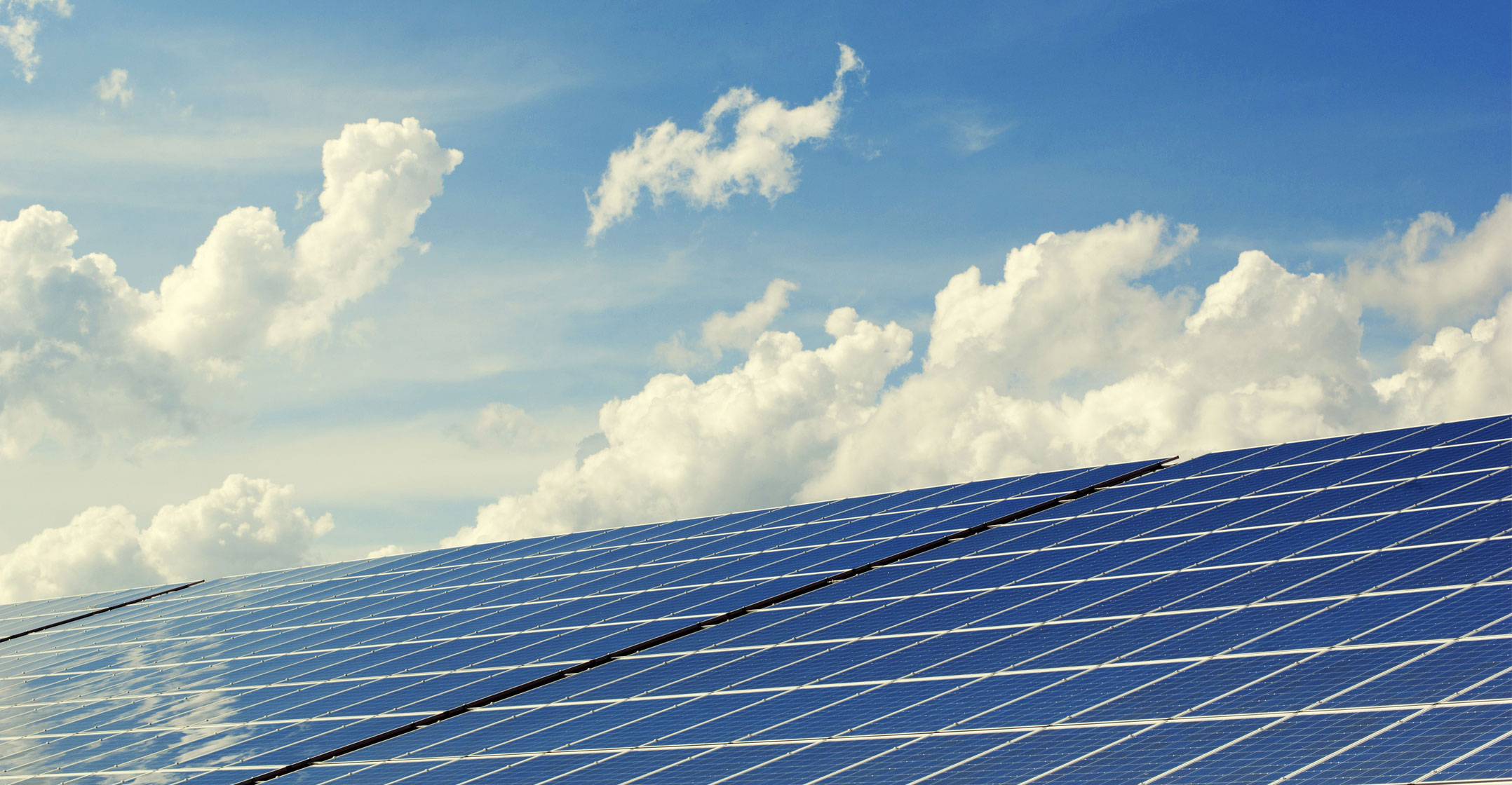
    In November, AgriSA wrote to energy minister Jeff Radebe to request his intervention to speed things up. AgriSA cites the example of a specific “fully BBBEE farm” that has already invested R9-million in its 300kW solar photovoltaic plant, without gaining any benefit from its investment. “This investment is now going to waste every day they are not able to generate electricity.”

    According to AgriSA, the farm borrowed the R9-million from the bank at an interest rate of 10%. Throughout the delay of eight months and counting, the farm must continue repaying the loan as well as an estimated R400 000 to Eskom in electricity charges, which the system was meant to save it over the period.

    “This all adds up to an astronomical amount which in the end will result in the loss of job opportunities on the farm,” AgriSA told Radebe.

    Farmers who irrigate their land, using a lot of electricity during seasonal operations, would in particular benefit from these systems

    It attached a letter from Nersa to Eskom dated 28 August stating that its application complies with all Nersa’s registration requirements.

    Du Plessis explains that Eskom will not connect any photovoltaic system to its grid unless it is registered with Nersa.

    Once registered, the electricity consumer can enter into a new agreement with Eskom to do “net-metering” and banking on the Eskom network. This means it will be credited for the electricity it generates and feeds into the Eskom system, with this credit offset against the cost of the electricity it later extracts from the system.

    Du Plessis says the systems are designed to save customers up to 90% of their energy charges (the units they use) and they are left with the obligation to pay the balance as well as the fixed charges.

    Farmers who irrigate their land, using a lot of electricity during seasonal operations, would in particular benefit from these systems, he says.

    Eskom requirements

    Nersa requires applicants to show that the proposed photovoltaic system complies with Eskom’s requirements and that Eskom is prepared to connect it to the grid. To get to that point, applicants must fork out substantial amounts of money, including around R1-million for the connection point, which will connect their PV system to the network. Du Plessis says it could take up to two years before an applicant will reach the point that the connection work can begin; they must first receive a cost estimate letter, followed by a budget quote (cost estimate).

    If the process runs smoothly, the owner should be able to recover their investment through savings on their electricity bill in less than seven years.

    The current delays are, however, impacting negatively on the business case, Du Plessis says.

    Sonfin currently has four clients who have collectively invested almost R50-million, where the construction of the PV systems is complete but Eskom refuses to connect them without proof of Nersa registration.

    It has another five clients who have committed at least R1-million to ensure Eskom compliance, but cannot proceed without certainty from Nersa.

    Once Nersa gets its process sorted out, the industry will grow exponentially, says Du Plessis. He says Sonfin is aware of more than 100 applications that have already been submitted to Eskom and are at different stages of processing.

    • This article was originally published on Moneyweb and is used here with permission

    Follow TechCentral on Google News Add TechCentral as your preferred source on Google


    Eskom Ig du Plessis Nersa Sonfin top
    WhatsApp YouTube
    Share. Facebook Twitter LinkedIn WhatsApp Telegram Email Copy Link
    Previous ArticleWatch | Ex-Nasa engineer builds ‘glitter-bomb trap’ to shame package thieves
    Next Article Computicket, Shoprite face prosecution for ‘anticompetitive conduct’

    Related Posts

    Load shedding is over - and that's exposing a new energy crisis

    Load shedding is over – and that’s exposing a new energy crisis

    23 July 2026
    Eskom quashes Koeberg contamination reports

    Eskom scrambles to quash Koeberg contamination reports

    19 July 2026
    Eskom appoints group executive for renewable energy - Rivoningo Mnisi

    Eskom Green cleared for take-off

    16 July 2026
    Company News
    Why Europe is turning to South Africa for cross-border innovation - BBD Software

    Why Europe is turning to South Africa for cross-border innovation

    24 July 2026
    Green dashboards, stalled change: the CIO's blind spot - Change Logic Marchant van den Heever

    Green dashboards, stalled change: the CIO’s blind spot

    24 July 2026
    Why Africa's cloud needs more than one path - Africa Data Centres

    Why Africa’s cloud needs more than one path

    23 July 2026
    Opinion
    Selling vapour is corporate suicide in slow motion - Jannie van Zyl

    Selling vapour is corporate suicide in slow motion

    16 July 2026
    Brazil's online gambling crackdown is a lesson for South Africa

    How Amazon outmanoeuvred Starlink in South Africa

    15 July 2026
    The Popia problem with agentic AI - Herman Haasbroek

    The Popia problem with agentic AI

    14 July 2026

    Subscribe to Updates

    Get the best South African technology news and analysis delivered to your e-mail inbox every morning.

    Latest Posts
    Africa's most popular phones have a tracking problem

    Africa’s most popular phones have a tracking problem

    24 July 2026
    Vodacom taps UJ, AWS to build its AI talent pipeline - Vodacom Group CEO Shameel Joosub

    Vodacom taps UJ, AWS to build its AI talent pipeline

    24 July 2026
    Intel is back in the game - Intel CEO Lip-Bu Tan. Laure Andrillon/Reuters

    Intel is back in the game

    24 July 2026
    Why Europe is turning to South Africa for cross-border innovation - BBD Software

    Why Europe is turning to South Africa for cross-border innovation

    24 July 2026
    © 2009 - 2026 NewsCentral Media
    Built and maintained by Chronon
    • Cookie policy (ZA)
    • TechCentral – privacy and Popia

    Type above and press Enter to search. Press Esc to cancel.

    Manage consent

    TechCentral uses cookies to enhance its offerings. Consenting to these technologies allows us to serve you better. Not consenting or withdrawing consent may adversely affect certain features and functions of the website.

    Functional Always active
    The technical storage or access is strictly necessary for the legitimate purpose of enabling the use of a specific service explicitly requested by the subscriber or user, or for the sole purpose of carrying out the transmission of a communication over an electronic communications network.
    Preferences
    The technical storage or access is necessary for the legitimate purpose of storing preferences that are not requested by the subscriber or user.
    Statistics
    The technical storage or access that is used exclusively for statistical purposes. The technical storage or access that is used exclusively for anonymous statistical purposes. Without a subpoena, voluntary compliance on the part of your Internet Service Provider, or additional records from a third party, information stored or retrieved for this purpose alone cannot usually be used to identify you.
    Marketing
    The technical storage or access is required to create user profiles to send advertising, or to track the user on a website or across several websites for similar marketing purposes.
    • Manage options
    • Manage services
    • Manage {vendor_count} vendors
    • Read more about these purposes
    View preferences
    • {title}
    • {title}
    • {title}