Close Menu
TechCentralTechCentral

    Subscribe to the newsletter

    Get the best South African technology news and analysis delivered to your e-mail inbox every morning.

    Facebook X (Twitter) YouTube LinkedIn
    WhatsApp Facebook X (Twitter) LinkedIn YouTube
    TechCentralTechCentral
    • News
      Toyota SA CEO: NEV inaction will cost South Africa its motoring industry - Andrew Kirby

      Toyota SA CEO: NEV inaction will cost South Africa its motoring industry

      12 February 2026
      Censorship-resistant internet from space - Spacecoin

      Censorship-resistant internet from space

      12 February 2026
      Chip shortage hits PCs as AI swallows the world's memory supply

      Chip shortage hits PCs as AI swallows the world’s memory supply

      12 February 2026
      Altron jumps after company flags strong earnings growth

      Altron jumps after company flags strong earnings growth

      12 February 2026
      Here comes the next wave of Chinese AI models

      Here comes the next wave of Chinese AI models

      12 February 2026
    • World
      Russia bans WhatsApp

      Russia bans WhatsApp

      12 February 2026
      EU regulators take aim at WhatsApp

      EU regulators take aim at WhatsApp

      9 February 2026
      Musk hits brakes on Mars mission

      Musk hits brakes on Mars mission

      9 February 2026
      Crypto firm accidentally sends R700-billion in bitcoin to its users

      Crypto firm accidentally sends R700-billion in bitcoin to its users

      8 February 2026
      AI won't replace software, says Nvidia CEO amid market rout - Jensen Huang

      AI won’t replace software, says Nvidia CEO amid market rout

      4 February 2026
    • In-depth
      How liberalisation is rewiring South Africa's power sector

      How liberalisation is rewiring South Africa’s power sector

      21 January 2026
      The top-performing South African tech shares of 2025

      The top-performing South African tech shares of 2025

      12 January 2026
      Digital authoritarianism grows as African states normalise internet blackouts

      Digital authoritarianism grows as African states normalise internet blackouts

      19 December 2025
      TechCentral's South African Newsmakers of 2025

      TechCentral’s South African Newsmakers of 2025

      18 December 2025
      Black Friday goes digital in South Africa as online spending surges to record high

      Black Friday goes digital in South Africa as online spending surges to record high

      4 December 2025
    • TCS
      Watts & Wheels S1E4: 'We drive an electric Uber'

      Watts & Wheels S1E4: ‘We drive an electric Uber’

      10 February 2026
      TCS+ | How Cloud On Demand is helping SA businesses succeed in the cloud - Xhenia Rhode, Dion Kalicharan

      TCS+ | Cloud On Demand and Consnet: inside a real-world AWS partner success story

      30 January 2026
      Watts & Wheels S1E4: 'We drive an electric Uber'

      Watts & Wheels S1E3: ‘BYD’s Corolla Cross challenger’

      30 January 2026
      Watts & Wheels S1E4: 'We drive an electric Uber'

      Watts & Wheels S1E2: ‘China attacks, BMW digs in, Toyota’s sublime supercar’

      23 January 2026

      TCS+ | Why cybersecurity is becoming a competitive advantage for SA businesses

      20 January 2026
    • Opinion
      South Africa's skills advantage is being overlooked at home - Richard Firth

      South Africa’s skills advantage is being overlooked at home

      29 January 2026
      Why Elon Musk's Starlink is a 'hard no' for me - Songezo Zibi

      Why Elon Musk’s Starlink is a ‘hard no’ for me

      26 January 2026
      South Africa's new fibre broadband battle - Duncan McLeod

      South Africa’s new fibre broadband battle

      20 January 2026
      AI moves from pilots to production in South African companies - Nazia Pillay SAP

      AI moves from pilots to production in South African companies

      20 January 2026
      South Africa's new fibre broadband battle - Duncan McLeod

      ANC’s attack on Solly Malatsi shows how BEE dogma trumps economic reality

      14 December 2025
    • Company Hubs
      • Africa Data Centres
      • AfriGIS
      • Altron Digital Business
      • Altron Document Solutions
      • Altron Group
      • Arctic Wolf
      • AvertITD
      • Braintree
      • CallMiner
      • CambriLearn
      • CYBER1 Solutions
      • Digicloud Africa
      • Digimune
      • Domains.co.za
      • ESET
      • Euphoria Telecom
      • Incredible Business
      • iONLINE
      • IQbusiness
      • Iris Network Systems
      • LSD Open
      • Mitel
      • NEC XON
      • Netstar
      • Network Platforms
      • Next DLP
      • Ovations
      • Paracon
      • Paratus
      • Q-KON
      • SevenC
      • SkyWire
      • Solid8 Technologies
      • Telit Cinterion
      • Tenable
      • Vertiv
      • Videri Digital
      • Vodacom Business
      • Wipro
      • Workday
      • XLink
    • Sections
      • AI and machine learning
      • Banking
      • Broadcasting and Media
      • Cloud services
      • Contact centres and CX
      • Cryptocurrencies
      • Education and skills
      • Electronics and hardware
      • Energy and sustainability
      • Enterprise software
      • Financial services
      • Information security
      • Internet and connectivity
      • Internet of Things
      • Investment
      • IT services
      • Lifestyle
      • Motoring
      • Public sector
      • Retail and e-commerce
      • Satellite communications
      • Science
      • SMEs and start-ups
      • Social media
      • Talent and leadership
      • Telecoms
    • Events
    • Advertise
    TechCentralTechCentral
    Home » Sections » Energy and sustainability » Eskom wants your solar system registered – but what does that actually mean?

    Eskom wants your solar system registered – but what does that actually mean?

    Households and businesses are now required to register all rooftop solar power installations. Here's what it means in practice.
    By Nkosinathi Ndlovu15 July 2025
    Twitter LinkedIn Facebook WhatsApp Email Telegram Copy Link
    News Alerts
    WhatsApp

    Eskom wants your solar system registered - but what does that actually mean?Households and businesses are now required to register all rooftop solar power installations. But electricity users have been swimming in a sea of confusion about the new rules, when they come into force and what penalties are involved.

    The new requirements form part of Eskom’s small-scale embedded generation (SSEG) programme. TechCentral asked the utility for clarity regarding the new rules and what they mean for consumers and businesses.

    In this Q&A, Eskom clarifies why it believes that registering such systems is crucial, outlining the regulatory requirements from its regulator, Nersa, the benefits for homeowners and businesses, and the associated costs.

    TechCentral: Why is it important for Eskom that homes and businesses register their systems?

    Eskom: It is important to Eskom that homes and businesses register their SSEG installations because it is a regulatory requirement of Nersa’s. To be clear, this is not an Eskom requirement, it is a Nersa requirement. Across the world, with more and more solar PV systems pushing energy onto the grid, the safety of the grid has become a critical focus for both performance and the safety of the employees working on it. Nersa’s requirements are similar to many countries across the world.

    In accordance with the Nersa regulations, all SSEG installations that operate alongside Eskom’s supply, even those not exporting power back into the grid, must be registered with Eskom (up to 100kW) or Nersa. As a licensed electricity distributor, Eskom ensures that all connections both load and generation comply with the required codes, standards and guidelines set by Nersa.

    Read: Jaltech backs solar firm Wetility in R500-million capital raise

    Adhering to these technical standards is crucial for maintaining network security, ensuring the safety of field personnel and protecting the public. Municipal-supplied customers are required to engage with their local network providers for the applicable process and requirements.

    TechCentral: What benefits do homes and business get for registering their systems?

    Eskom: By registering their SSEGs with Eskom, customers will meet regulatory requirements for a safe connection, potentially earn by selling surplus energy to Eskom via net billing, store excess power within the utility framework and reduce their electricity costs through self-generated power.
    TechCentral: What benefits to you get for paying these registration fees if you are a business?

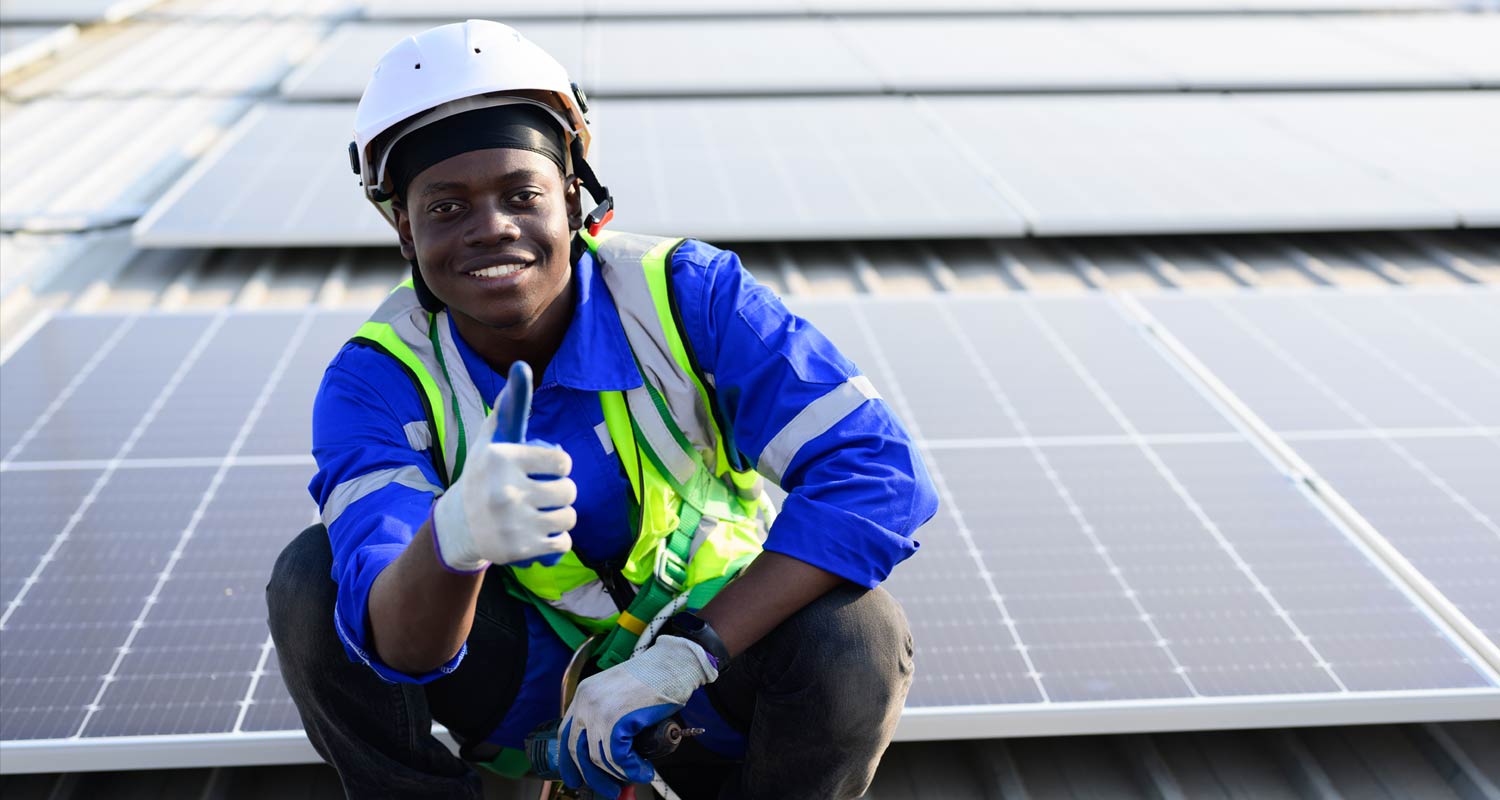
    Eskom: To comply with the Nersa regulations, there are once-off costs associated with solar PV installations. It is important to distinguish between the requirements for residential households and businesses. For residential installations up to 50kVA (a normal household is typically 16kVA), Eskom is offering free registration services and providing a complimentary smart bidirectional meter. This initiative, which began in March 2023 and runs until March 2026, helps reduce upfront costs by about R9 000 for households installing systems of 50kVA or less.

    Business installations generally start at 50kVA and above and are subject to different regulatory and technical requirements. Where we have seen reported in the media of compliance costs in the range of tens of thousands of rand, it is in relation to an engineer or technologist sign off on the “embedded generator installation” report to ensure the safe integration of the system, as requested in the Nersa guidelines.

    In addition, all customers coming forward receive a 12-month grace period to get their system compliant.

    Read: Africa’s solar boom: 42% growth expected in 2025

    TechCentral: What factors were considered in determining how much to charge for registration fees?

    Eskom: Eskom focused on the most cost-effective solution for customers to meet the Nersa regulations.

    TechCentral: How were these factors weighed up against issues of high fees lowering the return on investment and even acting as a deterrent for those wanting to install SSEG systems?

    Eskom: A critical aspect of compliance is ensuring that installations meet safety standards. There is ongoing debate regarding who is authorised to sign off on these installations, which in turn has an impact on the cost to the consumer. Eskom and municipalities are awaiting a formal decision from South African Bureau of Standards on this matter. In the meantime, Eskom continues to apply the NRS097-2 SSEG standard to ensure safe integration of customer systems into the national electricity grid, in line with Nersa guidelines. Eskom is monitoring this situation closely.  – © 2025 NewsCentral Media

    Get breaking news from TechCentral on WhatsApp. Sign up here.

    Don’t miss:

    Why AI could soon be managing your home solar system


    Eskom Eskom SSEG
    WhatsApp YouTube Follow on Google News Add as preferred source on Google
    Share. Facebook Twitter LinkedIn WhatsApp Telegram Email Copy Link
    Previous ArticleBeyond bandwidth: FNOs should prioritise customer service
    Next Article MTN empowerment investors see ‘modest’ return as Zakhele Futhi winds up

    Related Posts

    Nersa blunder triggers sharper electricity tariff increases

    Nersa blunder triggers sharper electricity tariff increases

    9 February 2026
    Eskom unbundling U-turn threatens to undo hard-won electricity gains

    Eskom unbundling U-turn threatens to undo hard-won electricity gains

    9 February 2026
    Eskom lifts load reduction for 140 000 customers

    Eskom lifts load reduction for 140 000 customers

    8 February 2026
    Company News
    How NEC XON tackled identity risk for a major telco - Michael de Neuilly Rice

    How NEC XON tackled identity risk for a major telco

    11 February 2026

    Why Acer is the strategic choice for South Africa’s educational future

    11 February 2026
    Fyndae is building Africa's human verification layer for community security and collaboration

    Fyndae wants to turn lost-item recovery into Africa’s trust infrastructure

    11 February 2026
    Opinion
    South Africa's skills advantage is being overlooked at home - Richard Firth

    South Africa’s skills advantage is being overlooked at home

    29 January 2026
    Why Elon Musk's Starlink is a 'hard no' for me - Songezo Zibi

    Why Elon Musk’s Starlink is a ‘hard no’ for me

    26 January 2026
    South Africa's new fibre broadband battle - Duncan McLeod

    South Africa’s new fibre broadband battle

    20 January 2026

    Subscribe to Updates

    Get the best South African technology news and analysis delivered to your e-mail inbox every morning.

    Latest Posts
    Toyota SA CEO: NEV inaction will cost South Africa its motoring industry - Andrew Kirby

    Toyota SA CEO: NEV inaction will cost South Africa its motoring industry

    12 February 2026
    Russia bans WhatsApp

    Russia bans WhatsApp

    12 February 2026
    Censorship-resistant internet from space - Spacecoin

    Censorship-resistant internet from space

    12 February 2026
    Chip shortage hits PCs as AI swallows the world's memory supply

    Chip shortage hits PCs as AI swallows the world’s memory supply

    12 February 2026
    © 2009 - 2026 NewsCentral Media
    • Cookie policy (ZA)
    • TechCentral – privacy and Popia

    Type above and press Enter to search. Press Esc to cancel.

    Manage consent

    TechCentral uses cookies to enhance its offerings. Consenting to these technologies allows us to serve you better. Not consenting or withdrawing consent may adversely affect certain features and functions of the website.

    Functional Always active
    The technical storage or access is strictly necessary for the legitimate purpose of enabling the use of a specific service explicitly requested by the subscriber or user, or for the sole purpose of carrying out the transmission of a communication over an electronic communications network.
    Preferences
    The technical storage or access is necessary for the legitimate purpose of storing preferences that are not requested by the subscriber or user.
    Statistics
    The technical storage or access that is used exclusively for statistical purposes. The technical storage or access that is used exclusively for anonymous statistical purposes. Without a subpoena, voluntary compliance on the part of your Internet Service Provider, or additional records from a third party, information stored or retrieved for this purpose alone cannot usually be used to identify you.
    Marketing
    The technical storage or access is required to create user profiles to send advertising, or to track the user on a website or across several websites for similar marketing purposes.
    • Manage options
    • Manage services
    • Manage {vendor_count} vendors
    • Read more about these purposes
    View preferences
    • {title}
    • {title}
    • {title}