Close Menu
TechCentralTechCentral

    Subscribe to the newsletter

    Get the best South African technology news and analysis delivered to your e-mail inbox every morning.

    Facebook X (Twitter) YouTube LinkedIn
    WhatsApp Facebook X (Twitter) LinkedIn YouTube
    TechCentralTechCentral
    • News
      MultiChoice scraps annual DStv price hikes for 2026 - David Mignot

      MultiChoice scraps annual DStv price hike

      20 February 2026
      What Gen Z really thinks about the tech world it inherited - Tinashe Mazodze

      What Gen Z really thinks about the tech world it inherited

      20 February 2026
      Showmax 'can't continue' in its current form

      Showmax ‘can’t continue’ in its current form

      20 February 2026
      Free Market Foundation slams treasury's proposed gambling tax

      Free Market Foundation slams treasury’s proposed gambling tax

      20 February 2026
      South Africa's dynamic spectrum breakthrough - Paul Colmer

      South Africa’s dynamic spectrum breakthrough

      20 February 2026
    • World
      Prominent Southern African journalist targeted with Predator spyware

      Prominent Southern African journalist targeted with Predator spyware

      18 February 2026
      More drama in Warner Bros tug of war

      More drama in Warner Bros tug of war

      17 February 2026
      Russia bans WhatsApp

      Russia bans WhatsApp

      12 February 2026
      EU regulators take aim at WhatsApp

      EU regulators take aim at WhatsApp

      9 February 2026
      Musk hits brakes on Mars mission

      Musk hits brakes on Mars mission

      9 February 2026
    • In-depth
      How liberalisation is rewiring South Africa's power sector

      How liberalisation is rewiring South Africa’s power sector

      21 January 2026
      The top-performing South African tech shares of 2025

      The top-performing South African tech shares of 2025

      12 January 2026
      Digital authoritarianism grows as African states normalise internet blackouts

      Digital authoritarianism grows as African states normalise internet blackouts

      19 December 2025
      TechCentral's South African Newsmakers of 2025

      TechCentral’s South African Newsmakers of 2025

      18 December 2025
      Black Friday goes digital in South Africa as online spending surges to record high

      Black Friday goes digital in South Africa as online spending surges to record high

      4 December 2025
    • TCS
      Watts & Wheels S1E4: 'We drive an electric Uber'

      Watts & Wheels S1E4: ‘We drive an electric Uber’

      10 February 2026
      TCS+ | How Cloud On Demand is helping SA businesses succeed in the cloud - Xhenia Rhode, Dion Kalicharan

      TCS+ | Cloud On Demand and Consnet: inside a real-world AWS partner success story

      30 January 2026
      Watts & Wheels S1E4: 'We drive an electric Uber'

      Watts & Wheels S1E3: ‘BYD’s Corolla Cross challenger’

      30 January 2026
      Watts & Wheels S1E4: 'We drive an electric Uber'

      Watts & Wheels S1E2: ‘China attacks, BMW digs in, Toyota’s sublime supercar’

      23 January 2026

      TCS+ | Why cybersecurity is becoming a competitive advantage for SA businesses

      20 January 2026
    • Opinion
      A million reasons monopolies don't work - Duncan McLeod

      A million reasons monopolies don’t work

      10 February 2026
      The author, Business Leadership South Africa CEO Busi Mavuso

      Eskom unbundling U-turn threatens to undo hard-won electricity gains

      9 February 2026
      South Africa's skills advantage is being overlooked at home - Richard Firth

      South Africa’s skills advantage is being overlooked at home

      29 January 2026
      Why Elon Musk's Starlink is a 'hard no' for me - Songezo Zibi

      Why Elon Musk’s Starlink is a ‘hard no’ for me

      26 January 2026
      A million reasons monopolies don't work - Duncan McLeod

      South Africa’s new fibre broadband battle

      20 January 2026
    • Company Hubs
      • Africa Data Centres
      • AfriGIS
      • Altron Digital Business
      • Altron Document Solutions
      • Altron Group
      • Arctic Wolf
      • AvertITD
      • Braintree
      • CallMiner
      • CambriLearn
      • CYBER1 Solutions
      • Digicloud Africa
      • Digimune
      • Domains.co.za
      • ESET
      • Euphoria Telecom
      • Incredible Business
      • iONLINE
      • IQbusiness
      • Iris Network Systems
      • LSD Open
      • Mitel
      • NEC XON
      • Netstar
      • Network Platforms
      • Next DLP
      • Ovations
      • Paracon
      • Paratus
      • Q-KON
      • SevenC
      • SkyWire
      • Solid8 Technologies
      • Telit Cinterion
      • Tenable
      • Vertiv
      • Videri Digital
      • Vodacom Business
      • Wipro
      • Workday
      • XLink
    • Sections
      • AI and machine learning
      • Banking
      • Broadcasting and Media
      • Cloud services
      • Contact centres and CX
      • Cryptocurrencies
      • Education and skills
      • Electronics and hardware
      • Energy and sustainability
      • Enterprise software
      • Financial services
      • Information security
      • Internet and connectivity
      • Internet of Things
      • Investment
      • IT services
      • Lifestyle
      • Motoring
      • Public sector
      • Retail and e-commerce
      • Satellite communications
      • Science
      • SMEs and start-ups
      • Social media
      • Talent and leadership
      • Telecoms
    • Events
    • Advertise
    TechCentralTechCentral
    Home » In-depth » Facebook’s Free Basics is no charity

    Facebook’s Free Basics is no charity

    By The Conversation11 January 2016
    Twitter LinkedIn Facebook WhatsApp Email Telegram Copy Link
    News Alerts
    WhatsApp
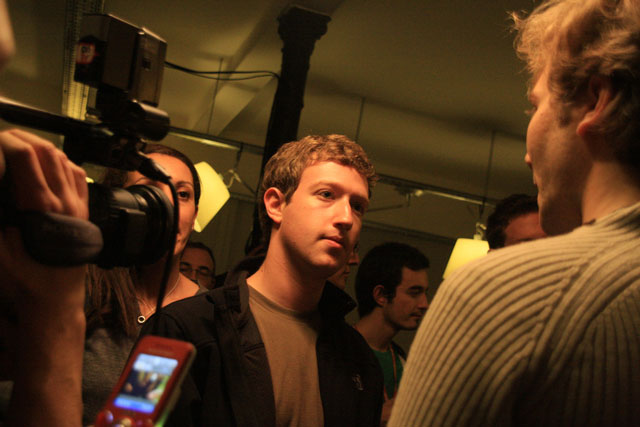
    Facebook CEO Mark Zuckerberg
    Facebook CEO Mark Zuckerberg

    Who could possibly be against free Internet access? This is the question that Mark Zuckerberg asks in a piece for the Times of India in which he claims Facebook’s Free Basics service “protects net neutrality”.

    Free Basics is the rebranded Internet.org, a Facebook operation where, by partnering with local telecoms firms in the developing world (including South Africa, through Cell C), the firm offers free Internet access – limited only to Facebook, Facebook-owned WhatsApp, and a few other carefully selected sites and services.

    Zuckerberg was responding to the strong backlash that Free Basics has faced in India, where the country’s Telecom Regulatory Authority recently pulled the plug on the operation while it debates whether telecoms operators should be allowed to offer different services with variable pricing, or whether a principle of network neutrality should be enforced.

    Not content to await the regulator’s verdict, Facebook has come out swinging. It has paid for billboards, full-page newspaper ads and television ad campaigns to try to enforce the point that Free Basics is good for India’s poor. In his Times piece, Zuckerberg goes one step further — implying that those opposing Free Basics are actually hurting the poor.

    He argued that “for every 10 people connected to the Internet, roughly one is lifted out of poverty”. Without reference to supporting research, he instead offers an anecdote about a farmer called Ganesh from Maharashtra state. Ganesh apparently used Free Basics to double his crop yields and get a better deal for his crops.

    Zuckerberg stressed that “critics of free basic Internet services should remember that everything we’re doing is about serving people like Ganesh. This isn’t about Facebook’s commercial interests”.

    Zuckerberg’s indignation illustrates either how little he understands about the Internet, or that he’s willing to say anything to anyone listening.

    This is not a charity
    First, despite his claims to the contrary, Free Basics clearly runs against the idea of net neutrality by offering access to some sites and not others. While the service is claimed to be open to any app, site or service, in practice the submission guidelines forbid JavaScript, video, large images and Flash, and effectively rule out secure connections using https. This means that Free Basics is able to read all data passing through the platform. The same rules don’t apply to Facebook itself, ensuring that it can be the only social network, and (Facebook-owned) WhatsApp the only messaging service, provided.

    Yes, Free Basics is free. But how appealing is a taxi company that will only take you to certain destinations, or an electricity provider that will only power certain home electrical devices? There are alternative models: in Bangladesh, Grameenphone gives users free data after they watch an advert. In some African countries, users get free data after buying a handset.

    Second, there is no convincing body of peer-reviewed evidence to suggest Internet access lifts the world’s poor out of poverty. Should we really base telecommunications policy on an anecdote and a self-serving industry report sponsored by the firm that stands to benefit? India has a literacy rate of 74%, of which a much smaller proportion speak English well enough to read it. Literate English speakers and readers tend not to be India’s poorest citizens, yet it’s English that is the predominant language on the Web. This suggests Free Basics isn’t suited for India’s poorest, who’d be better served by more voice and video services.

    Third, the claim that Free Basics isn’t in Facebook’s commercial interest is the most outrageous. In much the same way that Nestlé offered free baby formula in the 1970s as development assistance to low-income countries — leaving nursing mothers unable to produce sufficient milk themselves — Free Basics is likely to impedes commercial alternatives.

    By offering free access, Free Basics disrupts the market, allowing Facebook to gain a monopoly that can benefit from the network effects of a growing user base. Sunil Abraham, executive director of the Centre for Internet and Society, in India, has aptly noted that expanding audience and consumer bases have long been as important as revenues for Internet firms. Against Facebook’s immensely deep pockets and established user-base, home-grown competitors are thwarted before they even begin.

    India will not always have low levels of Internet access. This is not the issue — in fact, Indian Internet penetration growth rates are relatively high. Instead, the company sees Free Basics as a means to establish a bridgehead into the country, establishing a monopoly before other firms move in.

    There is decades of research about how best to help farmers like Ganesh: access to good quality education, healthcare and water all could go a long way. But even if we see Internet access as one of the key needs to be met, why would we then offer a restricted version?

    In presenting Free Basics as an act of altruism, Zuckerberg tries to silence criticism. “Who could possibly be against this?”, he asks:

    What reason is there for denying people free access to vital services for communication, education, healthcare, employment, farming and women’s rights?

    That is the right question, but Free Basics is the wrong answer. Let’s call a spade a spade and see Free Basics as an important part of the business strategy of one of the world’s largest Internet corporations, rather than as a selfless act of charity.The Conversation

    • Mark Graham is associate professor, Oxford Internet Institute, University of Oxford
    • This article was originally published on The Conversation

    Follow TechCentral on Google News Add TechCentral as your preferred source on Google


    Cell C Facebook Facebook Free Basics Free Basics Mark Zuckerberg
    WhatsApp YouTube
    Share. Facebook Twitter LinkedIn WhatsApp Telegram Email Copy Link
    Previous ArticleEmbattled rand on shaky ground
    Next Article Around the world in 80 payments

    Related Posts

    Blu Label takes R5.2-billion Cell C hit, touts clean slate ahead

    Blu Label takes R5.2-billion Cell C hit, touts clean slate ahead

    19 February 2026
    Icasa gears up for South Africa's next big spectrum auction - Tshiamo Maluleka-Disemelo

    Icasa gears up for South Africa’s next big spectrum auction

    17 February 2026
    Blu Label lands energy trading licence from Nersa - Mark Levy

    Blu Label lands electricity trading licence from Nersa

    17 February 2026
    Company News
    Service is everyone's problem now - and that's exactly why the Atlassian Service Collection matters

    Service is everyone’s problem now – why the Atlassian Service Collection matters

    20 February 2026
    Customers have new expectations. Is your CX ready? 1Stream

    Customers have new expectations. Is your CX ready?

    19 February 2026
    South Africa's cybersecurity challenge is not a tool problem - Nicholas Applewhite, Trinexia South Africa

    South Africa’s cybersecurity challenge is not a tool problem

    19 February 2026
    Opinion
    A million reasons monopolies don't work - Duncan McLeod

    A million reasons monopolies don’t work

    10 February 2026
    The author, Business Leadership South Africa CEO Busi Mavuso

    Eskom unbundling U-turn threatens to undo hard-won electricity gains

    9 February 2026
    South Africa's skills advantage is being overlooked at home - Richard Firth

    South Africa’s skills advantage is being overlooked at home

    29 January 2026

    Subscribe to Updates

    Get the best South African technology news and analysis delivered to your e-mail inbox every morning.

    Latest Posts
    MultiChoice scraps annual DStv price hikes for 2026 - David Mignot

    MultiChoice scraps annual DStv price hike

    20 February 2026
    What Gen Z really thinks about the tech world it inherited - Tinashe Mazodze

    What Gen Z really thinks about the tech world it inherited

    20 February 2026
    Showmax 'can't continue' in its current form

    Showmax ‘can’t continue’ in its current form

    20 February 2026
    Free Market Foundation slams treasury's proposed gambling tax

    Free Market Foundation slams treasury’s proposed gambling tax

    20 February 2026
    © 2009 - 2026 NewsCentral Media
    • Cookie policy (ZA)
    • TechCentral – privacy and Popia

    Type above and press Enter to search. Press Esc to cancel.

    Manage consent

    TechCentral uses cookies to enhance its offerings. Consenting to these technologies allows us to serve you better. Not consenting or withdrawing consent may adversely affect certain features and functions of the website.

    Functional Always active
    The technical storage or access is strictly necessary for the legitimate purpose of enabling the use of a specific service explicitly requested by the subscriber or user, or for the sole purpose of carrying out the transmission of a communication over an electronic communications network.
    Preferences
    The technical storage or access is necessary for the legitimate purpose of storing preferences that are not requested by the subscriber or user.
    Statistics
    The technical storage or access that is used exclusively for statistical purposes. The technical storage or access that is used exclusively for anonymous statistical purposes. Without a subpoena, voluntary compliance on the part of your Internet Service Provider, or additional records from a third party, information stored or retrieved for this purpose alone cannot usually be used to identify you.
    Marketing
    The technical storage or access is required to create user profiles to send advertising, or to track the user on a website or across several websites for similar marketing purposes.
    • Manage options
    • Manage services
    • Manage {vendor_count} vendors
    • Read more about these purposes
    View preferences
    • {title}
    • {title}
    • {title}