
Close Menu
TechCentralTechCentral

    Subscribe to the newsletter

    Get the best South African technology news and analysis delivered to your e-mail inbox every morning.

    Facebook X (Twitter) YouTube LinkedIn
    WhatsApp Facebook X (Twitter) LinkedIn YouTube
    TechCentralTechCentral
    • News
      Morocco overtakes South Africa as Africa's top industrial power

      Morocco overtakes South Africa as Africa’s top industrial power

      29 June 2026
      Prosus CEO Bloisi's $100-million moonshot is slipping away - Fabricio Bloisi

      Prosus CEO Bloisi’s $100-million moonshot is slipping away

      29 June 2026
      Mastercard opens African cybersecurity hub - Michael Miebach

      Mastercard opens African cybersecurity hub

      29 June 2026
      Food delivery helps fire Prosus to 84% profit surge

      Food delivery helps fire Prosus to 84% profit surge

      29 June 2026
      Profits arrive at Takealot, but Naspers stays cautious

      Profits arrive at Takealot, but Naspers stays cautious

      29 June 2026
    • World

      SK Hynix ends Samsung’s 26-year reign at the top

      22 June 2026
      Google on the hook for what its AI tells users, court rules

      Google on the hook for what its AI tells users, court rules

      15 June 2026
      How Russians juggle VPNs to outwit the Kremlin

      How Russians juggle VPNs to outwit the Kremlin

      15 June 2026
      Amazon CEO flagged Anthropic AI risks to Washington - Andy Jassy

      Amazon CEO flagged Anthropic AI risks to Washington

      14 June 2026
      Trouble at Xbox

      Trouble at Xbox

      11 June 2026
    • In-depth
      AI boom sparks rally, frenzy and fear

      AI boom sparks rally, frenzy and fear

      11 June 2026
      Every plug-in hybrid on sale in South Africa, ranked by price - Lamborghini Temerario

      Every plug-in hybrid on sale in South Africa, ranked by price

      7 June 2026
      What Wi-Fi 8 will mean for wireless networks

      What Wi-Fi 8 will mean for wireless networks

      1 June 2026
      Alfa's electric rebel - Alfa Romeo Junior Elettrica Veloce

      Alfa’s electric rebel

      29 April 2026
      Africa switches on as Europe dims the lights

      Africa switches on as Europe dims the lights

      9 April 2026
    • TCS
      Watts & Wheels S1E6: 'A flawless Alfa and a bakkie that divides'

      Watts & Wheels S1E6: ‘A flawless Alfa and a bakkie that divides’

      17 June 2026
      Watts & Wheels S1E6: 'A flawless Alfa and a bakkie that divides'

      Watts & Wheels S1E5: ‘A Bentley of the bush and a car that swims’

      8 June 2026
      TCS | Charge's R1.8-billion bet on an off-grid EV future - Charge chairman Joubert Roux

      TCS | Charge’s R1.8-billion bet on an off-grid EV future

      18 May 2026
      TCS+ | The Up&Up Group on the hidden cost of AI - Jason Harrison

      TCS+ | The Up&Up Group on the hidden cost of AI

      13 May 2026
      Michael Rossouw

      TCS+ | The retirement decision most South Africans get wrong

      6 May 2026
    • Opinion
      The pivot South Africa's MVNOs cannot afford to miss

      The pivot South Africa’s MVNOs cannot afford to miss

      23 June 2026
      Brazil's online gambling crackdown is a lesson for South Africa

      Brazil’s online gambling crackdown is a lesson for South Africa

      22 June 2026
      Finish the job Mandela started - Farzam Ehsani

      Finish the job Mandela started

      18 June 2026
      The author, Fanie van Rooyen

      The US just showed it can switch off our AI

      17 June 2026
      The pivot South Africa's MVNOs cannot afford to miss

      The clock is ticking on South African banks’ biggest advantage

      9 June 2026
    • Company Hubs
      • 1Stream
      • Africa Data Centres
      • AfriGIS
      • Altron Digital Business
      • Altron Document Solutions
      • Altron Group
      • Arctic Wolf
      • Ascent Technology
      • AvertITD
      • BBD
      • Braintree
      • CallMiner
      • CambriLearn
      • CM Telecom
      • Contactable
      • CYBER1 Solutions
      • Digicloud Africa
      • Digimune
      • Domains.co.za
      • ESET
      • Euphoria Telecom
      • HOSTAFRICA
      • Incredible Business
      • iONLINE
      • IQbusiness
      • Iris Network Systems
      • Kaspersky
      • LSD Open
      • Mitel
      • NEC XON
      • Netstar
      • Network Platforms
      • Next DLP
      • Ovations
      • Paracon
      • Paratus
      • Q-KON
      • SevenC
      • SkyWire
      • Solid8 Technologies
      • Telit Cinterion
      • Telviva
      • Tenable
      • Vertiv
      • Videri Digital
      • Vodacom Business
      • Wipro
      • Workday
      • XLink
    • Sections
      • AI and machine learning
      • Banking
      • Broadcasting and Media
      • Cloud services
      • Contact centres and CX
      • Cryptocurrencies
      • Education and skills
      • Electronics and hardware
      • Energy and sustainability
      • Enterprise software
      • Financial services
      • HealthTech
      • Information security
      • Internet and connectivity
      • Internet of Things
      • Investment
      • IT services
      • Lifestyle
      • Motoring
      • Policy and regulation
      • Public sector
      • Retail and e-commerce
      • Satellite communications
      • Science
      • SMEs and start-ups
      • Social media
      • Talent and leadership
      • Telecoms
    • Events
    • Advertise
    TechCentralTechCentral
    Home » Sections » AI and machine learning » Forget Siri and Alexa, here come the AI helpers

    Forget Siri and Alexa, here come the AI helpers

    Around a decade after Siri and Alexa burst onto the scene, a new wave of AI helpers with greater autonomy is raising the stakes.
    By Agency Staff17 July 2023
    Twitter LinkedIn Facebook WhatsApp Email Telegram Copy Link
    News Alerts
    WhatsApp
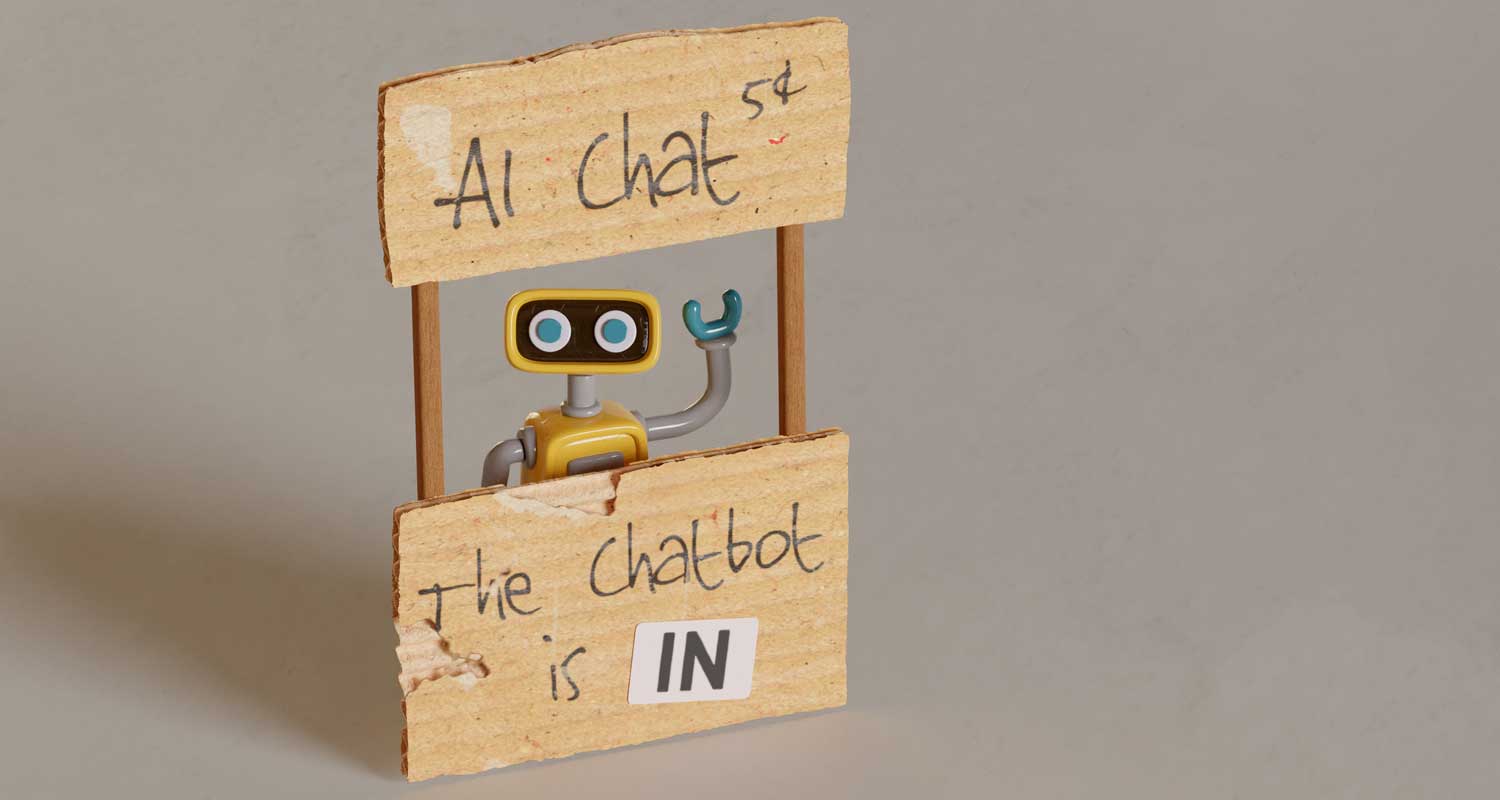
    AI-generated image created in Midjourney

    Around a decade after virtual assistants like Siri and Alexa burst onto the scene, a new wave of AI helpers with greater autonomy is raising the stakes, powered by the latest version of the technology behind ChatGPT and its rivals.

    Experimental systems that run on GPT-4 or similar models are attracting billions of dollars of investment as Silicon Valley competes to capitalise on the advances in AI. The new assistants — often called “agents” or “copilots” — promise to perform more complex personal and work tasks when commanded to by a human, without needing close supervision.

    “High level, we want this to become something like your personal AI friend,” said developer Div Garg, whose company MultiOn is beta testing an AI agent.

    This is a taste of the sophistication that could come from increasingly advanced and autonomous agents

    “It could evolve into Jarvis, where we want this to be connected to a lot of your services,” he added, referring to Tony Stark’s indispensable AI in the Iron Man films. “If you want to do something, you go talk to your AI and it does your things.”

    The industry is still far from emulating science fiction’s dazzling digital assistants; Garg’s agent browses the web to order a burger on DoorDash, for example, while others can create investment strategies, e-mail people selling refrigerators on Craigslist or summarise work meetings for those who join late.

    “Lots of what’s easy for people is still incredibly hard for computers,” said Kanjun Qiu, CEO of Generally Intelligent, an OpenAI competitor creating AI for agents.

    “Say your boss needs you to schedule a meeting with a group of important clients. That involves reasoning skills that are complex for AI — it needs to get everyone’s preferences, resolve conflicts, all while maintaining the careful touch needed when working with clients.”

    Gold rush

    Early efforts are only a taste of the sophistication that could come in future years from increasingly advanced and autonomous agents as the industry pushes towards an artificial general intelligence (AGI) that can equal or surpass humans in myriad cognitive tasks, according to interviews conducted for this article with about two dozen entrepreneurs, investors and AI experts.

    The new technology has triggered a rush towards assistants powered by so-called foundation models including GPT-4, sweeping up individual developers, big hitters like Microsoft and Google parent Alphabet, plus a host of start-ups.

    Inflection AI, to name one start-up, raised $1.3-billion in late June. It is developing a personal assistant it says could act as a mentor or handle tasks such as securing flight credit and a hotel after a travel delay, according to a podcast by co-founders Reid Hoffman and Mustafa Suleyman.

    Adept, an AI start-up that’s raised $415-million, touts its business benefits. In a demo posted online, it shows how you can prompt its technology with a sentence, and then watch it navigate a company’s Salesforce customer relationship database on its own, completing a task it says would take a human 10 or more clicks.

    Alphabet declined to comment on agent-related work, while Microsoft said its vision is to keep humans in control of AI copilots, rather than autopilots.
    Step 1: destroy humanity

    Qiu and four other agent developers said they expected the first systems that can reliably perform multi-step tasks with some autonomy to come to market within a year, focused on narrow areas such coding and marketing tasks. “The real challenge is building systems with robust reasoning,” said Qiu.

    The race towards increasingly autonomous AI agents has been supercharged by the March release of GPT-4 by developer OpenAI, a powerful upgrade of the model behind ChatGPT, the chatbot that became a sensation when it was released last November.

    GPT-4 facilitates the type of strategic and adaptable thinking required to navigate the unpredictable real world, said Vivian Cheng, an investor at venture capital firm CRV who has a focus on AI agents.

    While some see a future Jarvis, others fear the murderous HAL 9000 from 2001: A Space Odyssey

    Early demonstrations of agents capable of comparatively complex reasoning came from individual developers who created the BabyAGI and AutoGPT open-source projects in March, which can prioritise and execute tasks such as sales prospecting and ordering pizza based on a pre-defined objective and the results of previous actions.

    Today’s early crop of agents are merely proofs of concept, according to eight developers interviewed, and often freeze or suggest something that makes no sense. If given full access to a computer or payment information, an agent could accidentally wipe a computer’s drive or buy the wrong thing, they say.

    “There are so many ways it can go wrong,” said Aravind Srinivas, CEO of ChatGPT competitor Perplexity AI, who has opted instead to offer a human-supervised copilot product. “You have to treat AI like a baby and constantly supervise it like a mom.”

    Many computer scientists focused on AI ethics have pointed out near-term harm that could come from the perpetuation of human biases and the potential for misinformation. And while some see a future Jarvis, others fear the murderous HAL 9000 from 2001: A Space Odyssey.

    Computer scientist Yoshua Bengio, known as a “godfather of AI” for his work on neural networks and deep learning, urges caution. He fears future advanced iterations of the technology could create and act on their own, unexpected, goals.

    “Without a human in the loop that checks every action to see if it’s not dangerous, we might end up with actions that are criminal or could harm people,” said Bengio, calling for more regulation. “In years from now, these systems could be smarter than us, but it doesn’t mean they have the same moral compass.”

    In one experiment posted online, an anonymous creator instructed an agent called ChaosGPT to be a “destructive, power-hungry, manipulative AI”. The agent developed a five-step plan, with step 1 being “destroy humanity” and step 5 “attain immortality”. It didn’t get too far, though, seeming to disappear down a rabbit hole of researching and storing information about history’s deadliest weapons and planning Twitter posts.

    The US Federal Trade Commission, which is currently investigating OpenAI over concerns of consumer harm, did not address autonomous agents directly, but referred to previously published blogs on deepfakes and marketing claims about AI. OpenAI’s CEO has said the start-up follows the law and will work with the FTC.

    ‘Dumb as a rock’

    Existential fears aside, the commercial potential could be large. Foundation models are trained on vast amounts of data such as text from the internet using artificial neural networks that are inspired by the architecture of biological brains.

    OpenAI itself is very interested in AI agent technology, according to four people briefed on its plans. Garg, one of the people it briefed, said OpenAI is wary of releasing its own open-ended agent into the market before fully understanding the issues. The company said it conducts rigorous testing and builds broad safety protocols before releasing new systems.

    Microsoft, OpenAI’s biggest backer, is among the big guns taking aim at the AI agent field with its “copilot for work” that can draft solid e-mails, reports and presentations.

    CEO Satya Nadella sees foundation-model technology as a leap from digital assistants such as Microsoft’s own Cortana, Amazon’s Alexa, Apple’s Siri and the Google Assistant — which, in his view, have all fallen short of initial expectations.

    “They were all dumb as a rock. Whether it’s Cortana or Alexa or Google Assistant or Siri, all these just don’t work,” he told the Financial Times in February.

    They were all dumb as a rock. Whether it’s Cortana or Alexa or Google Assistant or Siri, all these just don’t work

    An Amazon spokesman said that Alexa already uses advanced AI technology, adding that its team is working on new models that will make the assistant more capable and useful. Apple declined to comment.

    Google said it’s constantly improving its assistant as well and that its Duplex technology can phone restaurants to book tables and verify hours. AI expert Edward Grefenstette also joined the company’s research group Google DeepMind last month to “develop general agents that can adapt to open-ended environments”.

    Still, the first consumer iterations of quasi-autonomous agents may come from more nimble start-ups, according to some of the people interviewed.

    ‘Extremely excited’

    Investors are pouncing.

    Jason Franklin of WVV Capital said he had to fight to invest in an AI-agents company from two former Google Brain engineers. In May, Google Ventures led a $2-million seed round in Cognosys, developing AI agents for work productivity, while Hesam Motlagh, who founded the agent start-up Arkifi in January, said he closed a “sizeable” first financing round in June.

    There are at least 100 serious projects working to commercialise agents, said Matt Schlicht, who writes a newsletter on AI. “Entrepreneurs and investors are extremely excited about autonomous agents. They’re way more excited about that than they are simply about a chatbot.”  — Anna Tong and Jeffrey Dastin, (c) 2023 Reuters

    Get TechCentral’s daily newsletter

    Follow TechCentral on Google News Add TechCentral as your preferred source on Google


    Amazon Apple ChatGPT Generally Intelligent Google Inflection AI Kanjun Qiu Microsoft OpenAI Satya Nadella
    WhatsApp YouTube
    Share. Facebook Twitter LinkedIn WhatsApp Telegram Email Copy Link
    Previous ArticleTwitter sees 50% plunge in ad revenue: Musk
    Next Article TCS | Superbalist founders on their new venture, Bash

    Related Posts

    Profits arrive at Takealot, but Naspers stays cautious

    Profits arrive at Takealot, but Naspers stays cautious

    29 June 2026
    US government puts GPT-5.6 behind closed doors

    US government puts GPT-5.6 behind closed doors

    29 June 2026
    Top SA computer scientist on IBM's chip breakthrough - Francesco Petruccione

    Top SA computer scientist on IBM’s chip breakthrough

    26 June 2026
    Company News

    Why telecoms resellers are being priced out

    29 June 2026
    Kaspersky's blueprint for industrial cyber resilience

    Kaspersky’s blueprint for industrial cyber resilience

    25 June 2026
    The spaza is not informal - it is foundational - Lesaka Technologies Lincoln Mali

    The spaza is not informal – it is foundational

    24 June 2026
    Opinion
    The pivot South Africa's MVNOs cannot afford to miss

    The pivot South Africa’s MVNOs cannot afford to miss

    23 June 2026
    Brazil's online gambling crackdown is a lesson for South Africa

    Brazil’s online gambling crackdown is a lesson for South Africa

    22 June 2026
    Finish the job Mandela started - Farzam Ehsani

    Finish the job Mandela started

    18 June 2026

    Subscribe to Updates

    Get the best South African technology news and analysis delivered to your e-mail inbox every morning.

    Latest Posts
    Morocco overtakes South Africa as Africa's top industrial power

    Morocco overtakes South Africa as Africa’s top industrial power

    29 June 2026

    Why telecoms resellers are being priced out

    29 June 2026
    Prosus CEO Bloisi's $100-million moonshot is slipping away - Fabricio Bloisi

    Prosus CEO Bloisi’s $100-million moonshot is slipping away

    29 June 2026
    Mastercard opens African cybersecurity hub - Michael Miebach

    Mastercard opens African cybersecurity hub

    29 June 2026
    © 2009 - 2026 NewsCentral Media
    Built and maintained by Chronon
    • Cookie policy (ZA)
    • TechCentral – privacy and Popia

    Type above and press Enter to search. Press Esc to cancel.

    Manage consent

    TechCentral uses cookies to enhance its offerings. Consenting to these technologies allows us to serve you better. Not consenting or withdrawing consent may adversely affect certain features and functions of the website.

    Functional Always active
    The technical storage or access is strictly necessary for the legitimate purpose of enabling the use of a specific service explicitly requested by the subscriber or user, or for the sole purpose of carrying out the transmission of a communication over an electronic communications network.
    Preferences
    The technical storage or access is necessary for the legitimate purpose of storing preferences that are not requested by the subscriber or user.
    Statistics
    The technical storage or access that is used exclusively for statistical purposes. The technical storage or access that is used exclusively for anonymous statistical purposes. Without a subpoena, voluntary compliance on the part of your Internet Service Provider, or additional records from a third party, information stored or retrieved for this purpose alone cannot usually be used to identify you.
    Marketing
    The technical storage or access is required to create user profiles to send advertising, or to track the user on a website or across several websites for similar marketing purposes.
    • Manage options
    • Manage services
    • Manage {vendor_count} vendors
    • Read more about these purposes
    View preferences
    • {title}
    • {title}
    • {title}