Close Menu
TechCentralTechCentral

    Subscribe to the newsletter

    Get the best South African technology news and analysis delivered to your e-mail inbox every morning.

    Facebook X (Twitter) YouTube LinkedIn
    WhatsApp Facebook X (Twitter) LinkedIn YouTube
    TechCentralTechCentral
    • News
      Vuyani Jarana: Mobile coverage masks a deeper broadband failure

      Vuyani Jarana: Mobile coverage masks a deeper broadband failure

      30 January 2026
      SABC Plus to flight Microsoft AI training videos

      SABC Plus to flight Microsoft AI training videos

      30 January 2026
      Fibre ducts

      Fibre industry consolidation in KZN

      30 January 2026
      Watts & Wheels S1E3: 'BYD's Corolla Cross challenger'

      Watts & Wheels S1E3: ‘BYD’s Corolla Cross challenger’

      30 January 2026
      What ordinary South Africans really think of AI

      What ordinary South Africans really think of AI

      30 January 2026
    • World
      Apple acquires audio AI start-up Q.ai

      Apple acquires audio AI start-up Q.ai

      30 January 2026
      SpaceX IPO may be largest in history

      SpaceX IPO may be largest in history

      28 January 2026
      Nvidia throws AI at the weather

      Nvidia throws AI at weather forecasting

      27 January 2026
      Debate erupts over value of in-flight Wi-Fi

      Debate erupts over value of in-flight Wi-Fi

      26 January 2026
      Intel takes another hit - Intel CEO Lip-Bu Tan. Laure Andrillon/Reuters

      Intel takes another hit

      23 January 2026
    • In-depth
      How liberalisation is rewiring South Africa's power sector

      How liberalisation is rewiring South Africa’s power sector

      21 January 2026
      The top-performing South African tech shares of 2025

      The top-performing South African tech shares of 2025

      12 January 2026
      Digital authoritarianism grows as African states normalise internet blackouts

      Digital authoritarianism grows as African states normalise internet blackouts

      19 December 2025
      TechCentral's South African Newsmakers of 2025

      TechCentral’s South African Newsmakers of 2025

      18 December 2025
      Black Friday goes digital in South Africa as online spending surges to record high

      Black Friday goes digital in South Africa as online spending surges to record high

      4 December 2025
    • TCS
      TCS+ | How Cloud On Demand is helping SA businesses succeed in the cloud - Xhenia Rhode, Dion Kalicharan

      TCS+ | Cloud On Demand and Consnet: inside a real-world AWS partner success story

      30 January 2026
      Watts & Wheels S1E3: 'BYD's Corolla Cross challenger'

      Watts & Wheels S1E2: ‘China attacks, BMW digs in, Toyota’s sublime supercar’

      23 January 2026

      TCS+ | Why cybersecurity is becoming a competitive advantage for SA businesses

      20 January 2026
      Watts & Wheels S1E3: 'BYD's Corolla Cross challenger'

      Watts & Wheels: S1E1 – ‘William, Prince of Wheels’

      8 January 2026
      TCS+ | Africa's digital transformation - unlocking AI through cloud and culture - Cliff de Wit Accelera Digital Group

      TCS+ | Cloud without culture won’t deliver AI: Accelera’s Cliff de Wit

      12 December 2025
    • Opinion
      South Africa's skills advantage is being overlooked at home - Richard Firth

      South Africa’s skills advantage is being overlooked at home

      29 January 2026
      Why Elon Musk's Starlink is a 'hard no' for me - Songezo Zibi

      Why Elon Musk’s Starlink is a ‘hard no’ for me

      26 January 2026
      South Africa's new fibre broadband battle - Duncan McLeod

      South Africa’s new fibre broadband battle

      20 January 2026
      AI moves from pilots to production in South African companies - Nazia Pillay SAP

      AI moves from pilots to production in South African companies

      20 January 2026
      South Africa's new fibre broadband battle - Duncan McLeod

      ANC’s attack on Solly Malatsi shows how BEE dogma trumps economic reality

      14 December 2025
    • Company Hubs
      • Africa Data Centres
      • AfriGIS
      • Altron Digital Business
      • Altron Document Solutions
      • Altron Group
      • Arctic Wolf
      • AvertITD
      • Braintree
      • CallMiner
      • CambriLearn
      • CYBER1 Solutions
      • Digicloud Africa
      • Digimune
      • Domains.co.za
      • ESET
      • Euphoria Telecom
      • Incredible Business
      • iONLINE
      • IQbusiness
      • Iris Network Systems
      • LSD Open
      • NEC XON
      • Netstar
      • Network Platforms
      • Next DLP
      • Ovations
      • Paracon
      • Paratus
      • Q-KON
      • SevenC
      • SkyWire
      • Solid8 Technologies
      • Telit Cinterion
      • Tenable
      • Vertiv
      • Videri Digital
      • Vodacom Business
      • Wipro
      • Workday
      • XLink
    • Sections
      • AI and machine learning
      • Banking
      • Broadcasting and Media
      • Cloud services
      • Contact centres and CX
      • Cryptocurrencies
      • Education and skills
      • Electronics and hardware
      • Energy and sustainability
      • Enterprise software
      • Financial services
      • Information security
      • Internet and connectivity
      • Internet of Things
      • Investment
      • IT services
      • Lifestyle
      • Motoring
      • Public sector
      • Retail and e-commerce
      • Satellite communications
      • Science
      • SMEs and start-ups
      • Social media
      • Talent and leadership
      • Telecoms
    • Events
    • Advertise
    TechCentralTechCentral
    Home » Opinion » Busi Mavuso » Government’s new energy plan is out of touch with reality

    Government’s new energy plan is out of touch with reality

    Every government should adopt evidence-based policies – and no good case has been built for the assumptions in the IRP 2023.
    By Busi Mavuso2 April 2024
    Twitter LinkedIn Facebook WhatsApp Email Telegram Copy Link
    News Alerts
    WhatsApp
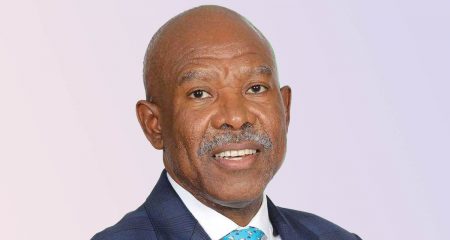
    The author, Business Leadership South Africa CEO Busi Mavuso

    Tainting the positive news of the diminishing – though still serious – impact of load shedding on the economy is the knowledge that the core document that is meant to shape the future of our energy supply is an impediment to progress rather than the catalyst it should be.

    The economy certainly needs all the help it can get. It barely avoided a technical recession in the fourth quarter of last year with 0.1% growth, taking the annual rate to just 0.6%. In announcing the figures, Reserve Bank governor Lesetja Kganyago bemoaned the impact of the electricity crisis on GDP growth, saying load shedding was worse than in previous years, while port and rail constraints also had a negative impact.

    But he gave estimates of the Bank’s Monetary Policy Committee on the impact of power cuts that were heartening: electricity shortages took 1.5 percentage points off GDP last year and is expected to drop to 0.6pp this year and 0.2pp next year.

    While the latest IRP published only in January, it was never fit for purpose and needs to be revised immediately

    The diminishing impact of load shedding reflects the success of the energy action plan and the collaboration between government and business. The power cuts that have shackled growth prospects for more than a decade are easing as more generation becomes available, and the national energy crisis committee estimates that this year and next year, an estimated 10.6GW of additional generation capacity will come on stream from private sector projects connecting to the grid including projects from previous bid windows nearing completion, additional Eskom units returning to service and the continued increase in rooftop solar.

    The economy will remain handicapped still for some time, however, until we make more progress in the other two core areas of the business-government collaboration – transport & logistics and crime & corruption. In transport there has been solid but slow progress and there is still a long way to go before we reach the levels of required efficiencies.

    Evidence-based policies

    The reason this partnership with government is working – and by and large it’s working pretty well in some areas – is because it is premised on good data based on research, which generates solid assumptions, otherwise it would just be propaganda.

    Every government should adopt evidence-based policies – and no good case has been built for the assumptions in the IRP 2023. To advance in each area of collaboration, we need government to be aligned and for the most part government is fully behind our work but of course there are elements within it who directly oppose it.

    Read: Gwede spurns shift to renewables

    The IRP, by legislation, is supposed to be a living plan to be continuously revised and updated as necessitated by changing circumstances. This is an area the government has brazenly neglected – before the IRP 2023, it was updated in 2019 and before that, it was way back in 2010.

    While the latest version was published only in January this year, it was never fit for purpose and needs to be revised immediately. There are so many difficulties in generating enough new power to stabilise supply that the country cannot afford to be held back by the core document that is meant to shape the future of our energy supply being so different to the reality of what is happening in the energy market and so out of touch with reality.
    The first, overarching problem, is that it goes against the least-cost principle and presents some spurious costing estimates that appear to elevate the price of renewable energy and underestimate the cost of fossil fuels.

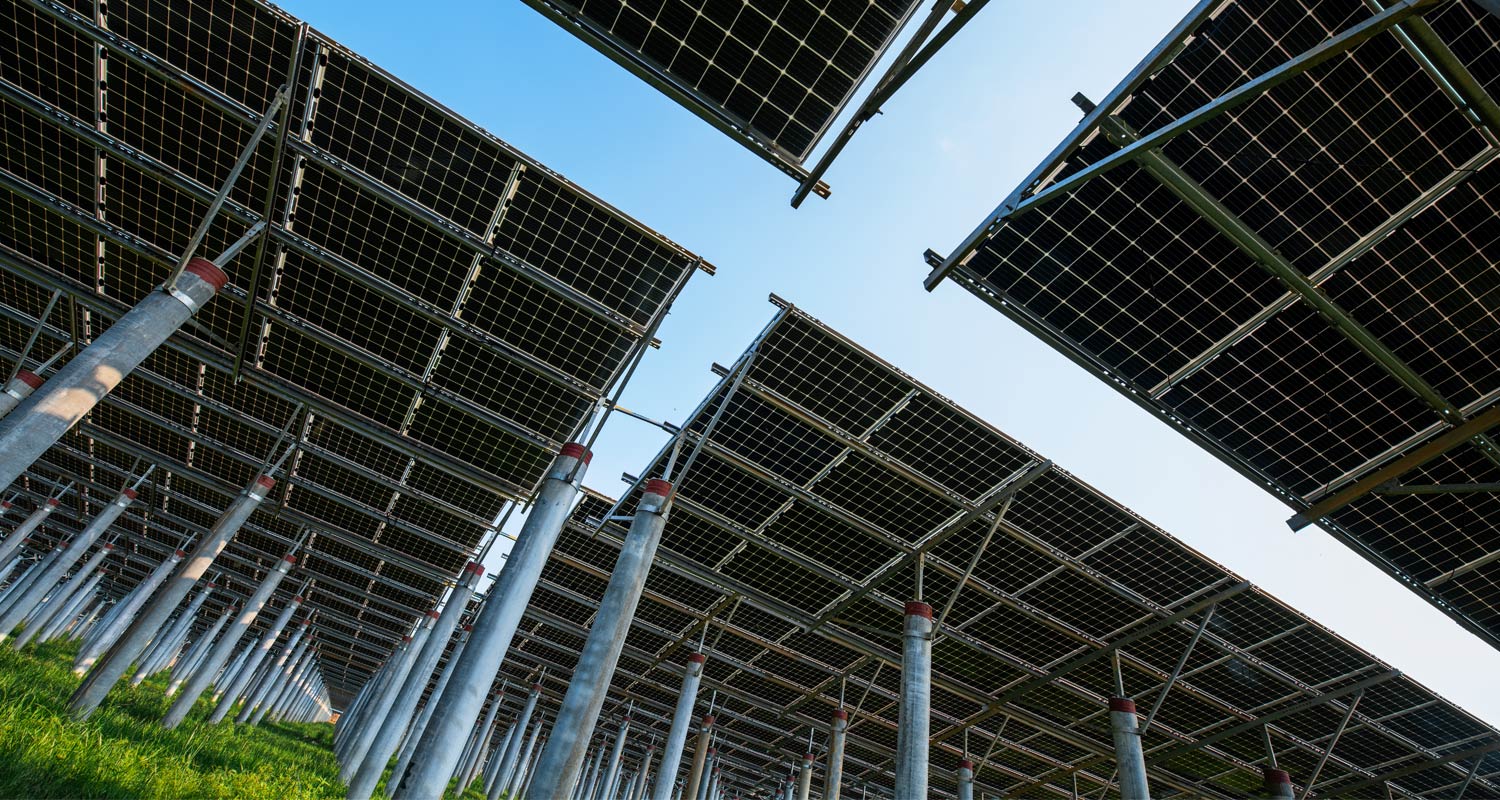
    Then it slashes the amount of renewable energy – still easily the cheapest form of new energy generation – to be installed between 2024 and 2030 via public procurement from 15.2GW in IRP 2019 to 8GW in IRP 2023. The huge increase in the allocation to gas is also eyebrow-raising – it allocates 7.22GW to gas-based generation, up from 3GW in the IRP 2019.

    Energy analyst Chris Yelland points out that although it is relatively easy and fast to build gas-to-power plants, the problem is supplying the gas to these stations as the infrastructure does not exist and that takes time to develop – and it’s expensive.

    Opposition within government to reforms slows everything down, at best, or results in failure

    One element of the IRP 2023 is to delay the shutdown plan of 13GW being decommissioned by 2034, and then there will be no decommissioning between 2035 and 2045. But Eskom has already calculated the costs for this, concluding that it would cost about R400-billion for a five-year extension of just a small set of power stations and the IRP makes no mention of where the funding would come from.

    There are numerous other problems with the document. It underestimates the uptake of rooftop solar, for which it allocates 900MW/year until 2030 despite far more than that already being added. It also underestimates future energy demand – which on its own puts the entire modelling process at risk.

    Heavy penalties

    But the second overarching problem with the IRP is that it pushes back against the gains we have made in our own fight against climate change and, if adhered to, will see South Africa pay heavy penalties in the form of carbon taxes (the EU’s Carbon Border Adjustment Mechanism kicks in in 2026) while the country will also be shunned by numerous institutional investors where fund managers are restricted from investing in high-carbon countries.

    The reality of the market is that funding for new fossil fuel ventures does not exist, a factor entirely ignored in in IRP 2023.

    Read: 76% of Africa’s energy needs could come from renewables by 2040

    The bottom line is that we need electricity that is affordable, reliable and can come on stream quickly. Anything that goes against that doesn’t make sense and the IRP needs to be reworked to facilitate this – it’s an imperative to enable economic growth and boost employment.

    The IRP is but one example of bad policy, all of which mitigate against and delay economic growth and the reduction of unemployment. There is lots of agreement and goodwill between government and business, but in many areas other than energy, there are similar problematic issues where policies are not aligned with President Cyril Ramaphosa’s drive for growth.
    To get to the point where the economy is growing fast enough to create jobs at a significant rate, all the dysfunctional elements need to be remedied – transport, logistics and infrastructure are major areas but also water supply, efficiency of state-owned enterprises, general service delivery, corruption … the list is endless and resolutions to the problems in each area need to be pursued vigorously. Opposition within government to reforms slows everything down, at best, or results in failure. The economy cannot afford that.

    • Busi Mavuso is CEO of Business Leadership South Africa
    • Read more pieces by Busi Mavuso on TechCentral

    Get breaking news alerts from TechCentral on WhatsApp


    BLSA Busi Mavuso Business Leadership South Africa Lesetja Kganyago South African Reserve Bank
    WhatsApp YouTube Follow on Google News Add as preferred source on Google
    Share. Facebook Twitter LinkedIn WhatsApp Telegram Email Copy Link
    Previous ArticleMicrosoft to separate Teams and Office globally
    Next Article What new electricity bill means for South Africa

    Related Posts

    Rand breaks through R16/$ - and may have further to run

    Rand breaks through R16/$ – and may have further to run

    26 January 2026
    Consumer demand driving a shift in online payments

    Shoppers forcing merchants to adopt new digital payment methods

    15 January 2026
    Green shoots are breaking through South Africa's economic static

    Green shoots are breaking through South Africa’s economic static

    8 December 2025
    Company News
    Huawei turns 25 in South Africa, celebrates with major device discounts

    Huawei turns 25 in South Africa, celebrates with major device discounts

    30 January 2026
    Phishing has not disappeared, but it has grown up - KnowBe4

    Phishing has not disappeared, but it has grown up

    30 January 2026
    Smartphone affordability: South Africa's new economic divide - PayJoy

    Smartphone affordability: South Africa’s new economic divide

    29 January 2026
    Opinion
    South Africa's skills advantage is being overlooked at home - Richard Firth

    South Africa’s skills advantage is being overlooked at home

    29 January 2026
    Why Elon Musk's Starlink is a 'hard no' for me - Songezo Zibi

    Why Elon Musk’s Starlink is a ‘hard no’ for me

    26 January 2026
    South Africa's new fibre broadband battle - Duncan McLeod

    South Africa’s new fibre broadband battle

    20 January 2026

    Subscribe to Updates

    Get the best South African technology news and analysis delivered to your e-mail inbox every morning.

    Latest Posts
    Vuyani Jarana: Mobile coverage masks a deeper broadband failure

    Vuyani Jarana: Mobile coverage masks a deeper broadband failure

    30 January 2026
    TCS+ | How Cloud On Demand is helping SA businesses succeed in the cloud - Xhenia Rhode, Dion Kalicharan

    TCS+ | Cloud On Demand and Consnet: inside a real-world AWS partner success story

    30 January 2026
    Huawei turns 25 in South Africa, celebrates with major device discounts

    Huawei turns 25 in South Africa, celebrates with major device discounts

    30 January 2026
    SABC Plus to flight Microsoft AI training videos

    SABC Plus to flight Microsoft AI training videos

    30 January 2026
    © 2009 - 2026 NewsCentral Media
    • Cookie policy (ZA)
    • TechCentral – privacy and Popia

    Type above and press Enter to search. Press Esc to cancel.

    Manage consent

    TechCentral uses cookies to enhance its offerings. Consenting to these technologies allows us to serve you better. Not consenting or withdrawing consent may adversely affect certain features and functions of the website.

    Functional Always active
    The technical storage or access is strictly necessary for the legitimate purpose of enabling the use of a specific service explicitly requested by the subscriber or user, or for the sole purpose of carrying out the transmission of a communication over an electronic communications network.
    Preferences
    The technical storage or access is necessary for the legitimate purpose of storing preferences that are not requested by the subscriber or user.
    Statistics
    The technical storage or access that is used exclusively for statistical purposes. The technical storage or access that is used exclusively for anonymous statistical purposes. Without a subpoena, voluntary compliance on the part of your Internet Service Provider, or additional records from a third party, information stored or retrieved for this purpose alone cannot usually be used to identify you.
    Marketing
    The technical storage or access is required to create user profiles to send advertising, or to track the user on a website or across several websites for similar marketing purposes.
    • Manage options
    • Manage services
    • Manage {vendor_count} vendors
    • Read more about these purposes
    View preferences
    • {title}
    • {title}
    • {title}