
Close Menu
TechCentralTechCentral

    Subscribe to the newsletter

    Get the best South African technology news and analysis delivered to your e-mail inbox every morning.

    Facebook X (Twitter) YouTube LinkedIn
    WhatsApp Facebook X (Twitter) LinkedIn YouTube
    TechCentralTechCentral
    • News
      Vuyani Jarana: Mobile coverage masks a deeper broadband failure

      Vuyani Jarana: Mobile coverage masks a deeper broadband failure

      30 January 2026
      SABC Plus to flight Microsoft AI training videos

      SABC Plus to flight Microsoft AI training videos

      30 January 2026
      Fibre ducts

      Fibre industry consolidation in KZN

      30 January 2026
      Watts & Wheels S1E3: 'BYD's Corolla Cross challenger'

      Watts & Wheels S1E3: ‘BYD’s Corolla Cross challenger’

      30 January 2026
      What ordinary South Africans really think of AI

      What ordinary South Africans really think of AI

      30 January 2026
    • World
      Apple acquires audio AI start-up Q.ai

      Apple acquires audio AI start-up Q.ai

      30 January 2026
      SpaceX IPO may be largest in history

      SpaceX IPO may be largest in history

      28 January 2026
      Nvidia throws AI at the weather

      Nvidia throws AI at weather forecasting

      27 January 2026
      Debate erupts over value of in-flight Wi-Fi

      Debate erupts over value of in-flight Wi-Fi

      26 January 2026
      Intel takes another hit - Intel CEO Lip-Bu Tan. Laure Andrillon/Reuters

      Intel takes another hit

      23 January 2026
    • In-depth
      How liberalisation is rewiring South Africa's power sector

      How liberalisation is rewiring South Africa’s power sector

      21 January 2026
      The top-performing South African tech shares of 2025

      The top-performing South African tech shares of 2025

      12 January 2026
      Digital authoritarianism grows as African states normalise internet blackouts

      Digital authoritarianism grows as African states normalise internet blackouts

      19 December 2025
      TechCentral's South African Newsmakers of 2025

      TechCentral’s South African Newsmakers of 2025

      18 December 2025
      Black Friday goes digital in South Africa as online spending surges to record high

      Black Friday goes digital in South Africa as online spending surges to record high

      4 December 2025
    • TCS
      TCS+ | How Cloud On Demand is helping SA businesses succeed in the cloud - Xhenia Rhode, Dion Kalicharan

      TCS+ | Cloud On Demand and Consnet: inside a real-world AWS partner success story

      30 January 2026
      Watts & Wheels S1E3: 'BYD's Corolla Cross challenger'

      Watts & Wheels S1E2: ‘China attacks, BMW digs in, Toyota’s sublime supercar’

      23 January 2026

      TCS+ | Why cybersecurity is becoming a competitive advantage for SA businesses

      20 January 2026
      Watts & Wheels S1E3: 'BYD's Corolla Cross challenger'

      Watts & Wheels: S1E1 – ‘William, Prince of Wheels’

      8 January 2026
      TCS+ | Africa's digital transformation - unlocking AI through cloud and culture - Cliff de Wit Accelera Digital Group

      TCS+ | Cloud without culture won’t deliver AI: Accelera’s Cliff de Wit

      12 December 2025
    • Opinion
      South Africa's skills advantage is being overlooked at home - Richard Firth

      South Africa’s skills advantage is being overlooked at home

      29 January 2026
      Why Elon Musk's Starlink is a 'hard no' for me - Songezo Zibi

      Why Elon Musk’s Starlink is a ‘hard no’ for me

      26 January 2026
      South Africa's new fibre broadband battle - Duncan McLeod

      South Africa’s new fibre broadband battle

      20 January 2026
      AI moves from pilots to production in South African companies - Nazia Pillay SAP

      AI moves from pilots to production in South African companies

      20 January 2026
      South Africa's new fibre broadband battle - Duncan McLeod

      ANC’s attack on Solly Malatsi shows how BEE dogma trumps economic reality

      14 December 2025
    • Company Hubs
      • Africa Data Centres
      • AfriGIS
      • Altron Digital Business
      • Altron Document Solutions
      • Altron Group
      • Arctic Wolf
      • AvertITD
      • Braintree
      • CallMiner
      • CambriLearn
      • CYBER1 Solutions
      • Digicloud Africa
      • Digimune
      • Domains.co.za
      • ESET
      • Euphoria Telecom
      • Incredible Business
      • iONLINE
      • IQbusiness
      • Iris Network Systems
      • LSD Open
      • NEC XON
      • Netstar
      • Network Platforms
      • Next DLP
      • Ovations
      • Paracon
      • Paratus
      • Q-KON
      • SevenC
      • SkyWire
      • Solid8 Technologies
      • Telit Cinterion
      • Tenable
      • Vertiv
      • Videri Digital
      • Vodacom Business
      • Wipro
      • Workday
      • XLink
    • Sections
      • AI and machine learning
      • Banking
      • Broadcasting and Media
      • Cloud services
      • Contact centres and CX
      • Cryptocurrencies
      • Education and skills
      • Electronics and hardware
      • Energy and sustainability
      • Enterprise software
      • Financial services
      • Information security
      • Internet and connectivity
      • Internet of Things
      • Investment
      • IT services
      • Lifestyle
      • Motoring
      • Public sector
      • Retail and e-commerce
      • Satellite communications
      • Science
      • SMEs and start-ups
      • Social media
      • Talent and leadership
      • Telecoms
    • Events
    • Advertise
    TechCentralTechCentral
    Home » In-depth » Growing outrage over new monitor tax

    Growing outrage over new monitor tax

    By Editor2 August 2011
    Twitter LinkedIn Facebook WhatsApp Email Telegram Copy Link
    News Alerts
    WhatsApp

    A new tax on imported monitors has the computer industry increasingly incensed and they want action from authorities to remedy the situation, which they say is harming the technology sector.

    In April, a 7% ad valorem tax, which previously only applied to imported television sets and which was scrapped in 2004, was reintroduced on computer monitors, because some companies were importing them without TV components and adding these locally to avoid the tax.

    The result is more expensive monitors in an industry that’s meant to be trying to make its products as cheap as possible to get more South Africans online.

    The SA Revenue Service (Sars) says the tax was instituted to protect SA’s TV manufacturing industry. But this industry has all but disappeared in recent years. The tax is only meant to apply to monitors larger than 20,8 inches, but as most monitors are now larger than this, it affects most sales.

    Jed Michaletos, a director at Deloitte, says neither lawmakers nor retailers are happy about the tax and its implications. “The tariff structure is flawed and always has been,” he says. “Computer components are meant to be exempt from duties. Originally, the rule was that any display bigger than 45cm got taxed, regardless of its intended purpose. But now that means graphic designers, the medical industry, and others who shouldn’t have to pay duties, are being forced to.”

    Michaletos says the part of the problem is the speed with which the technology industry moves. He argues that legislators can’t keep up and this results in things like the monitor taxation that requires frequent amendments to remain relevant and to continue to achieve its stated aims.

    He says specialist monitors, such as those for the medical industry, don’t have local equivalents, and so should be exempt from taxation because there is no local industry to protect. “It’s just more money for Sars really,” Michaletos says.

    David Kan, CEO at computer company Mustek, says that it’s important to note that the actual taxes applied come to 34,8% rather than just the ad valorem tax of 7%. “There is a 25% import duty and ad valorem is levied on top of this.” In total, taxes on monitors amounts to 34,8% of the total cost.

    Mustek CEO David Kan

    “It’s also important to remember that the form factor of monitors has changed in recent years from 4:3 to 16:10 to 16:9, so most monitors now exceed the 45cm or 20,8-inch limit,” says Kan.

    He says when he approached national treasury about the motivations for the tax he was told that the levies were intended to protect the local manufacturing industry. “But if you look at how long the TV industry has been protected by these duties, and how there isn’t really a local manufacturing industry left, you have to ask why they’re still protecting it.”

    Kan says it’s a misnomer to speak of the SA TV manufacturing industry. “It’s more accurate to talk about the local assembly industry as no components are actually made in SA any more. There’s just an industry of people with screwdrivers putting TVs together.”

    The result, says Kan, is an industry that has to import parts and then assemble them, resulting in more unnecessary packaging and greater transport costs. “When you import a whole TV you only need one set of packaging, as opposed to packaging for each part. Also, you can ship more whole TVs in a single consignment than parts of TVs. Why are we protecting a local industry that doesn’t really do anything? They should remove the tax entirely. If they want to argue that assembly is creating local jobs, then why not protect the computer industry that really does create jobs?”

    Kan wants the computer industry to lobby for the tax to be scrapped because the agenda behind it is misplaced, saying the only benefits of the tax are to Sars’s coffers and that “consumers suffer the most because of it”.

    “If you visit Samsung’s assembly plant in East London, you can see how few employees there are,” he says. “It’s a screwdriver industry. Components arrive readymade and are literally just put together. Why is government protecting this sort of industry? If SA was actually making components it would be understandable, but we’re not.”
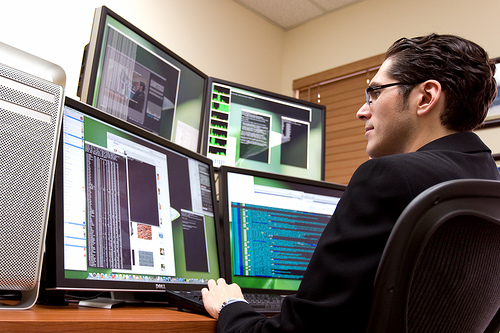
    The computer industry is outraged by new taxes on monitors

    Bronwyn Hume, head of marketing at LG Electronics in SA, says the Korean company has had no choice but to adjust its prices in line with the new tax.

    “We’ve tried to manage it effectively and absorb what we could, but it has resulted in substantial increases in prices for consumers,” she says.

    Kevan Jones, executive director at the SA Communication Industries Association (Sacia), an industry body, echoes Kan’s views and says the tax is “protecting an industry that to a large extent no longer exists”.

    “There are no local manufacturers of professional-grade displays and there are unlikely to be, so audio-visual professionals are being charged to protect an industry that isn’t there,” Jones says.

    He says large-format displays, like those used in digital signage, the medical industry and in broadcasting are all specialist products that cost more than consumer alternatives to start with. “Those prices have increased even further.”

    In the process, says Jones, government has become its own worst enemy because it is the largest user of professional displays. “Many products are now out of the reach of the commercial market.”

    He says the professional devices were never going to be used as alternatives to consumer products anyway, and that this was what the tax was intended to prevent. Many companies, such as those providing video post-production services, are buying less equipment to offset the increased costs.

    Sacia has been tasked with creating a lobby group that will engage with the industry and Sars and explore opportunities to encourage them to reduce duties and ad valorem taxes, he adds. “We’ve asked Deloitte to conduct an initial survey into this issue. The problem is, many vendors active in the market believe that government is inflexible and will not be swayed by any arguments and they are therefore reluctant to invest funds in engaging in a discourse unless there’s a guaranteed outcome, which of course there isn’t.”

    Jones says monitors that can be shown to be for computer use alone are exempt from the tax. All-in-one computer products like the Apple iMac fall into this category. “Those monitors brought in as part of a computer package are exempt, but those that are brought in independently aren’t.” Because some companies manufacture monitors only, rather than integrated PCs, there is no workaround.

    “The wording of the legislation is poor,” Jones says. “It talks about it applying to screens over 20,8 inches and while the global standard is to measure diagonally, here they mean the longest side. They’re applying a measurement criterion that is just irrelevant. The law also talks about being applicable to screens up to a maximum size of 4x3m, but no monitors are built to that size. I suspect they looked at 4:3 as an aspect ratio and just tacked on metres.”

    He says the monitor tax has been implemented without consultation with relevant industry players and, as such is “just fraud really”, adding that it’s important that vendors provide funding to assess and fight the tax for the long-term good of the industry rather than simply accepting it.  — Craig Wilson, TechCentral

    Credits: Effekt! (top image); TotalAldo (bottom image)

    • Subscribe to our free daily newsletter
    • Follow us on Twitter or on Facebook


    Bronwyn Hume David Kan Deloitte Jed Michaletos Kevan Jones LG Electronics Mustek Sacia Samsung Sars
    WhatsApp YouTube Follow on Google News Add as preferred source on Google
    Share. Facebook Twitter LinkedIn WhatsApp Telegram Email Copy Link
    Previous ArticleSigma EX 12-24mm lens: wide, very wide
    Next Article The 31 000 square kilometre hotspot

    Related Posts

    Chip shortage will get worse, Samsung warns

    Chip shortage will get worse, Samsung warns

    29 January 2026
    Reports of the smartphone's impending death are greatly exaggerated

    Reports of the smartphone’s impending death are greatly exaggerated

    28 January 2026
    The era of (relatively) cheap computers is over

    The era of (relatively) cheap computers is over

    13 January 2026
    Company News
    Huawei turns 25 in South Africa, celebrates with major device discounts

    Huawei turns 25 in South Africa, celebrates with major device discounts

    30 January 2026
    Phishing has not disappeared, but it has grown up - KnowBe4

    Phishing has not disappeared, but it has grown up

    30 January 2026
    Smartphone affordability: South Africa's new economic divide - PayJoy

    Smartphone affordability: South Africa’s new economic divide

    29 January 2026
    Opinion
    South Africa's skills advantage is being overlooked at home - Richard Firth

    South Africa’s skills advantage is being overlooked at home

    29 January 2026
    Why Elon Musk's Starlink is a 'hard no' for me - Songezo Zibi

    Why Elon Musk’s Starlink is a ‘hard no’ for me

    26 January 2026
    South Africa's new fibre broadband battle - Duncan McLeod

    South Africa’s new fibre broadband battle

    20 January 2026

    Subscribe to Updates

    Get the best South African technology news and analysis delivered to your e-mail inbox every morning.

    Latest Posts
    Vuyani Jarana: Mobile coverage masks a deeper broadband failure

    Vuyani Jarana: Mobile coverage masks a deeper broadband failure

    30 January 2026
    TCS+ | How Cloud On Demand is helping SA businesses succeed in the cloud - Xhenia Rhode, Dion Kalicharan

    TCS+ | Cloud On Demand and Consnet: inside a real-world AWS partner success story

    30 January 2026
    Huawei turns 25 in South Africa, celebrates with major device discounts

    Huawei turns 25 in South Africa, celebrates with major device discounts

    30 January 2026
    SABC Plus to flight Microsoft AI training videos

    SABC Plus to flight Microsoft AI training videos

    30 January 2026
    © 2009 - 2026 NewsCentral Media
    • Cookie policy (ZA)
    • TechCentral – privacy and Popia

    Type above and press Enter to search. Press Esc to cancel.

    Manage consent

    TechCentral uses cookies to enhance its offerings. Consenting to these technologies allows us to serve you better. Not consenting or withdrawing consent may adversely affect certain features and functions of the website.

    Functional Always active
    The technical storage or access is strictly necessary for the legitimate purpose of enabling the use of a specific service explicitly requested by the subscriber or user, or for the sole purpose of carrying out the transmission of a communication over an electronic communications network.
    Preferences
    The technical storage or access is necessary for the legitimate purpose of storing preferences that are not requested by the subscriber or user.
    Statistics
    The technical storage or access that is used exclusively for statistical purposes. The technical storage or access that is used exclusively for anonymous statistical purposes. Without a subpoena, voluntary compliance on the part of your Internet Service Provider, or additional records from a third party, information stored or retrieved for this purpose alone cannot usually be used to identify you.
    Marketing
    The technical storage or access is required to create user profiles to send advertising, or to track the user on a website or across several websites for similar marketing purposes.
    • Manage options
    • Manage services
    • Manage {vendor_count} vendors
    • Read more about these purposes
    View preferences
    • {title}
    • {title}
    • {title}