Close Menu
TechCentralTechCentral

    Subscribe to the newsletter

    Get the best South African technology news and analysis delivered to your e-mail inbox every morning.

    Facebook X (Twitter) YouTube LinkedIn
    WhatsApp Facebook X (Twitter) LinkedIn YouTube
    TechCentralTechCentral
    • News
      Schreiber publishes draft rules for South Africa's digital ID system

      Schreiber publishes draft rules for South Africa’s digital ID system

      5 May 2026
      From app idea to board game hit - Elijah Djan and Danei Rall FinMaster

      From app idea to board game hit

      5 May 2026
      Your biggest cyber threat is now sitting at the desk next to you - Heino Gevers Mimecast

      Your biggest cyber threat is now sitting at the desk next to you

      5 May 2026
      Vodacom advances on strong trading update

      Vodacom advances on strong trading update

      5 May 2026
      AI is quietly reshaping how F1 teams race, spend and win

      AI is quietly reshaping how F1 teams race, spend and win

      5 May 2026
    • World
      'It was my idea': Musk claims paternity of OpenAI - Elon Musk

      ‘It was my idea’: Musk claims paternity of OpenAI

      29 April 2026
      Pivotal week for US tech stocks

      Pivotal week for US tech stocks

      28 April 2026
      Worries over OpenAI's growth as Anthropic gains ground - Sam Altman. Shelby Tauber/Reuters

      Worries over OpenAI’s growth as Anthropic gains ground

      28 April 2026
      Taylor Swift trademarks her voice to fight AI fakes

      Taylor Swift trademarks her voice to fight AI fakes

      28 April 2026
      DeepSeek's long-awaited V4 model enters preview

      DeepSeek’s long-awaited V4 model enters preview

      24 April 2026
    • In-depth
      Alfa's electric rebel - Alfa Romeo Junior Elettrica Veloce

      Alfa’s electric rebel

      29 April 2026
      Africa switches on as Europe dims the lights

      Africa switches on as Europe dims the lights

      9 April 2026
      The biggest untapped EV market on Earth is hiding in plain sight

      The biggest untapped EV market on Earth is hiding in plain sight

      1 April 2026
      The R18-billion tech giant hiding in plain sight - Jens Montanana

      The R16-billion tech giant hiding in plain sight

      26 March 2026
      The last generation of coders

      The last generation of coders

      18 February 2026
    • TCS
      TCS | The Cape Town start-up listening for TB with AI - Braden van Breda

      TCS | The Cape Town start-up listening for TB with AI

      4 May 2026

      TCS+ | ‘The ISP for ISPs’: Vox’s shift to wholesale aggregator

      20 April 2026
      TCS | Werner Lindemann on how AI is rewriting the infosec rulebook

      TCS | Werner Lindemann on how AI is rewriting the infosec rulebook

      15 April 2026
      TCS | Donovan Marsh on AI and the future of filmmaking

      TCS | Donovan Marsh on AI and the future of filmmaking

      7 April 2026
      TCS+ | Vodacom Business moves to crack the SME tech gap - Andrew Fulton, Sannesh Beharie

      TCS+ | Vodacom Business moves to crack the SME tech gap

      7 April 2026
    • Opinion
      Free calls, dead voice and Shameel Joosub's Spanish ghost - Duncan McLeod

      Free calls, dead voice and Shameel Joosub’s Spanish ghost

      22 April 2026
      The conflict of interest at the heart of PayShap's slow adoption - Cheslyn Jacobs

      The conflict of interest at the heart of PayShap’s slow adoption

      26 March 2026
      South Africa's energy future hinges on getting wheeling right - Aishah Gire

      South Africa’s energy future hinges on getting wheeling right

      10 March 2026
      Free calls, dead voice and Shameel Joosub's Spanish ghost - Duncan McLeod

      Apple just dropped a bomb on the Windows world

      5 March 2026
      R230-million in the bag for Endeavor's third Harvest Fund - Alison Collier

      VC’s centre of gravity is shifting – and South Africa is in the frame

      3 March 2026
    • Company Hubs
      • 1Stream
      • Africa Data Centres
      • AfriGIS
      • Altron Digital Business
      • Altron Document Solutions
      • Altron Group
      • Arctic Wolf
      • Ascent Technology
      • AvertITD
      • BBD
      • Braintree
      • CallMiner
      • CambriLearn
      • Contactable
      • CYBER1 Solutions
      • Digicloud Africa
      • Digimune
      • Domains.co.za
      • ESET
      • Euphoria Telecom
      • HOSTAFRICA
      • Incredible Business
      • iONLINE
      • IQbusiness
      • Iris Network Systems
      • Kaspersky
      • LSD Open
      • Mitel
      • NEC XON
      • Netstar
      • Network Platforms
      • Next DLP
      • Ovations
      • Paracon
      • Paratus
      • Q-KON
      • SevenC
      • SkyWire
      • Solid8 Technologies
      • Telit Cinterion
      • Telviva
      • Tenable
      • Vertiv
      • Videri Digital
      • Vodacom Business
      • Wipro
      • Workday
      • XLink
    • Sections
      • AI and machine learning
      • Banking
      • Broadcasting and Media
      • Cloud services
      • Contact centres and CX
      • Cryptocurrencies
      • Education and skills
      • Electronics and hardware
      • Energy and sustainability
      • Enterprise software
      • Financial services
      • HealthTech
      • Information security
      • Internet and connectivity
      • Internet of Things
      • Investment
      • IT services
      • Lifestyle
      • Motoring
      • Policy and regulation
      • Public sector
      • Retail and e-commerce
      • Satellite communications
      • Science
      • SMEs and start-ups
      • Social media
      • Talent and leadership
      • Telecoms
    • Events
    • Advertise
    TechCentralTechCentral
    Home » Sections » Information security » Home affairs’ R10 ID fee is forcing companies to rethink identity verification

    Home affairs’ R10 ID fee is forcing companies to rethink identity verification

    Layered digital identity systems emerge after sharp increase in South Africa’s real-time ID verification fees.
    By Amy Musgrave9 February 2026
    Twitter LinkedIn Facebook WhatsApp Email Telegram Copy Link
    News Alerts
    WhatsApp

    Home affairs' R10 ID fee is forcing companies to rethink identity verification

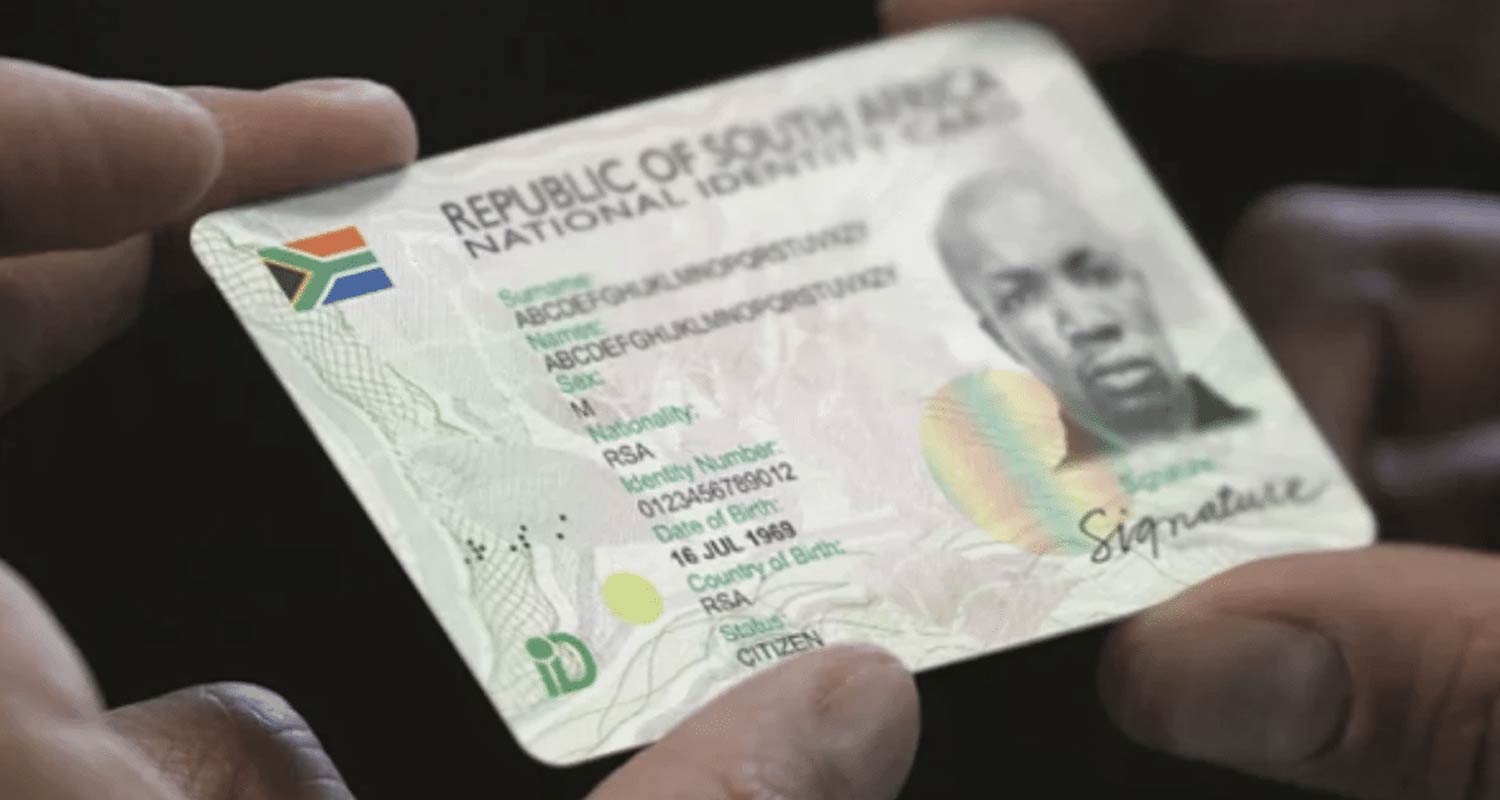
    There has been a drastic increase in the cost of real-time identity verification for banks, fintechs and mobile communications companies in South Africa, resulting in a rethink as to how they perform know-your-customer (KYC) checks.

    According to industry executives, this is accelerating interest in reusable, layered digital identity systems.

    In July last year, the home affairs department controversially increased the price of live ID lookups against the national population database from as little as15c to as much as R10/transaction, significantly increasing compliance costs for financial institutions.

    The move prompted companies to search for alternatives that reduce reliance on repeated calls to the database

    Home affairs minister Leon Schreiber and his department came under fire from stakeholders in the telecoms, banking and microfinance industries for his decision to hike access fees for the real-time verifications, which are needed to fight fraud.

    An after-hours option batch processing of requests is also now offered – at a more affordable but still more expensive rate of R1/query. The move prompted companies to search for alternatives that reduce reliance on repeated calls to the database.

    Analysts say the issue is not only cost, but the way identity verification has historically been implemented.

    Tom Schoon, head of strategic partnerships for Africa at global verification platform Sumsub, said access to the home affairs database was previously loosely controlled. This allowed a wide range of organisations, including unregulated entities, to connect via application programming interfaces.

    Multi-layered KYC

    “The combination of sharply higher costs, weak historical controls and uneven data quality has pushed some players towards risky workarounds like using cached copies of the database. Financial institutions expect robust, current verification with predictable and sustainable cost structures,” he said.

    Schoon said rather than treating the department’s lookups as a default step for every transaction, industry players are increasingly advocating for multi-layered KYC architectures that use the national ID system as a legal anchor for establishing a person’s core identity, while shifting most day-to-day risk decisions to additional data sources.

    Under a reusable KYC model, a customer’s identity can be verified once through a strong check against the department’s database and remains valid for a defined period, typically several months. That verification can then be reused across products and channels, reducing the need for repeated lookups.

    Read: Biometrics boss slams home affairs over R10 ID query fee

    During onboarding, a bank will do one strong check against national ID rails, then bind that identity to biometrics such as liveness detection and face matching to prevent impersonation. Step two will involve device risk intelligence such as fingerprinting, Sim swap detection and geolocation anomalies.

    The final layer will rely on data analytics such as behavioural scoring, velocity checks, and consortium intelligence. The state database remains the anchor, but it’s no longer queried for every event.

    FutureBank Sergio Barbosa
    FutureBank’s Sergio Barbosa

    Periodic calls back to the department would still occur, but they would be triggered by time-based expiry or elevated risk, rather than routine transactions.

    He said banks adopting this approach will reduce their exposure to escalating government costs, while consolidating KYC, anti-money laundering, sanctions screening and fraud detection into fewer systems.

    The model also supports scale, particularly for institutions operating across multiple channels or jurisdictions. Once an identity has been anchored and enriched, it can be reused without rebuilding verification workflows for each new product or market.

    The model also supports scale, particularly for institutions operating across multiple channels or jurisdictions

    This is increasingly important as banks expand digital services and cross-border offerings across Africa, where identity infrastructure varies widely between countries.

    At a regional level, interoperable identity verification could lower friction in cross-border payments and trade, where weak trust mechanisms currently drive up costs through multiple intermediaries.

    Sergio Barbosa, CEO of banking platform FutureBank, said many institutions still operate fragmented stacks, with separate vendors handling identity verification, anti-money laundering, sanctions screening and fraud detection.

    “This fragmentation makes it difficult to implement a consistent reusable KYC strategy. Platform-based approaches aim to solve this by providing a single orchestration layer that integrates national ID checks with multi-source risk analytics,” he said.

    Read: Home affairs faces backlash over ID database fee surge

    If South Africa’s shift towards reusable KYC and layered identity verification proves effective, they believe the model could be replicated across other African markets, which will lay the groundwork for the continent’s next phase of digital financial infrastructure.  – © 2026 NewsCentral Media

    Get breaking news from TechCentral on WhatsApp. Sign up here.

    Follow TechCentral on Google News Add TechCentral as your preferred source on Google


    FutureBank Sergio Barbosa Sumsub Tom Schoon
    WhatsApp YouTube
    Share. Facebook Twitter LinkedIn WhatsApp Telegram Email Copy Link
    Previous ArticleEU regulators take aim at WhatsApp
    Next Article SABC says it can’t afford to cover the next election

    Related Posts

    South African banks need a complete app overhaul - Sergio Barbosa

    South African banks need a complete app overhaul

    21 February 2025
    FutureBank Sergio Barbosa

    FutureBank selected for Mastercard Start Path programme

    13 February 2025
    FutureBank Sergio Barbosa

    Banks warned against failed core strategies as time runs out to modernise

    4 February 2025
    Company News
    Cyber-physical risk: a growing concern for South African companies - Marsh

    Cyber-physical risk: a growing concern for South African companies

    5 May 2026
    Building digital twins that can be trusted - Snode Technologies - Snode Technologies

    Building digital twins that can be trusted

    5 May 2026
    CambriLearn on the right way to use AI in schools

    CambriLearn on the right way to use AI in schools

    4 May 2026
    Opinion
    Free calls, dead voice and Shameel Joosub's Spanish ghost - Duncan McLeod

    Free calls, dead voice and Shameel Joosub’s Spanish ghost

    22 April 2026
    The conflict of interest at the heart of PayShap's slow adoption - Cheslyn Jacobs

    The conflict of interest at the heart of PayShap’s slow adoption

    26 March 2026
    South Africa's energy future hinges on getting wheeling right - Aishah Gire

    South Africa’s energy future hinges on getting wheeling right

    10 March 2026

    Subscribe to Updates

    Get the best South African technology news and analysis delivered to your e-mail inbox every morning.

    Latest Posts
    Schreiber publishes draft rules for South Africa's digital ID system

    Schreiber publishes draft rules for South Africa’s digital ID system

    5 May 2026
    From app idea to board game hit - Elijah Djan and Danei Rall FinMaster

    From app idea to board game hit

    5 May 2026
    Your biggest cyber threat is now sitting at the desk next to you - Heino Gevers Mimecast

    Your biggest cyber threat is now sitting at the desk next to you

    5 May 2026
    Vodacom advances on strong trading update

    Vodacom advances on strong trading update

    5 May 2026
    © 2009 - 2026 NewsCentral Media
    • Cookie policy (ZA)
    • TechCentral – privacy and Popia

    Type above and press Enter to search. Press Esc to cancel.

    Manage consent

    TechCentral uses cookies to enhance its offerings. Consenting to these technologies allows us to serve you better. Not consenting or withdrawing consent may adversely affect certain features and functions of the website.

    Functional Always active
    The technical storage or access is strictly necessary for the legitimate purpose of enabling the use of a specific service explicitly requested by the subscriber or user, or for the sole purpose of carrying out the transmission of a communication over an electronic communications network.
    Preferences
    The technical storage or access is necessary for the legitimate purpose of storing preferences that are not requested by the subscriber or user.
    Statistics
    The technical storage or access that is used exclusively for statistical purposes. The technical storage or access that is used exclusively for anonymous statistical purposes. Without a subpoena, voluntary compliance on the part of your Internet Service Provider, or additional records from a third party, information stored or retrieved for this purpose alone cannot usually be used to identify you.
    Marketing
    The technical storage or access is required to create user profiles to send advertising, or to track the user on a website or across several websites for similar marketing purposes.
    • Manage options
    • Manage services
    • Manage {vendor_count} vendors
    • Read more about these purposes
    View preferences
    • {title}
    • {title}
    • {title}