
Close Menu
TechCentralTechCentral

    Subscribe to the newsletter

    Get the best South African technology news and analysis delivered to your e-mail inbox every morning.

    Facebook X (Twitter) YouTube LinkedIn
    WhatsApp Facebook X (Twitter) LinkedIn YouTube
    TechCentralTechCentral
    • News
      Post Office on the brink of collapse

      Post Office on the brink of collapse

      13 March 2026
      New policy direction targets South Africa's municipal broadband logjam - Solly Malatsi

      New policy direction targets South Africa’s municipal broadband logjam

      13 March 2026
      How electronic warfare is threatening ships and their crews

      How electronic warfare is threatening ships and their crews

      13 March 2026
      Rand slumps for second week

      Rand slumps for second week

      13 March 2026
      Parliament opens nominations for Icasa council seats

      Parliament opens nominations for Icasa council seats

      13 March 2026
    • World
      Musk launches Macrohard in cheeky nod to Microsoft - Elon Musk

      Musk launches Macrohard in cheeky nod to Microsoft

      12 March 2026
      Europe is building an alternative to Microsoft Office

      Europe is building an alternative to Microsoft Office

      11 March 2026
      Microsoft bets on Anthropic as it loosens ties with OpenAI

      Microsoft bets on Anthropic as it loosens ties with OpenAI

      10 March 2026
      World hit by worst oil shock since the 1970s

      World hit by worst oil shock since the 1970s

      9 March 2026
      iStore prices MacBook Neo at R11 999 in South Africa

      Apple debuts MacBook Neo to challenge Windows PCs, Chromebooks

      5 March 2026
    • In-depth
      The last generation of coders

      The last generation of coders

      18 February 2026
      Sentech is in dire straits

      Sentech is in dire straits

      10 February 2026
      How liberalisation is rewiring South Africa's power sector

      How liberalisation is rewiring South Africa’s power sector

      21 January 2026
      The top-performing South African tech shares of 2025

      The top-performing South African tech shares of 2025

      12 January 2026
      Digital authoritarianism grows as African states normalise internet blackouts

      Digital authoritarianism grows as African states normalise internet blackouts

      19 December 2025
    • TCS
      TCS+ | Vox Kiwi: a wireless solution promising a fibre-like experience - Theo van Zyl

      TCS+ | Vox Kiwi: a wireless solution promising a fibre-like experience

      13 March 2026
      TCS+ | Flipping the narrative on AI in the Global South - Josefin Rosén

      TCS+ | Flipping the narrative on AI in the Global South

      13 March 2026
      TCS | Sink or swim? Antony Makins on how AI is rewriting the rules of work

      TCS | Sink or swim? Antony Makins on how AI is rewriting the rules of work

      5 March 2026
      TCS+ | Bolt ups the ante on platform safety - Simo Kalajdzic

      TCS+ | Bolt ups the ante on platform safety

      4 March 2026
      Watts & Wheels S1E4: 'We drive an electric Uber'

      Watts & Wheels S1E4: ‘We drive an electric Uber’

      10 February 2026
    • Opinion
      South Africa's energy future hinges on getting wheeling right - Aishah Gire

      South Africa’s energy future hinges on getting wheeling right

      10 March 2026
      Hold the doom: the case for a South African comeback - Duncan McLeod

      Apple just dropped a bomb on the Windows world

      5 March 2026
      VC's centre of gravity is shifting - and South Africa is in the frame - Alison Collier

      VC’s centre of gravity is shifting – and South Africa is in the frame

      3 March 2026
      Hold the doom: the case for a South African comeback - Duncan McLeod

      Hold the doom: the case for a South African comeback

      26 February 2026
      The AI fraud crisis your bank is not ready for - Andries Maritz

      The AI fraud crisis your bank is not ready for

      18 February 2026
    • Company Hubs
      • 1Stream
      • Africa Data Centres
      • AfriGIS
      • Altron Digital Business
      • Altron Document Solutions
      • Altron Group
      • Arctic Wolf
      • AvertITD
      • Braintree
      • CallMiner
      • CambriLearn
      • CYBER1 Solutions
      • Digicloud Africa
      • Digimune
      • Domains.co.za
      • ESET
      • Euphoria Telecom
      • HOSTAFRICA
      • Incredible Business
      • iONLINE
      • IQbusiness
      • Iris Network Systems
      • LSD Open
      • Mitel
      • NEC XON
      • Netstar
      • Network Platforms
      • Next DLP
      • Ovations
      • Paracon
      • Paratus
      • Q-KON
      • SevenC
      • SkyWire
      • Solid8 Technologies
      • Telit Cinterion
      • Tenable
      • Vertiv
      • Videri Digital
      • Vodacom Business
      • Wipro
      • Workday
      • XLink
    • Sections
      • AI and machine learning
      • Banking
      • Broadcasting and Media
      • Cloud services
      • Contact centres and CX
      • Cryptocurrencies
      • Education and skills
      • Electronics and hardware
      • Energy and sustainability
      • Enterprise software
      • Financial services
      • HealthTech
      • Information security
      • Internet and connectivity
      • Internet of Things
      • Investment
      • IT services
      • Lifestyle
      • Motoring
      • Policy and regulation
      • Public sector
      • Retail and e-commerce
      • Satellite communications
      • Science
      • SMEs and start-ups
      • Social media
      • Talent and leadership
      • Telecoms
    • Events
    • Advertise
    TechCentralTechCentral
    Home » Sections » Energy and sustainability » Shift to solar a big threat to South Africa’s municipalities

    Shift to solar a big threat to South Africa’s municipalities

    The financial stability of municipalities hinges in large part on the revenue they generate from selling electricity.
    By The Conversation2 February 2024
    Twitter LinkedIn Facebook WhatsApp Email Telegram Copy Link
    News Alerts
    WhatsApp

    Eskom struggles to generate and supply a stable flow of electricity to meet demand in South Africa. In 2023, there were times when households and businesses had no power for up to 11 hours a day. Eskom has warned that load shedding will be worse in 2024.

    The result is that many South Africans are choosing to end or reduce their dependence on the national electricity grid. The approaches people are taking are still evolving. Some are choosing to cut off their reliance on local government, which is responsible for local electricity distribution and reticulation. Others are opting to add solar and battery power while retaining municipal power for backup.

    The move away from reliance on the grid points to a pressing need for clarity and support in the legal and regulatory environment. The shift raises complex legal and regulatory challenges, which we dealt with in a recent paper.

    Local ordinances and zoning regulations indirectly accommodate and facilitate the off-grid transition

    We examined whether South Africa’s law allows individual households to generate their own power and disconnect their properties from the grid. And, if so, whether the regulatory framework is tailored to enable and empower them to do so.

    Our paper also sought to address whether off-grid technological advances can coexist with – or are hindered by – existing regulations.

    We found that there’s no national legislation that deals with delinking from the national grid. Instead, local ordinances and zoning regulations indirectly accommodate and facilitate the off-grid transition.

    In South Africa, municipalities play an important role in delivering basic services, including electricity. The financial stability of these municipalities hinges, in large part, on the revenue they generate from selling electricity to consumers. Without it, most would collapse.

    Disastrous

    This means that while transitioning to off-grid solutions may be beneficial to individuals who can afford it, completely abandoning reliance on the grid would be disastrous for broader society. It would hobble the ability of municipalities to provide other basic services such as water and refuse removal.

    We also found that homeowners face uncertainty about the legal and financial implications of moving off-grid. This includes questions about their obligations to pay municipal charges for services they no longer use.

    Our research is essential for understanding and potentially reshaping the legal landscape to better accommodate and encourage off-grid electricity solutions in South Africa.

    Read: Solar in South Africa is growing at an astonishing rate

    The shift towards solar energy in South Africa has seen a remarkable surge. This reflects a growing trend among companies and citizens to seek alternative energy solutions.

    Many factories, mines, farms, businesses and individuals are now actively reducing their dependence on Eskom’s network by integrating solar energy. This trend is driven by the desire to lower electricity bills as well as the need for a reliable backup during power outages.
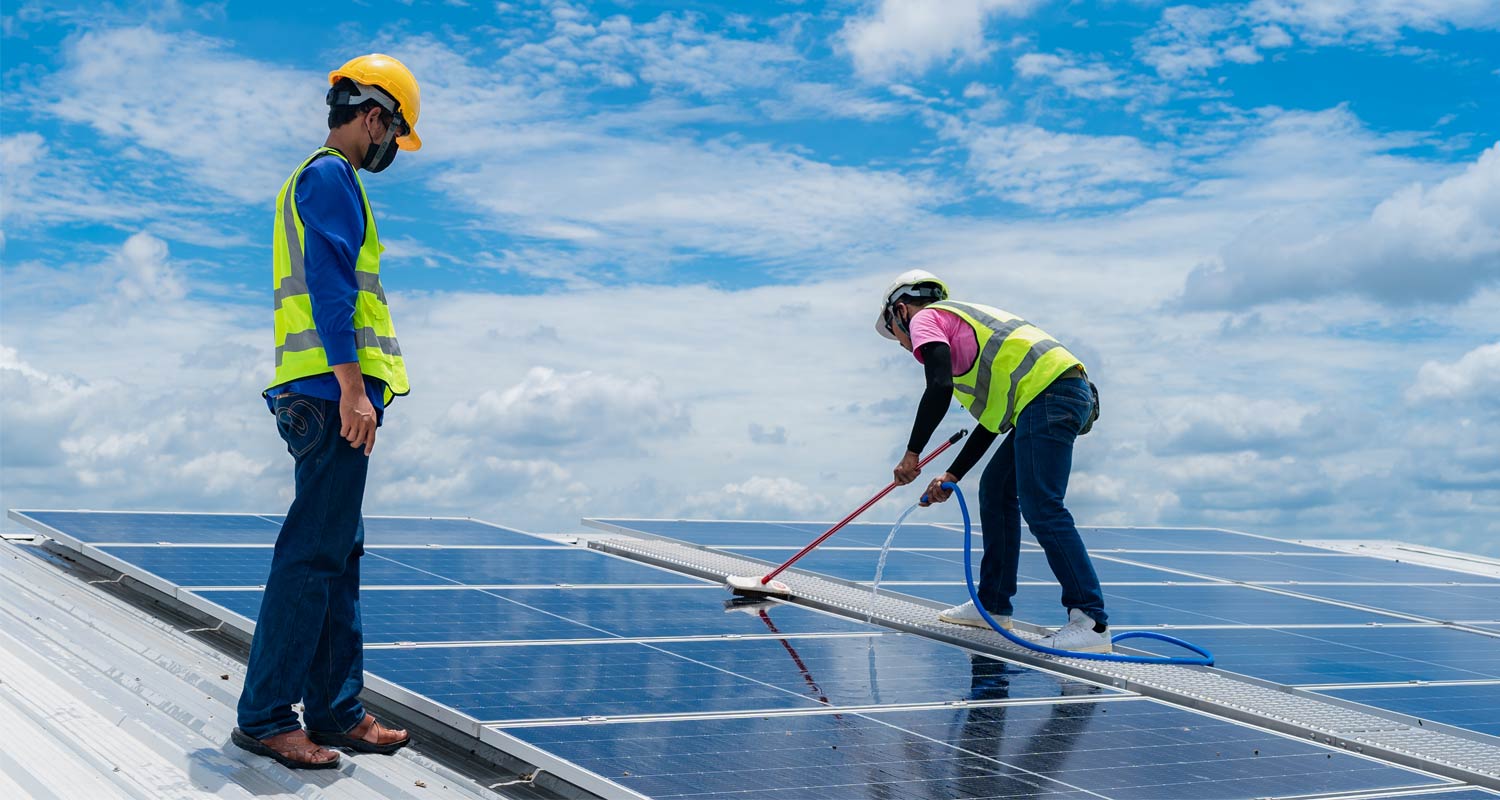
    At present, those who have invested in in-house solar capacity often maintain their connection to the main grid to cover periods when solar power is insufficient or unavailable.

    South African energy expert Anton Eberhard, using data from Eskom, has highlighted this significant transition. According to his analysis, the installed capacity of rooftop solar PV systems in South Africa has more than quadrupled between March 2022 and June 2023.

    Rooftop solar energy is a popular alternative because the country has high sunlight levels. It enjoys an average of 2 500 hours of sunshine every year.

    The role of local government

    Legislation mandates Eskom to generate electricity and sell it in bulk to municipalities. They then reticulate it to consumers. This means that local government is a significant stakeholder in the transition of consumers to off-grid power.

    Municipalities have the mandate to provide basic services, including electricity. Yet they stand to lose an important revenue source if more of their customers reduce electricity usage or delink from the grid.

    Read: South African banks’ solar financing options explored

    That’s why municipalities should revise their by-laws to create regulatory mechanisms for managing such a transition. By implementing by-laws that regulate electricity generation by consumers and their ability to feed into the grid, local governments can create an enabling environment for those who want to go off grid.

    There are still many municipalities that don’t see their role as enabling households to make the shift to clean energy

    The consent of municipalities is essential for those looking to adopt off-grid solutions. Various municipalities have, over the past three years, introduced regulations and by-laws that typically require compliance with safety and quality guidelines. These by-laws also ensure that off-grid installations, like solar panels, are safe and effective.

    In addition, municipalities require adherence to specific by-laws for consumers opting for a dual system: wanting to maintain connection to the grid while also installing small scale embedded generation systems, such as solar panels. Registration of these systems is often mandated for legal compliance and safety.

    This makes municipalities regulatory bodies as well as enablers in the shift towards sustainable and self-sufficient electricity generation. By setting these regulatory frameworks, they provide a structured path for consumers to pursue off-grid solutions. In turn, this aligns with the broader national goals of energy security and sustainability.

    Cape Town example

    Many municipalities also understand the need to create an enabling environment for households to generate their own power and sell their excess electricity to the national grid.

    For example, in January 2023, the City of Cape Town announced incentives for consumers who sell their surplus green energy to the national grid. These households can get credits against their other municipal accounts.

    Read: Home solar: the pros and cons of leasing vs buying

    But we found that there wasn’t consistency in approach. There are still many municipalities that don’t see their role as enabling households to make the shift to cleaner energy choices.The Conversation

    • The authors are Germarié Viljoen, associate professor of law, North-West University, and Felix Dube, senior lecturer in the department of public law, University of Pretoria
    • This article is republished from The Conversation under a Creative Commons licence

    Follow TechCentral on Google News Add TechCentral as your preferred source on Google


    Eskom Felix Dube Germarié Viljoen
    WhatsApp YouTube
    Share. Facebook Twitter LinkedIn WhatsApp Telegram Email Copy Link
    Previous ArticleMeta to deploy in-house chips to power AI drive
    Next Article Mozambique seeks to cut power supply to South Africa

    Related Posts

    South Africa's energy future hinges on getting wheeling right - Aishah Gire

    South Africa’s energy future hinges on getting wheeling right

    10 March 2026
    Eskom tariffs to surge on 1 April as Nersa blunder hits home

    Eskom tariffs to surge on 1 April as Nersa blunder hits home

    10 March 2026
    Eskom to rationalise AI pilots as costs rise

    Eskom to rationalise AI pilots as costs rise

    2 March 2026
    Company News
    Households still under big pressure, Altron Fintech index shows

    Households still under big pressure, Altron Fintech index shows

    13 March 2026
    How AI is changing the way we work - Angela Ho, Obsidian Systems

    How AI is changing the way we work

    12 March 2026
    Domains.co.za introduces complete domain protection service

    Domains.co.za introduces complete domain protection service

    12 March 2026
    Opinion
    South Africa's energy future hinges on getting wheeling right - Aishah Gire

    South Africa’s energy future hinges on getting wheeling right

    10 March 2026
    Hold the doom: the case for a South African comeback - Duncan McLeod

    Apple just dropped a bomb on the Windows world

    5 March 2026
    VC's centre of gravity is shifting - and South Africa is in the frame - Alison Collier

    VC’s centre of gravity is shifting – and South Africa is in the frame

    3 March 2026

    Subscribe to Updates

    Get the best South African technology news and analysis delivered to your e-mail inbox every morning.

    Latest Posts
    Post Office on the brink of collapse

    Post Office on the brink of collapse

    13 March 2026
    New policy direction targets South Africa's municipal broadband logjam - Solly Malatsi

    New policy direction targets South Africa’s municipal broadband logjam

    13 March 2026
    How electronic warfare is threatening ships and their crews

    How electronic warfare is threatening ships and their crews

    13 March 2026
    Rand slumps for second week

    Rand slumps for second week

    13 March 2026
    © 2009 - 2026 NewsCentral Media
    • Cookie policy (ZA)
    • TechCentral – privacy and Popia

    Type above and press Enter to search. Press Esc to cancel.

    Manage consent

    TechCentral uses cookies to enhance its offerings. Consenting to these technologies allows us to serve you better. Not consenting or withdrawing consent may adversely affect certain features and functions of the website.

    Functional Always active
    The technical storage or access is strictly necessary for the legitimate purpose of enabling the use of a specific service explicitly requested by the subscriber or user, or for the sole purpose of carrying out the transmission of a communication over an electronic communications network.
    Preferences
    The technical storage or access is necessary for the legitimate purpose of storing preferences that are not requested by the subscriber or user.
    Statistics
    The technical storage or access that is used exclusively for statistical purposes. The technical storage or access that is used exclusively for anonymous statistical purposes. Without a subpoena, voluntary compliance on the part of your Internet Service Provider, or additional records from a third party, information stored or retrieved for this purpose alone cannot usually be used to identify you.
    Marketing
    The technical storage or access is required to create user profiles to send advertising, or to track the user on a website or across several websites for similar marketing purposes.
    • Manage options
    • Manage services
    • Manage {vendor_count} vendors
    • Read more about these purposes
    View preferences
    • {title}
    • {title}
    • {title}