
Close Menu
TechCentralTechCentral

    Subscribe to the newsletter

    Get the best South African technology news and analysis delivered to your e-mail inbox every morning.

    Facebook X (Twitter) YouTube LinkedIn
    WhatsApp Facebook X (Twitter) LinkedIn YouTube
    TechCentralTechCentral
    • News
      South Africa planning big overhaul of public sector IT - State IT Agency Sita

      South Africa planning big overhaul of public sector IT

      23 April 2026
      Usaasa's 30-year run nears its end - Communications minister Solly Malatsi. Image c/o DCDT

      Usaasa’s 30-year run nears its end

      23 April 2026
      Charge to switch on first N3 off-grid EV stations in May - Joubert Roux

      Charge to switch on first N3 off-grid EV stations in May

      23 April 2026
      Middle-class South Africa is ditching streaming for AI

      Middle-class South Africa is ditching streaming for AI

      23 April 2026
      Mythos forces South African banks onto high alert - Graham Lee

      Mythos forces South African banks onto high alert

      23 April 2026
    • World
      More organic compounds detected on Mars - Nasa Curiosity rover

      More organic compounds detected on Mars

      21 April 2026
      Adobe bets on AI agents to fend off cheaper rivals

      Adobe bets on AI agents to fend off cheaper rivals

      16 April 2026
      Google poised to lose ad crown to Meta

      Google poised to lose ad crown to Meta

      14 April 2026
      Grand Theft Data - hackers hit Rockstar Games - Grand Theft Auto

      Grand Theft Data – hackers hit Rockstar Games

      14 April 2026
      UK PM Keir Starmer declares war on doomscrolling

      UK PM Keir Starmer declares war on doomscrolling

      13 April 2026
    • In-depth
      Africa switches on as Europe dims the lights

      Africa switches on as Europe dims the lights

      9 April 2026
      The biggest untapped EV market on Earth is hiding in plain sight

      The biggest untapped EV market on Earth is hiding in plain sight

      1 April 2026
      The R18-billion tech giant hiding in plain sight - Jens Montanana

      The R16-billion tech giant hiding in plain sight

      26 March 2026
      The last generation of coders

      The last generation of coders

      18 February 2026
      Sentech is in dire straits

      Sentech is in dire straits

      10 February 2026
    • TCS

      TCS+ | ‘The ISP for ISPs’: Vox’s shift to wholesale aggregator

      20 April 2026
      TCS | Werner Lindemann on how AI is rewriting the infosec rulebook

      TCS | Werner Lindemann on how AI is rewriting the infosec rulebook

      15 April 2026
      TCS | Donovan Marsh on AI and the future of filmmaking

      TCS | Donovan Marsh on AI and the future of filmmaking

      7 April 2026
      TCS+ | Vodacom Business moves to crack the SME tech gap - Andrew Fulton, Sannesh Beharie

      TCS+ | Vodacom Business moves to crack the SME tech gap

      7 April 2026
      TCS | MTN's Divysh Joshi on the strategy behind Pi - Divyesh Joshi

      TCS | MTN’s Divyesh Joshi on the strategy behind Pi

      1 April 2026
    • Opinion
      The conflict of interest at the heart of PayShap's slow adoption - Cheslyn Jacobs

      The conflict of interest at the heart of PayShap’s slow adoption

      26 March 2026
      South Africa's energy future hinges on getting wheeling right - Aishah Gire

      South Africa’s energy future hinges on getting wheeling right

      10 March 2026
      Hold the doom: the case for a South African comeback - Duncan McLeod

      Apple just dropped a bomb on the Windows world

      5 March 2026
      R230-million in the bag for Endeavor's third Harvest Fund - Alison Collier

      VC’s centre of gravity is shifting – and South Africa is in the frame

      3 March 2026
      Hold the doom: the case for a South African comeback - Duncan McLeod

      Hold the doom: the case for a South African comeback

      26 February 2026
    • Company Hubs
      • 1Stream
      • Africa Data Centres
      • AfriGIS
      • Altron Digital Business
      • Altron Document Solutions
      • Altron Group
      • Arctic Wolf
      • Ascent Technology
      • AvertITD
      • BBD
      • Braintree
      • CallMiner
      • CambriLearn
      • CYBER1 Solutions
      • Digicloud Africa
      • Digimune
      • Domains.co.za
      • ESET
      • Euphoria Telecom
      • HOSTAFRICA
      • Incredible Business
      • iONLINE
      • IQbusiness
      • Iris Network Systems
      • Kaspersky
      • LSD Open
      • Mitel
      • NEC XON
      • Netstar
      • Network Platforms
      • Next DLP
      • Ovations
      • Paracon
      • Paratus
      • Q-KON
      • SevenC
      • SkyWire
      • Solid8 Technologies
      • Telit Cinterion
      • Telviva
      • Tenable
      • Vertiv
      • Videri Digital
      • Vodacom Business
      • Wipro
      • Workday
      • XLink
    • Sections
      • AI and machine learning
      • Banking
      • Broadcasting and Media
      • Cloud services
      • Contact centres and CX
      • Cryptocurrencies
      • Education and skills
      • Electronics and hardware
      • Energy and sustainability
      • Enterprise software
      • Financial services
      • HealthTech
      • Information security
      • Internet and connectivity
      • Internet of Things
      • Investment
      • IT services
      • Lifestyle
      • Motoring
      • Policy and regulation
      • Public sector
      • Retail and e-commerce
      • Satellite communications
      • Science
      • SMEs and start-ups
      • Social media
      • Talent and leadership
      • Telecoms
    • Events
    • Advertise
    TechCentralTechCentral
    Home » Weekend » How religious fantasies dog Dungeons & Dragons

    How religious fantasies dog Dungeons & Dragons

    By The Conversation31 May 2015
    Twitter LinkedIn Facebook WhatsApp Email Telegram Copy Link
    News Alerts
    WhatsApp
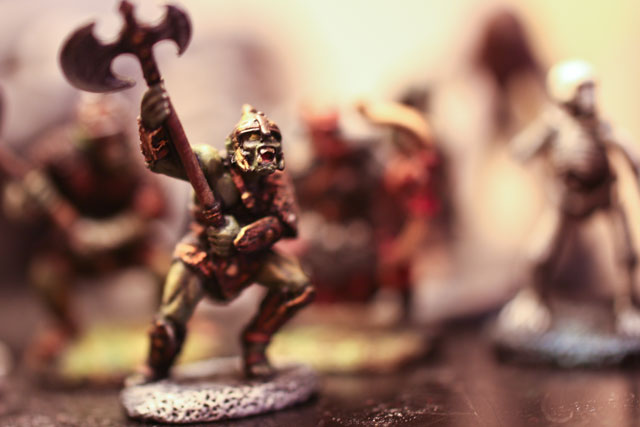
    A miniature orc from the popular role-playing game Dungeons & Dragons. Bart Heird/Flickr, CC BY-NC-ND
    A miniature orc from the popular role-playing game Dungeons & Dragons. Bart Heird/Flickr, CC BY-NC-ND

    Religion-fuelled conspiracy theories continue to pervade our culture.

    Today, some claim energy drinks are Satanic plots. Others argue that shape-shifting reptiles secretly rule the world. And musicians from Kanye West to Katy Perry have been accused of conducting occult Illuminati rituals disguised as harmless stage performances.

    But one of the strangest — and most persistent — conspiracy theories is the claim that the popular role-playing game Dungeons & Dragons (D&D) is actually a recruiting tool for Satanism.

    Last year, D&D celebrated its 40th anniversary, and the game’s publisher, Wizards of the Coast, has just announced a new transmedia storyline for the game called “Rage of Demons”.

    Since many of these raging demons, such as Orcus, Baphomet and Demogorgon, are drawn from “actual” myths and legends, it’s a fitting time to explore the real fear that D&D is a crash course in evil occultism.

    As a religion professor, I study the history and sociology of religious movements. While the opposition to D&D wasn’t always framed in religious terms, a particular strain of evangelical Christianity was the driving force behind the panic.

    Why were these Christians so bothered by a game? And why did they claim the game was ungodly instead of merely unwholesome? Exploring these questions led me to conclude that fantasy role-playing games (RPGs) do, in fact, share traits in common with religious worldviews. Conversely, religious worldviews can resemble RPGs.
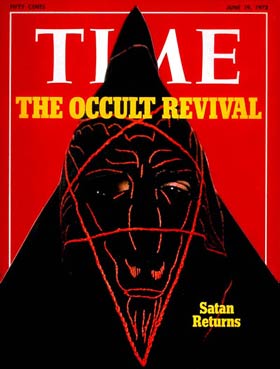
    Dungeons & Dragons was invented just as the nation was being swept with paranoia over an occult revival. Image: Time.com
    Dungeons & Dragons was invented just as the nation was being swept with paranoia over an occult revival. Image: Time.com

    In 1974, Dave Arneson and Gary Gygax created Dungeons & Dragons, the first commercially viable fantasy role-playing game. Fantasy RPGs usually involve players assuming the role of characters in an imaginary world. Complicated rules (often involving multi-sided dice) are used to determine the outcome of a character’s actions. D&D quickly spread through college campuses and filtered down to secondary schools, where it was incorporated into programmes for gifted children.

    Beginning in the 1980s, rumours abounded that the game caused players to dissociate from reality and commit suicide. The decade also saw the apogee of “Satanic Panic”: when a coalition of evangelicals, talk show hosts and dubious “occult crime” experts claimed that Satanic cabals had infiltrated all aspects of society. According to psychiatrists like Lawrence Pazder, these groups conducted horrifying rituals in secret in order to corrupt innocent children and create brainwashed cultists.

    Soon, church leaders, concerned parents, politicians and others began to claim that the Satanists had created D&D to indoctrinate children into the occult. They formed coalitions, petitioned federal agencies and worked to shut down school-based D&D clubs. Many of the self-proclaimed experts were invited to special police seminars on “occult crime”, where they claimed D&D led directly to involvement in criminal cults. They even drafted documents to help police interrogate adolescent players.

    However, in many ways, RPGs and religious cultures aren’t so different: both involve a collective effort to construct and inhabit an alternative reality that is uniquely meaningful. Whereas gamers explore alternate realities using dice, character sheets and narrative, religious communities use sermons, hymns and rituals to create a sense of connection to another world.

    The key difference is the frame through which this reality is understood. For role players, it’s purely fantasy. Religious cultures, on the other hand, generally regard otherworldly realities as real.

    Watch: Satanic Panic: Christian broadcast network JCTV profiled a man who claimed to have been corrupted by Dungeons & Dragons:

    Who led the charge?
    One area in which this line of thinking can serve as an interpretive lens is the phenomenon of conspiracy theories.

    In a 2000 interview, D& D creator Gary Gygax suggested that it is the claims-makers — rather than the gamers — whose grasp of reality is poor:

    That a group playing a fantasy RPG will lose touch with reality or become “mind-controlled” is completely fatuous. This is obvious to any observer of or participant in RPG activity. Those who claim such an effect is possible are the ones who have lost touch with reality.

    Indeed, when I traced the claims about the dangers of D&D back to their sources, I arrived at a handful of people who appear to have been either hopelessly uncritical, liars or mentally disturbed.

    Figures who claimed D&D was a Satanic conspiracy included Patricia Pulling, founder of Bothered About Dungeons and Dragons (and author of The Devil’s Web: Who Is Stalking Your Children for Satan?), evangelist Mike Warnke, conspiracy theorist John Todd and author William Schnoebelen.

    Warnke, Todd and Schnoebelen all claimed to have been powerful leaders of Satanic cults before converting to Christianity — claims that were eventually debunked in various Christian publications.

    Cut from the same cloth
    Interestingly, the Satanic conspiracies of the 1980s were constructed from many of the same elements as D&D — especially 1960s horror media. Some of D&D creator Dave Arneson’s early ideas for the game came from Creature Features — local TV programming featuring schlocky monster movies — and the vampire soap opera Dark Shadows.

    But anti-D&D crusader Mike Warnke also confessed to loving Creature Features and other horror films as a child. Meanwhile, John Todd claimed to have been brought up in a family of witches named Collins who settled in the New England colonies — a plot line lifted from Dark Shadows.

    A still from the TV series Dark Shadows. Source: Wikimedia Commons
    A still from the TV series Dark Shadows. Source: Wikimedia Commons

    As play worlds crafted from similar elements, Satanic conspiracy theories and D&D weirdly mirrored each other: both were replete with themes of fighting against demonic evil.

    The difference, of course, is that while D&D is just a game, the conspiracy theorists refused to admit their play worlds were imaginary.

    Play as inspiration and escape
    Each of these figures described a parallel world in which they were opposed by Satanic forces. To them, their choices carried tremendous importance. But it doesn’t enhance our understanding to medicalise their behaviour or dismiss these figures as “insane”.

    Generally, paranoid schizophrenics do not publish books, organise speaking tours at local churches or collaborate with like-minded people. Rather, the strange views of these conspiracy theorists seem to be the product of play not unlike an RPG. Their theories present an enchanted world in which they can assume heroic roles.

    Play is a serious thing. It creates a situation in which real-world elements may be removed from their established order, reassessed and repurposed. A child at play can take a banana and imagine it is a phone, a pistol or a yellow rocket ship. In play, we have the power to reimagine the world.

    Theorists such as Johan Huizinga — and, more recently, Robert Bellah — have argued that all human culture, including religion, was derived from play.

    Bellah even called play “the first alternative reality” from which the frames of science, philosophy and religion are ultimately derived.

    In a sense, conspiracy theories are a form of “corrupted play”, in which the frame of play is lost and the game passes for reality.

    One factor contributing to this corruption of play may be the emphasis on Biblical inerrancy — the idea that Bible stories are “true” in the same sense that historical and scientific claims are “true”.

    This frame of religious thinking accompanied the rise of Fundamentalism in the early 20th century.

    And with this move comes a suspicion of discrete frames of meaning. Several of the anti-D&D crusaders claimed that when players “imagine” a demon, they are actually having a metaphysical encounter with a real demon. Others claimed that the imagination itself is an unbiblical and heretical faculty.

    Because imagination and reality were confounded together, people from these religious cultures had no alternative reality onto which to project their natural, heroic fantasies. They could battle evil only if that evil was given a literal existence in the form of demonic paranoia and conspiracy theories.

    In this sense, the impulse to spin conspiracy theories is a kind of spiritual malaise that arises from a sense of disenchantment, combined with a fear of the imagination.

    The irony is that the conspiracy theorists who claimed D&D was Satanic were the ones who could have benefited the most from playing it.The Conversation

    • Joseph P Laycock is assistant professor of religious Studies at Texas State University
    • This article was originally published on The Conversation

    Follow TechCentral on Google News Add TechCentral as your preferred source on Google


    D&D Dungeons & Dragons Dungeons and Dragons
    WhatsApp YouTube
    Share. Facebook Twitter LinkedIn WhatsApp Telegram Email Copy Link
    Previous ArticleHow pricey Internet holds back Africa
    Next Article A year on, the telecoms minister has achieved little
    Company News
    Security by design is the channel's strongest pitch - Othelo Vieira

    Security by design is the channel’s strongest pitch

    23 April 2026
    Your brand is invisible to the AI that's choosing your competitor - Michelle Losco

    Your brand is invisible to the AI that’s choosing your competitor

    23 April 2026
    How AnyDesk is redefining remote access for African enterprises

    How AnyDesk is redefining remote access for African enterprises

    22 April 2026
    Opinion
    The conflict of interest at the heart of PayShap's slow adoption - Cheslyn Jacobs

    The conflict of interest at the heart of PayShap’s slow adoption

    26 March 2026
    South Africa's energy future hinges on getting wheeling right - Aishah Gire

    South Africa’s energy future hinges on getting wheeling right

    10 March 2026
    Hold the doom: the case for a South African comeback - Duncan McLeod

    Apple just dropped a bomb on the Windows world

    5 March 2026

    Subscribe to Updates

    Get the best South African technology news and analysis delivered to your e-mail inbox every morning.

    Latest Posts
    South Africa planning big overhaul of public sector IT - State IT Agency Sita

    South Africa planning big overhaul of public sector IT

    23 April 2026
    Usaasa's 30-year run nears its end - Communications minister Solly Malatsi. Image c/o DCDT

    Usaasa’s 30-year run nears its end

    23 April 2026
    Charge to switch on first N3 off-grid EV stations in May - Joubert Roux

    Charge to switch on first N3 off-grid EV stations in May

    23 April 2026
    Middle-class South Africa is ditching streaming for AI

    Middle-class South Africa is ditching streaming for AI

    23 April 2026
    © 2009 - 2026 NewsCentral Media
    • Cookie policy (ZA)
    • TechCentral – privacy and Popia

    Type above and press Enter to search. Press Esc to cancel.

    Manage consent

    TechCentral uses cookies to enhance its offerings. Consenting to these technologies allows us to serve you better. Not consenting or withdrawing consent may adversely affect certain features and functions of the website.

    Functional Always active
    The technical storage or access is strictly necessary for the legitimate purpose of enabling the use of a specific service explicitly requested by the subscriber or user, or for the sole purpose of carrying out the transmission of a communication over an electronic communications network.
    Preferences
    The technical storage or access is necessary for the legitimate purpose of storing preferences that are not requested by the subscriber or user.
    Statistics
    The technical storage or access that is used exclusively for statistical purposes. The technical storage or access that is used exclusively for anonymous statistical purposes. Without a subpoena, voluntary compliance on the part of your Internet Service Provider, or additional records from a third party, information stored or retrieved for this purpose alone cannot usually be used to identify you.
    Marketing
    The technical storage or access is required to create user profiles to send advertising, or to track the user on a website or across several websites for similar marketing purposes.
    • Manage options
    • Manage services
    • Manage {vendor_count} vendors
    • Read more about these purposes
    View preferences
    • {title}
    • {title}
    • {title}

