Close Menu
TechCentralTechCentral

    Subscribe to the newsletter

    Get the best South African technology news and analysis delivered to your e-mail inbox every morning.

    Facebook X (Twitter) YouTube LinkedIn
    WhatsApp Facebook X (Twitter) LinkedIn YouTube
    TechCentralTechCentral
    • News
      Absa's AI is writing its code and answering its calls - Johnson Idesoh

      Absa’s AI is writing its code and answering its calls

      19 August 2026
      WhatsApp's free lunch ends on 1 October

      WhatsApp’s free lunch ends on 1 October

      19 August 2026
      South Afircan inflation breaks its upward run

      South African inflation breaks its upward run

      19 August 2026
      Nissan's Rosslyn plant buyer now also builds police robots

      Nissan’s Rosslyn plant buyer now also builds police robots

      19 August 2026
      A hidden charge in your electricity bill is being scrapped - Kgosientsho Ramokgopa

      A hidden charge in your electricity bill is being scrapped

      19 August 2026
    • World
      Russia building its own Starlink - and faster than expected - Vadym Skibitskyi

      Russia building its own Starlink – and faster than expected

      11 August 2026
      Meta AI will now tell parents if their teen is in crisis

      Meta AI will now tell parents if their teen is in crisis

      17 July 2026
      IBM shares crash 25% as AI upends software spending - Arvind Krishna

      IBM shares crash 25% as AI upends software spending

      15 July 2026
      Jony Ive's first OpenAI device: an AI smart speaker - Jony Ive and Sam Altman

      Jony Ive’s first OpenAI device: an AI smart speaker

      15 July 2026
      Stripe, Advent in talks to buy PayPal for $53-billion

      Stripe, Advent in talks to buy PayPal for $53-billion

      15 July 2026
    • In-depth
      Google DeepMind CEO Demis Hassabis. Image: John Sears

      The plan to stop AI from breaking the world

      16 July 2026
      The internet has a Strait of Hormuz problem

      The internet has a Strait of Hormuz problem

      15 July 2026
      AI boom sparks rally, frenzy and fear

      AI boom sparks rally, frenzy and fear

      11 June 2026
      Every plug-in hybrid on sale in South Africa, ranked by price - Lamborghini Temerario

      Every plug-in hybrid on sale in South Africa, ranked by price

      7 June 2026
      What Wi-Fi 8 will mean for wireless networks

      What Wi-Fi 8 will mean for wireless networks

      1 June 2026
    • TCS
      Meet the CIO | Discovery's Derek Wilcocks on AI, guardrails and growth

      Meet the CIO | Derek Wilcocks on how AI personalised Vitality

      13 August 2026
      TCS | Money just became native to the internet - Steven Boykey Sidley

      TCS | Money just became native to the internet – Steven Boykey Sidley

      12 August 2026
      TCS+ | Specops' Darren James on continuous trust in an AI world

      TCS+ | Specops’ Darren James on continuous trust in an AI world

      7 August 2026
      TCS+ | How AI is turning hardware into a subscription service - Shane van der Merwe Merchant West

      TCS+ | How AI is turning hardware into a subscription service

      6 August 2026
      TCS+ | Why South African workers must become supervisors of digital labour - Accelera Digital Group Cliff de Wit

      TCS+ | Why South African workers must become supervisors of digital labour

      31 July 2026
    • Opinion
      The author, Jannie van Zyl

      Selling vapour is corporate suicide in slow motion

      16 July 2026
      Brazil's online gambling crackdown is a lesson for South Africa

      How Amazon outmanoeuvred Starlink in South Africa

      15 July 2026
      The Popia problem with agentic AI - Herman Haasbroek

      The Popia problem with agentic AI

      14 July 2026
      The author, Fanie van Rooyen

      South Africa can still catch the AI wave – here’s how

      7 July 2026
      The author, Fanie van Rooyen

      The AI utopia South Africa can’t afford

      1 July 2026
    • Company Hubs
      • 1Stream
      • Africa Data Centres
      • AfriGIS
      • Altron Digital Business
      • Altron Document Solutions
      • Altron Group
      • Arctic Wolf
      • Ascent Technology
      • AvertITD
      • BBD
      • Braintree
      • CallMiner
      • CambriLearn
      • CM Telecom
      • Contactable
      • CYBER1 Solutions
      • Digicloud Africa
      • Digimune
      • Domains.co.za
      • ESET
      • Euphoria Telecom
      • HOSTAFRICA
      • Incredible Business
      • iONLINE
      • IQbusiness
      • Iris Network Systems
      • Kaspersky
      • LSD Open
      • Mitel
      • NEC XON
      • Netstar
      • Network Platforms
      • Next DLP
      • Ovations
      • Paracon
      • Paratus
      • Q-KON
      • SevenC
      • SkyWire
      • Solid8 Technologies
      • Telit Cinterion
      • Telviva
      • Tenable
      • Vertiv
      • Videri Digital
      • Vodacom Business
      • Vox
      • Wipro
      • Workday
      • XLink
    • Sections
      • AI and machine learning
      • Banking
      • Broadcasting and Media
      • Cloud services
      • Contact centres and CX
      • Cryptocurrencies
      • Education and skills
      • Electronics and hardware
      • Energy and sustainability
      • Enterprise software
      • Financial services
      • HealthTech
      • Information security
      • Internet and connectivity
      • Internet of Things
      • Investment
      • IT services
      • Lifestyle
      • Policy and regulation
      • Public sector
      • Retail and e-commerce
      • Satellite communications
      • Science
      • SMEs and start-ups
      • Social media
      • Talent and leadership
      • Telecoms
      • Watts & Wheels
    • Events
    • Advertise
    TechCentralTechCentral
    Home » Sections » Telecoms » Icasa wants operators to learn to share spectrum

    Icasa wants operators to learn to share spectrum

    Icasa wants spectrum to be shared and dynamically allocated based on demand, time, location and usage patterns.
    By Nkosinathi Ndlovu25 June 2024
    Twitter LinkedIn Facebook WhatsApp Email Telegram Copy Link
    News Alerts
    WhatsApp

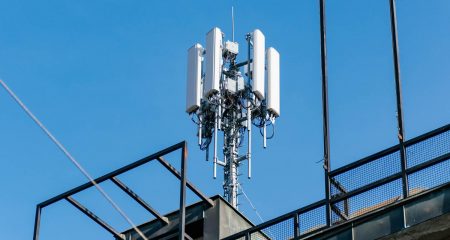
    Icasa wants operators to learn to share spectrumIcasa is creating a framework that will allow for spectrum to be shared and dynamically allocated to different licensees depending on demand, time, location and usage patterns.

    The communications regulator has asked stakeholders to supply it with information about the type of systems that can be used to manage spectrum access in the 3.8GHz-4.2GHz and 5.925GHz-6.425GHz frequency bands.

    It intends running dynamic spectrum allocation simulations that, along with input from the public, will inform the structure of a governing framework for dynamic spectrum access.

    The move to a database-driven and dynamic system for managing spectrum is in line with international trends

    “A draft regulatory sandbox will be developed for public consultation with the aim of facilitating the implementation of the dynamic spectrum access and opportunistic spectrum management framework,” Icasa said in a notice published in the Government Gazette published last week.

    Implementing dynamic spectrum sharing doesn’t come without its challenges. According to Paul Colmer, regulatory expert at the Wireless Access Providers’ Association, occupancy of the frequencies around 4GHz includes C-band satellite providers, while spectrum around 6GHz has been allocated for unlicensed indoor Wi-Fi applications.

    “This exercise by Icasa is to see if the incumbents and others (such as mobile operators) can coexist in these bands using a database system,” Colmer explained.

    Interference

    “To write the regulations, Icasa needs to know who is [using the spectrum] and what they are doing [with it], because that information will go into the database. The database will help determine how to channel traffic so there is no interference with the incumbent [users of the spectrum],” said Colmer.

    He said Icasa’s spectrum-sharing plan will quadruple the amount of spectrum that wireless service providers have access to, allowing them to provide faster internet of 500Mbit/s or more to consumers.

    Read: Vodacom drags Icasa to court over ‘secret’ spectrum deals

    “This will be huge for us, just as it’s been in the rest of the world. At this moment, this is very clean spectrum because there are few people in those bands. Icasa is following worldwide trends, which is right,” said Colmer.

    Proponents of dynamic spectrum allocation say it is more efficient than the “static” spectrum allocation model preferred in South Africa until now. In the static model, an entity – such as a television broadcaster or a mobile network operator – is assigned a block of spectrum that no one else is allowed to use. In practice, this leads to wastage.

    Paul Colmer of the Wireless Access Providers’ Association

    For example, a mobile operator with exclusive rights over a specific frequency band may utilise all that spectrum in an urban area, where there is a lot of demand, but only a small portion in rural settings. The unused portion of spectrum could be shared with another company, like a broadcaster or a wireless service provider.

    Icasa’s move to a database-driven and dynamic system for managing spectrum allocation is in line with international trends.

    “While spectrum database coordination is not a new concept, the evolution from a manual to dynamic approach has proven essential when looking to use spectrum more efficiently,” said Martha Suarez, president of the Dynamic Spectrum Alliance, a global non-profit that advocates for the efficient use of spectrum. Suarez made the remarks at the release of its Solving the Spectrum Crunch white paper last October.

    TV white spaces hasn’t been successful, but the principle is important – and that is what Icasa is taking forward

    “Dynamic spectrum management systems enable lower transaction costs, speed up time to market and protect incumbents from interference. Regulators across the globe should be encouraged to embrace modern spectrum management tools to meet the growing demand for broadband access,” said Suarez.

    Different models for spectrum sharing and dynamic allocation of that spectrum have been implemented around the world. Icasa has not said which model it will use for spectrum sharing – probably because it hasn’t made a decision yet.

    Principle

    Rolf Blom, a regulatory specialist at telecoms legal advisory Ellipsis, said Icasa’s latest plan is a continuation of its efforts to use high-demand spectrum – frequencies where demand exceeds supply – more efficiently.

    “When Icasa did phase 1 of this process and opened up TV white spaces, it gave the industry hope that things would work in different way. I don’t think TV white spaces has been successful, but the principle is important – and that is what Icasa is taking forward here,” said Blom.  – © 2024 NewsCentral Media

    Read next: South Africa takes a step closer to spectrum trading

    Follow TechCentral on Google News Add TechCentral as your preferred source on Google


    Elipsis Icasa Paul Colmer Wapa Wireless Access Providers Association
    WhatsApp YouTube
    Share. Facebook Twitter LinkedIn WhatsApp Telegram Email Copy Link
    Previous ArticleNew trade minister must have strong tech focus: Takealot
    Next Article Licensed fixed-wireless access holds its own against fibre

    Related Posts

    Starlink direct-to-mobile network launched in key Sadc country

    Starlink direct-to-mobile network launched in key Sadc country

    17 August 2026
    Still no end in sight to South Africa's digital migration saga

    Still no end in sight to South Africa’s digital migration saga

    17 August 2026
    Icasa retracts collusion claim against mobile operators

    Icasa retracts collusion claim against mobile operators

    14 August 2026
    Company News
    Fidelity turns to Sigfox to spot fires before they start

    Fidelity turns to Sigfox to spot fires before they start

    19 August 2026
    Paratus Rwanda marks first year with AfPIF opening reception

    Paratus Rwanda marks first year with AfPIF opening reception

    18 August 2026
    Digital sovereignty on the agenda at Africa Cybersecurity Indaba

    Digital sovereignty on the agenda at Africa Cybersecurity Indaba

    18 August 2026
    Opinion
    The author, Jannie van Zyl

    Selling vapour is corporate suicide in slow motion

    16 July 2026
    Brazil's online gambling crackdown is a lesson for South Africa

    How Amazon outmanoeuvred Starlink in South Africa

    15 July 2026
    The Popia problem with agentic AI - Herman Haasbroek

    The Popia problem with agentic AI

    14 July 2026

    Subscribe to Updates

    Get the best South African technology news and analysis delivered to your e-mail inbox every morning.

    Latest Posts
    Absa's AI is writing its code and answering its calls - Johnson Idesoh

    Absa’s AI is writing its code and answering its calls

    19 August 2026
    Fidelity turns to Sigfox to spot fires before they start

    Fidelity turns to Sigfox to spot fires before they start

    19 August 2026
    WhatsApp's free lunch ends on 1 October

    WhatsApp’s free lunch ends on 1 October

    19 August 2026
    South Afircan inflation breaks its upward run

    South African inflation breaks its upward run

    19 August 2026
    © 2009 - 2026 NewsCentral Media
    Built and maintained by Chronon
    • Cookie policy (ZA)
    • TechCentral – privacy and Popia

    Type above and press Enter to search. Press Esc to cancel.

    Manage consent

    TechCentral uses cookies to enhance its offerings. Consenting to these technologies allows us to serve you better. Not consenting or withdrawing consent may adversely affect certain features and functions of the website.

    Functional Always active
    The technical storage or access is strictly necessary for the legitimate purpose of enabling the use of a specific service explicitly requested by the subscriber or user, or for the sole purpose of carrying out the transmission of a communication over an electronic communications network.
    Preferences
    The technical storage or access is necessary for the legitimate purpose of storing preferences that are not requested by the subscriber or user.
    Statistics
    The technical storage or access that is used exclusively for statistical purposes. The technical storage or access that is used exclusively for anonymous statistical purposes. Without a subpoena, voluntary compliance on the part of your Internet Service Provider, or additional records from a third party, information stored or retrieved for this purpose alone cannot usually be used to identify you.
    Marketing
    The technical storage or access is required to create user profiles to send advertising, or to track the user on a website or across several websites for similar marketing purposes.
    • Manage options
    • Manage services
    • Manage {vendor_count} vendors
    • Read more about these purposes
    View preferences
    • {title}
    • {title}
    • {title}