Energy regulator Nersa will be required to publish a rolling 10-year electricity price forecast, and Eskom and municipalities will be barred from recovering unpaid customer debt through tariffs, under a revised pricing policy that goes out for public comment on Friday.
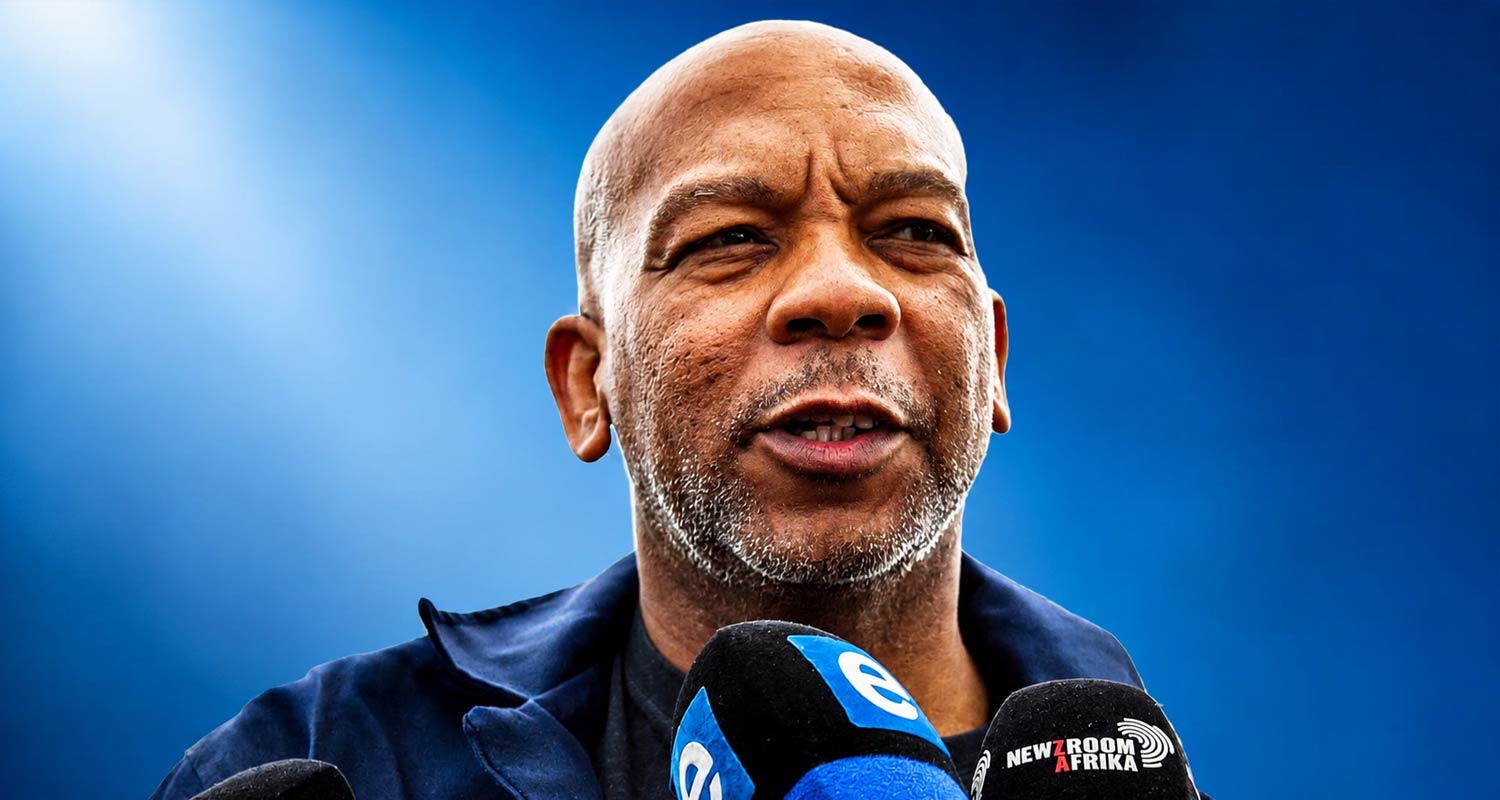
Energy minister Kgosientsho Ramokgopa outlined the revised electricity pricing policy at a media briefing in Pretoria on Tuesday. Cabinet approved its publication for comment on 30 July. It replaces the 2008 pricing policy and is meant to align tariff setting with the unbundling of Eskom and the Electricity Regulation Amendment Act of 2024.
The forecast requirement is aimed at industrial investors. “For heavy industries, when people want to make significant investments in the South African economy, and they’re investing in a sector that relies on electricity, they want to compute their return on investment,” Ramokgopa said. “If electricity is a big part of the input cost, you need to have an appreciation of what the price path looks like.”
The second change has a measurable effect on bills. Between 1% and 2.5% of the current tariff covers what Eskom and municipalities cannot collect from non-paying and illegally connected customers, according to Ramokgopa. “In terms of this policy, that’s not allowed,” he said.
Municipalities will have to justify their electricity costs through cost-of-supply studies rather than loading unrecovered debt onto paying customers. Municipal arrears to Eskom stand at about R110-billion, and the utility’s distribution unit cannot be separated out until that is resolved.
Against that, tariffs have risen by more than 900% since 2007 on the minister’s own numbers, against inflation of roughly 150% in the same period. Increases have run at 15.63% in 2021/2022, 9.61% in 2022/2023, 18.7% in 2023/2024, 12.7% in 2024/2025 and 12.74% in 2025/2026, and Eskom direct customers absorbed a further 8.76% on 1 April after Nersa admitted it had miscalculated the sixth multi-year price determination. The policy does not reverse any of that.
Wholesale market
Ramokgopa also set out rules for a market in which Eskom is no longer the only seller. “We’re going to allow a bilateral arrangement, where someone who is a generator can enter into an agreement with someone who is an off-taker,” he said. “Off-takers are entering into bilateral arrangements outside the realm of Eskom for the supply of electricity. That means that there’s a set of rules that must govern this new dispensation.”
The country is moving towards a wholesale market, he said, which the policy has to accommodate. Eskom has proposed a four-subsidiary structure for that market.
Read: Why the AI gold rush may be smaller than Eskom hopes
On social protection, the department plans a central national database for free basic electricity, integrated with home affairs and social grant records so that qualifying households are identified automatically. Ramokgopa said in May the 50kWh monthly allocation was under review, with preliminary indications that 150kWh would be adequate.
The policy also widens the Negotiated Pricing Agreement instrument, under which electricity-intensive industries can obtain concessional rates. At present a company must be in financial distress to qualify.

“We’re also introducing another criterion,” Ramokgopa said. “This could be industries that are not in distress, but if they were to get concessional funding, they’re able to support the national interest in that they’ll be able to accelerate the growth in the priority sectors of the economy; they’ll be able to create employment.”
He did not say who would decide which companies qualify, on what criteria, or how the resulting discounts would be funded.
The policy is due to be gazetted for public comment on Friday. Neither Eskom nor Nersa commented on Tuesday. – Reporting with SANews
- Subscribe to TechCentral’s daily newsletter
- Get breaking news alerts on WhatsApp