Close Menu
TechCentralTechCentral

    Subscribe to the newsletter

    Get the best South African technology news and analysis delivered to your e-mail inbox every morning.

    Facebook X (Twitter) YouTube LinkedIn
    WhatsApp Facebook X (Twitter) LinkedIn YouTube
    TechCentralTechCentral
    • News
      Nedbank hires MTN's former tech chief as group CIO - Nikos Angelopoulos

      Nedbank hires MTN’s former tech chief as group CIO

      31 July 2026
      Eskom's diesel bill falls 86% as breakdowns hit eight-year low

      Eskom’s diesel bill falls 86% as breakdowns hit eight-year low

      31 July 2026
      Ramaphosa signs off on taking the grid away from Eskom

      Ramaphosa signs off on taking the grid away from Eskom

      31 July 2026
      Microsoft just had the biggest day in stock market history

      Microsoft just had the biggest day in stock market history

      31 July 2026
      MTN Nigeria's growth engine stalled in second quarter - Karl Toriola

      MTN Nigeria’s growth engine stalled in second quarter

      31 July 2026
    • World
      Meta AI will now tell parents if their teen is in crisis

      Meta AI will now tell parents if their teen is in crisis

      17 July 2026
      IBM shares crash 25% as AI upends software spending - Arvind Krishna

      IBM shares crash 25% as AI upends software spending

      15 July 2026
      Jony Ive's first OpenAI device: an AI smart speaker - Jony Ive and Sam Altman

      Jony Ive’s first OpenAI device: an AI smart speaker

      15 July 2026
      Stripe, Advent in talks to buy PayPal for $53-billion

      Stripe, Advent in talks to buy PayPal for $53-billion

      15 July 2026
      Memory crisis sends smartphone market into steep decline

      Memory crisis sends smartphone market into steep decline

      13 July 2026
    • In-depth
      The plan to stop AI from breaking the world - Google DeepMind CEO Demis Hassabis. Image: John Sears

      The plan to stop AI from breaking the world

      16 July 2026
      The internet has a Strait of Hormuz problem

      The internet has a Strait of Hormuz problem

      15 July 2026
      AI boom sparks rally, frenzy and fear

      AI boom sparks rally, frenzy and fear

      11 June 2026
      Every plug-in hybrid on sale in South Africa, ranked by price - Lamborghini Temerario

      Every plug-in hybrid on sale in South Africa, ranked by price

      7 June 2026
      What Wi-Fi 8 will mean for wireless networks

      What Wi-Fi 8 will mean for wireless networks

      1 June 2026
    • TCS
      TCS+ | Why South African workers must become supervisors of digital labour - Accelera Digital Group Cliff de Wit

      TCS+ | Why South African workers must become supervisors of digital labour

      31 July 2026
      TCS | Rapid deployment rules can't work without municipalities: ACT - Nomvuyiso Batyi

      TCS | Icasa’s rules skip the real bottleneck: ACT

      30 July 2026
      TCS+ | iStore Business on why Apple makes sense for SMEs - Sudesh Pillay and Tamia Nontsikelelo

      TCS+ | iStore Business on why Apple makes sense for SMEs

      30 July 2026
      TCS+ | A smarter approach to cloud for South African businesses - Joel Chacko and Jonathan Oaker

      TCS+ | A smarter approach to cloud for South African businesses

      28 July 2026
      TCS | How Optasia lends billions to people banks can't see - Salvador Anglada

      TCS | How Optasia lends billions to people banks can’t see

      23 July 2026
    • Opinion
      The author, Jannie van Zyl

      Selling vapour is corporate suicide in slow motion

      16 July 2026
      Brazil's online gambling crackdown is a lesson for South Africa

      How Amazon outmanoeuvred Starlink in South Africa

      15 July 2026
      The Popia problem with agentic AI - Herman Haasbroek

      The Popia problem with agentic AI

      14 July 2026
      The author, Fanie van Rooyen

      South Africa can still catch the AI wave – here’s how

      7 July 2026
      The author, Fanie van Rooyen

      The AI utopia South Africa can’t afford

      1 July 2026
    • Company Hubs
      • 1Stream
      • Africa Data Centres
      • AfriGIS
      • Altron Digital Business
      • Altron Document Solutions
      • Altron Group
      • Arctic Wolf
      • Ascent Technology
      • AvertITD
      • BBD
      • Braintree
      • CallMiner
      • CambriLearn
      • CM Telecom
      • Contactable
      • CYBER1 Solutions
      • Digicloud Africa
      • Digimune
      • Domains.co.za
      • ESET
      • Euphoria Telecom
      • HOSTAFRICA
      • Incredible Business
      • iONLINE
      • IQbusiness
      • Iris Network Systems
      • Kaspersky
      • LSD Open
      • Mitel
      • NEC XON
      • Netstar
      • Network Platforms
      • Next DLP
      • Ovations
      • Paracon
      • Paratus
      • Q-KON
      • SevenC
      • SkyWire
      • Solid8 Technologies
      • Telit Cinterion
      • Telviva
      • Tenable
      • Vertiv
      • Videri Digital
      • Vodacom Business
      • Vox
      • Wipro
      • Workday
      • XLink
    • Sections
      • AI and machine learning
      • Banking
      • Broadcasting and Media
      • Cloud services
      • Contact centres and CX
      • Cryptocurrencies
      • Education and skills
      • Electronics and hardware
      • Energy and sustainability
      • Enterprise software
      • Financial services
      • HealthTech
      • Information security
      • Internet and connectivity
      • Internet of Things
      • Investment
      • IT services
      • Lifestyle
      • Policy and regulation
      • Public sector
      • Retail and e-commerce
      • Satellite communications
      • Science
      • SMEs and start-ups
      • Social media
      • Talent and leadership
      • Telecoms
      • Watts & Wheels
    • Events
    • Advertise
    TechCentralTechCentral
    Home » Sections » Science » In big shake-up, CSIR vows to embrace the private sector

    In big shake-up, CSIR vows to embrace the private sector

    By Duncan McLeod4 April 2019
    Twitter LinkedIn Facebook WhatsApp Email Telegram Copy Link
    News Alerts
    WhatsApp
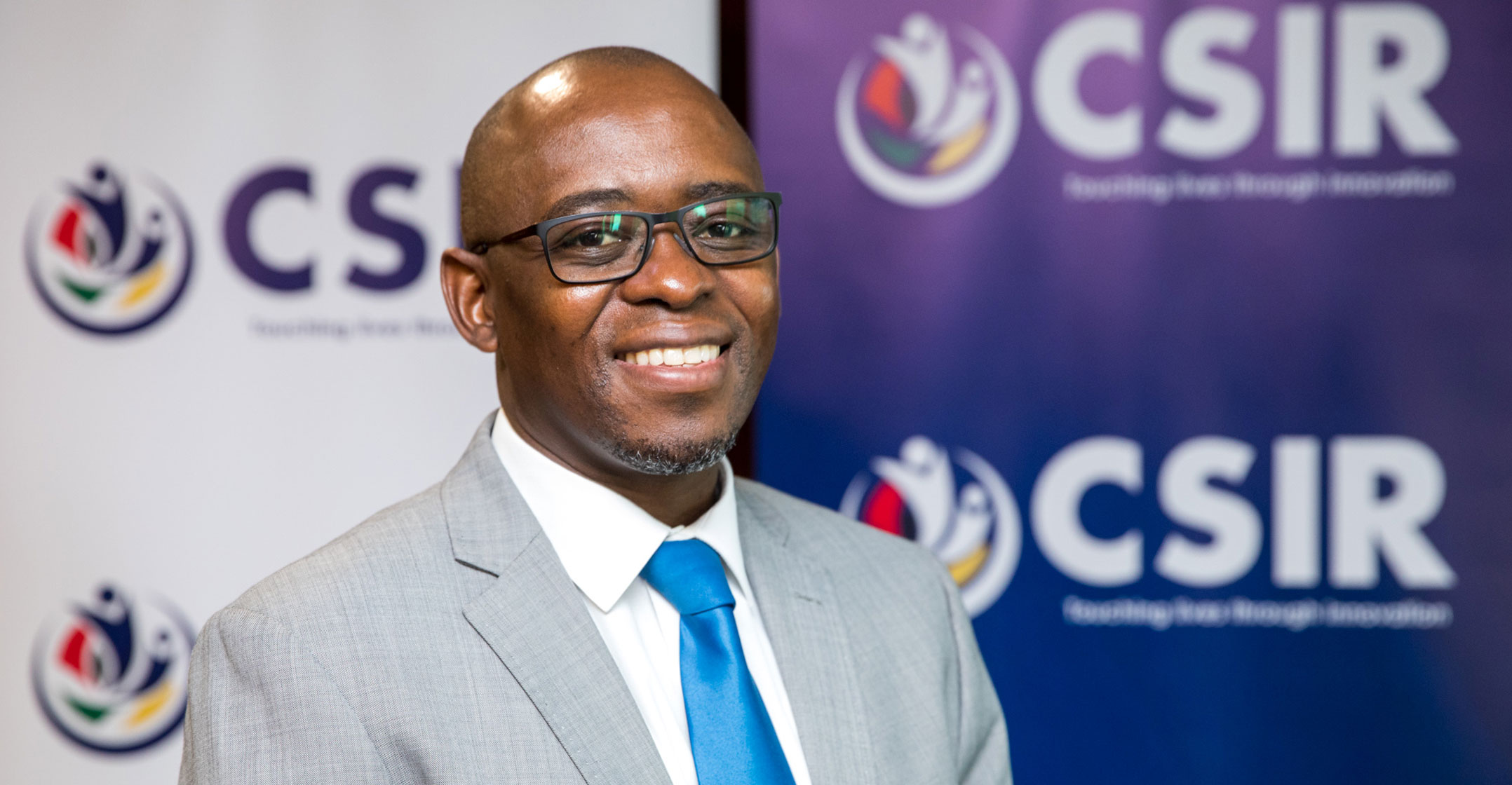
    CSIR CEO Thulani Dlamini

    The Council for Scientific & Industrial Research (CSIR) wants to engage much more actively with the private sector as it rolls out a new strategic plan to grow its revenue from industry and reduce its reliance on public-sector income.

    Speaking to TechCentral in an exclusive interview in Pretoria on Thursday, CEO Thulani Dlamini and chairman Thokozani Majozi set out how the 74-year-old institution – which was founded at the end of the second World War – intends restructuring itself to assist the private sector to a much greater degree in their research and development efforts.

    Dlamini, a materials scientist who previously worked in various roles at the CSIR and later headed the R&D team at Sasol, returned as CEO in 2017, taking the reins from Sibusiso Sibisi, who now heads the Wits Business School.

    We want the CSIR to be seen as a key technology development partner for government and for business

    He said that only 10% of the council’s revenue comes from the private sector and the intention is to grow this to at least a third in the “longer term”.

    It also intends to become much more active in communicating its role in South Africa’s “national system of innovation”, said Majozi, who also serves as professor at the School of Chemical and Metallurgical Engineering at the University of the Witwatersrand.

    The board approved the CSIR’s new strategy – called Project Synapse – in August 2018. It will be rolled out over the next two years, and will focus on getting the institution’s scientists, engineers and technicians to work much more closely with private-sector companies in their innovation efforts. This will help reposition the CSIR “for the future”.

    Cost-cutting programme

    The restructuring comes after a separate and unrelated cost-cutting programme in 2018, which saw the CSIR reduce its staff compliment by about 70 people (most of whom took voluntary severance packages) to improve its financial position, which had been deteriorating for several years.

    Project Synapse, on the other hand, is about gearing the council for growth. “Most of the focus of the work at the CSIR has been on the science part, and little on the industrial part,” Majozi said. “We do fundamental research, but we also do research that promotes and supports industry. Over the years, a perception, whether correct or wrong, has been created that the CSIR has been focusing too much on the science part of its mandate. The new strategy says, ‘Let’s accentuate the industrial part of the mandate, without losing focus on the science part.’”

    The CSIR is partly funded by a government grant, which makes up about 30% of its R2.6-billion in revenue. The remaining 70% is generated through contract research. However, about 80% of that contract research money comes from government and state-owned enterprises, not from the private sector. “We want to correct this. There is a lot of mileage to be gained from responding to what the private sector requires. We believe there’s big scope – we have not tapped into on the industrial side,” Majozi said.

    CSIR chairman Thokozani Majozi

    Of the CSIR’s roughly 2 600 employees, about 1 700 are scientists, engineers and technologists. “Human capability in the CSIR is what distinguishes us as a research and technology organisation,” he said, adding that it invests about R150-million to R200-million/year in human capital development. It has a “pipeline” of about a thousand students and interns at various levels of development. “We work very hard to ensure we can protect this.”

    A significant number of these students and interns don’t end up working for the CSIR, but are rather snapped up by universities and the private sector.

    Securing business from the public sector, the organisation’s bread and butter, is becoming more difficult as a result of new government rules, including changes in national treasury regulations, which require it to tender for work. “It defeats the very purpose of a science council like us,” said Dlamini. “If we now have to compete with the private sector, it makes it more difficult.”

    The diversity of skills we have in the organisation can be used to support the advancement of industry in South Africa

    Dlamini said the restructuring will take time – at least two years – and will involve a significant culture change, new values, and a new vision and mission for the organisation.

    “There are milestones along the way. The message we wish to convey is we want the CSIR to be seen as a key technology development partner for government and for business,” he said.

    “The opportunity is huge for the CSIR. It makes sense (for the private sector) to partner with the CSIR because they don’t carry the risk internally; it gives them flexibility. The diversity of skills we have in the organisation can be used to support the advancement of industry in South Africa.”

    ‘Supportive’

    The idea, Dlamini said, is to “balance the industrial relevance of the work we are doing, while not neglecting investing in the science capability for long-term sustainability of the organisation”.

    He said the response from industry so far has been “supportive and positive, across the board”.

    Its focus on the private sector is on the areas it has identified as its strategic strengths, namely health; chemicals; advanced food and agriculture; manufacturing; mining; defence; security; smart logistics, including transport; smart places (such as the “built” environment and the natural environment); and next-generation enterprises and institutions (broadly classified as digital transformation). This last pillar includes technologies such as the Internet of things and artificial intelligence. Each focus area has an executive manager responsible for driving growth. — © 2019 NewsCentral Media


    Follow TechCentral on Google News Add TechCentral as your preferred source on Google


    CSIR Sibusiso Sibisi Thokozani Majozi Thulani Dlamini top
    WhatsApp YouTube
    Share. Facebook Twitter LinkedIn WhatsApp Telegram Email Copy Link
    Previous ArticleNo more blackouts: Eskom’s plan to stop load shedding
    Next Article Amazon to blanket Earth in Internet satellites

    Related Posts

    Battlefield tech could save lives on South Africa's roads - Dithoto Modungwa

    Battlefield tech could save lives on South Africa’s roads

    10 July 2026
    South Africa's leap to modern Wi-Fi has barely begun

    Mobile operators locked out as Icasa opens 900MHz of spectrum

    27 May 2026
    Wapa's Paul Colmer said publication of the regulations is hugely significant

    South Africa’s dynamic spectrum breakthrough

    20 February 2026
    Company News
    Domains.co.za launches self-hosted n8n VPS hosting

    Domains.co.za launches self-hosted n8n VPS hosting

    31 July 2026
    Smarter.tech '26 shows why smarter technology begins with context - Obsidian Systems

    Context is the missing piece in enterprise AI: Obsidian

    31 July 2026
    Huawei launches 12 intelligent transport solutions in South Africa - Sam Tang

    Huawei launches 12 intelligent transport solutions in South Africa

    30 July 2026
    Opinion
    The author, Jannie van Zyl

    Selling vapour is corporate suicide in slow motion

    16 July 2026
    Brazil's online gambling crackdown is a lesson for South Africa

    How Amazon outmanoeuvred Starlink in South Africa

    15 July 2026
    The Popia problem with agentic AI - Herman Haasbroek

    The Popia problem with agentic AI

    14 July 2026

    Subscribe to Updates

    Get the best South African technology news and analysis delivered to your e-mail inbox every morning.

    Latest Posts
    Nedbank hires MTN's former tech chief as group CIO - Nikos Angelopoulos

    Nedbank hires MTN’s former tech chief as group CIO

    31 July 2026
    Eskom's diesel bill falls 86% as breakdowns hit eight-year low

    Eskom’s diesel bill falls 86% as breakdowns hit eight-year low

    31 July 2026
    Ramaphosa signs off on taking the grid away from Eskom

    Ramaphosa signs off on taking the grid away from Eskom

    31 July 2026
    TCS+ | Why South African workers must become supervisors of digital labour - Accelera Digital Group Cliff de Wit

    TCS+ | Why South African workers must become supervisors of digital labour

    31 July 2026
    © 2009 - 2026 NewsCentral Media
    Built and maintained by Chronon
    • Cookie policy (ZA)
    • TechCentral – privacy and Popia

    Type above and press Enter to search. Press Esc to cancel.

    Manage consent

    TechCentral uses cookies to enhance its offerings. Consenting to these technologies allows us to serve you better. Not consenting or withdrawing consent may adversely affect certain features and functions of the website.

    Functional Always active
    The technical storage or access is strictly necessary for the legitimate purpose of enabling the use of a specific service explicitly requested by the subscriber or user, or for the sole purpose of carrying out the transmission of a communication over an electronic communications network.
    Preferences
    The technical storage or access is necessary for the legitimate purpose of storing preferences that are not requested by the subscriber or user.
    Statistics
    The technical storage or access that is used exclusively for statistical purposes. The technical storage or access that is used exclusively for anonymous statistical purposes. Without a subpoena, voluntary compliance on the part of your Internet Service Provider, or additional records from a third party, information stored or retrieved for this purpose alone cannot usually be used to identify you.
    Marketing
    The technical storage or access is required to create user profiles to send advertising, or to track the user on a website or across several websites for similar marketing purposes.
    • Manage options
    • Manage services
    • Manage {vendor_count} vendors
    • Read more about these purposes
    View preferences
    • {title}
    • {title}
    • {title}