Close Menu
TechCentralTechCentral

    Subscribe to the newsletter

    Get the best South African technology news and analysis delivered to your e-mail inbox every morning.

    Facebook X (Twitter) YouTube LinkedIn
    WhatsApp Facebook X (Twitter) LinkedIn YouTube
    TechCentralTechCentral
    • News
      Visa, FNB and RMB take aim at corporate cash - Lineshree Moodley

      Visa, FNB and RMB take aim at corporate cash

      24 June 2026
      OpenAI and Broadcom build a chip to rival Nvidia's Blackwell

      OpenAI and Broadcom build a chip to rival Nvidia’s Blackwell

      24 June 2026
      Absa's silence and the MVNO move no bank has made

      Absa’s silence and the banking MVNO move no one has tried

      24 June 2026
      GTA 6 retail price locked in

      GTA 6 retail price locked in

      24 June 2026
      Investec deploying AI tools to every employee - Lyndon Subroyen

      Investec deploying AI tools to every employee

      24 June 2026
    • World

      SK Hynix ends Samsung’s 26-year reign at the top

      22 June 2026
      Google on the hook for what its AI tells users, court rules

      Google on the hook for what its AI tells users, court rules

      15 June 2026
      How Russians juggle VPNs to outwit the Kremlin

      How Russians juggle VPNs to outwit the Kremlin

      15 June 2026
      Amazon CEO flagged Anthropic AI risks to Washington - Andy Jassy

      Amazon CEO flagged Anthropic AI risks to Washington

      14 June 2026
      Trouble at Xbox

      Trouble at Xbox

      11 June 2026
    • In-depth
      AI boom sparks rally, frenzy and fear

      AI boom sparks rally, frenzy and fear

      11 June 2026
      Every plug-in hybrid on sale in South Africa, ranked by price - Lamborghini Temerario

      Every plug-in hybrid on sale in South Africa, ranked by price

      7 June 2026
      What Wi-Fi 8 will mean for wireless networks

      What Wi-Fi 8 will mean for wireless networks

      1 June 2026
      Alfa's electric rebel - Alfa Romeo Junior Elettrica Veloce

      Alfa’s electric rebel

      29 April 2026
      Africa switches on as Europe dims the lights

      Africa switches on as Europe dims the lights

      9 April 2026
    • TCS
      Watts & Wheels S1E6: 'A flawless Alfa and a bakkie that divides'

      Watts & Wheels S1E6: ‘A flawless Alfa and a bakkie that divides’

      17 June 2026
      Watts & Wheels S1E6: 'A flawless Alfa and a bakkie that divides'

      Watts & Wheels S1E5: ‘A Bentley of the bush and a car that swims’

      8 June 2026
      TCS | Charge's R1.8-billion bet on an off-grid EV future - Charge chairman Joubert Roux

      TCS | Charge’s R1.8-billion bet on an off-grid EV future

      18 May 2026
      TCS+ | The Up&Up Group on the hidden cost of AI - Jason Harrison

      TCS+ | The Up&Up Group on the hidden cost of AI

      13 May 2026
      Michael Rossouw

      TCS+ | The retirement decision most South Africans get wrong

      6 May 2026
    • Opinion
      The pivot South Africa's MVNOs cannot afford to miss

      The pivot South Africa’s MVNOs cannot afford to miss

      23 June 2026
      Brazil's online gambling crackdown is a lesson for South Africa

      Brazil’s online gambling crackdown is a lesson for South Africa

      22 June 2026
      Finish the job Mandela started - Farzam Ehsani

      Finish the job Mandela started

      18 June 2026
      The author, Fanie van Rooyen

      The US just showed it can switch off our AI

      17 June 2026
      The pivot South Africa's MVNOs cannot afford to miss

      The clock is ticking on South African banks’ biggest advantage

      9 June 2026
    • Company Hubs
      • 1Stream
      • Africa Data Centres
      • AfriGIS
      • Altron Digital Business
      • Altron Document Solutions
      • Altron Group
      • Arctic Wolf
      • Ascent Technology
      • AvertITD
      • BBD
      • Braintree
      • CallMiner
      • CambriLearn
      • CM Telecom
      • Contactable
      • CYBER1 Solutions
      • Digicloud Africa
      • Digimune
      • Domains.co.za
      • ESET
      • Euphoria Telecom
      • HOSTAFRICA
      • Incredible Business
      • iONLINE
      • IQbusiness
      • Iris Network Systems
      • Kaspersky
      • LSD Open
      • Mitel
      • NEC XON
      • Netstar
      • Network Platforms
      • Next DLP
      • Ovations
      • Paracon
      • Paratus
      • Q-KON
      • SevenC
      • SkyWire
      • Solid8 Technologies
      • Telit Cinterion
      • Telviva
      • Tenable
      • Vertiv
      • Videri Digital
      • Vodacom Business
      • Wipro
      • Workday
      • XLink
    • Sections
      • AI and machine learning
      • Banking
      • Broadcasting and Media
      • Cloud services
      • Contact centres and CX
      • Cryptocurrencies
      • Education and skills
      • Electronics and hardware
      • Energy and sustainability
      • Enterprise software
      • Financial services
      • HealthTech
      • Information security
      • Internet and connectivity
      • Internet of Things
      • Investment
      • IT services
      • Lifestyle
      • Motoring
      • Policy and regulation
      • Public sector
      • Retail and e-commerce
      • Satellite communications
      • Science
      • SMEs and start-ups
      • Social media
      • Talent and leadership
      • Telecoms
    • Events
    • Advertise
    TechCentralTechCentral
    Home » In-depth » Inside Africa’s electricity crisis

    Inside Africa’s electricity crisis

    By The Conversation18 April 2016
    Twitter LinkedIn Facebook WhatsApp Email Telegram Copy Link
    News Alerts
    WhatsApp

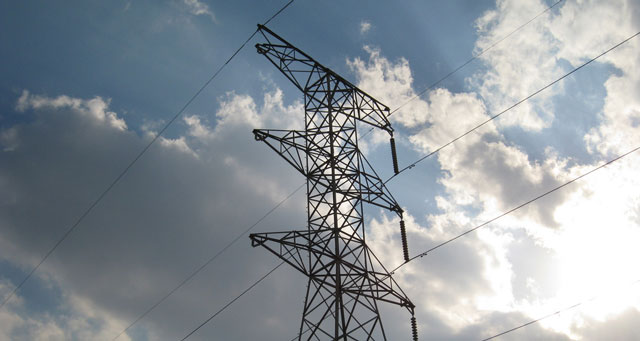
    eskom-640

    Afrobarometer, a pan-African, non-partisan research network, recently released a report highlighting Africa’s electricity challenges. Power shortages can hamper socioeconomic development, but they also have implications for health and education. Ozayr Patel spoke to Peter Penar, one of the researchers.

    How serious is the electricity crisis in Africa?
    One of the most glaring disparities is that across the 36 countries surveyed, 94% of urban dwellers have access to the electric grid, whereas only 45% do in rural areas. The urban-rural divide is most pronounced in Guinea, Mali and Niger. This suggests that major cities, including capitals, have fairly good grid coverage, but the outlying rural areas remain severely wanting.

    The problem of accessing electricity varies greatly across countries. Many North African and island countries achieve high rates of access. But several countries have extended the electric grid to only a third or less of the country. Examples include Burundi (17%), Burkina Faso (25%), Sierra Leone (29%), Niger (30%), Guinea (31%), Liberia (31%) and Mali (32%).

    West and East African countries lag behind other regions in extending the grid. Southern Africa is a mixed picture, with many countries falling below the 36-country average (66%). These include Zimbabwe (62%), Namibia (62%), Zambia (50%), Mozambique (50%) and Malawi (42%).

    The next step is whether the electricity grid actually connects to citizens. In some instances, the electricity grid is in the area but connections to dwellings are not present.

    But even being connected to the grid doesn’t ensure electricity supply. This is because power is intermittent. In South Africa, 14% of those with an electric connection suggest that power never or only occasionally works, with even higher proportions in Zimbabwe (44%), Zambia (33%), Botswana (23%), Namibia (19%) and Kenya (15%).

    Why is providing electricity so important?
    Electricity is central to the broader development agenda. Without electricity it is unlikely that development projects and public investments, such as schools and community centres, can achieve their intended goals. The expansion of technology initiatives in rural areas, such as supplying laptops to students, will not be sustainable without reliable connections to electricity. Electricity is also essential for basic things like charging one’s mobile phone or powering a household water pump and heater.

    It has broader implications, too. A lack of electricity prevents efforts to improve election quality, as the equipment for biometric registration and identification requires a reliable connection. For example, biometric voters’ lists couldn’t be managed in some areas in Kenya’s 2013 elections because computers ran out of battery power by midday. They were unable to be charged at polling stations.

    Any similar effort to employ technology in state administration in areas without the power grid, a connection or supply will be futile under the current constraints in many African countries. A larger concern is that many countries, even more developed countries such as South Africa, have failed to engage in long-term energy resource planning.

    Would it be better to extend the electricity grid in rural areas or to pursue renewable energy initiatives?
    Renewable energy initiatives should definitely be part of national energy plans. Renewable energy production is generally good for the environment and may not require large-scale infrastructural projects and investments. But some initiatives need to be complemented by traditional approaches. For renewable energy projects to work systematically, they must provide rural dwellers and the poor the same coverage and quality as on-the-grid electricity flows.

    Another consideration is who is supporting and initiating these renewable energy solutions. African citizens and states must be equal partners and innovators in the energy sector, particularly as cooperation with other countries, such as the US (through Power Africa), increases.

    How have North African countries and Mauritius done so well? Are there lessons for other countries?
    These countries benefit from their geography and population distribution, and higher levels of economic development.

    The fact that Mauritius and Cape Verde are doing well is most likely due to the fact that they are fairly small and easy to connect to a grid system.

    In North Africa, one factor is that, on average, the population is more urbanised and geographically centralised than in most sub-Saharan African countries. This means that there’s no need for extensive rural electrification efforts and the focus can be on urban areas. In addition, higher levels of economic development may contribute to electrification.

    Unfortunately, this suggests that the solutions to rural electrification will be hard to extend to sub-Saharan African countries.

    Electricity isn’t high on many African countries’ priority lists. Why is this? What can be done about it?
    Employment, effective health care, water supply, and agriculture and farming were all rated as more pressing problems than electricity. These are all highly tangible and involve basic issues of livelihoods.

    The fact is that electricity is important to all of them. For example, investments in energy have the potential to create jobs to build and maintain the energy infrastructure. In addition, advancements in health care and water management will involve technology applications, with electricity being a prerequisite.

    This is why it’s important that civil society and grassroots associations explain to their governments that electricity should be a pillar of national development plans and that improvements in electricity supply support investments in other development areas.

    Some countries are connected to the grid but still have electricity issues. In Nigeria, for example, 96% of households are connected but only 18% of these connections function more than about half the time. What can be done to improve this?
    The gaps between grid extension and electricity supply are sizable for many countries, such as Nigeria, Ghana and Cameroon. Although it is hard to generalise, part of the problem is government mismanagement of electricity resources and the failure to develop a feasible national energy plan. This involves seeking out a diversified supply of energy to meet increasing demand. In the case of Ghana, citizens clearly blame government mismanagement for failing to supply electricity. This is clear from the fact that the proportion of Ghanaians saying they approve of the government’s performance declined from 48% in 2012 to 23% in 2014.

    The neglect from government is also rooted in inequalities in the countries. For example, in Nigeria the energy supply burden is shifted from the government to individuals. To maintain electricity, those who can afford it invest in generators run on gas or diesel. Only citizens who can afford to purchase fuel for the generator and can find time to wait in long lines at gas stations — or hire someone to wait for them — are able to maintain electricity in the house.The Conversation

    • Peter Penar is researcher and PhD candidate in the department of political science, Michigan State University
    • This article was originally published on The Conversation

    Follow TechCentral on Google News Add TechCentral as your preferred source on Google


    WhatsApp YouTube
    Share. Facebook Twitter LinkedIn WhatsApp Telegram Email Copy Link
    Previous ArticleAre banks doing enough to secure your data?
    Next Article Africa’s best and worst countries to live in

    Related Posts

    Visa, FNB and RMB take aim at corporate cash - Lineshree Moodley

    Visa, FNB and RMB take aim at corporate cash

    24 June 2026
    OpenAI and Broadcom build a chip to rival Nvidia's Blackwell

    OpenAI and Broadcom build a chip to rival Nvidia’s Blackwell

    24 June 2026
    Absa's silence and the MVNO move no bank has made

    Absa’s silence and the banking MVNO move no one has tried

    24 June 2026
    Company News
    The spaza is not informal - it is foundational - Lesaka Technologies Lincoln Mali

    The spaza is not informal – it is foundational

    24 June 2026
    A smarter way to buy or renew your Red Hat subscriptions - LSD Open

    A smarter way to buy or renew your Red Hat subscriptions

    22 June 2026
    Moving past the pilot: inside the CloudZA and AWS closed-door AI executive roundtable

    CloudZA and AWS chart the road from AI pilots to production

    19 June 2026
    Opinion
    The pivot South Africa's MVNOs cannot afford to miss

    The pivot South Africa’s MVNOs cannot afford to miss

    23 June 2026
    Brazil's online gambling crackdown is a lesson for South Africa

    Brazil’s online gambling crackdown is a lesson for South Africa

    22 June 2026
    Finish the job Mandela started - Farzam Ehsani

    Finish the job Mandela started

    18 June 2026

    Subscribe to Updates

    Get the best South African technology news and analysis delivered to your e-mail inbox every morning.

    Latest Posts
    Visa, FNB and RMB take aim at corporate cash - Lineshree Moodley

    Visa, FNB and RMB take aim at corporate cash

    24 June 2026
    OpenAI and Broadcom build a chip to rival Nvidia's Blackwell

    OpenAI and Broadcom build a chip to rival Nvidia’s Blackwell

    24 June 2026
    Absa's silence and the MVNO move no bank has made

    Absa’s silence and the banking MVNO move no one has tried

    24 June 2026
    GTA 6 retail price locked in

    GTA 6 retail price locked in

    24 June 2026
    © 2009 - 2026 NewsCentral Media
    • Cookie policy (ZA)
    • TechCentral – privacy and Popia

    Type above and press Enter to search. Press Esc to cancel.

    Manage consent

    TechCentral uses cookies to enhance its offerings. Consenting to these technologies allows us to serve you better. Not consenting or withdrawing consent may adversely affect certain features and functions of the website.

    Functional Always active
    The technical storage or access is strictly necessary for the legitimate purpose of enabling the use of a specific service explicitly requested by the subscriber or user, or for the sole purpose of carrying out the transmission of a communication over an electronic communications network.
    Preferences
    The technical storage or access is necessary for the legitimate purpose of storing preferences that are not requested by the subscriber or user.
    Statistics
    The technical storage or access that is used exclusively for statistical purposes. The technical storage or access that is used exclusively for anonymous statistical purposes. Without a subpoena, voluntary compliance on the part of your Internet Service Provider, or additional records from a third party, information stored or retrieved for this purpose alone cannot usually be used to identify you.
    Marketing
    The technical storage or access is required to create user profiles to send advertising, or to track the user on a website or across several websites for similar marketing purposes.
    • Manage options
    • Manage services
    • Manage {vendor_count} vendors
    • Read more about these purposes
    View preferences
    • {title}
    • {title}
    • {title}