Close Menu
TechCentralTechCentral

    Subscribe to the newsletter

    Get the best South African technology news and analysis delivered to your e-mail inbox every morning.

    Facebook X (Twitter) YouTube LinkedIn
    WhatsApp Facebook X (Twitter) LinkedIn YouTube
    TechCentralTechCentral
    • News
      Netflix, Warner Bros talks raise fresh headaches for MultiChoice

      Netflix, Warner Bros talks raise fresh headaches for MultiChoice

      5 December 2025
      Big Microsoft 365 price increases coming next year

      Big Microsoft price increases coming next year

      5 December 2025
      Vodacom to take control of Safaricom in R36-billion deal - Shameel Joosub

      Vodacom to take control of Safaricom in R36-billion deal

      4 December 2025
      Black Friday goes digital in South Africa as online spending surges to record high

      Black Friday goes digital in South Africa as online spending surges to record high

      4 December 2025
      BYD takes direct aim at Toyota with launch of sub-R500 000 Sealion 5 PHEV

      BYD takes direct aim at Toyota with launch of sub-R500 000 Sealion 5 PHEV

      4 December 2025
    • World
      Amazon and Google launch multi-cloud service for faster connectivity

      Amazon and Google launch multi-cloud service for faster connectivity

      1 December 2025
      Google makes final court plea to stop US breakup

      Google makes final court plea to stop US breakup

      21 November 2025
      Bezos unveils monster rocket: New Glenn 9x4 set to dwarf Saturn V

      Bezos unveils monster rocket: New Glenn 9×4 set to dwarf Saturn V

      21 November 2025
      Tech shares turbocharged by Nvidia's stellar earnings

      Tech shares turbocharged by stellar Nvidia earnings

      20 November 2025
      Config file blamed for Cloudflare meltdown that disrupted the web

      Config file blamed for Cloudflare meltdown that disrupted the web

      19 November 2025
    • In-depth
      Jensen Huang Nvidia

      So, will China really win the AI race?

      14 November 2025
      Valve's Linux console takes aim at Microsoft's gaming empire

      Valve’s Linux console takes aim at Microsoft’s gaming empire

      13 November 2025
      iOCO's extraordinary comeback plan - Rhys Summerton

      iOCO’s extraordinary comeback plan

      28 October 2025
      Why smart glasses keep failing - no, it's not the tech - Mark Zuckerberg

      Why smart glasses keep failing – it’s not the tech

      19 October 2025
      BYD to blanket South Africa with megawatt-scale EV charging network - Stella Li

      BYD to blanket South Africa with megawatt-scale EV charging network

      16 October 2025
    • TCS
      TCS+ | How Cloud on Demand helps partners thrive in the AWS ecosystem - Odwa Ndyaluvane and Xenia Rhode

      TCS+ | How Cloud On Demand helps partners thrive in the AWS ecosystem

      4 December 2025
      TCS | MTN Group CEO Ralph Mupita on competition, AI and the future of mobile

      TCS | Ralph Mupita on competition, AI and the future of mobile

      28 November 2025
      TCS | Dominic Cull on fixing South Africa's ICT policy bottlenecks

      TCS | Dominic Cull on fixing South Africa’s ICT policy bottlenecks

      21 November 2025
      TCS | BMW CEO Peter van Binsbergen on the future of South Africa's automotive industry

      TCS | BMW CEO Peter van Binsbergen on the future of South Africa’s automotive industry

      6 November 2025
      TCS | Why Altron is building an AI factory - Bongani Andy Mabaso

      TCS | Why Altron is building an AI factory in Johannesburg

      28 October 2025
    • Opinion
      Your data, your hardware: the DIY AI revolution is coming - Duncan McLeod

      Your data, your hardware: the DIY AI revolution is coming

      20 November 2025
      Zero Carbon Charge founder Joubert Roux

      The energy revolution South Africa can’t afford to miss

      20 November 2025
      It's time for a new approach to government IT spend in South Africa - Richard Firth

      It’s time for a new approach to government IT spend in South Africa

      19 November 2025
      How South Africa's broken Rica system fuels murder and mayhem - Farhad Khan

      How South Africa’s broken Rica system fuels murder and mayhem

      10 November 2025
      South Africa's AI data centre boom risks overloading a fragile grid - Paul Colmer

      South Africa’s AI data centre boom risks overloading a fragile grid

      30 October 2025
    • Company Hubs
      • Africa Data Centres
      • AfriGIS
      • Altron Digital Business
      • Altron Document Solutions
      • Altron Group
      • Arctic Wolf
      • AvertITD
      • Braintree
      • CallMiner
      • CambriLearn
      • CYBER1 Solutions
      • Digicloud Africa
      • Digimune
      • Domains.co.za
      • ESET
      • Euphoria Telecom
      • Incredible Business
      • iONLINE
      • IQbusiness
      • Iris Network Systems
      • LSD Open
      • NEC XON
      • Netstar
      • Network Platforms
      • Next DLP
      • Ovations
      • Paracon
      • Paratus
      • Q-KON
      • SevenC
      • SkyWire
      • Solid8 Technologies
      • Telit Cinterion
      • Tenable
      • Vertiv
      • Videri Digital
      • Vodacom Business
      • Wipro
      • Workday
      • XLink
    • Sections
      • AI and machine learning
      • Banking
      • Broadcasting and Media
      • Cloud services
      • Contact centres and CX
      • Cryptocurrencies
      • Education and skills
      • Electronics and hardware
      • Energy and sustainability
      • Enterprise software
      • Financial services
      • Information security
      • Internet and connectivity
      • Internet of Things
      • Investment
      • IT services
      • Lifestyle
      • Motoring
      • Public sector
      • Retail and e-commerce
      • Satellite communications
      • Science
      • SMEs and start-ups
      • Social media
      • Talent and leadership
      • Telecoms
    • Events
    • Advertise
    TechCentralTechCentral
    Home » In-depth » It’s difficult to be the next China, but not impossible

    It’s difficult to be the next China, but not impossible

    By Agency Staff28 June 2020
    Twitter LinkedIn Facebook WhatsApp Email Telegram Copy Link
    News Alerts
    WhatsApp

    Is the global monetary order ready for another reboot?

    In the 1960s, Japan and Europe exported their way to post-World War 2 prosperity under the fixed exchange rates of the Bretton Woods agreement. The US went off the gold standard in 1971, but the established way of doing things didn’t collapse. Thirty years later, China essayed the role of being the world economy’s periphery and selling cheap widgets to a revamped core — the West and Japan — with the help of an undervalued exchange rate.

    This, as economists Michael P Dooley, David Folkerts-Landau and Peter M Garber noted in an influential 2003 essay, was Bretton Woods revived. The “China phase”, they said, would play out over 10 to 20 years as the world economy absorbed 200 million surplus rural Chinese workers at the rate of 10 million to 20 million a year. To that end, Beijing would acquire vast quantities of foreign-exchange reserves regardless of cost. And when China was done, India would take its place. Will it?

    Yet the domestic political discourse is harking back to a protectionist past. Prime Minister Narendra Modi wants self-reliance

    One clue may lie in official reserves. By purchasing the public debt of a profligate centre, a hardworking fringe signals its reliability; any threat to Western business investments, and the periphery’s holdings of US treasuries and other safe assets could get cancelled. (Far-fetched as it may sound, the idea did get discussed recently when President Donald Trump’s administration was contemplating punishing China for its handling of the coronavirus outbreak.)

    By the time Dooley et al got down to writing The Revived Bretton Woods System’s First Decade in 2014, China’s reserves were peaking, at about US$4-trillion, from under $300-billion at the time of their original study. Just recently, India’s foreign-exchange stockpile crossed the $500-billion mark. In 1990, the country only had enough dollars to pay foreign suppliers for half a month. Now the reserves cover two years of imports.
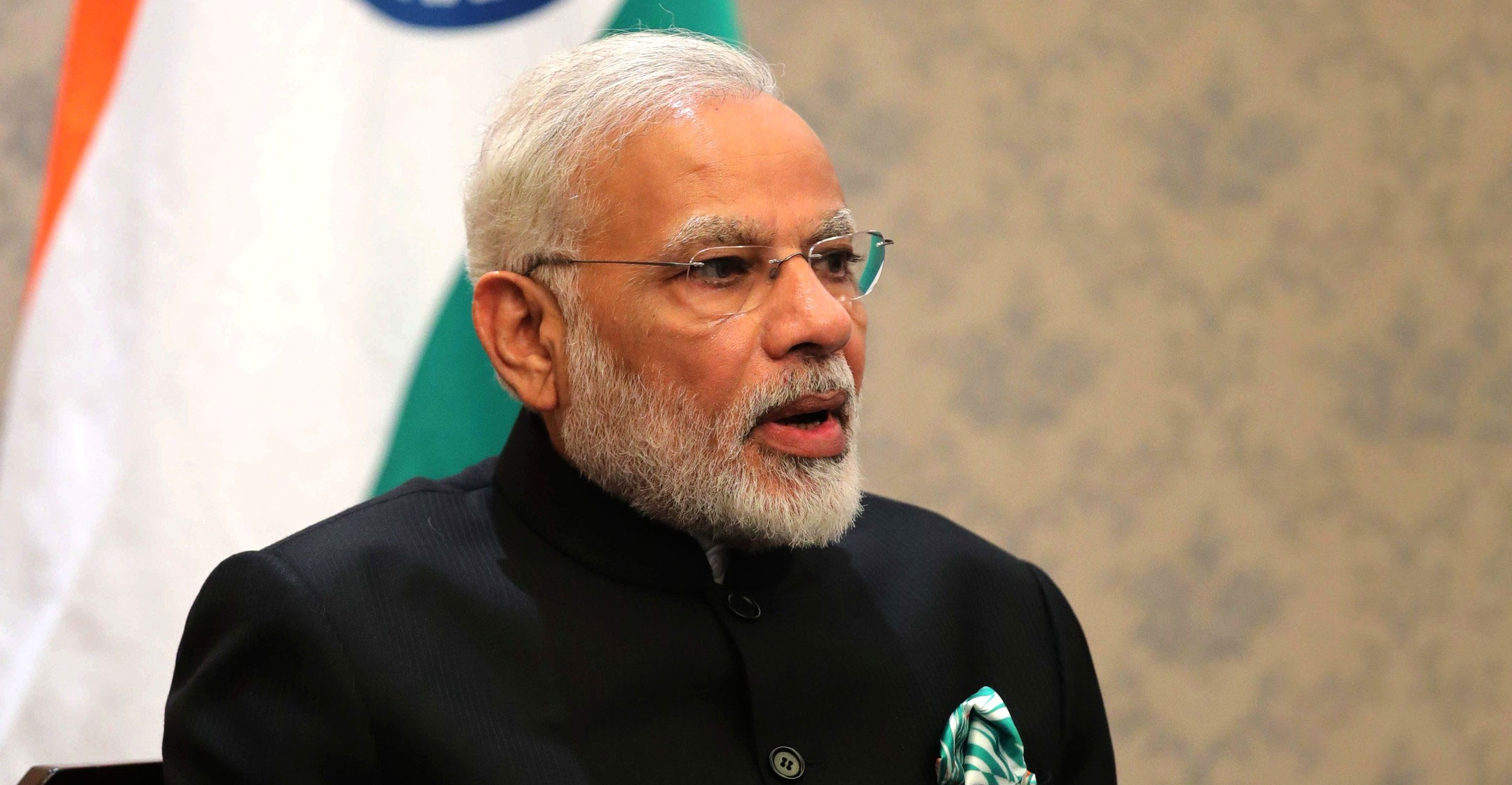
    Indian Prime Minister Narendra Modi

    Yet the domestic political discourse is harking back to a protectionist past. Prime Minister Narendra Modi wants self-reliance. Other officials are coaxing Indians to buy local even if means paying more. It doesn’t look like India sees itself as the world’s next factory, which requires openness. Emboldened by its recent free trade agreement with the European Union, Vietnam may be more suited to playing that role, even though the Southeast Asian nation of fewer than 100 million people lacks India’s labour power.

    Some of India’s retreat may be tactical and temporary. The US is still coping with China’s rise, and not in a mood to let another 200 million workers latch onto its customers. Industrialisation of the periphery requires a fundamental restructuring of the labour force in the core, as the authors of Bretton Woods 2.0 warned. “No country has found a workable way to compensate its own losers.”

    The Western companies that chose China as a manufacturing location became vocal supporters of its developmental strategy and shielded it from politicians and labour unions in their home countries. This global businesses elite is no longer as powerful amid a rising anti-globalisation tide almost everywhere. The threat of being branded a “currency manipulator” by the US treasury also limits the extent to which the Reserve Bank of India can intervene in the foreign-exchange market.

    Hundreds of millions of Indian workers need jobs, even if that means making things that China can supply far more competitively

    Then there’s Covid-19, and the worst global recession since the Great Depression. While a rapidly deteriorating relationship with Beijing impels Washington to draw the only other billion-plus-people country deeper into America’s embrace, massive unemployment in an election year makes it impossible to grant concessions. India understands the compulsions. When Trump recently ordered a freeze on H1-B visas used by technology workers to the end of this year, there was disappointment in the country’s outsourcing industry, but no sense of doom.

    India has its own constraints. After its Himalayan border with China witnessed the deadliest conflict between the nuclear-armed neighbours in 45 years, there’s little prospect for deeper economic engagement between the two. India’s trade with China is $50-billion in deficit, while that with the US is $22-billion in surplus. The talk of self-reliance in New Delhi may simply be code for weaning the economy off Chinese goods and capital. Hundreds of millions of pandemic-hit Indian workers need jobs, even if that means making things like solar panels that China can supply far more competitively.

    Rules of engagement

    The Western tech industry, which remains broadly excluded from China, will probably advocate for India. Even here, though, India’s powerful local business lobby will seek to define the rules of engagement. After investing billions of dollars in the country, Amazon.com still can’t maintain its own e-commerce inventory. Facebook has waited for two years for approval for its popular messaging service WhatsApp to send and receive payments.

    Eventually, investment banks will enable joint ventures and compromises. Indian tycoons’ wealth is tied to stocks traded in Mumbai. However, if they could float their businesses in New York — just as worried Chinese companies leave to seek listings closer to home — they would happily support an artificially low rupee. That would give them an export advantage while enabling them to be counted among the global rich. Bretton Woods could yet reload.  — By Andy Mukherjee, (c) 2020 Bloomberg LP



    Donald Trump Narendra Modi top
    Subscribe to TechCentral Subscribe to TechCentral
    Share. Facebook Twitter LinkedIn WhatsApp Telegram Email Copy Link
    Previous ArticleMark Zuckerberg $7-billion poorer amid Facebook ad boycott
    Next Article Firms placing post-Covid bets on tech not talent need to rethink

    Related Posts

    The AI threat to Cape Town's film industry - Julia Finnis-Bedford

    The AI threat to Cape Town’s film industry

    1 December 2025
    Jensen Huang: 'China is going to win the AI race' - Nvidia

    Jensen Huang: ‘China is going to win the AI race’

    6 November 2025
    Trump says China, other countries can't have Nvidia's top AI chips

    Trump says China, other countries can’t have Nvidia’s top AI chips

    3 November 2025
    Company News
    AI is not a technology problem - iqbusiness

    AI is not a technology problem – iqbusiness

    5 December 2025
    Telcos are sitting on a data gold mine - but few know what do with it - Phillip du Plessis

    Telcos are sitting on a data gold mine – but few know what do with it

    4 December 2025
    Unlock smarter computing with your surface Copilot+ PC

    Unlock smarter computing with your Surface Copilot+ PC

    4 December 2025
    Opinion
    Your data, your hardware: the DIY AI revolution is coming - Duncan McLeod

    Your data, your hardware: the DIY AI revolution is coming

    20 November 2025
    Zero Carbon Charge founder Joubert Roux

    The energy revolution South Africa can’t afford to miss

    20 November 2025
    It's time for a new approach to government IT spend in South Africa - Richard Firth

    It’s time for a new approach to government IT spend in South Africa

    19 November 2025

    Subscribe to Updates

    Get the best South African technology news and analysis delivered to your e-mail inbox every morning.

    Latest Posts
    Netflix, Warner Bros talks raise fresh headaches for MultiChoice

    Netflix, Warner Bros talks raise fresh headaches for MultiChoice

    5 December 2025
    Big Microsoft 365 price increases coming next year

    Big Microsoft price increases coming next year

    5 December 2025
    AI is not a technology problem - iqbusiness

    AI is not a technology problem – iqbusiness

    5 December 2025
    Vodacom to take control of Safaricom in R36-billion deal - Shameel Joosub

    Vodacom to take control of Safaricom in R36-billion deal

    4 December 2025
    © 2009 - 2025 NewsCentral Media
    • Cookie policy (ZA)
    • TechCentral – privacy and Popia

    Type above and press Enter to search. Press Esc to cancel.

    Manage consent

    TechCentral uses cookies to enhance its offerings. Consenting to these technologies allows us to serve you better. Not consenting or withdrawing consent may adversely affect certain features and functions of the website.

    Functional Always active
    The technical storage or access is strictly necessary for the legitimate purpose of enabling the use of a specific service explicitly requested by the subscriber or user, or for the sole purpose of carrying out the transmission of a communication over an electronic communications network.
    Preferences
    The technical storage or access is necessary for the legitimate purpose of storing preferences that are not requested by the subscriber or user.
    Statistics
    The technical storage or access that is used exclusively for statistical purposes. The technical storage or access that is used exclusively for anonymous statistical purposes. Without a subpoena, voluntary compliance on the part of your Internet Service Provider, or additional records from a third party, information stored or retrieved for this purpose alone cannot usually be used to identify you.
    Marketing
    The technical storage or access is required to create user profiles to send advertising, or to track the user on a website or across several websites for similar marketing purposes.
    • Manage options
    • Manage services
    • Manage {vendor_count} vendors
    • Read more about these purposes
    View preferences
    • {title}
    • {title}
    • {title}