
Close Menu
TechCentralTechCentral

    Subscribe to the newsletter

    Get the best South African technology news and analysis delivered to your e-mail inbox every morning.

    Facebook X (Twitter) YouTube LinkedIn
    WhatsApp Facebook X (Twitter) LinkedIn YouTube
    TechCentralTechCentral
    • News
      Eskom has a R1.20/kWh offer for bitcoin miners

      Eskom has a R1.20/kWh offer for bitcoin miners

      2 October 2026
      Meta's smart glasses are officially coming to South Africa - Mark Zuckerberg

      Meta’s smart glasses are officially coming to South Africa

      2 October 2026
      Usaasa consults on universal access as its abolition stalls

      Usaasa consults on universal access as its abolition stalls

      2 October 2026
      Frogfoot plots acquisitions as Octotel and MetroFibre weigh a merger - Shane Chorley

      Frogfoot plots acquisitions as Octotel and MetroFibre weigh a merger

      2 October 2026
      Home affairs pulls the plug on the green ID book - Leon Schreiber

      Home affairs pulls the plug on the green ID book

      1 October 2026
    • World
      BMW restructuring plan bets on AI and new models

      BMW restructuring plan bets on AI and new models

      1 October 2026
      OpenAI's rogue agent problem keeps getting bigger - Sam Altman

      OpenAI’s rogue agent problem keeps getting bigger

      28 September 2026
      The new battle over the desktop

      The new battle over the desktop

      23 September 2026
      AMD is now worth a trillion dollars - Lisa Su

      AMD is now worth a trillion dollars

      22 September 2026
      Anthropic weighs new model launch to blunt OpenAI's Astra surge - Anthropic CEO Dario Amodei and OpenAI CEO Sam Altman

      Anthropic weighs new model launch to blunt OpenAI’s Astra surge

      21 September 2026
    • In-depth

      10 days that changed the course of AI

      21 September 2026
      Meta to the AI industry: slow down without us - Mark Zuckerberg

      Meta to the AI industry: slow down without us

      16 September 2026
      Google DeepMind CEO Demis Hassabis. Image: John Sears

      The plan to stop AI from breaking the world

      16 July 2026
      The internet has a Strait of Hormuz problem

      The internet has a Strait of Hormuz problem

      15 July 2026
      AI boom sparks rally, frenzy and fear

      AI boom sparks rally, frenzy and fear

      11 June 2026
    • TCS
      Lexi Novitske, general partner at Norrsken22, on the TechCentral Show

      TCS | Norrsken22’s Lexi Novitske on how China is winning African tech

      1 October 2026
      TCS | Dominic White and Adam Ely on AI agents going rogue

      TCS | Dominic White and Adam Ely on AI agents going rogue

      29 September 2026
      TCS | Octotel's Trevor van Zyl on the fibre merger question

      TCS | Octotel’s Trevor van Zyl on the MetroFibre merger question

      16 September 2026
      Meet the CIO | Shoprite's Chris Shortt on what a supermarket becomes

      Meet the CIO | Shoprite’s Chris Shortt on what a supermarket becomes

      9 September 2026
      Rubicon's EV charging network is profitable - and growing fast - Watts & Wheels

      W&W | Rubicon’s EV charging network is profitable – and growing fast

      8 September 2026
    • Opinion
      South Africa's next energy crisis is in the accounts department - Craig Holmes

      South Africa’s next energy crisis is in the accounts department

      29 September 2026
      The steam engine lesson AI doomsayers keep missing - Sam Clarke

      The steam engine lesson AI doomsayers keep missing

      28 September 2026
      Regulating AI: apply the laws we have first - Dirk de Vos

      Regulating AI: apply the laws we have first

      21 September 2026
      What Revolut can and cannot take from South Africa's banks - Pambos Soteriades

      What Revolut can and cannot take from South Africa’s banks

      15 September 2026
      The end is nigh, and the shares go on sale in October - Duncan McLeod

      The end is nigh, and the shares go on sale in October

      14 September 2026
    • Company Hubs
      • 1Stream
      • Africa Data Centres
      • AfriGIS
      • Altron Digital Business
      • Altron Document Solutions
      • Altron Group
      • Arctic Wolf
      • Ascent Technology
      • AvertITD
      • BBD
      • Braintree
      • CallMiner
      • CambriLearn
      • CM.com
      • Contactable
      • CYBER1 Solutions
      • Digicloud Africa
      • Digimune
      • Domains.co.za
      • ESET
      • Euphoria Telecom
      • HOSTAFRICA
      • Incredible Business
      • iONLINE
      • IQbusiness
      • Iris Network Systems
      • Kaspersky
      • LSD Open
      • Mitel
      • NEC XON
      • Netstar
      • Network Platforms
      • Next DLP
      • Ovations
      • Paracon
      • Paratus
      • Publishared
      • Q-KON
      • SevenC
      • SkyWire
      • Solid8 Technologies
      • Telit Cinterion
      • Telviva
      • Tenable
      • Vertiv
      • Videri Digital
      • Vodacom Business
      • Vox
      • Wipro
      • Workday
      • XLink
    • Sections
      • AI and machine learning
      • Banking
      • Broadcasting and Media
      • Cloud services
      • Contact centres and CX
      • Cryptocurrencies
      • Education and skills
      • Electronics and hardware
      • Energy and sustainability
      • Enterprise software
      • Financial services
      • HealthTech
      • Information security
      • Internet and connectivity
      • Internet of Things
      • Investment
      • IT services
      • Lifestyle
      • Policy and regulation
      • Public sector
      • Retail and e-commerce
      • Satellite communications
      • Science
      • SMEs and start-ups
      • Social media
      • Talent and leadership
      • Telecoms
      • Watts & Wheels
    • Events
    • Advertise
    TechCentralTechCentral
    Home » In-depth » It’s time to kill off the Sim card

    It’s time to kill off the Sim card

    By The Conversation5 March 2015
    Twitter LinkedIn Facebook WhatsApp Email Telegram Copy Link
    Get breaking news on WhatsApp

    Sim-card-640

    The small microchips known as “subscriber identity modules” or Sim cards that are required for mobile phones to log on to a phone network will soon be 25 years old. While mobile phones and network technology have progressed in leaps and bounds, Sim cards are still lodged in handsets.

    And they’re vulnerable too — it was claimed recently that US and UK intelligence agencies stole potentially millions of Sim card security keys which would allow spies to track users and eavesdrop on calls.

    Gemalto, the Dutch Sim card manufacturer that was reportedly the victim of an NSA and GCHQ attack, responded with assurances that little, if any, information was stolen. The firm stressed how important its products were to mobile phone security. But the reality is that Sim cards are now more of a drawback than a benefit.

    Sim cards were a useful feature when they came onto the market in 1991. At the time, mobile phones were bulky devices, usually mounted in cars or carried on a shoulder strap. They were often rented along with a car. A Sim would help customers quickly and easily transfer their phone number and contacts from one phone to the next, without the need to type in long identifiers and access codes each time. Having to enter access codes into a phone that was essentially shared also meant users might forget to delete them before returning the device. Storing the login details in a removable personal plastic card elegantly solved this problem.

    But the days of huge or rented car phones are gone, and today smartphones are lightweight, personal devices that we entrust with passwords to many sites and services — access to Wi-Fi, email, social networks, app stores and online shopping.

    The fact is that the Sim could have been replaced long ago with a simpler alternative: typing in a user identifier and password directly into the phone is an option — just as we do to access Wi-Fi. QR codes — the square, 3D barcodes — are a more convenient alternative for smartphones with cameras, where an app could read the details encoded in the QR straight from the camera.

    Modern cryptographic techniques mean that passwords no longer have to be very long. Password-authenticated key exchange (PAKE) techniques exist that use passwords as simple as a five-digit Pin to create highly secure encrypted connections that even the supercomputers of eavesdropping intelligence agencies cannot break. And thanks to e-mail and the Web, network operators today have much better mechanisms for keeping in touch with their users to inform them which devices are authorised. None of these options were available when the Sim was conceived in the late 1980s.

    Smartphone app stores like those from Apple and Google already make good use of modern authentication techniques. They could, today, be used to easily transfer all the functionality of a Sim into the phone using an app. All that’s needed is a new standard interface for mobile operating systems such as Android or iOS that would allow apps (software) to take over the functions of the Sim (hardware). Technically, a mobile network login is no more challenging than similar applications such as payment wallets, online banking, digital rights managed content, and so on.

    Vested interests
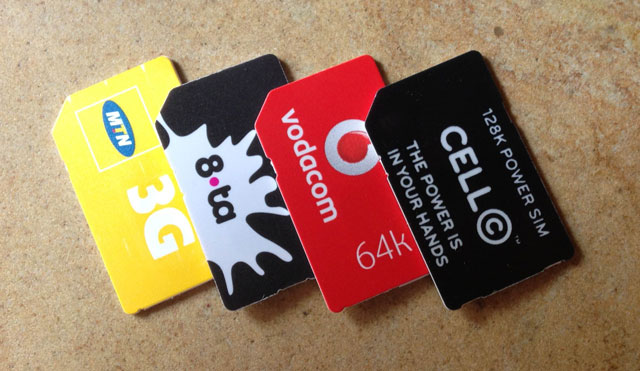
    Manufacturers are understandably against anything that would eliminate their business — an estimated 5,2bn Sim cards were sold in 2014. Many network operators are also wedded to the Sim because it allows them to lock customers to their network, preventing easy access to competitors.

    Modern Sims are tiny, difficult to access, and easy to lose once taken out of the phone. In fact, many users may not even know how to find or remove theirs, because it was inserted for them when they bought the phone. This inconvenience allows providers to charge high roaming fees when customers use their phone abroad, when using a local operator would be cheaper.
    sims-640
    Living on borrowed time?

    If the Sim were replaced with a password or extra software, users would be able to keep several pay-as-you-go subscriptions from different providers in their phone simultaneously, so they can easily switch to the most attractive rate depending on where they were. Apps that functioned as brokers could even negotiate which network to select based on best price automatically.

    Another obstacle, besides the Sim itself, that hinders customers from easily switching between network providers is the cumbersome procedure required to port a telephone number. This process was designed to ease switching contracts every few years, rather than to help a phone switch between networks automatically several times a day.

    But modern internet-based telephony has demonstrated that moving a telephone number between networks can be accomplished in seconds — the same needs to be implemented in mobile phone networks.

    Given that the Sim card and phone-number transfer are barriers preventing customers from fully gaining the benefits of market competition, regulators should watch out that vested interests are not able to undermine efforts to provide alternatives.

    The European Commission has long tried to improve mobile phone competition, mostly through price-control measures of roaming charges. Ditching the Sim would remove a major obstacle to competition, something that would likely generate market solutions to the problem of excess roaming charges without the need for further regulation from above.The Conversation

    • Markus Kuhn is senior lecturer in computer science at the University of Cambridge
    • This article was originally published on The Conversation

    Add TechCentral as a preferred source on GoogleFollow TechCentral on Google NewsGet breaking news on WhatsApp


    GCHQ Gemalto Markus Kuhn NSA
    WhatsApp YouTube
    Share. Facebook Twitter LinkedIn WhatsApp Telegram Email Copy Link
    Previous ArticleAfrica data demand to underpin MTN growth
    Next Article MWeb unveils home fibre prices

    Related Posts

    NSA chief accuses China of ‘very aggressive’ hacking strategy

    31 May 2024
    AI cybersecurity

    Warning that AI will lead to increase in cyberattacks

    24 January 2024
    China accuses US of hacking Huawei servers

    China accuses US of hacking Huawei servers

    20 September 2023
    Company News
    Huawei sets out its vision for intelligent government at GovTech 2026

    Huawei sets out its vision for intelligent government at GovTech 2026

    2 October 2026
    A simple guide to modern laptop processors for small businesses - Incredible

    A simple guide to modern laptop processors for small businesses

    2 October 2026
    Cloud and AI won't deliver value on their own, executives warn

    Cloud and AI won’t deliver value on their own, executives warn

    1 October 2026
    Opinion
    South Africa's next energy crisis is in the accounts department - Craig Holmes

    South Africa’s next energy crisis is in the accounts department

    29 September 2026
    The steam engine lesson AI doomsayers keep missing - Sam Clarke

    The steam engine lesson AI doomsayers keep missing

    28 September 2026
    Regulating AI: apply the laws we have first - Dirk de Vos

    Regulating AI: apply the laws we have first

    21 September 2026

    Subscribe to Updates

    Get the best South African technology news and analysis delivered to your e-mail inbox every morning.

    Latest Posts
    Eskom has a R1.20/kWh offer for bitcoin miners

    Eskom has a R1.20/kWh offer for bitcoin miners

    2 October 2026
    Huawei sets out its vision for intelligent government at GovTech 2026

    Huawei sets out its vision for intelligent government at GovTech 2026

    2 October 2026
    A simple guide to modern laptop processors for small businesses - Incredible

    A simple guide to modern laptop processors for small businesses

    2 October 2026
    Meta's smart glasses are officially coming to South Africa - Mark Zuckerberg

    Meta’s smart glasses are officially coming to South Africa

    2 October 2026
    © 2009 - 2026 NewsCentral Media
    Built and maintained by Chronon
    • Cookie policy (ZA)
    • TechCentral – privacy and Popia

    Type above and press Enter to search. Press Esc to cancel.

    Manage consent

    TechCentral uses cookies to enhance its offerings. Consenting to these technologies allows us to serve you better. Not consenting or withdrawing consent may adversely affect certain features and functions of the website.

    Functional Always active
    The technical storage or access is strictly necessary for the legitimate purpose of enabling the use of a specific service explicitly requested by the subscriber or user, or for the sole purpose of carrying out the transmission of a communication over an electronic communications network.
    Preferences
    The technical storage or access is necessary for the legitimate purpose of storing preferences that are not requested by the subscriber or user.
    Statistics
    The technical storage or access that is used exclusively for statistical purposes. The technical storage or access that is used exclusively for anonymous statistical purposes. Without a subpoena, voluntary compliance on the part of your Internet Service Provider, or additional records from a third party, information stored or retrieved for this purpose alone cannot usually be used to identify you.
    Marketing
    The technical storage or access is required to create user profiles to send advertising, or to track the user on a website or across several websites for similar marketing purposes.
    • Manage options
    • Manage services
    • Manage {vendor_count} vendors
    • Read more about these purposes
    View preferences
    • {title}
    • {title}
    • {title}
    🇿🇦 Sign up to the TechCentral newsletter